WHO OWNS HISTORY?
There is a curious irony in the modern conversation on art restitution. For centuries, empires crossed oceans claiming they were bringing civilisation to the world. Yet many of those same “civilised” powers quietly carried away the very soul of the nations they conquered - statues, manuscripts, jewels, sacred objects, ceremonial weapons and cultural treasures stripped from temples, palaces and royal courts. Today, when former colonies ask for these artefacts back, the question suddenly becomes “complicated.”
Before entering the debate, however, we must first understand an important distinction that many people confuse: art restoration as opposed to art restitution. Restoration refers to repairing or conserving an artwork that has been damaged by age, weather, neglect or war. A faded painting may be cleaned. A cracked sculpture may be repaired. The artwork remains where it is, but experts attempt to preserve it for future generations. Restitution, on the other hand, concerns ownership. It asks a far more uncomfortable question: who does this object
truly belong to? And that is where history becomes inconvenient.
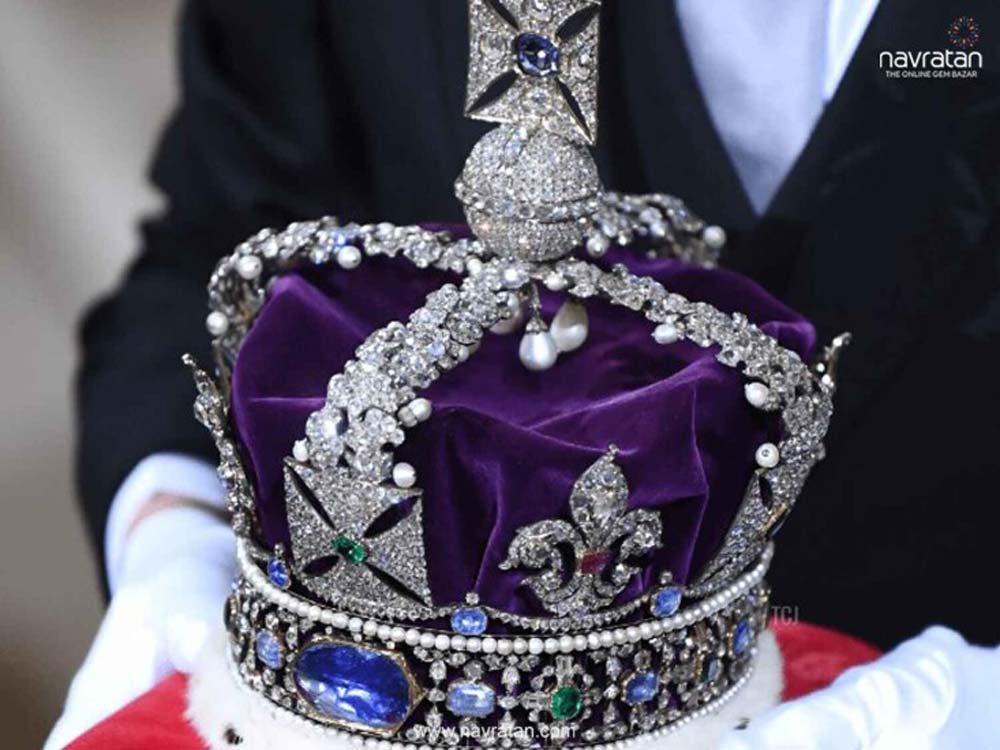
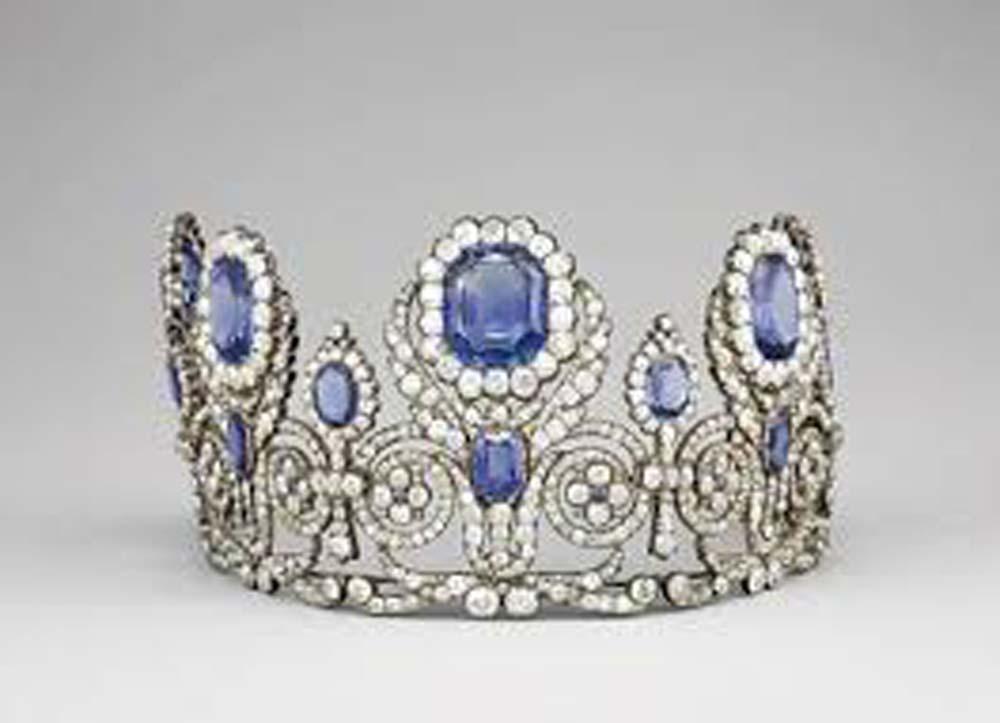
The argument for restitution appears morally straightforward at first glance. If an artefact was stolen, looted or taken under colonial coercion, surely it should be returned to its country of origin. Yet reality is far messier. What happens when records are incomplete? What happens when centuries have passed? What happens when the original owners no longer exist? And what happens when returning one object opens the floodgates for thousands more claims? The recent theft of royal jewels from the Louvre in Paris exposed this dilemma in dramatic fashion. Several priceless pieces disappeared despite modern surveillance systems and international policing networks. Experts openly admitted that many objects may never be traced because gemstones can be dismantled, melted down or altered beyond recognition. If investigators today struggle to track stolen treasures in an age of CCTV cameras and digital archives, how much harder must it be to trace artefacts removed from Asia or Africa two centuries ago? How many Sri Lankan jewels, manuscripts or sacred objects disappeared quietly into private European collections during the colonial era without a single inventory or photograph to prove they ever existed?
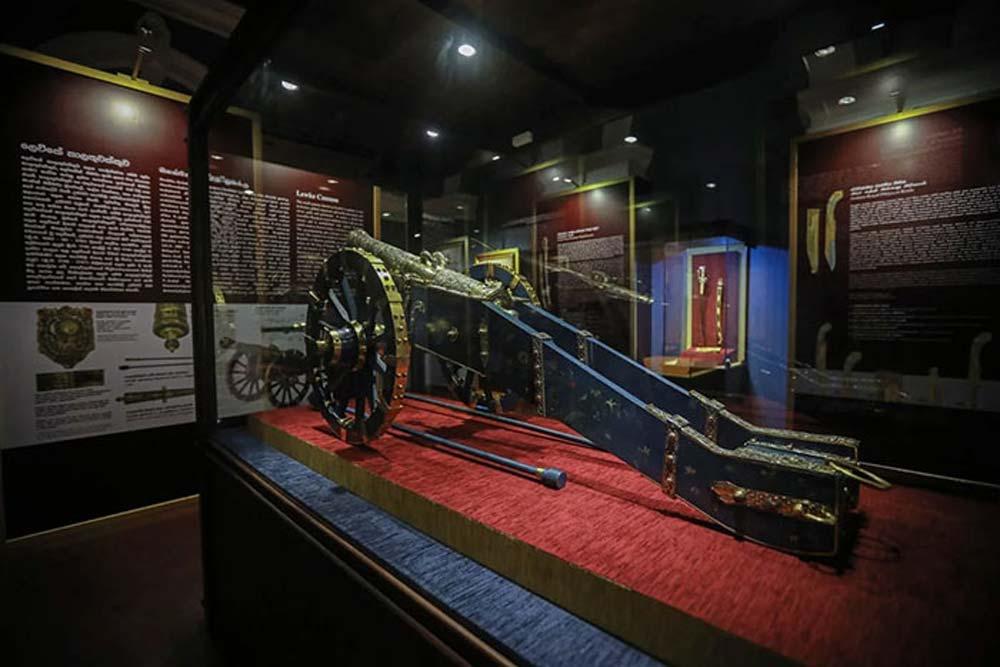
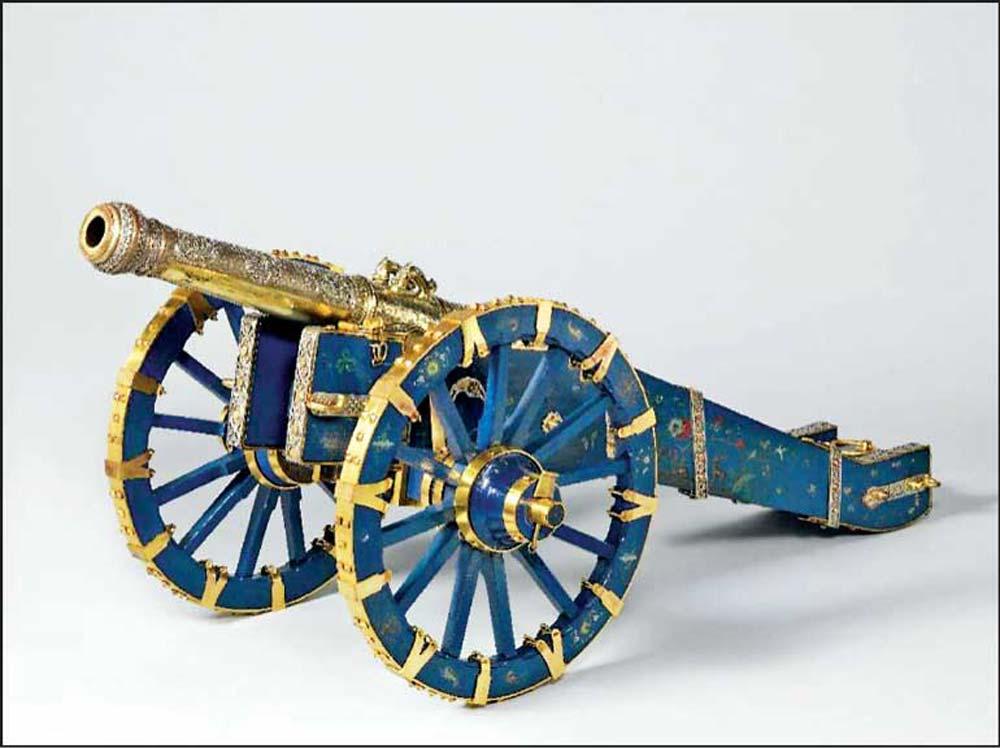
This is precisely why restitution debates become emotionally charged. They are not merely about museum pieces. They are about historical memory. Provenance research itself often resembles detective work more than history. Associate Professor of Colonial History, Alicia Schrikker of the Netherlands who led the research team tracing Sri Lankan artefacts in Dutch collections described the process as “searching for clues,” attempting to determine whether an object had been looted, gifted or legally acquired centuries ago. A ceremonial sword with gold, diamonds and royal symbolism may strongly suggest Kandyan ownership, but proving precisely when and how it left the island is far harder. The famous Cannon of Kandy itself reflected the tangled complexity of colonial history. European in shape, inscribed in Sinhalese and ornamented in distinctly Kandyan style, the cannon did not belong neatly to one civilisation alone, but told the story of interconnected worlds shaped by trade, empire and conquest.
Yet even when provenance is established, another difficult question emerges: who should receive the object? Should restitution mean returning artefacts to governments, or to the descendants of original owners? The famous case of Gustav Klimt’s Woman in Gold illustrates this perfectly. The painting had been seized by the Nazis from a Jewish family during the Second World War.
After years of legal battles, it was finally returned to Maria Altmann, the rightful heir. But once restitution occurred, the painting eventually left Austria altogether and was sold to a museum in the United States which Maria Altmann had made her home upon fleeing Austria during the war. Many Austrians felt a profound cultural loss. They argued that although the Nazis had acted illegally, the painting had nevertheless become part of Austria’s artistic identity. Others countered that justice mattered more than national pride. After all, can a country claim emotional ownership over something obtained through theft? And this is where restitution forces nations to confront their darkest historical truths. To acknowledge that an artefact must be returned is also to acknowledge that colonialism often involved looting, coercion and cultural erasure. It means admitting that the removal of treasures was not an act of preservation but an act of domination. Many former colonial powers are deeply uncomfortable with that admission because it dismantles the romanticised narrative of empire.
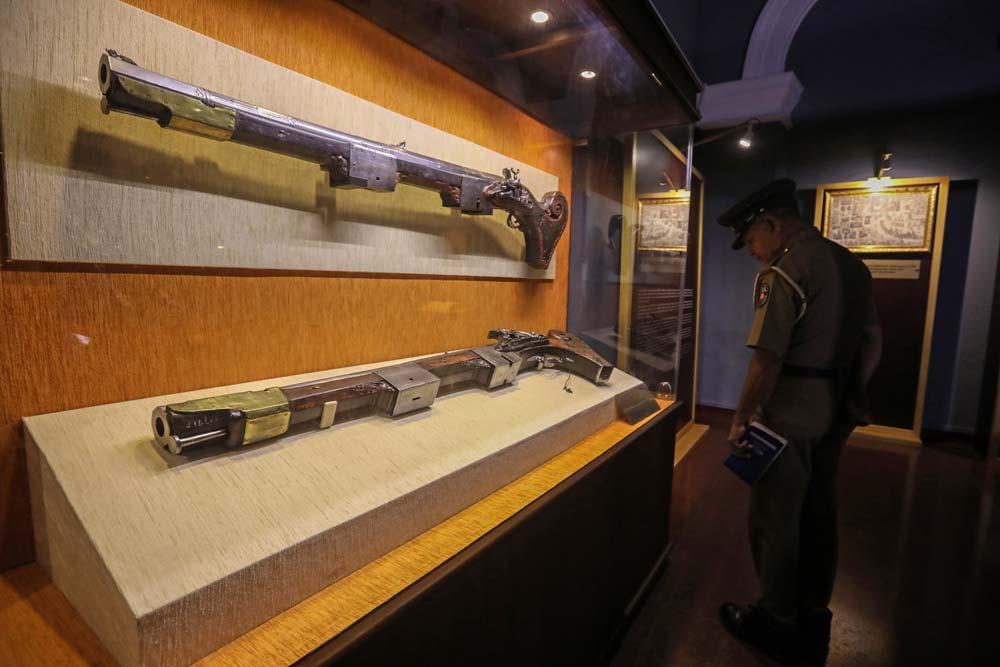
The Netherlands, to its credit, has shown unusual courage in this regard. In 2023, Dutch institutions returned six Kandyan artefacts to Sri Lanka, namely Lewke’s cannon, a gold kastane (ceremonial sword), a silver kastane, a Sinhalese knife, and two guns, openly recognising that these objects had been wrongfully taken during the colonial period. Dutch authorities acknowledged that the objects were obtained through looting or coercion following the Dutch invasion of Kandy in 1765. But even restitution itself is not free from controversy. While many Sri Lankans celebrated the return of the artefacts, others questioned whether such gestures risked becoming political theatre during a period of economic crisis and social instability. Some feared that cultural restitution could be used to inflame nationalism or distract from contemporary failures. Researchers involved in the Dutch-Sri Lankan project observed that returned artefacts often gain “new political-cultural significance” once they return home. In that sense, restitution is not the end of history, but the beginning of a new conversation about identity, ownership and memory.
But what about Britain? The British Museum continues to face global pressure over disputed objects from Greece, Africa and Asia. The difficulty for the United Kingdom is obvious. If one nation successfully secures restitution, many others will immediately demand the same. Entire museum collections could theoretically be emptied. Some fear that Europe’s grand museums (institutions built partly upon imperial acquisition) would lose much of their identity. Yet the argument that “everyone will ask for things back” cannot become an excuse for permanent injustice. At the same time, restitution cannot simply become an emotional free-for- all either. Not every object removed during history was stolen. Some were purchased legally. Others were gifted. Some may genuinely be safer in institutions with the resources to preserve them. A fragile manuscript destroyed by humidity, war or neglect serves nobody.
Today, the restitution debate is accelerating across the world. The opening of Egypt’s multi- billion-dollar Grand Egyptian Museum near the Pyramids of Giza has intensified campaigns for the return of iconic antiquities. Egypt has already secured the return of looted artefacts from the Netherlands, Belgium and the United States in recent years. Yet some of its most famous treasures remain stubbornly out of reach. The British Museum continues to resist calls to return the Rosetta Stone, citing restrictions under the British Museum Act of 1963, while Berlin’s Neues Museum still houses the celebrated bust of Nefertiti despite decades of Egyptian appeals. In the case of the Grand Egyptian Museum, the old colonial argument that Western museums are better equipped to preserve global heritage is also becoming increasingly difficult to sustain given that the museum is among the most technologically advanced museum complexes in the world.
 The question today is no longer whether former colonies are capable of preserving their own history, but whether former empires are willing to surrender the prestige attached to possessing it. Museums such as the British Museum, the National Gallery and London’s Natural History Museum offer free public access to millions of visitors every year. There is something undeniably noble about allowing ordinary people to experience human civilisation without financial barriers. Art and history become accessible not just to elites, but to school children, tourists and ordinary families. But even that noble principle raises uncomfortable questions. Is
it morally acceptable to display (not to mention, profit symbolically from) artefacts that may never have belonged to Britain in the first place? Does free admission erase the circumstances under which those objects were acquired? And is it ethical for museums elsewhere, such as Berlin’s Neues Museum, to charge admission to view masterpieces whose ownership remains
bitterly disputed? Perhaps that is why the future of museums may lie not in conquest, but in custodianship. The Museum of Islamic Art offers an interesting modern contrast. Today it houses one of the world’s greatest collections of Islamic art, spanning centuries and civilisations across Asia, Africa and Europe. Yet unlike many imperial collections, Qatar has largely built its museum through legal acquisition, scholarship and conservation rather than colonial extraction. The distinction matters. It proves that nations can preserve global heritage without first taking it through force.
So, what, then, is the solution? Perhaps the answer lies not in absolute ownership, but in shared stewardship. Long-term loans, rotating exhibitions, joint curatorship agreements and collaborative research may offer a middle path between historical justice and global accessibility. Technology too can help through digital archiving and virtual repatriation, allowing nations to reclaim cultural visibility even when physical transfer remains disputed. But above all, restitution demands honesty. Nations must stop pretending that colonial acquisition was always noble, voluntary or benevolent. Museums are not neutral spaces. Many were built upon unequal histories. Until the world is willing to confront that truth openly, the debate on restitution will remain less about art and more about power, memory and the stories nations tell themselves about who they once were.