Protecting Fair Play: Why the IOC’s Decision Safeguards the Future of Women’s Sport
By: Giselle Gunewardene
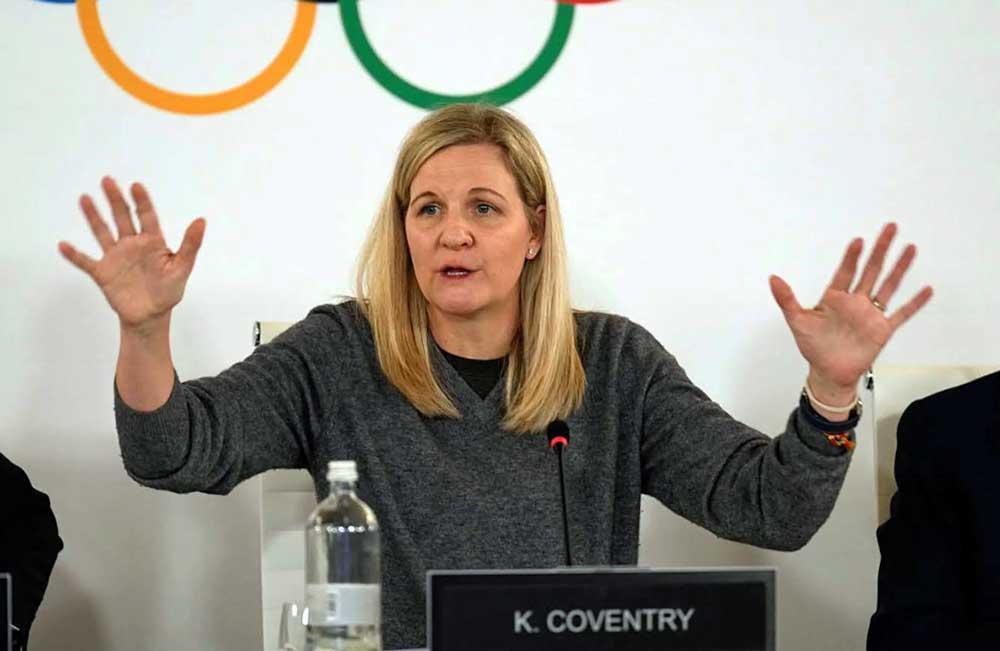
The International Olympic Committee’s decision to restrict participation in women’s sport to biological females marks a defining moment in the evolution of elite athletics. For years, governing bodies have wrestled with how to balance inclusion with fairness, often arriving at policies that satisfied neither side. This new ruling, while controversial in some quarters, represents a clear and decisive attempt to restore confidence in women’s sport as a protected competitive category.
At its core, sport is built on the principle of fair competition. Athletes dedicate their lives to training, discipline, and sacrifice in pursuit of excellence. The integrity of that pursuit depends on the assurance that competitors are measured against others with comparable physical parameters. In men’s and women’s sport, these categories exist not as social constructs, but as practical frameworks designed to account for biological differences that significantly influence performance.
The IOC’s policy recognises this fundamental reality. Scientific evidence has consistently shown that male puberty confers advantages in muscle mass, bone density, cardiovascular capacity, and overall strength. These advantages do not fully disappear with hormone suppression. Even after years of testosterone reduction, residual benefits can remain, particularly in explosive power and endurance. For elite athletes, where margins of victory are often measured in fractions of a second, such differences are not trivial.
Women’s sport was created precisely because of these disparities. Without separate categories, female athletes would have limited opportunities to compete at the highest levels. The introduction of this new rule reinforces the original purpose of women’s sport, ensuring that it remains a space where female athletes can compete on equal footing.
This is not simply a theoretical concern. In recent years, the debate around transgender participation has intensified as cases have emerged in various sports where competitors who have undergone male puberty have achieved significant success in female categories. While each case is unique, the broader pattern has raised legitimate questions about competitive equity. Athletes, coaches, and sporting organisations have increasingly voiced concerns that existing policies were insufficient to address these challenges.
The IOC’s decision provides clarity where there was once ambiguity. By establishing a uniform standard across all Olympic sports, it removes the patchwork of regulations that previously varied from one discipline to another. This consistency is essential for athletes preparing for competition, as well as for spectators who expect clear and transparent rules.
Importantly, the policy is forward looking rather than punitive. It does not alter past results or diminish the achievements of any athlete. Instead, it sets a framework for future competitions, offering a stable foundation upon which the next generation of athletes can build their careers. This approach reflects a measured and pragmatic understanding of the issue.
Critics of the decision argue that it excludes transgender women from competing in women’s sport at the highest level. Inclusion is an important value, and sport has long played a role in bringing people together across lines of difference. However, inclusion must be balanced with fairness. In this context, the IOC has determined that the preservation of equitable competition in women’s sport is paramount.
It is also worth noting that the ruling does not prevent transgender athletes from participating in sport altogether. Opportunities remain in open categories, mixed events, and other formats that can be developed to ensure that everyone has a place in the sporting world. The challenge moving forward will be to expand these opportunities in ways that are both inclusive and respectful of competitive integrity.
Another key aspect of the IOC’s decision is its reliance on objective criteria. The use of a genetic test to determine eligibility introduces a level of clarity that previous hormone-based guidelines struggled to achieve. While no system is without its complexities, the move toward a more definitive standard reflects a desire to reduce uncertainty and minimise disputes.
For female athletes, the impact of this decision is likely to be profound. Many have spoken about the importance of knowing that their competitions are governed by rules that prioritise fairness. This assurance can influence everything from training motivation to mental wellbeing. When athletes believe that the playing field is level, they can focus entirely on performance rather than on external controversies.
The decision also sends a broader message about the value of women’s sport. Over the past few decades, there has been significant progress in elevating the visibility and status of female athletes. Increased media coverage, sponsorship, and public interest have all contributed to this growth. Protecting the integrity of women’s competition is essential to sustaining that momentum.
From a governance perspective, the IOC has taken a leadership role in addressing a complex and often polarising issue. Rather than deferring entirely to individual sports federations, it has established a clear overarching principle. This does not eliminate debate, but it does provide a framework within which discussions can take place.
The response to the policy has been divided, reflecting the broader societal conversation around gender identity and fairness. Yet it is precisely because the issue is so complex that decisive action was needed. Prolonged uncertainty benefits no one, least of all the athletes whose careers are shaped by these decisions.
In many ways, this moment represents a return to first principles. Sport has always sought to create categories that enable meaningful competition. Whether through weight classes in boxing or age groups in junior events, these structures are designed to ensure that outcomes are determined by skill, training, and determination rather than by inherent physical advantages.
The women’s category is no different. It exists to provide a fair and viable arena for female athletes. By reaffirming this purpose, the IOC has taken a step that many believe is necessary to preserve the future of women’s sport.
Looking ahead, the focus should now shift to implementation and to the development of inclusive pathways for all athletes. The conversation does not end with this decision. Instead, it opens the door to new approaches that can accommodate diversity while maintaining fairness.
Sport has always evolved in response to changing circumstances. Rules are refined, categories are adjusted, and new formats are introduced. The challenge is to navigate these changes in a way that upholds the core values of competition. In this case, the IOC has chosen to prioritise fairness in the women’s category, while acknowledging the need for broader inclusivity across the sporting landscape.
For many observers, this decision will be seen as a necessary correction after years of uncertainty. For others, it will raise difficult questions about how best to balance competing values. What is clear, however, is that the conversation has entered a new phase, one defined by greater clarity and a renewed focus on the principles that underpin sport.
Ultimately, the success of this policy will be measured not only by its immediate impact but by its ability to sustain trust in the Olympic movement. Athletes and fans alike must believe that the rules of competition are fair, transparent, and consistently applied. Without that trust, the very foundation of sport is weakened.
In taking this step, the IOC has signalled its commitment to those principles. The decision may not resolve every debate, but it provides a clear direction at a time when clarity was urgently needed. For women’s sport, in particular, it represents a reaffirmation of purpose and a commitment to ensuring that the pursuit of excellence remains grounded in fairness.
As the world looks ahead to future Olympic Games, this policy will shape the landscape of competition in profound ways. It will influence how athletes train, how federations organise events, and how audiences understand the categories they watch. Above all, it will reinforce the idea that sport, at its best, is a contest of equals, where victory is earned through dedication, talent, and hard work. That is a principle worth protecting.