Missile Reach and Britain’s New Strategic Reality
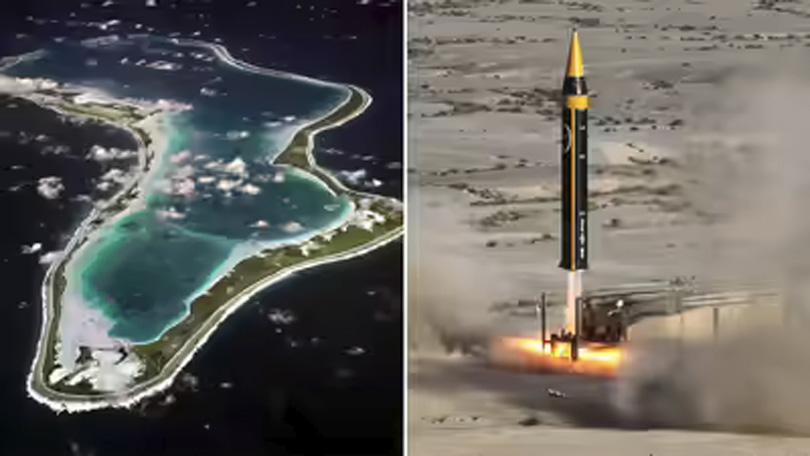
The war involving Iran, the United States and Israel has entered a decisive and deeply unsettling phase. What began as a regional confrontation is now expanding in both scale and ambition, raising urgent questions about global security. At the centre of this shift is a single development that has captured the attention of military planners and political leaders alike: Iran’s attempt to strike a joint United States and United Kingdom military base at Diego Garcia, thousands of kilometres from its shores. The significance of this event lies not in its outcome, but in what it reveals. The missiles did not hit their target. One reportedly failed mid-flight while another was intercepted or neutralised. Yet the attempt itself has altered the strategic conversation.
A Strike That Changed the Map
Diego Garcia is located in the Indian Ocean, roughly 3,800 to 4,000 kilometres from Iran. For decades, this distance placed it comfortably outside the expected range of Iranian missile capabilities. Iran has long maintained that its ballistic missiles are limited to around 2,000 kilometres, a self-imposed cap that was often cited in diplomatic and military assessments. The attempted strike challenges that assumption directly. According to US officials cited in reporting by CNN and others, Iran launched two intermediate range ballistic missiles towards the base. The fact that the missiles were even launched at such a distance suggests either previously undisclosed capabilities or a willingness to test the limits of existing systems. In strategic terms, this is a turning point. Distance has long served as a form of protection. Military installations located far from active conflict zones were considered relatively secure. That assumption is now under scrutiny.
Why Diego Garcia Matters
The choice of target was not incidental. Diego Garcia is one of the most important military bases in the world. Jointly operated by the United Kingdom and the United States, it serves as a critical hub for long range bombers, naval operations and logistical support. Its geographic isolation has always been its strength. Positioned far from the Middle East, it has functioned as a secure staging ground for operations across Asia and the Gulf. The attempted strike suggests that even such remote locations are no longer beyond reach. This has immediate implications for military planning. Bases once considered safe may now require enhanced defensive systems, new contingency planning and greater investment in missile interception technologies.
Britain’s Involvement and the Consequences
The incident cannot be separated from Britain’s growing role in the conflict. The United Kingdom recently allowed the United States to use its bases, including Diego Garcia, for operations against Iranian targets. This decision was framed as part of a broader effort to protect shipping routes and maintain stability in the Strait of Hormuz. However, from Iran’s perspective, this involvement places Britain firmly within the conflict. Iranian officials had warned that British cooperation would put UK interests at risk. The attempted strike on Diego Garcia appears to be a direct response to that policy shift. British officials have condemned the missile launches as reckless and emphasised that the UK’s role remains defensive. Yet the distinction between defensive and offensive involvement may carry little weight in a rapidly escalating conflict.
A Broader Pattern of Escalation
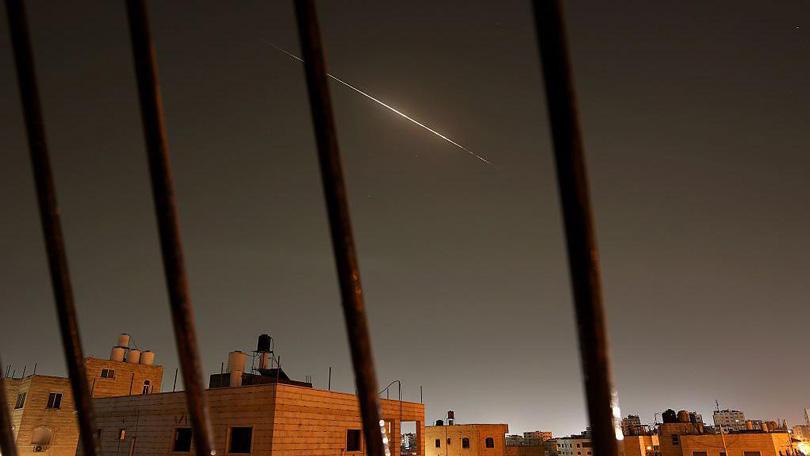
The Diego Garcia incident is not an isolated event. It forms part of a wider pattern of Iranian military activity across the region. Since the beginning of the current war, Iran has launched hundreds of missiles and drones at targets in countries including the United Arab Emirates, Kuwait and Bahrain. These attacks have targeted US military installations, energy infrastructure and, in some cases, civilian areas. Although many of the missiles have been intercepted, the sheer volume of launches reflects a strategy of sustained pressure and escalation. In this context, the strike towards Diego Garcia represents an expansion rather than an anomaly. It signals that Iran is willing to extend the geographical scope of the conflict far beyond its immediate neighbourhood.
The Question of Capability
A key question remains unresolved. Does Iran possess a reliable long range missile capability, or was the Diego Garcia attempt largely symbolic? The failure of both missiles suggests that such capabilities may still be in development. One missile reportedly malfunctioned, while another was intercepted by a US warship using an SM 3 interceptor. This indicates that while Iran can attempt long range strikes, its systems may not yet be fully operational or dependable. However, in strategic terms, reliability is not the only factor that matters. Even an imperfect capability can have a powerful deterrent effect. The possibility that Iran could strike targets thousands of kilometres away forces adversaries to reconsider their assumptions and allocate resources accordingly. This uncertainty is itself a form of leverage.
Implications for Europe
Perhaps the most significant consequence of this development is what it means for Europe. If Iran can project missile power over distances approaching 4,000 kilometres, then parts of Europe may eventually fall within range. While there is no immediate indication that Iran intends to target European cities, the potential alone is enough to alter defence planning. Governments may need to invest more heavily in missile defence systems, early warning capabilities and civil preparedness. For Britain, the implications are particularly acute. As a key ally of the United States and a host to critical military infrastructure, the UK is more exposed than many of its European counterparts.
Political Pressure at Home
The government’s role in the conflict is already facing scrutiny. Critics argue that allowing US operations from British bases risks drawing the UK into a wider war without sufficient parliamentary oversight. There are also concerns about the economic impact. Disruptions in the Strait of Hormuz have already contributed to volatility in global energy markets. Rising fuel prices and supply uncertainties could have direct consequences for households across Britain. The government must balance its strategic commitments with domestic political realities. Supporting allies while avoiding deeper entanglement is becoming an increasingly difficult task.
A New Era of Warfare
The attempted strike on Diego Garcia highlights a broader transformation in the nature of warfare. Advances in missile technology are eroding the traditional importance of geography. Distance is no longer a reliable barrier. This shift has implications far beyond the current conflict. It affects how countries think about defence, deterrence and vulnerability. It raises questions about the security of infrastructure, the resilience of supply chains and the effectiveness of existing military doctrines. Iran’s actions demonstrate that even states with limited resources can challenge global powers by exploiting asymmetries in technology and strategy.
What Comes Next
The future trajectory of the conflict remains uncertain. Further escalation is possible, particularly if Iran continues to test its long-range capabilities or if the United States and its allies intensify their operations. Diplomatic efforts may yet emerge, but the current climate suggests that tensions will remain high. Each new development increases the risk of miscalculation and unintended consequences. What is clear is that the attempted strike on Diego Garcia marks a significant moment. It is not simply an isolated incident, but a signal of changing capabilities and intentions.
Iran’s missile strike towards Diego Garcia has reshaped the strategic landscape. It demonstrates a willingness to extend the reach of conflict far beyond traditional boundaries and challenges long standing assumptions about security and distance. For Britain, the implications are immediate and complex. The country finds itself at the intersection of alliance commitments and emerging threats, navigating a conflict that is no longer confined to the Middle East. The world is entering a new phase of warfare, one in which geography offers less protection and uncertainty becomes a central feature of strategy. The events at Diego Garcia are a warning of what that future may look like.