Mardaani 3: Rani Mukerji Returns With Fire, Fury and Familiar Power
The return of Shivani Shivaji Roy was always going to be a moment. With Mardaani 3, the third instalment of one of Hindi cinema’s most consistent female led franchises, that moment arrives with urgency, intensity and expectation. Released on the 30th of January 2026, the film continues the franchise’s tradition of tackling disturbing social realities through the lens of a relentless police officer who refuses to look away. Directed by Abhiraj Minawala and produced by Yash Raj Films, Mardaani 3 is both a continuation and a culmination. It brings back the familiar tone of gritty realism while attempting to raise the emotional and narrative stakes. The result is a film that is gripping in parts, uneven in others, but anchored by a commanding central performance.
The Cast: A Strong Ensemble Around a Powerful Lead
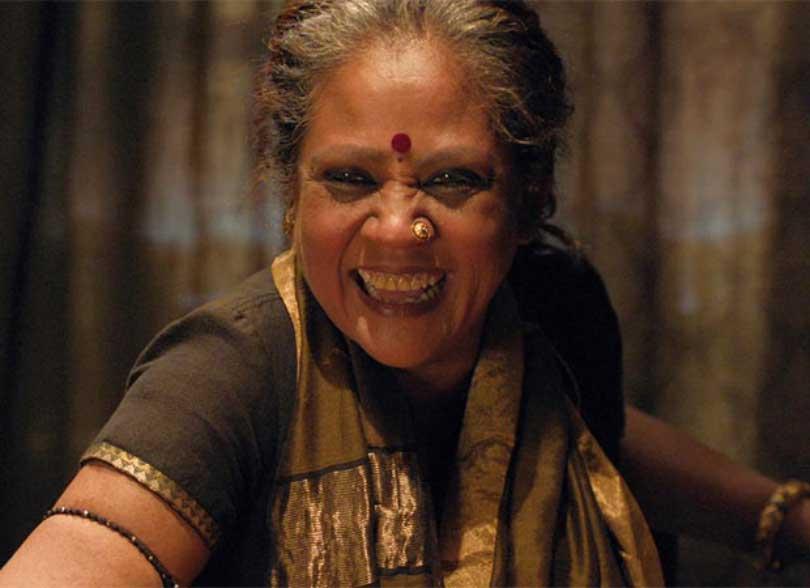
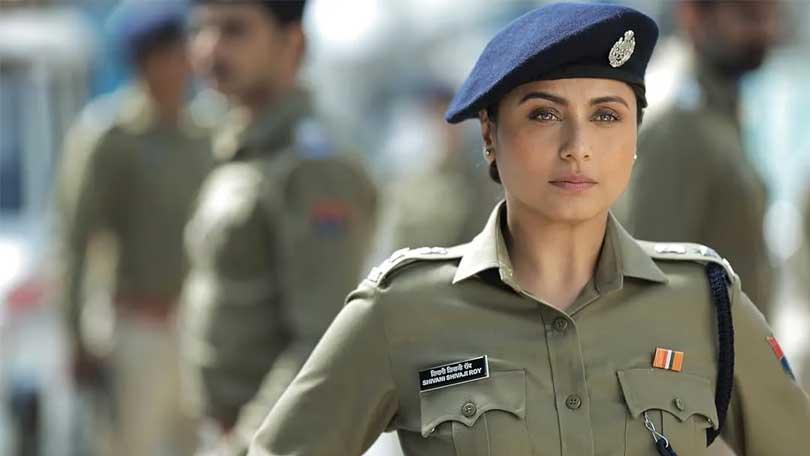
At the heart of Mardaani 3 is Rani Mukerji, reprising her role as SSP Shivani Shivaji Roy. This is now a character deeply etched into contemporary Bollywood, a cop who is equal parts rage, empathy and moral clarity. The supporting cast adds texture to the narrative. Janki Bodiwala plays Constable Fatima Anwar, bringing a grounded, youthful presence that contrasts with Shivani’s seasoned intensity. Mallika Prasad steps into the role of Amma, the film’s central antagonist, offering a rare female villain in mainstream Hindi cinema. Jisshu Sengupta returns as Dr. Bikram Roy, Shivani’s husband, providing emotional grounding to the otherwise relentless narrative. Other actors such as Prajesh Kashyap, Indraneel Bhattacharya and Mikhail Yawalkar fill out the investigative and political landscape, giving the story a broader institutional context. What stands out most is the film’s commitment to placing women at the centre of both sides of the conflict. Not only is the protagonist a woman, but the antagonist is too, which adds a layered dynamic to the storytelling.
The Plot: A Race Against Time
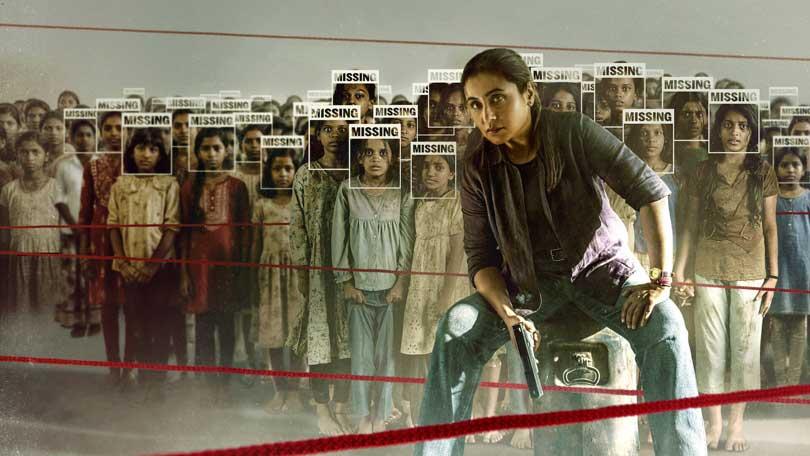
The narrative of Mardaani 3 revolves around a chilling case. Ninety-three young girls go missing within a span of three months, setting off alarm bells across the country. Shivani Roy is assigned to investigate, and what begins as a procedural case quickly evolves into a complex web of organised crime. As Shivani digs deeper, she uncovers a powerful network operating with chilling efficiency. At the centre of this network is Amma, a formidable and calculating figure who represents a different kind of villainy. Unlike the psychotic antagonist of Mardaani 2, Amma is strategic, patient and deeply embedded within the system. The investigation takes Shivani through multiple layers of society, exposing systemic failures, corruption and complicity. At one point, her pursuit of justice leads to her suspension, but she continues the mission independently, driven by her moral compass rather than institutional authority. The film builds toward a tense confrontation between Shivani and Amma, culminating in a climax that emphasises resilience and personal sacrifice. Thematically, the story continues the franchise’s focus on crimes against women but expands it into a broader commentary on power structures and societal indifference.
The Review: Power Meets Predictability
Mardaani 3 has received mixed to positive reviews, reflecting both its strengths and its limitations. On one hand, it delivers exactly what audiences expect from the franchise: a hard hitting, issue driven thriller anchored by a powerful female lead. On the other, it struggles at times with familiarity and narrative predictability. The strongest aspect of the film is undoubtedly Rani Mukerji’s performance. Critics have described it as a “power packed” turn that ranks among her finest work, with the actor fully inhabiting the role of Shivani Roy. Her presence gives the film its emotional core and keeps the audience invested even when the script falters. The film’s thematic ambition also deserves credit. By focusing on the disappearance of young girls and the systems that enable such crimes, it continues the franchise’s commitment to socially relevant storytelling. It is not just a crime thriller, but a commentary on real world issues. However, several reviews point out that the film leans heavily on familiar tropes. The narrative structure, character arcs and even certain emotional beats feel predictable, reducing the overall impact. Some critics have described the story as derivative, noting that it does not quite match the sharpness or originality of earlier instalments. The portrayal of the antagonist, while conceptually strong, is another mixed element. Mallika Prasad’s Amma is a compelling presence, but the writing sometimes limits the character’s complexity. Still, the idea of a female villain operating at such a scale is a refreshing departure from convention. Technically, the film maintains a gritty aesthetic, with tight editing and a tense background score that enhances the sense of urgency. The pacing, however, is uneven. Certain sequences feel stretched, while others rush through crucial developments.

Audience Response and Cultural Impact
Despite its flaws, Mardaani 3 has resonated with audiences. Many viewers have praised the film’s intensity and its willingness to confront uncomfortable realities. Audience reactions have highlighted the gripping storyline and strong performances, particularly that of Rani Mukerji. The film also continues to reinforce the importance of female led narratives in mainstream cinema. In a landscape often dominated by male protagonists, the Mardaani franchise stands out as a consistent and commercially viable alternative. The decision to feature a female antagonist adds another layer to this impact. It challenges traditional gender roles within the genre and opens up new possibilities for storytelling.
Final Verdict: A Worthy but Uneven Chapter
Mardaani 3 is a film that carries the weight of its own legacy. It succeeds in delivering a gripping, socially conscious thriller anchored by a stellar central performance. At the same time, it struggles to break new ground, often relying on familiar narrative devices. For fans of the franchise, the film offers enough to justify the wait. It deepens the character of Shivani Roy and reinforces her place as one of Hindi cinema’s most compelling protagonists. For new viewers, it serves as an intense, if somewhat conventional, entry into the world of Mardaani. Ultimately, the film belongs to Rani Mukerji. Her portrayal of Shivani Roy remains the beating heart of the series, a reminder that sometimes a single performance can elevate an entire film.
Mardaani 3 may not be the sharpest instalment, but it is still a powerful, engaging watch that continues to shine a light on stories that demand to be told.
Rating: 4/5