If the Earth Could Speak, Would Fashion Listen?
Beyond The Seams by Shri Amarasinghe
“If we could feel what we are doing to the earth, we would stop immediately,”
Terence McKenna (American Philosopher and Ethnobotanist)
There is something deeply unsettling about that quote because, in many ways, we are already hearing those screams. We hear them in record-breaking heatwaves, in oceans filled with plastic, in disappearing forests, in rivers turned toxic from industrial waste, and in the silent extinction of species we may never even know existed. The tragedy is not that humanity is unaware of the damage. The tragedy is that we have somehow normalized it.
Fashion sits right at the centre of this contradiction. It is an industry built on beauty, fantasy, and desire, yet behind the imagery lies one of the most environmentally destructive systems in the modern economy. The clothes hanging neatly in stores rarely reveal the ecological cost stitched into them. We see the final garment, but not the polluted waterways, the exhausted soil, the oil extracted to make synthetic fibres, or the mountains of waste left behind after trends expire.
The modern fashion industry operates at a speed the planet simply cannot sustain. Collections arrive weekly instead of seasonally. Clothing is designed for short-term consumption rather than longevity. Consumers are encouraged to constantly reinvent themselves through purchases, while garments themselves are increasingly made to be disposable. A shirt can now cost less than a meal, which should immediately force us to question what, or who, is absorbing the real price.
Usually, it is nature.
The fashion industry’s dependence on extraction is staggering. Cotton cultivation consumes enormous amounts of water and pesticides. Polyester, now one of the most widely used fibres in the world, is essentially plastic derived from fossil fuels. Textile dyeing continues to contaminate rivers across manufacturing regions in Asia, Africa, and South America. Leather production contributes to deforestation, while synthetic clothing releases microplastics into the ocean every time it is washed. Even the garments promoted as “sustainable” often exist within supply chains still fundamentally driven by overproduction and overconsumption.
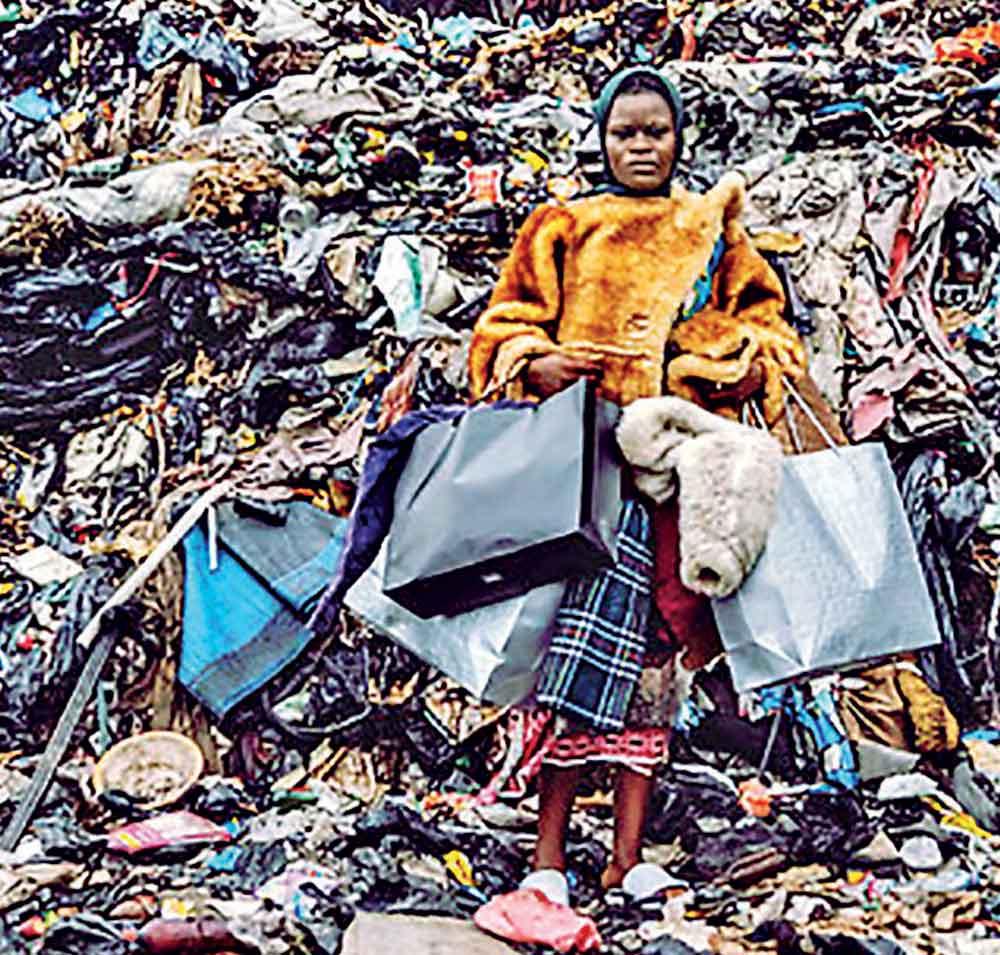
And then comes the waste. The world now produces far more clothing than it could ever realistically use. Millions of garments are discarded each year, many after being worn only a handful of times. Some end up in landfills. Others are shipped to countries in the Global South under the label of “donations,” overwhelming local waste systems and creating environmental disasters far away from the consumers who originally purchased them. Deserts in Chile are now littered with textile waste visible from satellite images. Beaches in Ghana are clogged with discarded fast fashion garments washing onto shore. The Earth is carrying the burden of our consumption patterns in very visible ways.
What makes this especially disturbing is how disconnected consumers have become from the origins of what they wear. Fashion was not always like this. Historically, clothing carried a sense of intimacy and value. Fabrics were woven locally. Garments were repaired repeatedly and passed down through generations. Craft traditions developed in relationship with geography, climate, and available natural resources. There was a deeper understanding that clothing came from the Earth and therefore demanded care and respect.
Industrial fashion severed that relationship.
Today, the system depends on emotional detachment. If consumers truly felt the impact of every purchase, the cycle would collapse. If a person could physically experience the river pollution caused by synthetic dyeing or feel the destruction of forests cleared for raw materials, it would become impossible to consume so carelessly. Instead, fashion is marketed as something weightless and consequence-free, detached from the ecosystems that sustain it.
The industry has also become remarkably skilled at softening public guilt without changing its core behaviour. Sustainability is now a marketing category in itself. Brands release “conscious collections” while continuing to produce enormous volumes of clothing. Greenwashing has become so common that consumers are often left confused about what sustainability even means anymore. Recycled packaging and carbon-neutral campaigns are presented as solutions, while the industry avoids confronting the uncomfortable reality that endless growth and true sustainability cannot coexist indefinitely.
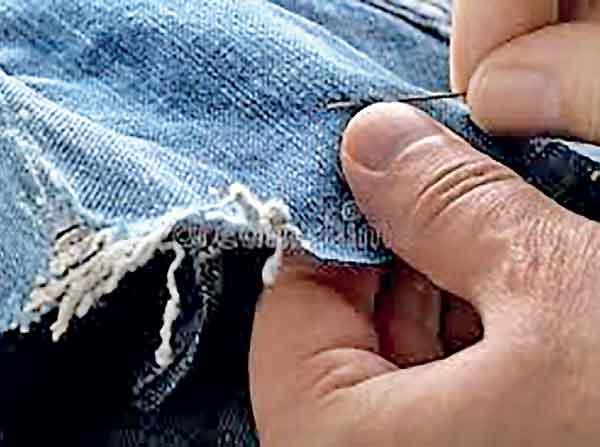
The conversation around fashion sustainability often focuses on materials, but the deeper issue is cultural. We have built an economic model that treats excess as normal. Overconsumption is rewarded. Newness is prioritized above craftsmanship. Repair is considered old-fashioned, while disposability is positioned as convenience. Fashion trends now move faster than human connection to clothing itself. People are no longer encouraged to build wardrobes; they are encouraged to continuously replace them.
Yet the environmental crisis is forcing a larger philosophical question: What is fashion actually for?
If clothing exists purely to fuel endless consumption cycles, then the industry will continue accelerating ecological collapse. But fashion can also be something entirely different. It can preserve craft traditions, support communities, celebrate identity, and reconnect people with material culture in meaningful ways. Fashion does not have to be disposable to remain creative. In fact, some of the most beautiful garments in history were treasured precisely because they were made slowly and intended to last. There are encouraging signs emerging from smaller corners of the industry. Independent designers are experimenting with deadstock fabrics, regenerative agriculture, natural dyes, and made-to-order production. Consumers are becoming more conscious about where their clothing comes from. Younger generations are increasingly questioning fast fashion culture and exploring vintage, repair, rental, and circular fashion models. These shifts may still be relatively niche, but they reflect a growing discomfort with the current system.
Ultimately, however, solving fashion’s environmental crisis requires more than ethical shopping habits. It requires a shift in values. We need to move away from seeing the Earth as an infinite resource existing purely for extraction and profit. The climate crisis and biodiversity collapse are reminders that humans are not separate from nature. We are part of it. The destruction of ecosystems eventually returns to us through polluted air, unstable weather patterns, food insecurity, water shortages, and declining public health.
The idea that humanity can endlessly exploit the planet without consequence is perhaps the greatest illusion of modern industrial culture.
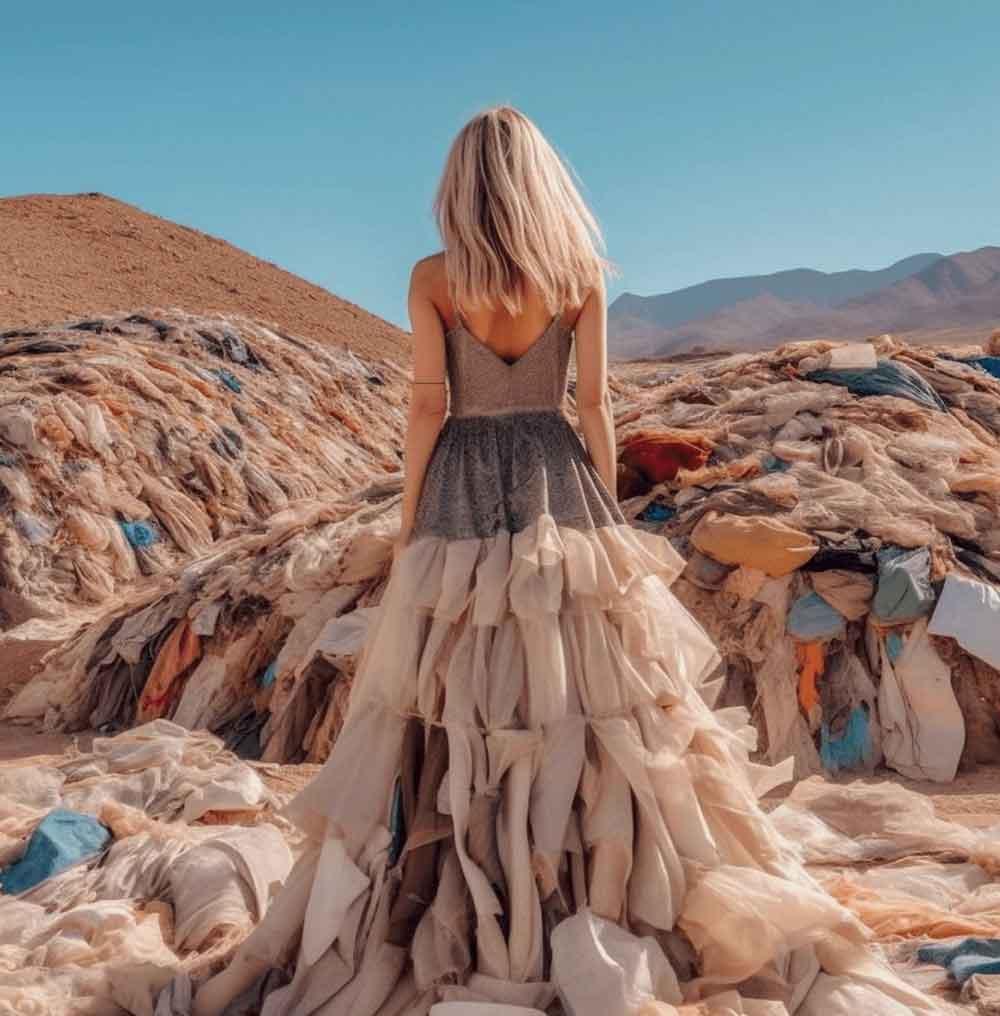
This is why the quote from Terence McKenna feels so powerful. It forces us to imagine what would happen if environmental destruction became emotionally impossible to ignore. Perhaps empathy is the missing element in conversations about sustainability. Data alone rarely changes behaviour. Statistics about carbon emissions or textile waste often feel abstract. But pain is different. Pain creates urgency.
If we could genuinely feel the suffering caused by exploitation, not just intellectually understand it, our priorities would likely change very quickly. Fashion now faces a choice. It can continue down the path of hyper-consumption, environmental degradation, and short-term profit, or it can become part of a broader cultural shift toward stewardship and responsibility. The future of fashion cannot simply be about producing “less bad” products while maintaining the same destructive scale. It has to involve rethinking our entire relationship with consumption, value, and growth.
Perhaps the future of luxury will not be abundance, but integrity. Clothing made with care. Materials sourced responsibly. Garments designed to endure emotionally and physically. Craftsmanship that respects both people and ecosystems. A slower relationship with fashion that values meaning over quantity. Because our role on this planet was never meant to be one of endless extraction. We were meant to be caretakers. And if we fail to remember that; the damage we inflict on the Earth and its biodiversity will not remain distant or separate from us. It will return, inevitably, through every system that sustains human life itself.