IN CONVERSATION WITH JANANI LIYANGE

HER STORY. HER STRENGTH. BY: DR. SULOCHANA SEGERA
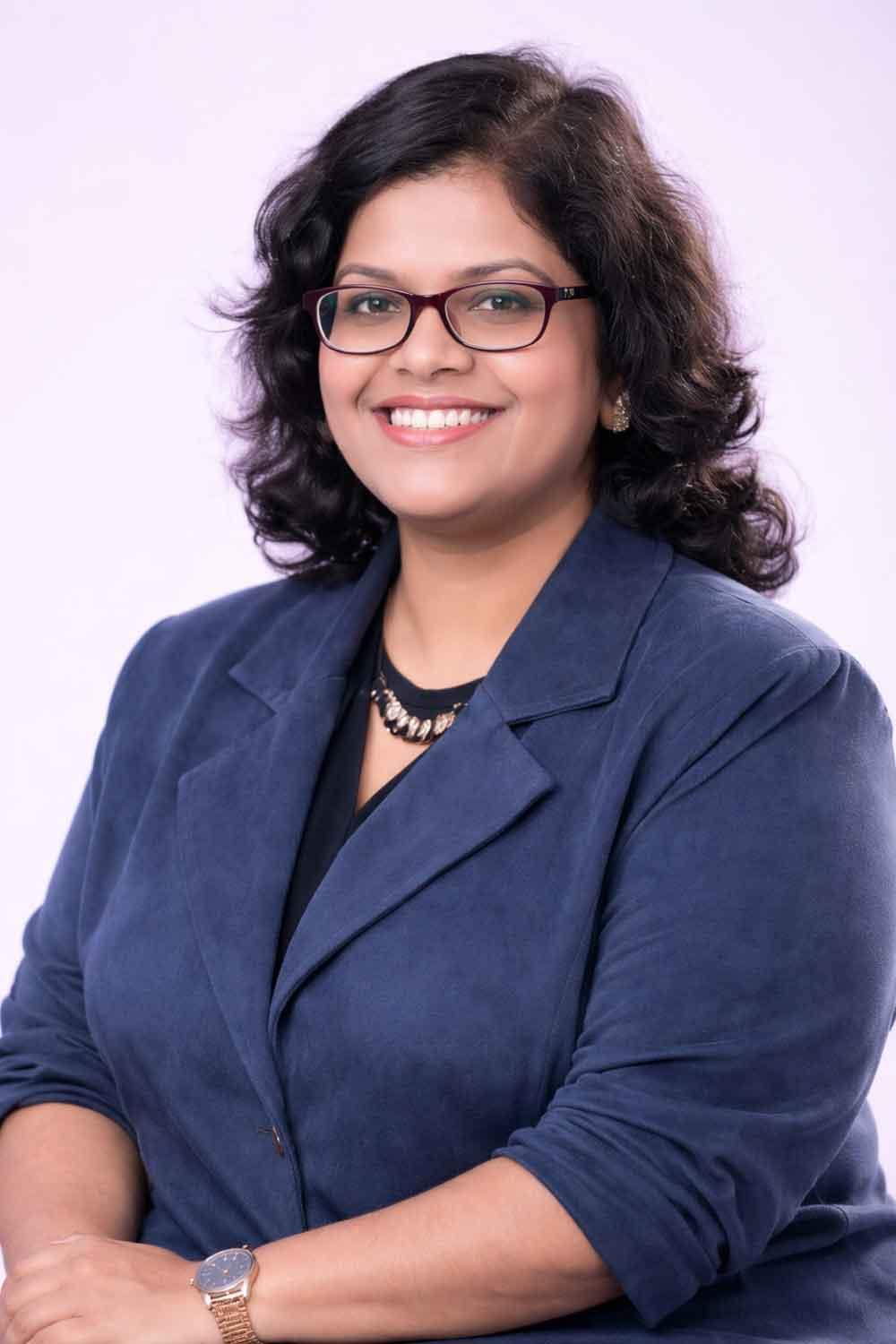
Technology leadership today is no longer confined to coding, systems, or technical delivery. It has evolved into something far more human, requiring adaptability, emotional intelligence, resilience, and the ability to guide people through constant change. Few professionals embody this transformation as clearly as Janani Liyanage. Beginning her career as a software engineer, she gradually transitioned into Agile coaching, enterprise transformation, and leadership consulting on a global scale. Her journey reflects not only the evolution of the technology industry itself, but also the growing recognition that successful organizations are built around people, culture, and purpose as much as process and innovation. In this conversation, she reflects on the lessons that shaped her career, the challenges of moving from engineering into leadership coaching, the realities women still face in corporate environments, and her vision for creating more human centric leadership development in a rapidly changing world.
Can you take us back to the beginning of your career and what inspired you to enter the world of software engineering and technology?
When I entered the software field, I was driven by curiosity. I wanted to discover who I could become in this vast world of technology. I remember feeling that I did not want to simply become another fish in the ocean. I wanted to become a ship, something that could move with purpose, direction, and impact. When I first joined university, I had only a very limited understanding of the industry I was about to enter. At that stage, I assumed my entire career would revolve around coding and technical work. But when I joined my first organization, I realized there was a much bigger world beyond writing code. I was introduced to creativity, collaboration, business challenges, innovation, and the complexity of solving real human problems. That realization changed my perspective completely. I understood that technology is not just about building software. It is about creating solutions that improve people’s lives and help organizations grow. That became my true inspiration and the reason I continued to evolve within the industry.
You transitioned from Software Engineer to Scrum Master and then to Agile Leadership Coach. What were the biggest challenges in this transformation?
At the beginning of my transition, there were very few coaching roles within the technology industry. I even remember having to write my own job description because the role was still not clearly understood. Those external challenges were difficult, but I was able to overcome them because I was deeply passionate about the work. The bigger challenge was transforming my own mindset. As engineers, we are trained to analyze systems, identify loopholes, recognize patterns, and solve problems logically. We are conditioned to believe that if we understand a problem deeply enough, we can design a process or algorithm to fix it.
But when I moved into coaching, I realized that people are not systems to be fixed. I had to stop approaching human behavior with the mindset of building solutions and instead learn how to truly listen, observe, and create space for growth. Coaching taught me that many people do not need someone to fix them. Often, they need trust, awareness, support, and someone who can help them see their own potential more clearly. That shift from problem solving to human understanding was one of the most important transformations of my career.
What fears or uncertainties did you experience when moving into coaching and consulting at a global level?
When I became an entrepreneur and stepped into global coaching and consulting, I understood that I was not simply changing jobs. I was embracing a completely different identity and way of life. Leaving behind the comfort of a stable corporate structure was not easy. I moved away from financial security, familiar systems, and professional environments that I already understood. Naturally, that brought fear and uncertainty. At the same time, global consulting required me to adapt to entirely different cultures, leadership styles, industries, and organizational realities. I had to learn how to communicate effectively with people across different levels of seniority and from very different backgrounds. That journey required humility because I constantly had to learn and unlearn. It also required courage because entrepreneurship forces you to trust yourself even when outcomes are uncertain. Looking back, I realize that growth often begins when we are willing to leave behind familiar shores.
Many people see Agile as a methodology, but you work deeply in Agile transformation. How do you define true Agile leadership?
Many organizations still treat Agile as a framework or a collection of processes, ceremonies, and tools. But true Agile leadership goes far beyond methodology. For me, Agile leadership is the ability to continue sailing toward a meaningful purpose even when storms appear. It is about adapting to uncertainty without abandoning the mission, the people, or the customers you serve. Agile leaders are not simply people who follow processes. They are people who create clarity during uncertainty. They guide teams through change with courage, adaptability, empathy, and responsibility. True Agile leadership also requires emotional maturity because transformation is never only technical. It involves people, culture, fear, resistance, and continuous learning. Agile leaders understand that change cannot be forced purely through process. It must be supported through trust, communication, and shared purpose.
How do you balance structure and flexibility when guiding large scale enterprise transformations?
Structure is extremely important. I often compare it to the human skeleton. Without a skeleton, the body cannot function properly. But the purpose of the skeleton is not to make us rigid. It exists to support movement and adaptability. Organizations function in a very similar way. Teams are like the organs of the body. Structure should provide stability, clarity, and alignment while still allowing healthy movement and decision making. One of the biggest mistakes organizations make during transformation is focusing only on changing processes. Real transformation requires deeper changes in strategy, culture, leadership behavior, and organizational structure. Flexibility is equally important because markets, customer expectations, and technologies are constantly evolving. Senior leadership teams also need continuous conditioning and development. Without that, even strong organizational structures can become stagnant and resistant to change.
How do you help leaders reconnect with emotional intelligence in high pressure corporate environments?
I often compare high pressure corporate environments to busy airports where everything feels urgent and constantly in motion. Yet even airports are designed with spaces for grounding, preparation, and transition before takeoff. Similarly, leaders need small moments of awareness and reflection within their daily lives. Emotional intelligence is not about remaining calm only in peaceful situations. It is about becoming aware of emotions, regulating reactions, and making conscious decisions even under pressure. In practice, this influences how leaders respond during meetings, how they communicate during conflict, how they make decisions, and how they create psychological safety for their teams. I encourage leaders to develop awareness of themselves first because leadership always begins internally. Once leaders become more aware of their emotions, patterns, and reactions, they become far more effective at guiding others through challenging environments.
As a co-founder building human centric coaching and leadership products, what gap are you trying to solve in the market?
Leadership is evolving rapidly, but technology and business are evolving even faster. Traditional leadership development models are often too slow and disconnected from the realities leaders face every day. Many existing leadership programs still depend heavily on long assessments, delayed feedback, and extensive reflection exercises. While these approaches have value, they are not always practical for leaders operating in fast moving environments. At BAT, we are trying to make leadership development more human centric, measurable, and integrated into real work experiences. Leaders need support while they are making decisions, leading meetings, navigating conflict, and driving organizational change in real time. We also believe that feedback becomes significantly more effective when it is timely, safe, relatable, and ethical. Reflection remains important, but technology can help make reflection easier and more accessible within everyday leadership experiences.
Another important area for us is alignment. Leadership development should not exist separately from business goals. We want stronger connections between HR teams, senior leadership, coaches, and measurable organizational outcomes. Leadership growth should create visible value not only for individuals, but also for teams and businesses.
In your experience working with organizations, have you observed differences in how leadership development opportunities are positioned for men and women?
Yes, I have observed differences in many organizations. Throughout my own experience, I have coached significantly more male leaders in senior leadership development programs than female leaders. This does not mean women are less capable or less prepared for leadership. In fact, I have worked with many exceptional women leaders across industries. However, visibility, sponsorship, and strategic positioning still differ in certain corporate environments. Organizations need to become more intentional about creating pathways for women to access leadership opportunities, sponsorship, and executive visibility. Inclusion alone is not enough. Women also need active development and positioning within strategic leadership spaces.
Do you think there are perceptions in corporates that men are more often chosen to coach senior leaders while women are more involved in middle management coaching?
I would not say this applies everywhere, but I have seen it happen in some organizations. In many cases, coach selection is influenced by familiarity, networks, and existing relationships rather than a careful evaluation of expertise, credibility, and suitability. As a result, certain coaches may repeatedly receive opportunities to work with senior executives, while others are positioned primarily within middle management development. I believe this often comes from unconscious bias or lack of awareness rather than intentional exclusion. However, awareness matters because these patterns shape opportunities and visibility over time. Organizations should become more objective and intentional when selecting coaches for leadership development. Decisions should be based on capability, experience, and alignment rather than assumptions or familiarity.
What advice would you give young women entering technology and leadership roles today?
I would encourage young women to find a purpose that is bigger than themselves and bigger than their careers. Find something that you genuinely love and can commit yourself to every day, whether that is your personal growth, your contribution, or the impact you create for others. The technology industry is like a massive adventure park filled with endless possibilities. You do not need to experience every opportunity or compare yourself with everyone around you. What matters is finding your own path, the place where your strengths, curiosity, values, and contribution truly come alive.
I also believe it is important to enter the industry with hope and courage rather than fear. Technology is changing rapidly, but that should inspire people rather than intimidate them. Young women should recognize that they have the ability to shape industries, businesses, communities, and society through technology and leadership. When purpose and contribution become the focus, confidence naturally follows.