Legacy Builders featuring Mithila Wegapitiya
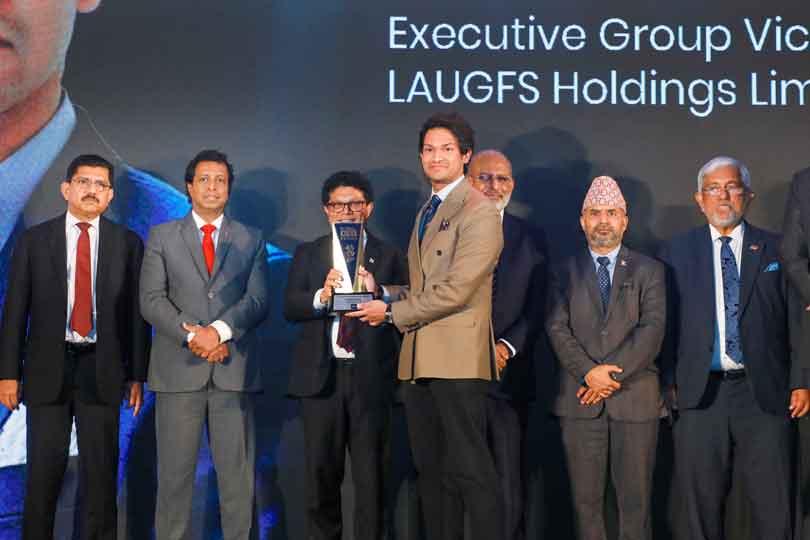
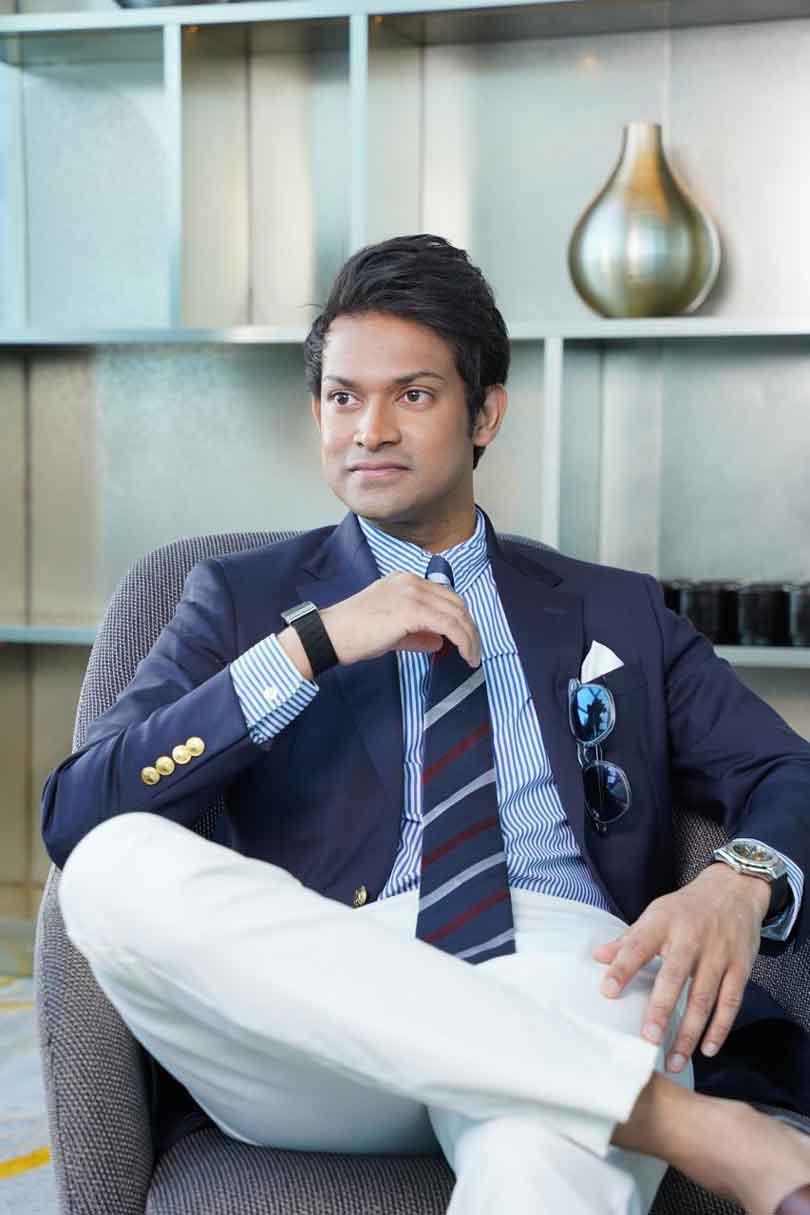
In an era defined by rapid digital transformation, the true architects of the future are those who do more than adapt to change, they create it. Today on Legacy Builders, we are honoured to feature one of Sri Lanka’s leading technology entrepreneurs and innovation advocates, Mithila Wegapitiya. With a career spanning global organizations including Warner Bros. Interactive Entertainment, Ve Interactive, Deutsche Bank, and Virtusa Corporation, Mithila has built a reputation as a visionary leader at the intersection of technology, business, and innovation. In 2016, he co-founded POTENZA, which has grown into a multi-million-dollar enterprise operating across eleven countries. Today, as Group Executive Vice Chairman of Laugfs Holdings, he continues to drive innovation, sustainability, and enterprise growth. Recognized in Echelon Magazine’s Next Generation 100 Leaders, Mithila was also named among the winners of the prestigious Global CEO Forum 45 Under 45 Awards, and we explore the experiences, challenges, and ambitions that have shaped his remarkable journey as a modern legacy builder.
1. Before the boardrooms, global ventures, and leadership roles, who was Mithila Wegapitiya as a child? Tell us a little about your upbringing, school life, and educational journey.
I grew up as a very curious and rebellious child. Whenever someone told me, “You can’t do it,” it only motivated me to prove them wrong. That mindset has stayed with me throughout my life. As a child, I was quite introverted. During school intervals, I would often stay in the classroom rather than socialize. While I may have appeared quiet, my mind was always filled with ideas and creativity. Academically, I wasn’t particularly outstanding during my early school years. My Ordinary Level results were average, but I performed much better during my Advanced Levels. I attended Ananda College before moving to the United Kingdom for university. Looking back, I think those experiences taught me resilience and independent thinking. I was never someone who followed the conventional path, and that willingness to challenge expectations became a defining part of who I am.
2. Your journey spans finance, marketing, technology, cybersecurity, and entrepreneurship. Looking back, what first sparked your fascination with innovation and technology?
I’ve always been fascinated by improving things. As a consumer, whether it was products, services, or content, I often found myself asking, “Why can’t this be better?” Innovation, to me, isn’t necessarily about inventing something entirely new. It’s about taking something that already exists and finding a better way to do it. Throughout my life, I’ve constantly asked myself, “What if?” What if we approached this differently? What if we challenged the status quo? I believe innovation is embedded in everything I do. Whenever I encounter a problem or an idea, I automatically start thinking about how it can be improved, made more efficient, or transformed into something more impactful. There’s also a rebellious element to it. I enjoy challenging assumptions and questioning limitations. That’s what keeps my passion for innovation alive.
3. You have worked with global giants such as Warner Bros. Interactive Entertainment and Deutsche Bank. How did those international experiences shape your leadership style and business philosophy?
My international experiences taught me discipline, accountability, and excellence. I remember being late to work by just three minutes on my second day at Warner Bros. because my train was delayed. My manager’s response was simple but powerful: “Don’t say sorry. Fix it. Make sure it never happens again.” That lesson stayed with me. It taught me that responsibility isn’t about excuses and it’s about solutions. Working with global brands and world-class professionals also showed me that mediocrity isn’t an option. When you’re collaborating with some of the best people in the world, you quickly realize that every detail matters. It pushes you to improve continuously and expand your capabilities. The exposure stretched my limits and helped me develop the confidence to tackle complex challenges. Once you’ve operated at that level, you realize that almost any challenge can be overcome with enough discipline and determination.
4. In 2016, you co-founded POTENZA. What gap did you see in the market that inspired you to build the company?
At the time, I noticed that many technology providers were focused solely on selling software rather than solving business problems. Organizations would purchase systems without fully understanding whether those systems addressed their actual challenges. There was often a disconnect between business strategy and technology implementation. POTENZA was founded to bridge that gap. We wanted to combine business consulting with technology consulting. Instead of starting with technology, we start with the problem. We sit down with clients, identify their biggest business challenges, and then determine how technology can help solve them. Our goal has always been to improve efficiency, increase visibility, and create measurable business value rather than simply sell software.
5. POTENZA has expanded across eleven countries and serves major global brands. What were some of the toughest challenges in scaling a Sri Lankan-founded company onto the global stage?
The biggest challenge was credibility. When you’re a young Sri Lankan company trying to enter international markets, many potential clients ask, “Who are you?” They want references, case studies, and proof of capability before entrusting you with large-scale projects. In our early days, we had very few reference customers. We spent countless months pitching our services and facing rejection. I remember one particular client in Myanmar, one of the country’s largest retail chains. We pursued that opportunity for eleven months before securing our first purchase order. Scaling globally requires patience, persistence, and the ability to keep moving forward despite repeated rejection. Building trust takes time, especially when you’re competing against much larger international firms.

6. Many young entrepreneurs today are eager to build startups quickly. What do you think people misunderstand most about entrepreneurship and long-term success?
Entrepreneurship has become romanticized. People see the titles such as Founder, CEO, Chairman and assume entrepreneurship is glamorous. They see the social media posts, the offices, and the success stories. What they don’t see are the sacrifices, the stress, the sleepless nights, and the emotional toll. Entrepreneurship demands an enormous amount of commitment. It affects your family, your friendships, your health, and your lifestyle. The odds of success are relatively low, yet people often overlook that reality. The truth is that entrepreneurship is equal parts reward and sacrifice. Success comes with a price, and many people underestimate what that price actually is.
7. You’ve built and led teams across different countries and industries. How would you describe your personal work ethic, and what principles guide the way you lead, motivate, and manage people?
My leadership style is relatively informal and approachable. I enjoy creating an environment where people feel comfortable expressing ideas openly. I believe leadership begins with being egoless. When leaders remove their ego, they become better listeners, more receptive to feedback, and more effective at empowering others. I delegate extensively because I trust my teams, but I also maintain very high standards. I know exactly what I want, particularly when it comes to strategy, creativity, branding, and product development. Ultimately, I try to create a culture where people feel empowered to contribute while maintaining a strong focus on excellence and execution.
8. In fast-moving industries, failure and uncertainty are inevitable. Can you share a moment in your career that tested your resilience and what it taught you?
One of the most challenging moments in my career occurred when one of our energy companies became subject to sanctions imposed by the United States government. The situation had the potential to affect not only that company but the broader group, including thousands of employees and their families. The pressure was immense. What the experience taught me was the importance of staying calm under pressure and breaking complex problems into smaller, manageable parts. We approached the situation strategically, worked transparently with the relevant authorities, and focused on finding solutions rather than assigning blame. Most importantly, it taught me the value of humility. Sometimes winning isn’t about proving you’re right, it’s about understanding what the other side needs and finding common ground.
9. When you hear the word “legacy,” what does it personally mean to you?
For me, legacy is about creating something that endures. If I were gone tomorrow, I would want the things I built to continue creating value for others. A true legacy stands the test of time. It positively impacts families, employees, communities, and future generations. Legacy isn’t just about personal success. It’s about building something meaningful that continues to make a difference long after you’re gone.
10. Finally, for young Sri Lankans who dream of becoming innovators, entrepreneurs, and changemakers, what message would you like to leave them with?
My advice is simple: dive in first and learn along the way. Many people spend years waiting for the perfect moment, the perfect plan, or the perfect conditions. In reality, those things rarely exist. If you’re passionate about something, take the leap. Once you’re in the deep end, you’ll find ways to adapt, learn, and move forward. You’ll discover strengths and solutions that you never knew you had. Entrepreneurship isn’t easy. In fact, it’s often incredibly difficult. But growth happens when you’re willing to step outside your comfort zone and embrace uncertainty. If you truly believe in your vision, don’t wait. Start. The journey itself will teach you what you need to know.