In Conversation with Dharshan Munidasa Founder, Nihonbashi and Ministry of Crab
Legacy Builders By Nisindi Jayaratne
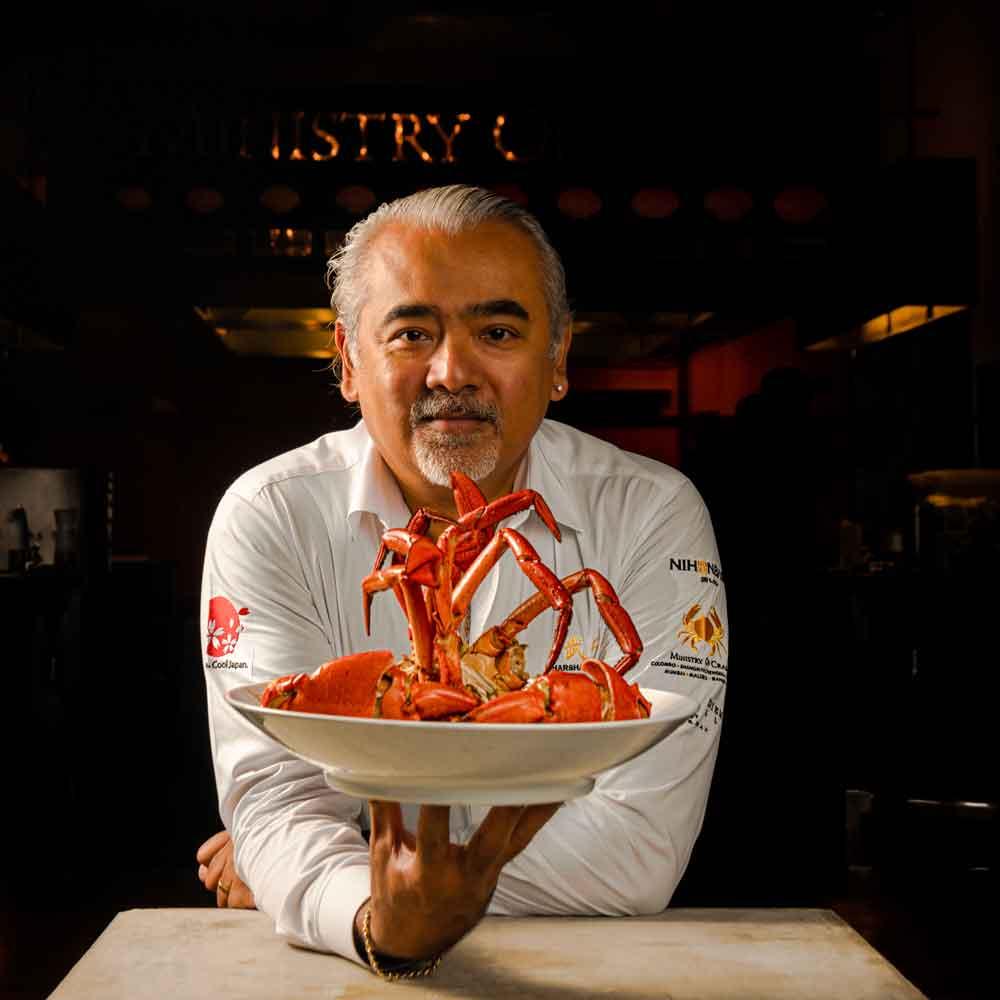
In the world of gastronomy, few individuals have transformed a nation’s culinary identity quite like Dharshan Munidasa. A visionary chef, entrepreneur, and cultural ambassador, Dharshan has spent decades redefining how Sri Lankan cuisine is perceived both locally and internationally. Born to a Japanese mother and a Sri Lankan father, he has masterfully blended two rich culinary traditions to create a unique gastronomic legacy that has captivated food enthusiasts around the world. As the founder of Nihonbashi and Ministry of Crab, Dharshan became the driving force behind the only Sri Lankan restaurants to be featured on Asia’s 50 Best Restaurants list, elevating Sri Lanka’s culinary reputation onto the global stage. A self-taught chef with a background in Computer Engineering and International Relations, his journey is a testament to the power of passion, innovation, and relentless pursuit of excellence.
Beyond building internationally acclaimed restaurants, Dharshan has served as a bridge between cultures, earning prestigious recognition. In 2021 Dharshan was appointed as a ‘Japanese Cuisine Goodwill Ambassador’ by the Ministry of Agriculture, Forestry and Fisheries in Japan, for his continuous effort toward the dissemination of Japanese food and dietary culture overseas. In 2023 he received the honour of being conferred ‘The Order of the Rising Sun, Gold and Silver Rays by the Government of Japan for his contribution to promoting Japanese food culture and strengthening ties between Sri Lanka and Japan. Today on Legacy Builders, we are honoured to feature a man who has transformed local ingredients into global icons, challenged conventional thinking, and built a legacy that extends far beyond the kitchen. Please join us as we welcome one of Sri Lanka’s most influential culinary pioneers, Dharshan Munidasa.
1. Growing up between Japanese and Sri Lankan cultures, how did your childhood shape the way you think about food, identity, and creativity today?
I was born in Japan, but my family moved frequently between Japan and Sri Lanka. Unlike many children of mixed heritage who spend most of their formative years in one country, my brother and I grew up deeply rooted in both cultures. We experienced Japanese traditions, values, and respect for nature while also enjoying the freedom and abundance of Sri Lankan life. Some of my fondest childhood memories involve fishing, climbing trees, identifying ripe fruits, and exploring nature. In Japan, we learned resourcefulness and appreciation for craftsmanship, while Sri Lanka gave us the freedom to experience nature firsthand. Looking back, those experiences shaped the way I think about food, creativity, and problem-solving. Food was never just something to eat, it was connected to culture, nature, observation, and discovery.
2. You studied Computer Engineering and International Relations rather than culinary arts. At what point did you realize that cooking would become your life’s calling?
Ironically, it happened while I was studying in the United States. The food available to me wasn’t what I was used to, so I started cooking for myself out of necessity. At first, it was simply about surviving and making sure I had decent meals throughout the week.
As time went on, I began experimenting. I recreated dishes I missed, improvised recipes, and started understanding ingredients more deeply. Every Friday, my apartment would become a gathering place where I cooked for around thirty friends. The more people enjoyed my food, the more confidence I gained. Looking back, that was the beginning of my journey into the culinary world.
3. You’ve often described yourself as a self-taught chef. How did teaching yourself influence your approach to innovation and continuous learning?
The biggest motivation wasn’t becoming a chef or making money. It was curiosity. I loved good food and wanted to understand how it was made. When my father took us to exceptional restaurants in Japan, my immediate question afterward was always, “How can I recreate this myself?” I learned by observing, experimenting, and constantly asking questions. I paid attention to ingredients, techniques, knives, and preparation methods. Even today, experimentation remains at the heart of everything I do. Being self-taught taught me that learning never stops and that innovation comes from curiosity rather than formal qualifications.
4. Many people know the success story, but what were some of the biggest challenges you faced when launching Nihonbashi in 1995?
Starting Nihonbashi was challenging because many of the ingredients and products I needed simply didn’t exist in Sri Lanka at the time. I had to work directly with suppliers and producers to create supply chains that weren’t available. There were also broader challenges. The country was facing curfews, strikes, road closures, and economic uncertainty. Yet every challenge forced us to find solutions. Looking back, those obstacles made us stronger. Success often comes from solving problems that others believe are impossible to overcome.
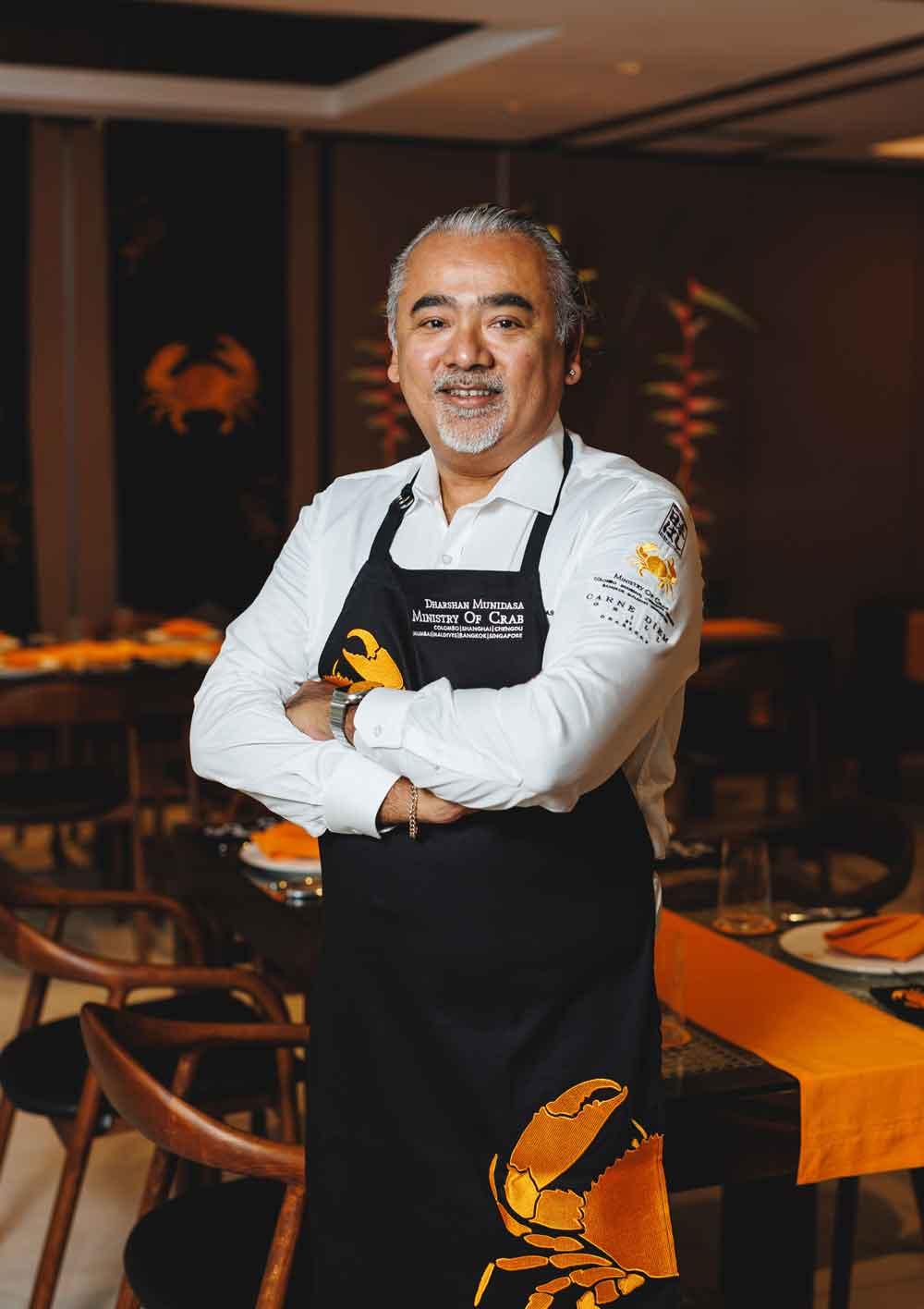
5. Ministry of Crab has become one of Sri Lanka’s most globally recognized restaurant brands. What inspired the idea, and did you envision it becoming an international phenomenon?
The initial idea began during my television programme “Culinary Journeys with Dharshan” where I showcased Japanese culture and cuisine. During one episode that was filmed in Singapore, I spoke about how Sri Lankan crabs were being celebrated abroad while we weren’t fully appreciating them at home. The idea evolved from there. When we opened Ministry of Crab, many people thought the concept was risky and unlikely to succeed. We never expected it to become the international brand it is today. We simply believed in the quality of Sri Lankan crab and committed ourselves to doing it properly. What happened afterward was a natural evolution driven by consistency and quality.
6. How do you balance preserving authenticity while adapting to the expectations of international audiences?
Authenticity at Ministry of Crab is unique because it doesn’t belong to one specific culinary tradition. The restaurant is built around Sri Lankan crab, but the influences come from many cultures, including Japanese techniques and flavours.
When we expand internationally, we don’t alter our core identity. Our signature dishes remain the same. Sometimes we create additional dishes inspired by local preferences, but the foundation never changes. I believe authenticity should never be compromised simply to meet expectations. Instead, you introduce people to your vision while remaining open to innovation.
7. As an entrepreneur, how do you evaluate risk when entering new markets and launching new concepts?
To be honest, some risks cannot be fully calculated. When you’re creating something entirely new, there are no guarantees and often no precedents. Throughout my career, I have taken risks because I believed in the idea rather than a spreadsheet that guaranteed success. Entrepreneurship requires conviction. Sometimes you have to move forward without knowing exactly what the outcome will be. The key is to remain adaptable and continue finding solutions as challenges emerge.
8. Was there a particular failure or setback that ultimately became one of your greatest learning experiences?
The loss/passing of my father changed the course of my life completely. I was not originally planning to return permanently to Sri Lanka, but circumstances required me to come back. That experience taught me the value of time. Time is the one resource we can never recover. It also taught me responsibility and resilience. Looking back, what felt like a setback at the time became one of the defining moments that shaped my future.
9. You’ve become a cultural ambassador for Sri Lanka through food. Do you see food as a tool for diplomacy and international connection?
Absolutely. Every state visit and diplomatic event uses food as a way to tell a country’s story. Food creates connections that transcend language, politics, and geography. For Sri Lanka, food diplomacy extends beyond recipes. It includes our ingredients, traditions, hospitality, and culture. When international visitors experience our cuisine, they are also experiencing Sri Lanka itself. Food is one of the most powerful ways to build understanding and relationships between people and nations.
10. What legacy do you hope to leave behind, not just as a chef, but as a builder, innovator, and entrepreneur?
Legacy is not about personal recognition. To me, it is about leaving behind a stronger Sri Lanka and helping create a generation of people who are resilient, innovative, and proud of what this country has to offer. I want to encourage people to become problem-solvers and solution-finders. Sri Lanka has extraordinary resources, talent, and opportunities. If future generations can recognize that potential and move faster, think bigger, and believe in themselves, that would be the legacy I would be most proud of leaving behind.