
Can a Dopamine Detox Quiet an Overthinking Mind?

Nichol Fernando
It usually begins with something small. A message that sounds slightly different. A pause that lasts a second too long. A decision that should take five minutes but somehow follows you for the rest of the day. You reread the conversation. You reconsider your response. You imagine what the other person meant, what you should have said and what might happen next. By midnight, one ordinary moment has become ten different stories, and your mind has chosen the worst one to believe.
This is what overthinking often looks like for young people today. It is not always dramatic enough for anyone else to notice. Sometimes, it is simply lying awake while replaying a conversation from three days ago. It is typing a message, deleting it and typing it again. It is watching opportunities pass because making the wrong choice feels more frightening than making no choice at all.
Overthinking can feel like problem-solving, but the two are not the same. Problem-solving moves towards an answer. Overthinking moves in circles. It asks the same questions without allowing any answer to feel certain. Eventually, that constant mental movement becomes exhausting. You begin to doubt decisions you once made confidently. Your mood depends on how quickly someone replies. The smallest change in another person’s tone feels like evidence that something is wrong. Even rest becomes difficult because silence gives every unfinished thought room to become louder.
However, this does not mean that you are weak, attention-seeking or incapable of controlling your own mind. Often, overthinking is the mind’s attempt to protect you. If you can predict every possible outcome, perhaps nothing will surprise you. If you analyse every detail, perhaps you can prevent rejection, embarrassment or failure. The mind believes it is keeping you safe. Instead, it keeps you trapped. When an uncomfortable thought appears, most of us know exactly where to go. We reach for our phones.
Within seconds, the silence is gone. There are messages to answer, videos to watch, posts to scroll through and other people’s lives to temporarily live instead of our own. For a moment, the thought that frightened us becomes quieter. But it has not disappeared. It is only waiting beneath the noise.
Dopamine is often called the brain’s “pleasure chemical,” although its role is far more complex. It is involved in motivation, learning and the anticipation of rewards. The problem is not that social media, entertainment or food “give us too much dopamine” in a simple, measurable way. Nor can dopamine be removed from the body through a detox.
The difficulty lies in what our habits teach us to expect. Many digital platforms offer rapid and unpredictable rewards. The next video might be funnier. The next notification might be from the person you are waiting for. The next post might finally make you feel informed, included or reassured. Because the reward is uncertain, you keep checking.
Whenever stress appears, the brain begins to learn a pattern:
- Feel uncomfortable.
- Find stimulation.
- Feel better briefly.
- Repeat.
Over time, distraction can become the automatic response to discomfort. Rather than staying with a problem long enough to understand it, we escape it. Then, when the screen is finally turned off, the original thought returns, often accompanied by several new ones. Now you are not only worried about the message, the assignment or the future. You are also frustrated that you wasted an hour avoiding it.
The cycle begins again. The phrase “dopamine detox” sounds scientific, but it should not be taken literally. You cannot and should not detox from dopamine. It is a necessary neurotransmitter that helps the brain function. A more honest name would be an attention reset.
The purpose is not to make life completely unstimulating or to punish yourself for enjoying your phone. It is to create intentional space between feeling discomfort and immediately escaping it.
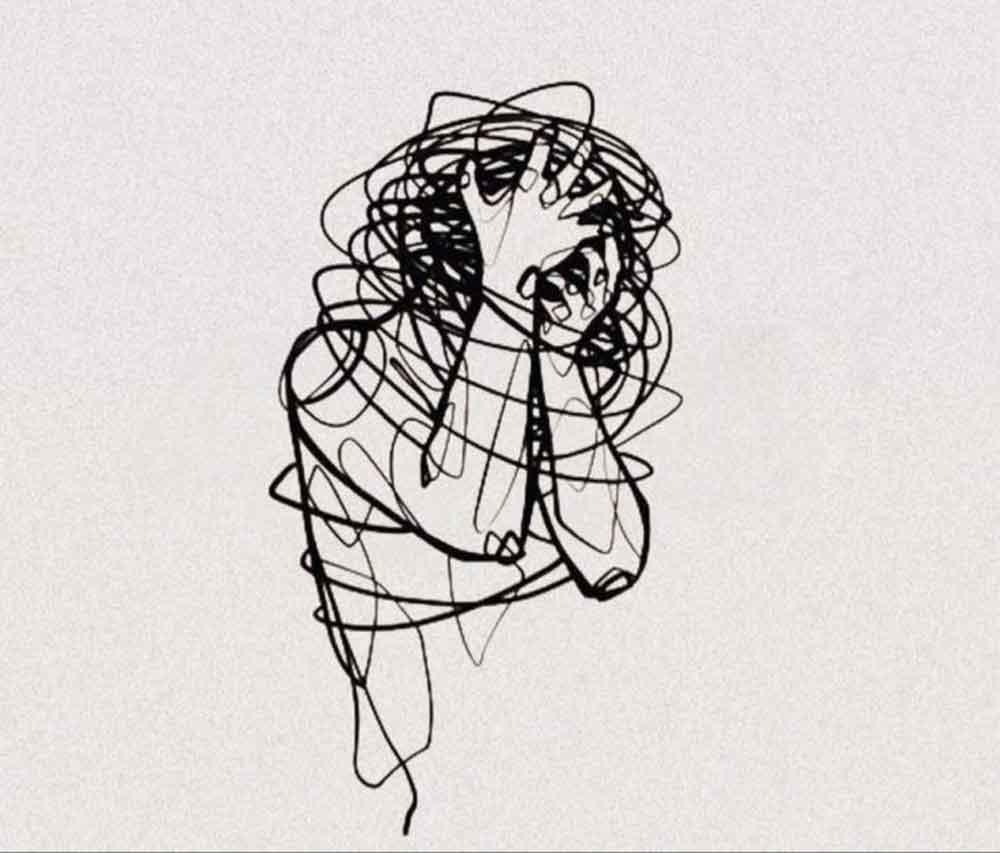
For someone who overthinks, that space can change everything. Imagine receiving a short reply that makes you anxious. Normally, you might reread it repeatedly, check whether the person is online, search social media for clues and ask a friend what the message “really means.” Every new action gives the worry more attention, making it feel increasingly important. During an attention reset, you pause before feeding the thought. You put the phone down. You notice what your mind is doing. You ask, “What do I actually know and what am I inventing?” Perhaps all you know is that the person replied with “okay.” Everything else; the anger, rejection and emotional distance, has been added by fear.
The pause does not guarantee that every situation will end well. It simply stops anxiety from writing the ending before reality has had a chance to continue. A useful reset does not need to involve disappearing into the mountains, deleting every app or spending an entire weekend staring at a wall. Extreme rules often fail because they turn self-care into another challenge, we can feel guilty about losing.
Begin with five minutes. When you notice yourself spiralling, resist the urge to immediately scroll, snack or search for reassurance. Sit somewhere quiet and name the real thought beneath the noise.
- “I am afraid they are losing interest.”
- “I am worried I will make the wrong decision.”
- “I think one mistake will change how everyone sees me.”
Once the thought has been named, separate what you can control from what you cannot. You cannot control another person’s interpretation, guarantee a perfect outcome or revisit the past. You can ask a clear question, make the best decision with the information available or choose not to respond while emotional. Then do one physical, uncomplicated thing. Walk around the room. Drink water. Shower. Stretch. Tidy one surface. Step outside without carrying your phone.
The point is not to distract yourself again. It is to show your brain that discomfort can exist without becoming an emergency.
With repetition, the distance between a thought and a reaction begins to grow. You stop treating every emotion as an instruction. You learn that anxiety can speak without being obeyed.
A dopamine detox is not a permanent cure for overthinking. It cannot resolve every insecurity, erase trauma or replace professional support when anxiety begins to interfere seriously with sleep, relationships, education or daily life.
It also does not mean that meditation, journaling and exercise are useless. These practices can help, but only when they are used to understand thoughts rather than endlessly examine them. Journaling should bring a thought to a conclusion, not give it twenty more pages. Meditation is not about having no thoughts; it is about noticing them without following every single one. Exercise can regulate stress, but it should not become another way of running from difficult feelings.
The goal is not to empty the mind. It is to stop giving every thought a permanent home. Overthinking survives on unlimited attention. It grows each time we revisit an uncertainty as though the next round of analysis will finally produce absolute reassurance but life rarely offers that kind of certainty. At some point, peace requires us to stop investigating what cannot yet be known.
A dopamine detox, understood as a deliberate break from constant stimulation, gives us a chance to practise that acceptance. It returns our attention to us. It reminds us that we do not need to answer every notification immediately, interpret every silence or solve our entire future before going to sleep. Sometimes, the mind does not need another explanation. It needs an ending. Perhaps freedom from overthinking does not arrive when every question has finally been answered. Perhaps it arrives when you realise that some questions can remain unanswered without ruining your life.
The message can wait. The decision can be imperfect. The future can remain unknown. And for once, your mind can be quiet; not because there is nothing left to think about, but because you have finally chosen not to follow every thought that asks to be chased.