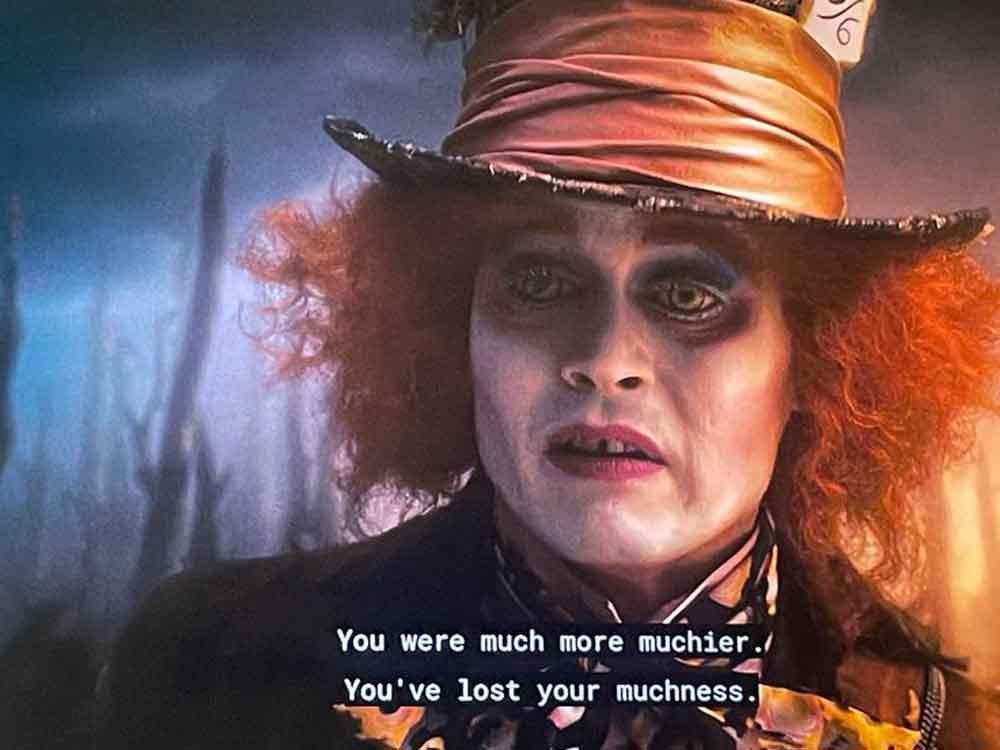
You Used To Be Much Muchier

By Amaya Perera
There is a kind of disappearance that happens without anyone noticing. You do not leave the room, change your name, or become visibly unrecognizable. You simply begin editing yourself. A little less laughter here, a little less ambition there, a little less honesty when honesty might inconvenience someone. You learn which versions of yourself are welcomed and which ones require explanation, and eventually the editing becomes so instinctive that you no longer remember there was ever an original draft. We are taught this disappearance as maturity. We call it knowing our place, being reasonable, being professional, being easy to love. We become fluent in anticipating what other people might need from us before we have even asked what we need from ourselves. We learn to read silences, interpret expressions, calculate distances, measure the warmth of a room before deciding how much of ourselves it is safe to reveal. Somewhere along the way, being liked begins to feel more important than being known. Being useful begins to feel more important than being alive. We start mistaking self-abandonment for generosity, exhaustion for devotion, and constant accommodation for kindness. There is always another version of ourselves waiting to be perfected: more composed, more productive, more attractive, more successful, less complicated, less emotional, less demanding. The world is extraordinarily efficient at making us feel unfinished. There is always something else to fix, another standard to reach, another room in which we have not yet been sufficiently impressive. And perhaps the cruelest part is that we begin doing the work ourselves. Nobody has to tell us to shrink anymore. We know exactly which pieces to put away before entering the room. But there comes a moment, usually quiet and almost anticlimactic, when the performance becomes too tiring to continue. You look at the life you have constructed and realize that although it may be admired from the outside, you are not entirely certain you recognize the person living inside it. That moment is not failure. It is an awakening. It is the first small rebellion against the idea that your worth must constantly be negotiated. You begin to understand that you were never supposed to spend your entire life auditioning for acceptance. Some doors will remain closed. Some people will misunderstand you. Some rooms will not make space for you. Let them. There is dignity in no longer turning every rejection into an investigation of your own inadequacy. There is freedom in understanding that not every absence requires an explanation and not every departure requires pursuit. Perhaps growing into yourself is less about becoming extraordinary and more about becoming unwilling to disappear simply because someone else finds your existence inconvenient.
Summer has always seemed to understand this better than we do. It has no interest in moderation. It arrives excessive and unapologetic, laying its brightness over everything until even ordinary streets appear transformed. Fruit ripens too quickly. Flowers open with almost reckless abundance. The evenings linger. Heat gathers against the windows. The air becomes thick with the scent of rain waiting somewhere beyond the horizon. And then, without warning, the sky darkens. A storm arrives with all the drama we spend our lives trying to suppress. Thunder rolls across the city. Rain strikes the roofs and pavements with a force that makes everything else temporarily irrelevant. The storm does not ask whether it is being too loud. It does not pause to consider whether its intensity might make someone uncomfortable. It simply arrives, breaks open, and leaves the world altered. Perhaps this is why summer feels less like a season and more like permission. Permission to be vivid. Permission to be unfinished. Permission to want things simply because you want them. We have become so accustomed to presenting carefully curated versions of ourselves that genuine desire can begin to feel embarrassing. We want the right clothes, but also the right reason for wanting them. We want success, but preferably a version of success that can be explained without appearing ambitious. We want love, but not so much that we seem needy. We want solitude, but not enough to appear difficult. Even our identities have become projects of presentation. We arrange our interests, our homes, our photographs and our aspirations into something coherent enough to be consumed. Yet a life is not necessarily more authentic because it is aesthetically consistent. Sometimes authenticity is messy. Sometimes you change your mind halfway through the sentence. Sometimes you love something you cannot justify. Sometimes the song you play alone in your room does not fit the person everyone thinks you are. Sometimes the clothes that make you feel most like yourself are precisely the ones that make someone else wonder what happened to your taste. Let them wonder. There is a profound difference between dressing to be perceived and dressing to inhabit your own body. There is a difference between building a life that photographs beautifully and building one that feels beautiful when nobody is watching. The older I become, the less interested I am in the performance of having everything figured out. I want the odd books, the unfinished notebooks, the impulsive flowers, the photographs that were never meant for publication, the afternoons that produce nothing except the memory of having been happy. I want a life that contains evidence of living rather than evidence of careful management. Summer reminds us that beauty does not always arrive politely. Sometimes it is overgrown, overheated, thunderous and inconvenient. Sometimes it asks us to stop apologizing for the sheer fact of our existence.
There is also a peculiar freedom in realizing that not everything is yours to repair. For years, we can become investigators in our own relationships, studying every conversation as though it contains a hidden answer. Why did they become distant? Did I say something wrong? Should I have replied differently? Was I too much? Was I not enough? We treat affection like a puzzle and ourselves like the missing piece. We imagine that if we can become perceptive enough, patient enough, indispensable enough, we can prevent people from leaving. But people are not equations, and love cannot be secured through surveillance. Someone can misunderstand you despite your best efforts to explain. Someone can leave despite everything you gave. Someone can decide that your particular way of being does not fit the life they want, and that decision can hurt without being a verdict on your value. This is where detachment becomes something more meaningful than indifference. Detachment is not the refusal to care. It is the refusal to abandon yourself in order to make someone else stay. It is allowing another person to have their feelings without making those feelings your responsibility. It is understanding that you can offer love without offering your entire nervous system as collateral. You can wish someone well without following them into every distance they create. You can mourn what something was without turning grief into a lifelong argument with reality. There is a strange maturity in letting people reveal themselves without constantly trying to persuade them into becoming someone else. And there is an even greater maturity in allowing yourself to be revealed, too. To say, this is what I want. This is what I believe. This is what I can give. This is what I cannot. This is the life I am trying to build. If that does not suit you, I will not destroy the architecture of my life to make you comfortable inside it. Perhaps this is what it means to stop chasing every table at which you are not invited to sit. There will always be rooms where someone else appears to be receiving the recognition you wanted. There will always be people who seem to move through life effortlessly while you are still figuring out where you belong. But comparison is another form of disappearance. It pulls your attention away from your own life and places it permanently inside someone else's. Your task is not to become universally chosen. Your task is to become so familiar with your own values that you no longer require constant external confirmation that they are worth having. A person who knows what matters to them does not need every door to open. They need only enough courage to walk toward the doors that are theirs.
Perhaps the muchness we lose is not some exaggerated personality we had as children, but our original capacity for wonder. Before we learned to be strategic, we were curious. Before we learned to be impressive, we were fascinated. Before we learned to protect ourselves from embarrassment, we were willing to try things badly. We could spend hours making something nobody would ever see. We could become completely absorbed in a story. We could love a colour without knowing whether it suited us. We could ask questions without worrying about whether the questions made us look intelligent. Somewhere in adolescence and adulthood, wonder becomes burdened by usefulness. We begin asking what something will do for us. Will it advance my career? Will it improve my image? Will it make me more desirable? Will it help me become the person I think I am supposed to be? And slowly, even pleasure becomes productive. We turn hobbies into side hustles, friendships into networks, interests into personal brands, rest into recovery for the next performance. It is exhausting to live as though every moment must justify itself. There should still be room in a life for useless beauty. For a walk taken because the evening is beautiful. For a book read with no intention of discussing it. For music that makes no sense to anyone else. For learning something simply because the world becomes more interesting when you understand it. For wearing something ridiculous because it makes you smile. These are not frivolities. They are evidence that your life belongs to you. The pressure to optimize everything can quietly become another form of self-rejection, because it teaches us to value only those parts of ourselves that produce measurable results. But you are not a portfolio. Your existence does not become more legitimate because it can be converted into achievements. There is a tenderness in allowing yourself to have private joys that do not need witnesses. There is strength in becoming someone whose happiness is not entirely dependent on being observed having it. Perhaps that is the internal stylist, the internal editor, the internal witness we have been searching for all along: the part of ourselves capable of looking inward and saying, I like this, even if nobody else does. I want this, even if nobody applauds. This matters to me, even if it cannot be monetised, photographed or explained. The return to oneself is rarely dramatic. It is usually made of tiny decisions. Wearing what you actually like. Saying no without writing an essay to justify it. Choosing the book that interests you rather than the one everyone is reading. Protecting an afternoon. Leaving a conversation that repeatedly makes you feel small. Starting again without announcing it. These gestures seem insignificant until, one day, you realize they have built a life that feels unmistakably yours.
So perhaps the task is not to become less much. Perhaps it is to become more deliberate about where your muchness goes. Not everyone deserves unlimited access to your energy. Not every dream needs to be explained before it has had the chance to become real. Not every opinion deserves a response. Not every criticism deserves a wound. Not every person who misunderstands you needs to be corrected. You can become softer without becoming available to everyone. You can become stronger without becoming hard. You can have standards without turning them into weapons. You can protect your peace without making solitude your personality. And you can still love intensely without making intensity synonymous with suffering. The world will continue to ask you to become legible. It will continue to offer templates for what a successful life should look like, what a desirable person should be, how ambition should sound, how femininity should appear, how much emotion is acceptable, how much silence is respectable. But there is no universal measurement for a life. There is only the increasingly intimate knowledge of whether you are living one that feels true. Maybe that is the real meaning of finding your muchness again. Not becoming louder, but becoming less edited. Not demanding that everyone understand you, but refusing to misunderstand yourself. Not turning your life into a rebellion against those who rejected you, because even that would give them too much authority. Your life is not a response to everyone who failed to recognize you. It is yours. Build it quietly if you need to. Build it extravagantly if you want to. Let it contain contradictions. Let it change seasons. Let some years be devoted to ambition and others to recovery, some to expansion and others to returning home to yourself. Let the storms come. Let them rearrange you. Let the heat make you restless. Let joy become excessive again. There is nothing shameful about wanting a life that feels alive. There is nothing immature about wonder. There is nothing embarrassing about caring deeply. And there is nothing inherently virtuous about becoming smaller. Some things are meant to overflow. Rivers. Gardens. Summer skies. Human possibility. Perhaps you were never meant to be everywhere, and you were never meant to be everything to everyone. You were simply meant to be here, fully present inside the strange, unfinished miracle of your own life. So take up the space that is already yours. Stop rehearsing your disappearance. Stop treating your existence as a negotiation. Let yourself become a little wilder, a little stranger, a little more honest. Let yourself be muchier. Not because the world has finally given you permission, but because you have finally understood that it never had the authority to take your muchness away.