Would Immortality Actually Be a Curse?

By: Kiara Wijewardene
For most of human history, death has been the villain of the story. We build religions around it, write poems about it, fear it, deny it and spend absurd amounts of money trying to delay it. If someone offered you eternal life right this very moment, no ageing, no disease, no expiration date, most people would probably say yes before you even finished the question. After all, death feels unfair. It interrupts relationships, steals opportunities and arrives whether you are ready or not. Every person you have ever loved exists under the same countdown, even if none of us can see it on the clock.
Yet when you stop treating immortality as a fantasy and start treating it as a practical reality, things become a bit strange. The dream begins to look less like a gift and more like an incredibly complicated problem. Because perhaps the greatest reason life feels valuable is precisely because it ends.
Imagine waking up tomorrow and discovering you could never die. Not live to 160 or age very slowly. Truly never die. It might seem incredible at first. You could learn every language on earth, master every instrument, visit every country and read every book that has ever been written. You could spend fifty years becoming a doctor, another fifty-learning architecture, then disappear for a century to study marine biology because why not?
Most of us feel we do not have enough time, and immortality seems like the perfect solution. But humans are remarkably talented at adapting to things. The first time you see the ocean, it feels magical. If you have lived beside it for thirty years, you might stop noticing it altogether. The first million dollars may seem life changing. The second million probably feels considerably less exciting.
Psychologists call this hedonic adaptation, our tendency to become accustomed to almost everything. We adjust to new circumstances and eventually treat them as normal. Immortality would not exempt you from this. The thousandth sunset might still be beautiful. The ten thousandth, maybe less so.
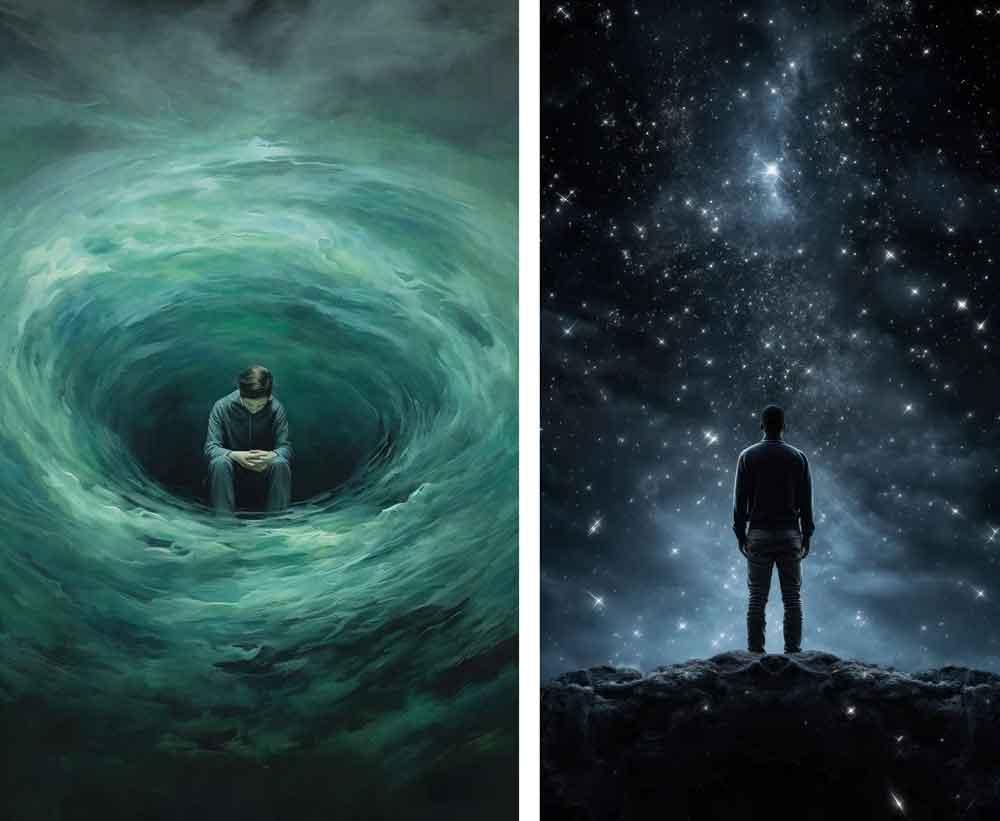
The problem is not that the world becomes less interesting but that eventually you become familiar with almost everything. Many of the experiences that shape our lives are meaningful because they are temporary. Summer holidays end, sadly. Children grow up. Friends move away. Relationships change. Even youth eventually leaves us.
We complain about these things while they are happening, yet their temporary nature is exactly what gives them emotional weight. If every moment lasted forever, would any moment feel special?
Let us think about birthdays for a moment. Part of the reason birthdays are so special is because they mark the passing of time. They remind us that another year has gone by. If you were immortal, eventually birthdays would become little more than administrative updates.
- Congratulations. You are now 34,365 years old.
- Cake loses its significance at some point.
- Then there is the problem nobody likes discussing. Everybody else.
Most fantasies surrounding immortality quietly assume that your loved ones are immortal too. If they are not, eternal life quickly becomes an exercise in endless grief. You would watch your parents grow old, then your friends, then your partner, your children and your grandchildren. Then generations of descendants whose names you struggle to remember.
The people you love would keep disappearing while you remained exactly where you are. Loss is already difficult because it happens a handful of times throughout our lives. Imagine experiencing it hundreds of times. Even thousands.
Would you continue to form attachments? Or would you begin holding people at arm’s length, knowing that every relationship ends with you standing alone at another funeral?
There is something unsettling about being a permanent character in a world where everything else is temporary. Of course, some people argue that immortality would allow us to appreciate relationships more. But humans are not built to carry endless emotional weight. Our memories themselves may become a burden.
Think about how your mind already feels. You probably remember embarrassing moments from years ago that nobody else thinks about. You remember people you have not spoken to in ages. Songs instantly transport you back to specific afternoons. Old conversations still occasionally appear uninvited while you are trying to sleep.
Now multiply that by ten thousand years. How much can a person realistically remember? Would your childhood still feel real after two millennia? Would your first love matter after your two hundredth? At some point, immortality might force us to become strangers to our own past.
There is also the issue of motivation. Many of our achievements happen because we know time is limited. Students study because exams are approaching. Writers finish books because deadlines exist. People confess their feelings because they know opportunities disappear.
Imagine having infinite tomorrows. Would you still do anything today? Why learn piano when you could start in three centuries? Why travel now when the world is not going anywhere? Why take risks when there is always more time?
Procrastination is already one of humanity’s favourite hobbies. Give us eternity and we might become world champions. Oddly enough, deadlines create action. The awareness that life is finite pushes us forward. Without that pressure, purpose itself begins to dissolve.
This does not mean immortality would be entirely miserable. There are undeniably appealing aspects. Watching history unfold firsthand would be extraordinary. You could witness civilisations rise and fall, see scientific discoveries transform society and experience futures that seem unimaginable today. The idea of standing beneath a night sky a thousand years from now is undeniably fascinating. Yet even that raises another question. How much change can a person endure? Languages evolve. Cultures transform. Entire belief systems disappear. The world your great grandparents knew already feels distant from the one we inhabit today. An immortal person would experience that process endlessly.
Eventually, every familiar thing would vanish. Your hometown would change. Your favourite buildings would disappear. The customs you grew up with would become historical curiosities. You would constantly be adapting to worlds that no longer resemble the one you came from. Perhaps the loneliest part of immortality is not watching people die but watching everything change until you no longer recognise where you belong. And still, despite all these arguments, there remains something deeply human about wanting forever.
Immortality appeals to us because it represents control. Death is the one appointment nobody can cancel or negotiate. Eternal life feels like escaping the rules. Maybe the rules are what make the game meaningful. A novel would be exhausting if it never ended. A song would lose its impact if it continued forever. Even our favourite meals become unpleasant if we are forced to eat them endlessly. Meaning often emerges from limitation. The fact that something cannot last forever is often the reason we treasure it while it exists.
Maybe life works the same way. The knowledge that our time is finite encourages us to pay attention. It urges us to call people we miss; pursue goals we care about and appreciate ordinary moments that might otherwise slip unnoticed through our fingers. Death is uncomfortable to think about because it places boundaries around our lives. But without those boundaries, existence risks becoming an endless stretch of tomorrows with no urgency, no conclusion and no reason to choose one moment over another. So, would immortality actually be a curse? Maybe not at first. I think the real question is whether forever is something the human mind, heart and spirit were never designed to carry. And the fact that we cannot exactly answer that question might be precisely why the idea continues to fascinate us.