HE’S JUST NOT THAT INTO YOU
There are few phrases in modern dating that inspire quite as much irritation as, "he's just not that into you.” It feels blunt to the point of cruelty. It sounds like something a friend says when they've run out of sympathy and want to end the conversation. After all, how can six words possibly explain the complexity of real human relationships? What about bad timing, emotional baggage, mixed signals, or all the countless reasons people fail to act on their feelings?
Yet the phrase has endured for years because it touches something uncomfortable. Not necessarily because it's always true, but because it challenges a habit many of us have: the habit of searching for complicated explanations when a simple one would hurt too much.
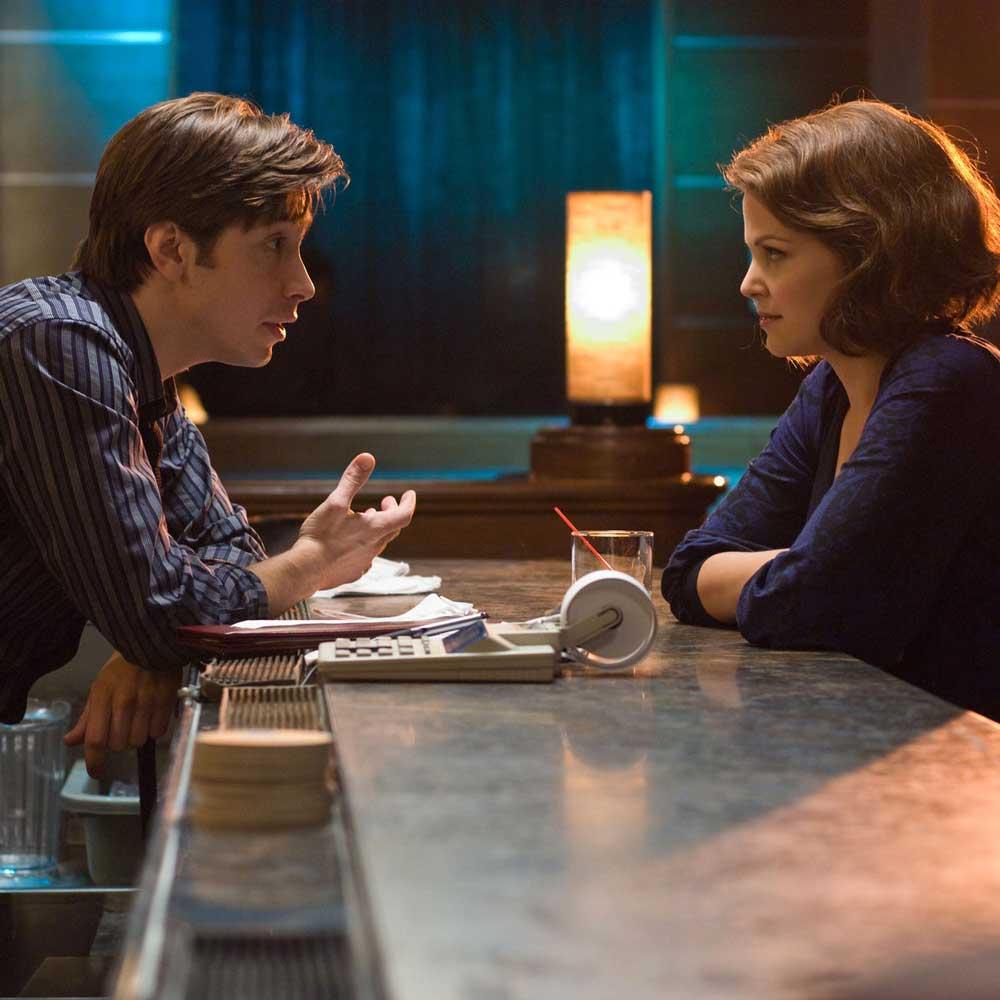
The phrase became famous through ‘He's Just Not That Into You,’ the 2009 romantic comedy based on the bestselling dating advice book. While the film follows several interconnected relationships, its emotional centre is Gigi, a woman who treats dating like an endless puzzle waiting to be solved. Every unanswered call must have a reason, and every awkward interaction warrants analysis. Every disappearing act surely has an explanation that couldn't possibly have anything to do with a lack of interest.
Then comes the film's most memorable idea. Gigi insists that there are exceptions to every rule. Some people do end up together after terrible first impressions, and sometimes the person who seemed uninterested eventually falls in love. Sometimes the unlikely outcome happens. Her argument isn't exactly irrational. It's actually kind of true. The problem, as another character points out, is that everybody believes they are the exception.
This observation has survived long after the film itself faded from popular conversation because it speaks to something deeply human. Most people do not move through life seeing themselves as ordinary. We all like to imagine that our circumstances are unique, that our story operates according to its own special set of rules. When someone pulls away, we instinctively search for reasons that preserve the possibility of a happy ending. A delayed text becomes evidence that they're busy rather than uninterested. Cancelling a date becomes proof that life is getting in the way. An emotionally unavailable person becomes someone who simply needs enough love to open up. It's crazy how creative we can become when it comes to protecting hope.
The irony is that rejection is often easier to process than uncertainty. Rejection hurts, but at least it offers some sort of clarity. Ambiguity creates a much stranger kind of suffering. It leaves room for interpretation. It allows hope and disappointment to coexist. You're never quite sure whether you should move on or keep waiting, and every interaction becomes something to dissect. Every silence becomes something to explain.
Maybe this is why so many people become trapped in situationships. They exist in this weird space between reality and possibility. There is often enough affection to keep someone invested, but not enough certainty to make them feel secure. The relationship survives not because it's moving forward, but because it hasn't ended clearly. Potential becomes the thing people fall in love with.
What makes the message of He's Just Not That Into You so unsettling is that it asks people to stop focusing on potential and start paying attention to reality. Most of us are surprisingly willing to overlook what is actually happening in favour of what we hope might happen next. We become attached to future versions of people, imagining how they could become if they healed, matured, communicated better, or finally realised what was right in front of them.
The film suggests that this tendency says less about romance and more about human nature. We are storytellers. We create narratives from incomplete information, connecting dots that may never have been connected. If given enough time, we can transform a handful of interactions into an entire love story.
What's particularly interesting to me is how often we romanticise difficulty. Popular culture has trained us to see obstacles as proof that something matters. If a relationship is confusing, it must be deep. If someone is difficult to get, they must be worth pursuing. If we are suffering, surely it means the story is building towards some grand reward. Many of the most beloved romantic films are built around this idea. The lovers are separated. The timing is wrong. One person spends years chasing the other, and obstacles pile up until finally, after enough perseverance, everything falls into place. These stories are entertaining because they make persistence feel noble.
Real life is less cooperative. For every couple who reunites years later and lives happily ever after, there are countless people who spend months or years waiting for someone who never intends to choose them. Oops. Sounds familiar. We hear about the exceptions because exceptions make good stories. Nobody writes bestselling novels about accurately interpreting mixed signals and moving on with dignity.
This is what makes the whole "exception" monologue so interesting. It's not really a speech about dating. It's more like a speech about optimism. It asks a difficult question: at what point does hope stop being hopeful and start becoming self-destructive? Hope is generally considered a virtue. We admire people who refuse to give up and celebrate perseverance. Yet there are situations where hope can turn into denial. Instead of helping us move forward, it keeps us emotionally tied to something that exists only in our imagination. This doesn't necessarily mean that every relationship should be abandoned at the first sign of difficulty. Human beings are complicated, and relationships are rarely as straightforward as dating advice books would have us believe. People make mistakes. Timing can genuinely matter. Fear can prevent people from expressing feelings they do possess.

I think it's important to draw a line between complexity and confusion. Confusion usually survives because one person is doing all the work of keeping the connection alive. Maybe that's why the exception monologue has stuck with people for so long. The older I get, the less I think it's actually about dating. It's about hope. Most of us would rather believe we're living through the difficult middle of a story than accept that we might already know how it ends.
I think that's why the phrase, "he's just not that into you," annoys so many people. Not because it's always right, but because it leaves very little room for the explanations, we'd like to give ourselves. The truth is that most people can think of at least one time they were convinced there had to be more to the story. Maybe the timing was wrong. Maybe they were scared. Maybe they just needed a bit more time. Sometimes that could be true, but I suppose the question the film leaves you with isn't whether exceptions exist. Of course they do. It's whether constantly searching for them stops you from seeing what's right in front of you. Years after watching the film, that's the part I keep coming back to. Not the dating advice, and not the idea that every confusing situation has some simple answer. What interests me is how determined people are to believe that they're the exception, even when every piece of evidence suggests otherwise. No shame, of course. I just might be the CEO of the club. Maybe it's foolish, or maybe it's just human nature. I'm still not entirely sure.