The Top Five Female World Leaders Who Changed the Course of History.
By: Nisindi Jayaratne
For centuries, political leadership was largely regarded as a male domain. Across continents and cultures women were often excluded from positions of power, denied voting rights, and prevented from participating in governance. Yet history has repeatedly demonstrated that leadership is not determined by gender but by vision, courage, resilience, and the ability to inspire change. Today, women lead nations, shape global policy, negotiate peace agreements, and confront some of the world's most pressing challenges. While many remarkable women have held political office, a select few have left an indelible mark not only on their countries but on the world itself. From breaking barriers and navigating international crises to transforming economies and championing human rights, these five female leaders have earned their place among the most influential figures in modern history.
1. Margaret Thatcher - The Iron Lady of Britain
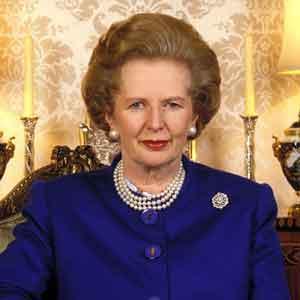 Few female leaders have generated as much admiration and controversy as Margaret Thatcher. Serving as Prime Minister of the United Kingdom from 1979 to 1990, she became Britain's first female prime minister and remains the longest-serving British prime minister of the twentieth century.
Nicknamed the "Iron Lady," Thatcher was known for her unwavering determination, strong political convictions, and transformative economic policies. When she came to power, Britain faced high inflation, unemployment, and industrial unrest. Through a series of free-market reforms, privatization programs, and reductions in state intervention, she sought to reshape the British economy.
Her leadership during the 1982 Falklands War further strengthened her image as a decisive leader. Under her command, Britain successfully reclaimed the Falkland Islands after Argentina's invasion, significantly boosting national morale and her political standing.
Internationally, Thatcher played a pivotal role during the final years of the Cold War. Her close relationship with U.S. President Ronald Reagan and her engagement with Soviet leader Mikhail Gorbachev contributed to changing East-West relations.
Although critics argue that her economic policies widened social inequalities, her influence on modern conservatism remains undeniable. Thatcher shattered one of the highest political glass ceilings and demonstrated that a woman could lead one of the world's most powerful nations during a period of profound global change.
2. Angela Merkel - Europe's Steady Hand
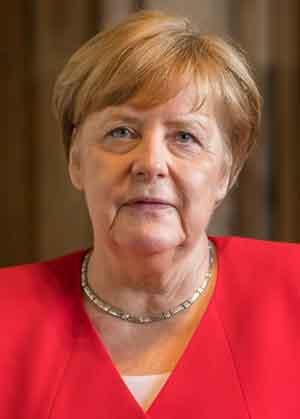 When Angela Merkel became Chancellor of Germany in 2005, few could have predicted that she would go on to become one of the most respected leaders of the twenty-first century. Raised in East Germany before reunification, Merkel brought a unique perspective to politics. Trained as a physicist, she developed a reputation for careful analysis, pragmatism, and calm decision-making. These qualities became particularly valuable during numerous international crises.
Throughout her sixteen years in office, Merkel guided Germany through the global financial crisis, the Eurozone debt crisis, the migration crisis, and the COVID-19 pandemic. Her leadership transformed Germany into Europe's dominant economic and political force. One of Merkel's defining moments came in 2015 when she opened Germany's doors to hundreds of thousands of refugees fleeing conflict in Syria and other regions. While the decision sparked intense debate, it demonstrated her willingness to prioritize humanitarian considerations despite political risks.
Merkel's style differed dramatically from many charismatic political leaders. Rather than relying on dramatic speeches or personal cults, she built trust through consistency, competence, and reliability. Her measured approach earned her the nickname "Mutti" or "Mother" among many Germans. Internationally, Merkel became a stabilizing force during periods of uncertainty. She often acted as a mediator between competing global powers and was widely viewed as the de facto leader of Europe.
Her legacy illustrates that effective leadership does not always require flamboyance. Sometimes, patience, expertise, and steady judgment can be equally transformative.
3. Benazir Bhutto - A Symbol of Democracy and Resilience
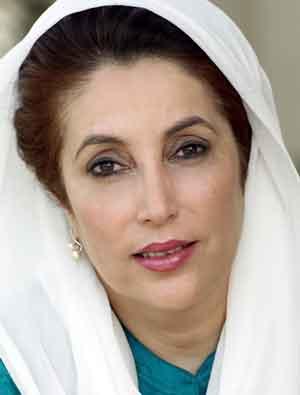 As the first woman to lead a democratic government in a Muslim-majority nation, Bhutto shattered political barriers and became an inspiration to women around the world. Born into one of Pakistan’s most prominent political families, Bhutto was the daughter of former Prime Minister Zulfikar Ali Bhutto. Educated at prestigious institutions including Harvard University and University of Oxford, she returned to Pakistan during a period of political turmoil following her father’s overthrow and execution.
In 1988, at the age of 35, Benazir Bhutto became Prime Minister of Pakistan, making history as the youngest person to lead the country and the first woman to head a government in the Islamic world. Her election was viewed globally as a breakthrough for women’s political participation and democratic governance.
During her time in office, Bhutto advocated for education, healthcare, women’s empowerment, and economic development. She sought to modernize Pakistan and improve opportunities for marginalized communities. Her government also worked to expand vaccination programs, strengthen public services, and increase the representation of women in public life.
However, her political career was marked by significant challenges. She faced opposition from powerful political and military institutions, accusations of corruption, and periods of exile. Despite these setbacks, Bhutto remained a central figure in Pakistan’s democratic movement and continued to campaign for civilian rule and political reform.
In 2007, after returning to Pakistan to contest national elections, Bhutto was assassinated during a political rally in Rawalpindi. Her death shocked the international community and transformed her into a symbol of democratic resistance and political sacrifice.
Today, Benazir Bhutto is remembered not only as a pioneering female leader but also as a woman who repeatedly risked her life for her political beliefs. Her legacy continues to inspire millions, particularly women seeking greater representation in politics and public life. Through her determination, resilience, and commitment to democracy, Bhutto demonstrated that leadership can endure even in the face of immense adversity.
4. Indira Gandhi - India's Most Powerful Prime Minister
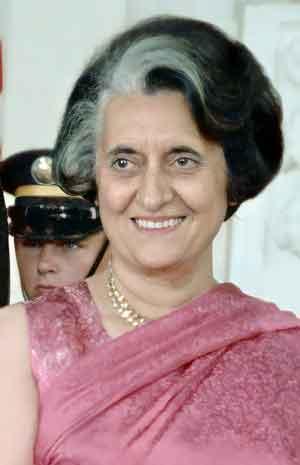 Indira Gandhi remains one of the most influential and complex figures in modern Indian history. As India's first and, to date, only female prime minister, she dominated the country's political landscape for much of the 1960s, 1970s, and early 1980s. Taking office in 1966, Gandhi inherited enormous challenges, including poverty, political instability, and regional tensions. Over time, she consolidated power and became one of the most formidable political leaders in the developing world.
One of her most significant achievements came during the 1971 Indo-Pakistani War, which ultimately led to the creation of Bangladesh. Her handling of the conflict elevated India's international standing and established her reputation as a strong and strategic leader. Gandhi also pursued ambitious economic and social reforms. Her government nationalized major banks and promoted programs aimed at reducing poverty and increasing self-sufficiency.
However, her tenure was not without controversy. In 1975, she declared a state of Emergency, suspending civil liberties and granting the government extensive powers. The period remains one of the most debated chapters in Indian democracy. Despite these controversies, Gandhi's impact on India is undeniable. She transformed the role of women in South Asian politics and demonstrated that female leaders could command authority on the global stage.
Her assassination in 1984 marked the end of a remarkable political career, but her influence continues to shape Indian politics today.
5. Sirimavo Bandaranaike - The World’s First Female Prime Minister
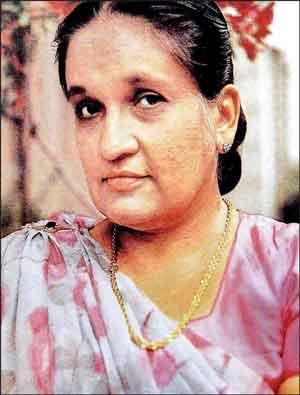 No discussion of influential female world leaders would be complete without acknowledging the remarkable legacy of Sirimavo Bandaranaike, the woman who made history as the world’s first female prime minister.
In 1960, Sirimavo Bandaranaike became Prime Minister of Sri Lanka, then known as Ceylon, following the assassination of her husband, former Prime Minister S. W. R. D. Bandaranaike. At a time when politics was overwhelmingly dominated by men, her election marked a groundbreaking moment not only for Sri Lanka but for women across the world. Her victory demonstrated that women could occupy the highest levels of political leadership and effectively govern a nation.
Bandaranaike served as Prime Minister on three separate occasions between 1960 and 2000, making her one of the longest-serving female political leaders in history. During her tenure, she pursued policies aimed at strengthening national sovereignty, expanding education, and promoting social welfare. She also implemented a number of socialist-oriented economic reforms, including the nationalization of key industries and efforts to reduce foreign influence over the country’s economy.
Internationally, Bandaranaike played a significant role in the development of the Non-Aligned Movement during the Cold War. Alongside leaders from Asia, Africa, and Latin America, she advocated for the interests of developing nations and sought to maintain independence from both the Western and Soviet blocs. Her diplomatic efforts elevated Sri Lanka’s standing on the global stage and established her as a respected voice among world leaders.
However, her leadership was not without controversy. Critics pointed to economic difficulties, shortages, and ethnic policies that contributed to growing tensions within the country. Like many transformative political figures, her legacy remains a subject of debate among historians and political analysts.
Despite these complexities, Sirimavo Bandaranaike’s place in history is secure. As the first woman ever elected to lead a government, she shattered one of the most significant political barriers of the twentieth century. Her achievement opened doors for countless women around the world who aspired to public office and demonstrated that political leadership was not confined
Conclusion
The journey toward equal representation in political leadership remains ongoing. Women are still underrepresented in many governments and face challenges that their male counterparts often do not encounter. Their stories remind us that leadership is not defined by gender but by vision, courage, integrity, and the ability to guide societies through moments of challenge and change. As the world continues to evolve, these women stand as powerful examples of how determination and excellence can reshape history and inspire millions across generations.