The Car That Smiled Back: The Ultimate Joy Machine
Marian de Silva
For a car enthusiast, especially one raised in a household where engines spoke louder than lullabies, being obsessed with automobiles isn’t really a choice. It’s an inheritance. It’s muscle memory. It’s an identity. Some of my earliest memories were sitting on my father’s lap, my small hands gripping a steering wheel far too big for me, pretending I understood control and gently washing the cars in our garden. That's where it begins for many of us, the illusion of control before we even understand responsibility. From learning how to hold the steering wheel “properly,” to standing beside a car while my dad explains why a tyre needs changing, not just how, but why.
From hearing random, oddly fascinating facts about M4 and M6 train engines and wondering why they were named that in the first place, to lifting the car bonnet and checking engine oil like it’s some sacred ritual, while my father says, “Hold it up a little… ah, okay, put it back.” And somewhere in between all of that, life starts to smell like petrol and diesel, sharp, expensive, addictive. Not unpleasant. Never unpleasant. Just… alive. So no, this isn’t a typical article. Today, this is about a car, less like a machine and more like an emotion on four wheels. Something small, playful, almost innocent, but dangerously capable of making you fall in love.
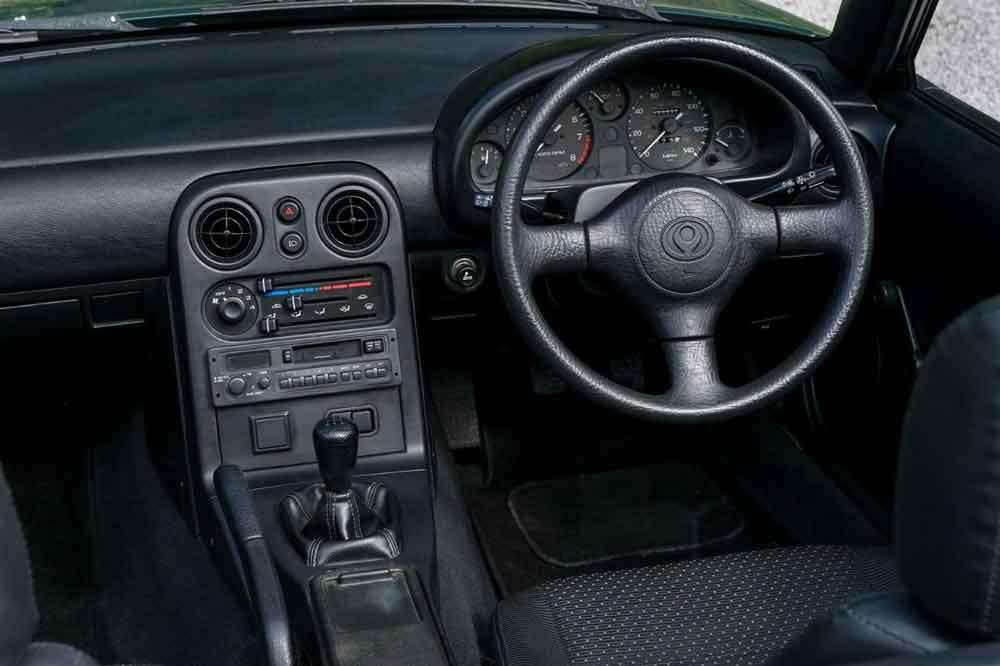
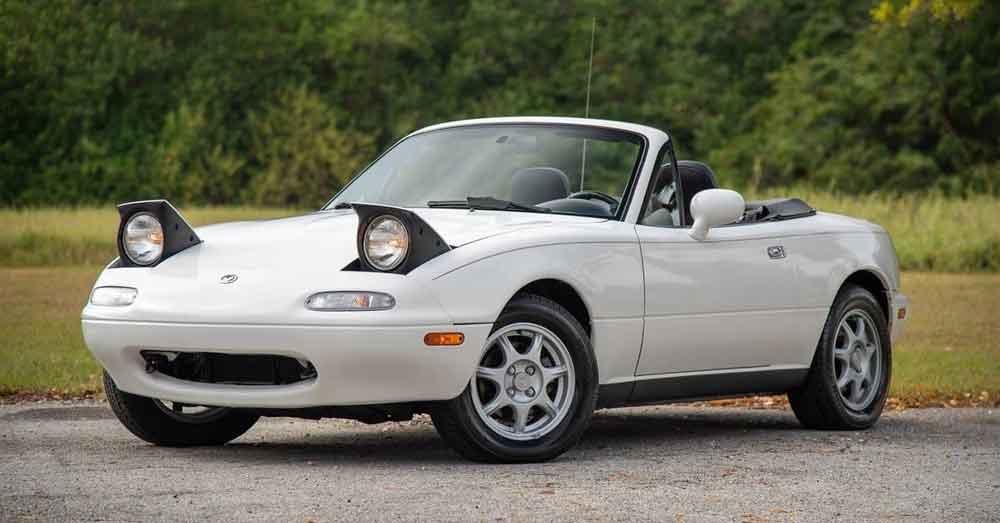
The Mazda MX-5 Miata (NA).
A Smile You Can Drive
The NA, or first-generation Miata, isn’t just a car. To me, it’s arguably the most fun car ever made, not the fastest, not the most powerful, not the most intimidating. And that’s exactly the point.
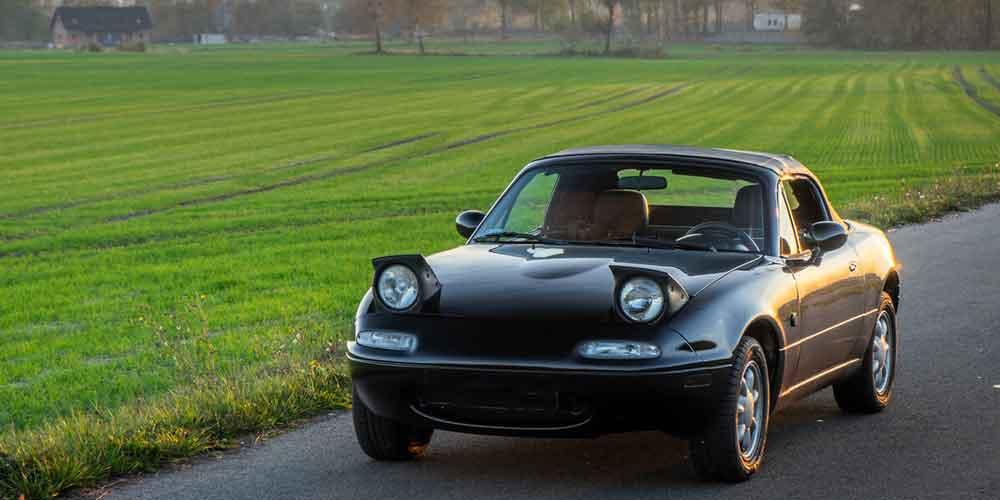
It doesn’t try to impress you. It charms you. There’s something almost poetic about the way it exists. A tiny, two-seater roadster with pop-up headlights that quite literally wink at you. It doesn’t look aggressive. It doesn’t look serious. But… happy. Very happy. And somehow, that happiness is contagious. It feels like the automotive equivalent of laughing with your whole chest, unfiltered, unapologetic, and a little reckless. A smiling mechanical antidepressant on wheels.
Where It Came From
The NA Miata was born in the late 1980s and carried through the 1990s, a time when cars were beginning to lose their soul in favour of practicality and numbers. But Mazda did something different. They looked backwards to move forward. Heavily inspired by classic British and Italian roadsters from the 1950s and 60s, especially icons like the Lotus Elan, Mazda created something that felt nostalgic, yet refreshingly new. It had the charm of old-school British cars, the simplicity, the lightness, the connection, but without the constant fear that it might break down just to prove a point. Because simply, this one was Japanese. Reliable. Precise. Thoughtful: A perfect contradiction.
Jinba Ittai: The Philosophy of Feeling
Mazda didn’t just build a car. They crafted a philosophy into it.
Jinba Ittai (人馬一体). It translates to “horse and rider as one,” inspired by traditional Japanese mounted archery, where the archer and the horse move in perfect, almost spiritual harmony. And somehow, they translated that into engineering. The Miata doesn’t feel like something you drive. It feels like something you wear, like an extension of your body rather than a separate machine. The steering isn’t just responsive; it’s conversational. The seating position feels natural, almost instinctive. Every input you give is met with an immediate, honest response. No filters. No unnecessary drama. Just you and the road, in quiet agreement.
The Details That Matter
The magic of the Miata isn’t in overwhelming power or aggressive performance figures. It’s in restraint. It was built with a near-perfect 50/50 weight distribution, something that sounds technical until you actually feel it. The balance. The way it corners. The way it doesn’t fight you. Every single component was carefully considered. Not for luxury. Not for status. But for the feeling. A 5-speed short-throw manual transmission came standard. This isn’t a car that wants to do the thinking for you. It wants you involved. Engines? Simple. Honest. A 1.6L inline-four in the early models, producing around 116 horsepower, later upgraded to a 1.8L pushing up to 133 horsepower.
On paper, that’s not impressive. But the Miata doesn’t live on paper. It lives in corners. In late-night drives. In the subtle grin you don’t even realise you’re wearing. With a high-revving 7,000 RPM redline and bulletproof reliability, these engines weren’t built to dominate, they were built to delight.
The Man Behind the Dream
What’s even more fascinating is that this car began as a pure idea, a vision. A motor journalist named Bob Hall once imagined a simple sports car: a lightweight, affordable machine that gave drivers what he called a “bugs-in-the-teeth” experience. That raw, wind-in-your-face, slightly chaotic joy of driving. And somehow, that idea made its way to Mazda. They didn’t just listen. They gave it a soul.
Special Editions
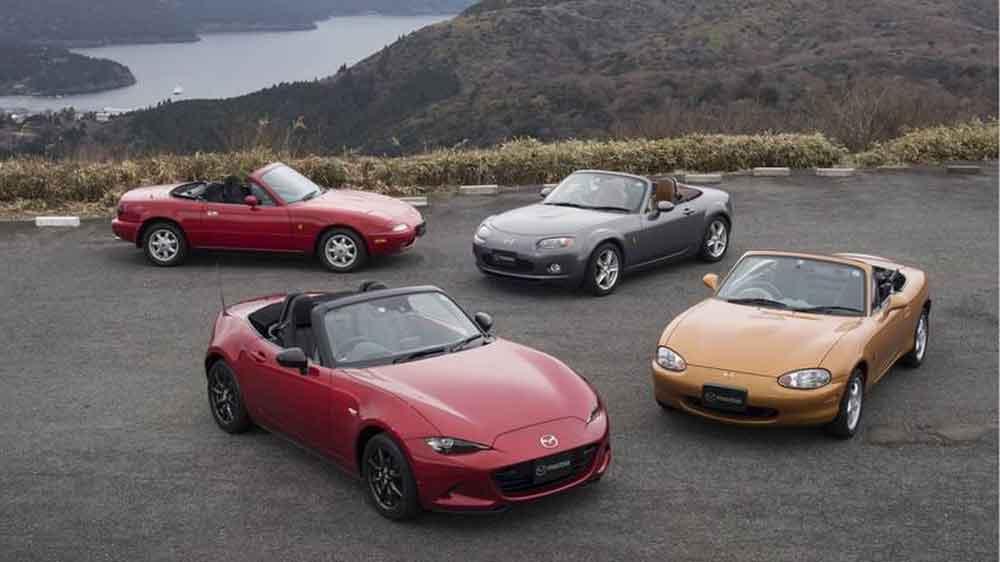
As the Miata gained popularity, Mazda began experimenting, offering limited and special editions that felt like different moods of the same soul.
The M-Editions between 1994 and 1997 were particularly iconic:
- 1994: Montego Blue Mica with a Torsen limited-slip differential
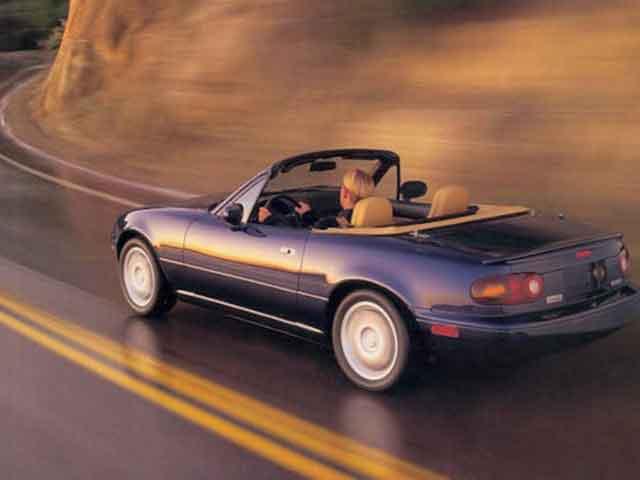
- 1995: Deep Merlot Mica with BBS wheels and refined interior touches
- 1996: Starlight Blue Mica paired with Enkei wheels
- 1997: Marina Green Mica with tan leather, a combination that felt almost vintage
Each one wasn’t just a variation, it was a personality shift.
Then came the rarities.
The 1991 British Racing Green edition, effortlessly elegant. The ultra-rare Le Mans edition, celebrating Mazda’s racing victory with bold, unapologetic styling. The 1993 Limited Edition, black with red leather is dramatic in all the right ways. And for those who wanted something more aggressive, the R-Package stripped things down, less comfort, more focus. Because sometimes joy comes without softness.
A Culture Built Around a Wink
But what truly makes the Miata special isn’t just the car itself. It’s the culture. Somewhere along the way, owners created their own language, a quiet, unspoken connection. If you see another Miata on the road, you don’t just pass by. You blink your headlights. And if they blink back? That is the handshake. A small, almost childish gesture, but deeply meaningful.
Why It Still Matters
In a world where cars are losing beauty, becoming heavier, more digital, more disconnected from the driver, where screens replace sensations and numbers replace emotions, the NA Miata feels almost rebellious. It refuses to be complicated. It refuses to be anything other than what it is.
Pure. Honest. Joyful. It doesn’t demand attention. It earns affection. And maybe that’s why it has lasted.
Why do people still talk about it, still chase it, still fall for it decades later? Because it reminds us of something we’re slowly losing: The simple, unfiltered joy of driving. The Car That Smiled Back There are faster cars. Better cars. More expensive cars. But very few feel like this. Very few that greet you with a smile and somehow leave you smiling back. The NA Miata never tried to be the best car in the world. It wanted to be your favourite. And honestly, for me? It did.