The Aesthetics of Heartbreak: Why Euphoria’s Toxic Relationships Look Like Love (And What Real Intimacy Actually Looks Like)

Nichol Fernando
As Euphoria’s third season comes to an end, the show once again leaves its audience questioning what love really looks like when it is shaped by pain. Renowned for its hypnotic cinematography, raw friction and emotionally charged relationships, Euphoria transcends the typical tropes of adolescent rebellion. Beneath its striking appearance, the series explores how deeply attachment trauma can affect the way young people love, trust, and depend on one another. Attachment trauma refers to emotional wounds that stem from unstable, unsafe, or harmful relationships, often beginning in childhood and bleeding into intimacy later in life. In stark contrast, authentic love demands mutual respect, emotional safety, trust, and stability. Through characters like Rue, Jules, Nate, and Maddy, Euphoria often glamorises the chaotic highs of these toxic dependencies in a way that can seem romantic. However, the show acts as a cautionary tale by juxtaposing destructive obsessions with rare, serene glimpses of genuine connection.
Evaluating the interpersonal dynamics in Euphoria requires an examination of the psychological wounds that shape the characters' romantic entanglements. The show suggests that many of their destructive relationships are not simply caused by teenage impulsiveness, but by unresolved emotional pain. Each character carries a different form of attachment trauma, and this trauma influences the way they seek love, comfort, control, and validation. For Rue, the anchor of her distress is profound grief. Left adrift by her father’s death, she utilizes narcotics to numb an agonizing internal emptiness. It is a coping mechanism that quickly bleeds into her romantic life. With Jules, Rue constantly yearns for sanctuary and rescue. Yet, instead of finding peace, Rue becomes trapped in an anxious-avoidant labyrinth. She desperately wants closeness, but she also fears the vulnerability that comes with it. This makes her love feel intense, unstable, and dependent rather than secure.
Nate and Maddy present a different territory of trauma, trapped in a destructive cycle of abuse, power plays, and passionate reconciliations. Nate’s behaviour is shaped by generational trauma, toxic masculinity, and the emotional instability within his family. He learns to associate control with strength and vulnerability with weakness. Maddy, captured by the intoxicating rhythm of their highs and lows, mistakes volatility for devotion. What they share is not a healthy partnership, but a trauma bond where grand romantic gestures temporarily camouflage a sinister reality of control and violence. Jules’ trauma comes from abandonment, especially through her relationship with her mother. This creates a deep need to be wanted, seen, and validated by others. Her search for external validation affects the way she approaches intimacy, often blurring the line between freedom and emotional escape. Jules wants connection, but she also fears being limited or rejected.
Caught between a fear of rejection and a dread of containment, she chases affection to feel powerful, only to find herself more exposed than before. Through this ensemble, Euphoria illustrates how trauma bonds mimic the intoxicating rush of addiction. The explosive arguments and desperate reunions trigger a dopamine loop that feels incredibly potent, mirroring the way Rue’s drug addiction works: pain is followed by temporary relief, only inviting deeper damage. The show uses this pattern to suggest that unhealthy attachment can become its own form of addiction. These relationships may feel exciting or passionate on the surface, but underneath, they are often built on fear, insecurity, and unresolved trauma.
The show masterfully deconstructs how teenage relationships often substitute co-dependency and fear for genuine intimacy, because these bonds are packed with drama and high-stakes passion, they easily pass for love. However, a closer look reveals that this intensity is often just trauma in disguise.
Rue and Jules, often referred to by fans as “Rules,” represent a deeply codependent cycle. After losing her father and struggling with addiction, Rue converts Jules into an emotional life raft, anchoring her sobriety and mental health to Jules' presence. This places an unfair emotional burden on Jules, who is made to feel responsible for keeping Rue stable. At the same time, while Jules initially welcomes the ego boost of being needed, she eventually wilts under the pressure. Their relationship reflects an anxious-avoidant attachment trap. Rue anxiously clings to Jules because she fears abandonment, while Jules often pulls away when the relationship becomes too emotionally demanding. A vicious cycle takes root, leaving Rue more desperate and Jules more detached. While it looks like passionate love, it is actually a form of dependency, where Rue treats Jules like a substance, and Jules uses Rue to feel important. Instead of offering a path to healing, they often end up deepening each other's scars.
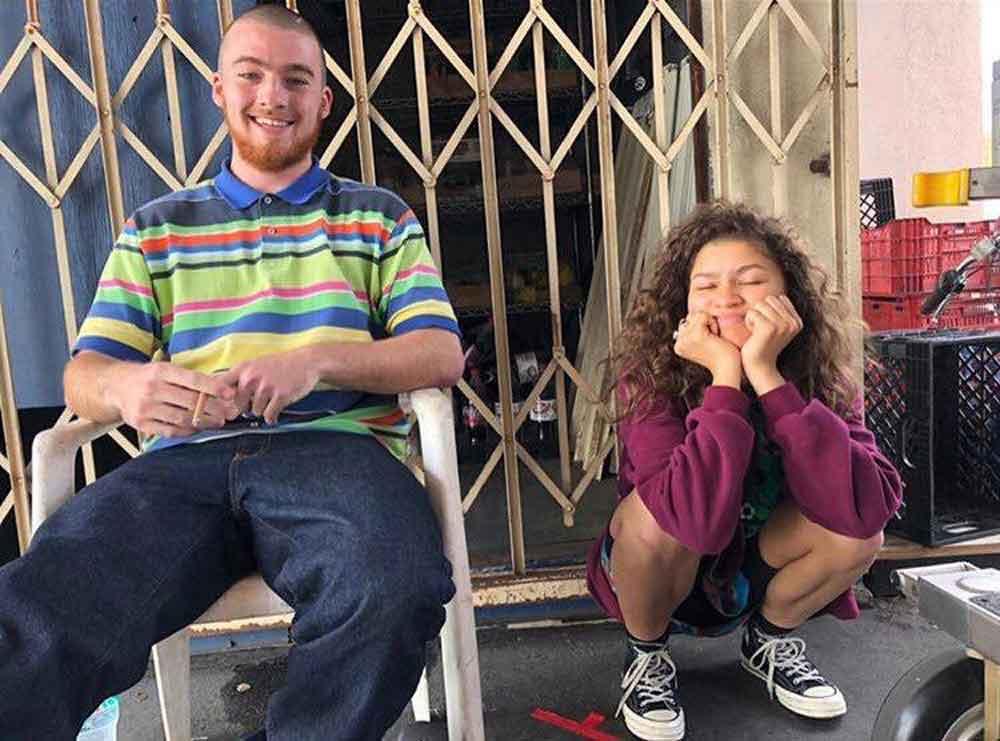
Nate and Maddy’s relationship is a more obvious example of a trauma bond. Their entire connection lives in the extremes. It is a constant cycle of cruelty, manipulation, explosive jealousy, and passionate reunions. They lack any real sense of peace, yet the sheer friction of their relationship makes it impossible for either to walk away. By mixing affection with abuse, they blur the lines between love and possession until Maddy views Nate’s jealousy as proof of care, and Nate views Maddy’s submission as proof of loyalty. This relationship is not based on safety, respect, or emotional trust. Instead, it reflects familiar patterns of childhood chaos, toxic masculinity, and instability. Nate’s need for dominance is shaped by the environment he grew up in, while Maddy becomes caught in the cycle of mistaking intensity for love. Their story reveals the addictive nature of trauma bonds, showing how a few moments of tenderness can make a person forget months of harm.
Additionally, Cassie and Nate’s relationship presents a different but equally damaging form of attachment trauma. It highlights the erasure of self. Cassie’s anxious attachment style makes her desperate to be chosen and loved, even if it means losing herself. To please Nate, she rewrites her entire identity, changing her look, her morals, and her behaviour to fit the mold of what she thinks he wants. Rather than being loved for who she is, Cassie slowly sacrifices herself in order to become desirable to him.
Real love allows a person to remain themselves. It supports individuality, emotional safety, and self-respect. Cassie’s attachment to Nate does the opposite. It requires her to shrink, change, and betray parts of herself in order to feel worthy. Through her, a powerful warning is delivered about how easily trauma can make us confuse being an object of desire with being truly loved.
Amid the wreckage of Euphoria’s most toxic pairings, the series quietly introduces a few rare glimpses of genuine affection. These moments are quieter, less dramatic, and often less romanticized, but that is exactly what makes them meaningful. Unlike trauma-based attachments, genuine love in Euphoria is not built on obsession, control, or emotional dependency. Instead, it appears through safety, honesty, patience, and boundaries.
Consider Rue and Fezco, whose connection serves as the show's purest example of platonic devotion. Fezco accepts Rue without judgment, even when she is at her worst. He understands her pain, listens to her, and treats her with a gentleness that many other characters fail to offer. Yet, what sets his love apart is his refusal to enable her. When Rue begins to spiral out of control, Fezco makes the agonizing choice to lock her out of his supply. This moment redefines what care looks like: it isn't about giving someone whatever they crave, but about having the courage to protect them from themselves.
Unlike Rue's suffocating dynamic with Jules, Fezco never lets himself become responsible for keeping Rue alive. He loves her deeply, but he refuses to be the single pillar holding up her sobriety, making their bond healthier than many others in the show. Rue is allowed to fail, relapse, and make mistakes without losing Fezco’s care, but his love still has limits. Their connection is grounded in mutual protection rather than co-dependency, showing that real love can be compassionate without becoming self-destructive.

Lexi and Fezco, often known by fans as “Fexi,” offer another rare glimpse of healthy intimacy. Their relationship develops slowly, through conversation, curiosity, and emotional openness. In a world where every other couple rushes into intense, hypersexualized pairings overnight, Lexi and Fezco feel like a calm breath of fresh air. They don't crash into each other's lives out of desperation; they build a bridge simply by talking, listening, and letting their guards down. One of the most important aspects of their relationship is the absence of performance. Lexi does not have to become louder, more attractive, or more dramatic to gain Fezco’s attention. Fezco, in turn, is allowed to show a softer, more thoughtful side of himself that is often hidden behind his unfortunate life circumstances. Simple moments, like watching Stand by Me together, show an intimacy built on truly seeing each other rather than chasing a high. Their relationship feels safe because neither person has to wear a mask to feel worthy.
Then there is Gia, whose love for Rue is perhaps the most heartbreaking in the entire series. Her loyalty to Rue is quiet, painful, and often overlooked. As Rue’s younger sister, Gia witnesses the damage of addiction from a deeply personal place. She loves Rue not as an idea, a fantasy, or a saviour, but as her sister. This love is real because it remains even when Rue becomes difficult to understand, forgive, or reach.
However, Gia’s relationship with Rue also shows that loving an addict can break your heart. Gia’s love is not toxic in itself, but the situation around it becomes emotionally damaging. Through Gia, the show reveals that even healthy family bonds can suffer when addiction takes over. Gia’s journey highlights the necessity of boundaries, showing that to survive, she must eventually learn that loving her sister cannot mean drowning in her struggle.
Genuine love is not always loud or dramatic. It does not need constant conflict to prove its strength. Instead, it is often found in patience, honesty, quiet loyalty, and the courage to set boundaries. Love is not measured by how much pain someone is willing to endure, but by how safe, seen, and respected they are allowed to feel.
The contrast between unhealed trauma and healthy love in Euphoria isn't just written into the script; it is woven directly into the show's cinematography. Trauma-based relationships are often presented with neon lighting, surreal imagery, fast editing, and intense music. These scenes feel beautiful but overwhelming, reflecting the emotional highs and lows of trauma bonds. Through this lens, the affairs of Rue and Jules, Nate and Maddy, and Cassie and Nate look incredibly thrilling, but they are clearly marked as unstable.
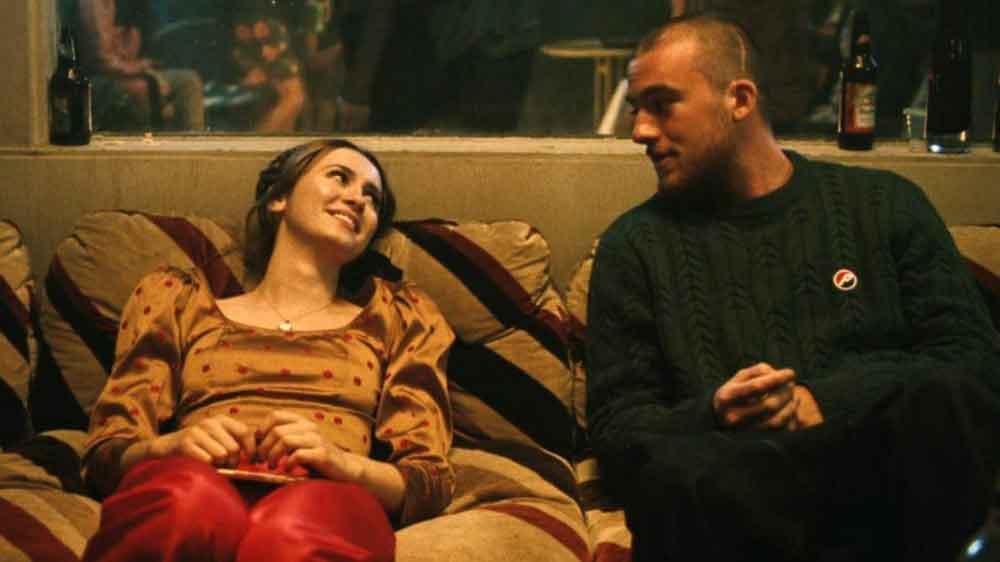
On the flip side, moments of genuine love are usually filmed with warmer tones, softer lighting, slower camera movements, and longer conversations. Scenes between Rue and Fezco, Lexi and Fezco, or Gia and Rue feel calmer and more grounded. This visual stillness represents safety, honesty, and emotional stability. Through this clever stylistic shift, Euphoria reminds the audience that toxic attachment may look dramatic and addictive, but real love often feels quieter, safer, and more peaceful.
At its heart, Euphoria is far more than a portrait of self-destructive youth. It is an exploration of the deep emotional fractures that drive those behaviors. Through Rue, Jules, Nate, Maddy, Cassie, Fezco, Lexi, and Gia, the show reveals how attachment trauma can make chaos feel like passion, control feel like love, and emotional dependency feel like connection. These characters are not just drawn to each other because of desire, but because their wounds recognize familiar patterns of instability.
Perhaps the most profound takeaway from the show is that to a person raised on a diet of emotional turbulence, a healthy relationship can feel incredibly strange and maybe even boring. Unlike trauma bonds, real love does not depend on jealousy, fear, obsession, or dramatic reunions. It is quieter, safer, and more stable, which can feel uncomfortable to a nervous system that has learned to survive through intensity. For a nervous system that only knows how to survive in a crisis, this peace can feel unnerving, yet the narrative suggests it is the only kind of connection that offers a path to healing.
In the end, Euphoria holds up a mirror to how we view modern relationships. It challenges us to see past the glitter, the neon, and the beautiful cinematography to recognize the heartbreak and dysfunction hiding in plain sight. The show reminds us that not every intense connection is love, and not every beautiful relationship is healthy. Sometimes, the real lesson is learning to tell the difference.