Forwarded as received: The saga of a Sri Lankan family’s WhatsApp forwards continue.
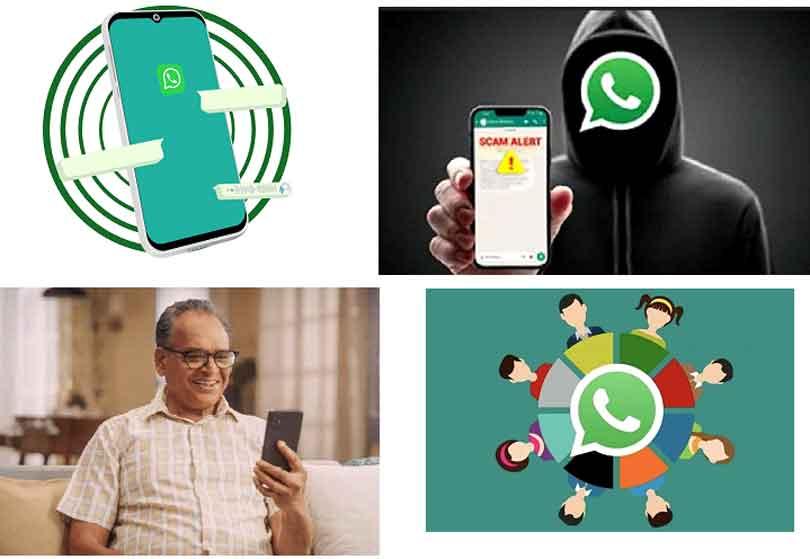
In many Sri Lankan households, the day begins with a familiar chime of a phone. Before breakfast is even finished, the family WhatsApp group may already be filled with colourful “Good Morning” graphics, religious blessings and jokes. Inevitably, this is followed by a pressing forwarded broadcast alleging a breakthrough medical remedy or a startling political alert. For numerous citizens, particularly senior generations, WhatsApp has transcended its original purpose as a mere communication platform. It has transitioned into a primary news outlet, a family noticeboard and a trusted community space where information rapidly circulates from one relative to the other.
However, this constant sharing of content carries risks. Most forwarded messages are sent with good intentions, often out of care, fear or the desire to protect loved ones. Yet, when these messages remain unverified, family group chats easily transform into catalysts for misinformation. False health advice, exaggerated crime alerts, political speculation and fraudulent links foster uncertainty, anxiety and possible interpersonal friction. Although WhatsApp effectively bridges Sri Lankan families domestically and globally, the unverified propagation of these messages exploits cultural reliance, strains intergenerational dynamics and underscores an urgent requirement for stronger collective digital literacy.
A distinct blueprint characterizes the WhatsApp forwards circulating within Sri Lanka, where messages typically blend high emotion with an intense sense of haste. Opening lines like “Forwarded as received”, “Very important” or “Please share” are frequently implemented to engineer a false display of gravity, successfully masking a complete absence of supporting evidence and subtly reshaping family perspectives, behavioral choices and reactions to current events.
One of the most common types is the “health remedy”. These messages often claim that a simple home remedy made with basic kitchen ingredients can eradicate major diseases, prevent cancer or protect individuals from infections, while concurrently cautioning against pairing specific everyday foods under the claim that such combinations induce sudden mortality or acute sickness. While some traditional remedies may have cultural value, the problem begins when the unverified medical advice is treated as a fact, occasionally causing individuals to postpone necessary clinical interventions because they place greater faith in a chat notification than a medical professional.
Secondly, celestial or faith-based prophecies frequently foreshadow upcoming cosmic disasters, unlucky dates, or “dangerous” planetary movements, while others utilize spiritual rhetoric to induce anxiety and moral obligation by insisting that forwarding the text to ten recipients is mandatory to unlock blessings or evade misfortune. As faith and astrology remain deeply woven into the fabric of daily Sri Lankan life, these narratives propagate rapidly by tapping directly into personal convictions, aspirations and anxieties.
The third major type is the “scam and clickbait”. Fraudulent financial clickbait poses an immediate threat to digital security, culminating in identity theft or financial deficits through fake links compromising disaster relief funds, government grants, free mobile data or lottery prizes. To project legitimacy, these schemes regularly clone the branding of reputable Sri Lankan enterprises, including major banking institutions, Dialog or SLT. Independent verification bodies consistently document the velocity at which these fraudulent URLs and fabricated claims spread through social media and messaging platforms, underscoring that misinformation undermines broader digital safety just as much as it disrupts domestic life.
Finally, there are politically charged and communal rumors, which represent the most harmful category of digital misinformation. During periods of civil unrest, economic instability, elections or moments of national anxiety, these messages disseminate fabricated reports concerning state officials, legislative policies or distinct ethnic and religious groups. Mimicking standard journalistic reports, their actual intent is to create resentment, suspicion or panic. In a country with a sensitive political and communal history, such rumors can deepen divisions and make families unknowingly participate in spreading harmful narratives.
To comprehend the seamless spread of WhatsApp misinformation within Sri Lankan households, one must analyze factors extending far beyond the digital interface. Frequently, the phenomenon stems not from malicious intent, but from deep-rooted cultural norms, interpersonal trust and distinct generational approaches to consuming data. One of the primary reasons behind this habit is the responsibility people feel toward their own family and community. Older family members regularly circulate wellness advisories, political bulletins or safety warnings under the sincere impression that they are shielding their relatives from harm. An aunt who shares a warning about a fake disease outbreak or a father who forwards a suspicious banking alert may not be trying to create panic. Instead, they view the act of sharing as a tangible expression of affection, meaning that misinformation is often spread through concern rather than malice.
Compounding this dynamic is the immense respect traditionally given to elders in Sri Lankan culture, who are conventionally regarded as sources of wisdom, advice and experience. Consequently, younger family members may often feel inhibited from scrutinizing or debunking a text received from a parent, grandparent, educator or respected relative. On WhatsApp, this respect can make misinformation harder to challenge. Even platform safeguards designed to flag over-circulated content, such as the “Forwarded many times” label, can backfire as recipients frequently misinterpret high distribution rates as validation of the message’s significance or authenticity, falling for the illusion that viral reach equals credibility.
The digital literacy gap also plays a significant role. The majority of the older generation transitioned abruptly from traditional mediums like print journalism, radio broadcasts, and television directly into the world of smartphones. As traditional media usually had editors, presenters, or official institutions behind it, information felt filtered and reliable. WhatsApp, on the other hand, does not work the same way.
Fabricated imagery, altered footage, deepfakes, and sensationalized clickbait hyperlinks can easily mimic professional journalism. Lacking the specific technical skills required to verify primary sources, scrutinize questionable URLs, or detect synthetic media, many users struggle to separate fact from fiction.
The spread of WhatsApp forwarded messages does not only affect what people believe. It also affects how families communicate with one another. One of the most visible impacts is the growing tension between younger and older generations. Younger family members, who are usually more familiar with online scams, fake links, edited images, and misleading headlines, may try to correct false information in the family group chat. However, these interventions frequently encounter resistance, as blunt corrections like "This is fake" are easily misconstrued by elders as insolent or condescending within a cultural framework that mandates deference toward senior relatives. To evade such confrontation, many opt for passive disengagement overactive dispute, choosing to mute notifications, disregard the messages, or exit the chat entirely. This creates a quiet divide within the family. Older relatives may continue sharing unverified information, while younger members become emotionally distant from the conversation. Over time, the family group chat, which was meant to connect people, can become a space of irritation, misunderstanding, and avoidance.
The ramifications of this phenomenon extend beyond family arguments, frequently materializing as tangible real-world harm. Wellness misinformation carries acute hazards due to its direct influence on personal well-being. A message promoting a miracle cure, herbal treatment, or “secret” home remedy may seem harmless, but it can become dangerous if someone delays proper medical care because they trust the forward more than professional advice.
Additionally, predatory financial schemes, including fraudulent bank alerts, deceptive lottery links, and credential harvesting, exploit these same channels of familial trust. When a message comes from a relative, people may be less likely to question it. This makes older family members particularly vulnerable, especially if they are unfamiliar with phishing links or online fraud tactics. A single careless click can lead to stolen personal information, lost money, or compromised accounts.
On a larger scale, misinformation inside family chats can slowly contribute to social panic and division. What begins as an isolated, localized rumor regarding a civic disruption, or a political dispute can exponentially scale when mirrored across countless domestic networks, actively molding public fear and distrust. Especially during critical junctures, these minor pieces of misinformation can build into larger narratives that divide communities. In this way, the WhatsApp forward problem is not just a private family issue. It is part of a larger social problem where misinformation moves through trusted relationships before reaching the public space.
Ultimately, this dilemma transcends mere technological vulnerability, representing a cultural problem disguised as a technical one. These messages spread so easily because they move through relationships built on trust, respect and care.
Therefore, the solution cannot simply be to blame older relatives or lecture them about misinformation. Protecting the family unit requires patience, understanding and cooperation.
Digital literacy should be treated as a shared family responsibility, where younger and older generations learn from each other instead of speaking against each other. The next time a doubtful link, alarming warning or miracle cure appears in the family group chat, the better response is not mockery or frustration, but calm dialogue. Prioritizing constructive conversation over dismissive criticism serves as the foundational step toward cultivating more discerning, secure, and genuinely unified Sri Lankan families.