The Crown in the Gutter: How China Built a Rival Space Empire
By Amaya Perera
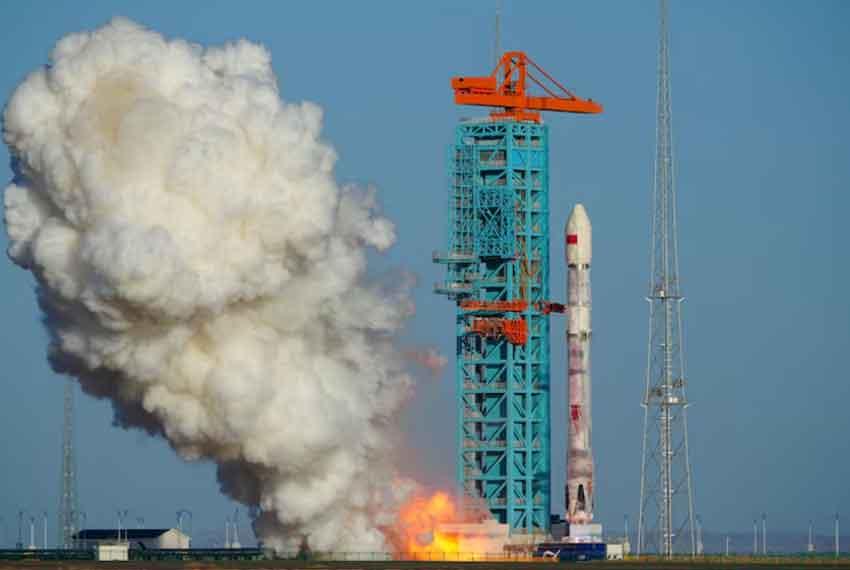
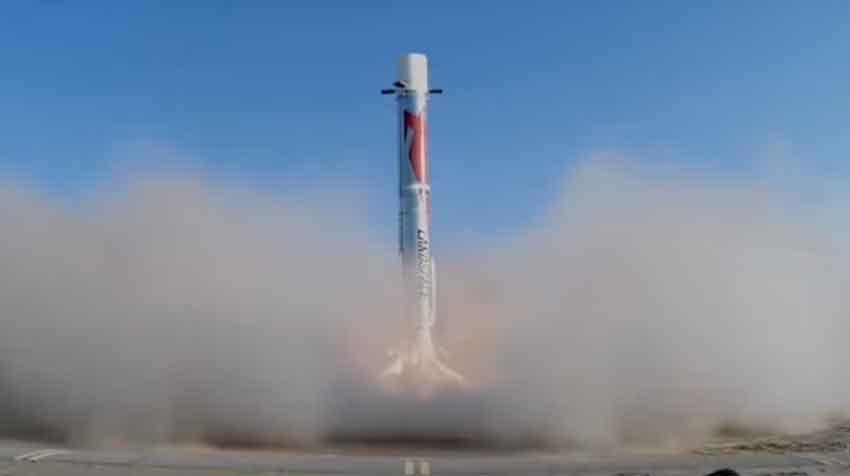
For much of the modern space age, the hierarchy was relatively easy to understand: the United States was the dominant space power, Russia remained a formidable but declining competitor, and other nations were largely attempting to develop capabilities within a system shaped by those two powers. That hierarchy is becoming increasingly difficult to sustain. In August 2026, Beijing-based LandSpace successfully recovered the first stage of its Zhuque-3 rocket following an orbital mission, adding another significant demonstration of China’s growing competence in reusable launch technology. The achievement came only weeks after China’s state-owned launch establishment demonstrated its own approach to recovering an orbital booster. Taken together, the two developments reveal something more consequential than the success of individual rockets: China now has both a state-backed space industry and an emerging commercial sector capable of pursuing reusable orbital launch technology, creating a degree of institutional depth that few countries outside the United States can match. At the same time, China is continuing to push its lunar programme towards the South Pole, where missions such as Chang’e 7 are expected to investigate permanently shadowed regions that may contain water ice. The significance of this is increasingly difficult to view as purely scientific. Water on the Moon could eventually support life-support systems, provide oxygen and, if processed into hydrogen and oxygen, potentially become a source of rocket propellant. The lunar South Pole is therefore emerging not merely as another destination for exploration, but as a potentially important piece of the infrastructure of a future lunar economy.
What makes China's rise particularly striking, however, is not simply the sophistication of its current programme but the extraordinary distance the country has travelled to reach this point. When Neil Armstrong stepped onto the Moon in 1969, China was an impoverished nation undergoing profound political and economic turmoil. The Great Leap Forward had devastated the economy, the Cultural Revolution was reshaping the country's institutions, and China's industrial and technological capabilities were nowhere near those of the United States or Soviet Union. The possibility that China could one day become a serious competitor for lunar leadership would have appeared almost absurd. Yet the transformation that followed was not produced by one technological breakthrough or one exceptional generation of engineers. It was the result of a long process in which Beijing gradually built the industrial, scientific and institutional capabilities required to operate independently in space. Understanding China's position today therefore requires looking beyond the spectacle of rockets and lunar landings and examining the system underneath them: the planning structures, manufacturing base, technical workforce, state financing and commercial sector that have allowed China to move from acquiring basic launch capability to developing an increasingly comprehensive space architecture.
The Strategy of Catch-Up
After Deng Xiaoping's Reform and Opening Up began in 1978, China's approach to technological development changed fundamentally. The space programme was increasingly connected to broader national objectives, including economic development, technological independence and strategic security. Rather than attempting to reproduce the full scale of the American space programme immediately, Beijing concentrated on acquiring capabilities sequentially, using each achievement as a foundation for the next. The first requirement was independent access to orbit, and the Long March family of rockets provided the foundation for that capability. China's participation in the international commercial launch market during the 1990s also gave its engineers operational experience while exposing the domestic industry to the demands of international customers. The next stage involved building the systems that would allow China to operate independently once in space. The Shenzhou programme established human-spaceflight capabilities, Beidou created an independent satellite-navigation system and the Tiangong programme developed expertise in orbital habitation and long-duration operations. These were not unrelated technological projects. Each removed a strategic dependency and expanded the range of activities China could perform without relying on foreign infrastructure.
The lunar programme followed the same logic. China's early missions concentrated on mapping and orbital observation before progressing to increasingly complex landing operations. In 2019, Chang’e 4 achieved the first soft landing on the far side of the Moon, a technically demanding mission that required China to operate through a dedicated communications relay because the far side cannot maintain direct communication with Earth. In 2024, Chang’e 6 went further, returning the first samples ever collected from the lunar far side. The importance of these missions lies partly in the fact that they demonstrate a pattern that has become characteristic of Chinese space development: rather than treating each mission as an isolated national achievement, Beijing has used successive missions to build capabilities that can be reused and expanded. Orbit leads to landing, landing leads to surface operations, surface operations lead to sample return, and sample return creates the technical foundation for increasingly sophisticated lunar missions. The strategy is one of accumulation rather than spectacle, and its effectiveness becomes clearer when viewed over several decades rather than through individual launch announcements.
A State System with a Commercial Layer
China's current space strategy has another important characteristic: it is no longer entirely dependent on the state. The state remains the essential foundation of the programme, with major institutions under the Chinese aerospace establishment providing infrastructure, financing and the capacity to sustain projects whose strategic value may not become apparent for decades. This includes major launch facilities, heavy-lift vehicles, human-spaceflight programmes and planetary missions that would be difficult for a purely commercial industry to finance.
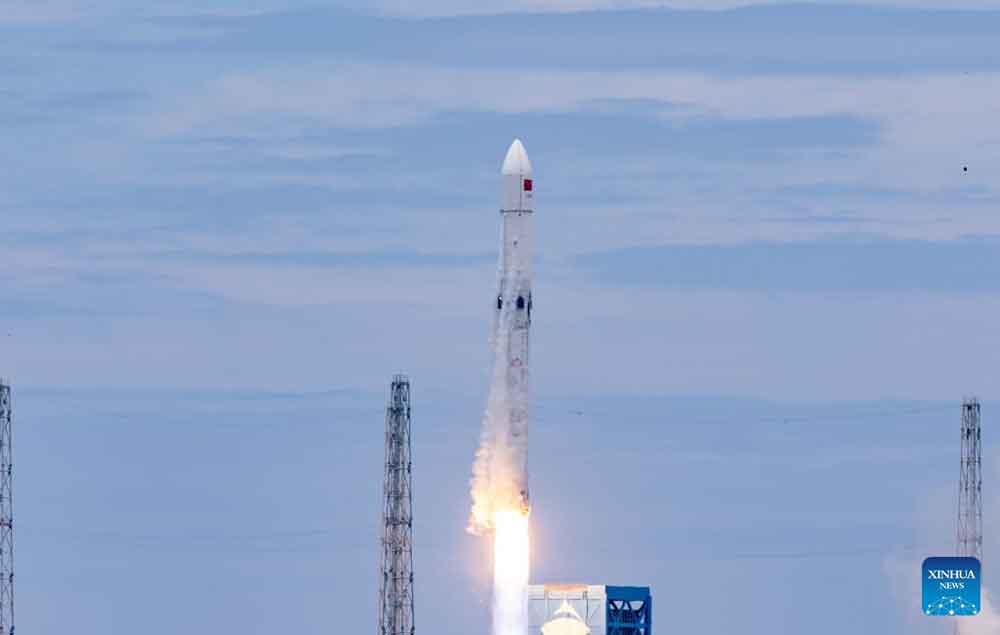
At the same time, Beijing has spent the past decade encouraging private participation in the sector, creating a growing group of companies pursuing technologies that could eventually reduce launch costs and increase flight frequency. LandSpace, Galactic Energy, iSpace and Deep Blue Aerospace are among the companies attempting to develop new launch systems, propulsion technologies and reusable vehicles. Their importance extends beyond the individual hardware they produce. A commercial ecosystem creates multiple centers of experimentation, allowing different companies to pursue different engineering approaches while the state continues to maintain the strategic backbone of the national programme.
This produces a model fundamentally different from a simple state-versus-private comparison. China is effectively attempting to combine the advantages of both. The state can absorb the enormous costs and long development timelines associated with strategic space infrastructure, while private companies can introduce competition and faster experimentation into areas where commercial incentives exist. Not every company will succeed, and some will inevitably fail, but failure within a broad ecosystem is less damaging than failure concentrated within a single institution. The emergence of commercial reusable rockets is particularly significant because reusable launch technology changes the economics of space. A rocket that can be recovered, inspected and flown again does not simply save the cost of manufacturing an entirely new vehicle for every mission; repeated flights generate operational data, increase engineering experience and create the possibility of much higher launch frequency. China's commercial sector is still well behind SpaceX in this respect, but its movement into the same technological territory indicates that Beijing increasingly understands reusability as a central component of future space power.
The Industrial Foundation
The deeper advantage behind China's space ambitions may ultimately have less to do with rockets than with factories. A modern launch vehicle is not simply an aerospace object; it is the product of an enormous industrial network involving advanced metals, precision machining, electronics, sensors, software, propulsion systems, specialized manufacturing equipment and thousands of suppliers. China has spent decades building one of the world's largest manufacturing systems, and that industrial capacity provides an important foundation for the expansion of its space sector. Aerospace companies can draw on domestic production networks for components and materials while benefiting from a large pool of engineers trained in mechanical engineering, electronics, software and related technical disciplines. The advantage should not be overstated, since aerospace manufacturing imposes reliability requirements far beyond those of ordinary industrial production, but scale nevertheless matters. A country capable of manufacturing large volumes of sophisticated hardware has greater opportunities to test, modify and reproduce designs than one dependent on smaller and more fragmented industrial networks.
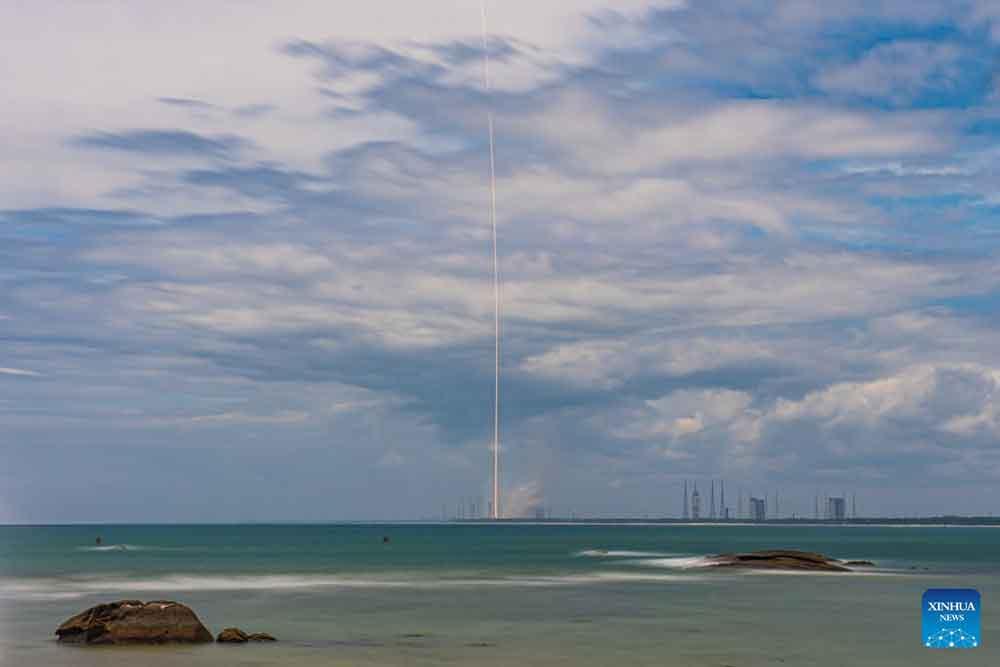
This becomes particularly important in the era of reusable rockets. Reusability is not simply an engineering problem; it is an industrial one. The value of a reusable vehicle emerges when it can be launched frequently enough for the cost of manufacturing and maintaining the system to fall substantially below the cost of replacing it. That requires factories, supply chains, testing infrastructure, launch facilities and a steady stream of missions. China already possesses much of the industrial base required to support such a system, and its commercial space companies are now beginning to connect that manufacturing capacity with reusable launch technology. The question is not whether China can reproduce SpaceX's exact model, but whether it can develop its own model at sufficient scale to make frequent orbital operations economically viable.
The Problem of Political Time
There is also a structural difference between the two countries that has little to do with engineering. Space exploration is inherently a long-term enterprise, while democratic political systems operate on much shorter cycles. American presidents serve four-year terms, congressional priorities change, budgets are renegotiated and major programmes can be reorganized as administrations change. NASA has repeatedly experienced this tension throughout its history, with ambitious projects sometimes being restructured, delayed or abandoned as political priorities shifted. Artemis has maintained a broad commitment to returning humans to the Moon, but it still operates within a political and budgetary environment that can change considerably over time.
China's political system allows a different form of continuity. Major strategic objectives can be incorporated into national planning frameworks and pursued across multiple political and budgetary cycles without the same electoral pressures faced by American programmes. The Chinese Lunar Exploration Programme demonstrates the value of that continuity, moving through increasingly complex stages of orbital observation, landing, surface exploration and sample return while maintaining a broader strategic direction. This does not mean every Chinese programme will proceed exactly according to schedule, nor does long-term planning eliminate technical failure or financial constraints. It does, however, give Chinese institutions the ability to think in decades rather than election cycles, which is particularly valuable when the ultimate objective involves infrastructure that may take generations to mature.
Why the Lunar South Pole Matters
The lunar South Pole is where these different strands of China's space strategy begin to converge. The region contains permanently shadowed craters that receive little or no direct sunlight, creating conditions in which water ice may have survived for extremely long periods. Establishing the quantity, location and accessibility of that water is scientifically important, but the strategic implications are potentially much larger. Water can support human life, be processed into oxygen and, theoretically, separated into hydrogen and oxygen for use as propellant. If future lunar missions demonstrate that these resources can be extracted economically, the Moon could become more than a destination requiring supplies to be transported from Earth. It could begin to function as a staging environment for further exploration.
That possibility explains why lunar exploration is increasingly being viewed through the language of logistics rather than simply discovery. The decisive achievement may not be the first landing at a particular location, but the ability to return repeatedly, establish communications, generate power, move equipment, conduct scientific and industrial operations and eventually support human crews. China’s current lunar programme is gradually building experience across precisely these areas. Chang’e 7 is another step in that progression, and the longer-term objective is increasingly connected to the development of the infrastructure required for sustained lunar operations.
A Different Kind of Space Race
The United States remains the leading space power by many important measures. SpaceX has an enormous advantage in operational rocket reuse and launch cadence, while NASA retains unmatched experience in deep-space exploration and continues to possess extraordinary scientific and engineering resources. American universities, laboratories and private companies remain leaders across numerous areas of aerospace technology. China has not overtaken the United States, and there is no guarantee that it will.
What has changed is the structure of the competition. China now possesses most of the major components required of an independent space power: orbital launch capability, human spaceflight, satellite navigation, space-station experience, planetary exploration, lunar sample return and an increasingly capable commercial launch sector. More importantly, these capabilities are beginning to reinforce one another. Industrial capacity supports rocket production; commercial competition encourages experimentation; state institutions provide long-term infrastructure; lunar missions generate technical experience; and the prospect of future lunar operations creates demand for increasingly sophisticated launch and communications systems.
The twentieth-century space race was largely a contest over prestige and first achievements: the first satellite, the first human in orbit, the first person on the Moon. The emerging competition is more complicated. It is increasingly about who can construct a durable space economy capable of producing hardware at scale, launching frequently, recovering vehicles, sustaining orbital infrastructure and extending operations to the Moon.
China's rise is therefore not simply a story about catching America. It is a story about building an alternative system. The American lead remains substantial, but it is no longer uncontested. The next phase of the space race will be determined not only by who reaches the Moon first, but by who can remain there, supply it, build around it and turn exploration into infrastructure. China has spent five decades preparing for that possibility. The contest for the next space age has already begun.