“Someone Else Will Do It”: The Volunteer’s Dilemma
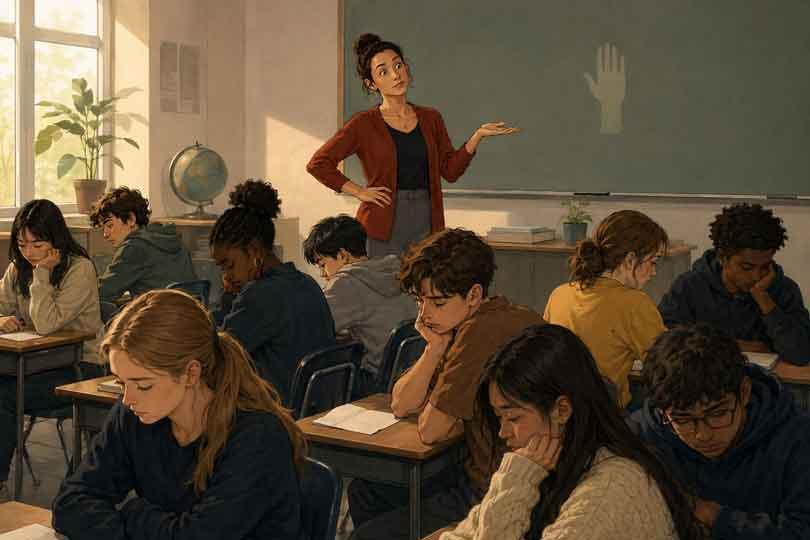
A glass falls in a crowded room. For a second, everyone turns towards the sound. They see the pieces scattered across the floor. They see the person standing above them, embarrassed and unsure of what to do. Everyone notices. Everyone understands. Yet, strangely, no one moves.
Not immediately. Each person waits for another hand to reach down first.
This pause appears everywhere. It happens when a student is being mocked and everyone expects someone else to defend them. It happens when a neighbour needs help carrying something heavy or when a group assignment requires one person to take responsibility. The need is visible. The solution is simple. The difficulty is that helping costs something, even if that cost is only time, effort or discomfort.

This is the volunteer’s dilemma: a situation in which everyone benefits if one person acts, but each individual would prefer that the person acting be someone else. At first, it sounds selfish.
Sometimes it is. However, the dilemma is more complicated than a room full of uncaring people. Often, everyone genuinely wants the problem solved. They simply do not want to be the one who pays the price of solving it. Helping might mean risking embarrassment, interrupting your day, accepting responsibility or stepping into a situation you do not fully understand. So, each person looks around and thinks the same comforting thought: surely someone else will do it.
The more people there are, the easier that thought becomes. One of the most famous stories associated with this idea is the 1964 murder of Kitty Genovese in New York. Early reports claimed that thirty-seven or thirty-eight people witnessed the attack and did nothing. The story became a symbol of urban coldness: a woman cried for help while an entire neighbourhood watched from behind its windows.
However, the original account was deeply misleading. Later reporting established that far fewer people saw parts of the attack, some misunderstood what was happening, two people called the police, and one neighbour went outside to hold Genovese as she lay dying. The truth does not give us a simple story about dozens of heartless witnesses.
Perhaps that matters. Human behaviour is rarely as clean as the lesson we try to build from it. People may hesitate not because they feel nothing, but because they are uncertain. They wonder whether the situation is truly serious. They look at the stillness of everyone around them and use it as evidence. If nobody else appears alarmed, perhaps there is no reason to be alarmed. Silence begins to confirm silence.
Psychologists John Darley and Bibb Latané described part of this as a diffusion of responsibility. When you are alone and something goes wrong, responsibility has nowhere else to go. It lands entirely on you. In a crowd, however, it seems to dissolve. It spreads so thinly across the room that no one feels they are holding enough of it to act.
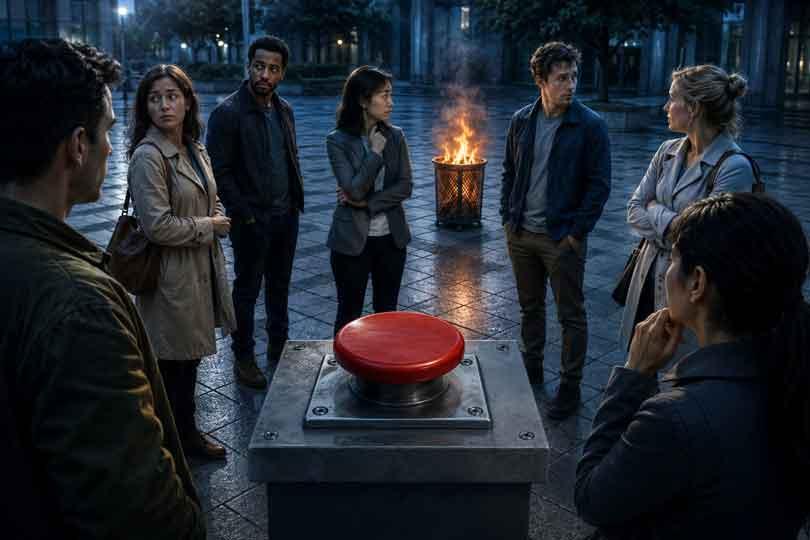
The sociologist Andreas Diekmann later examined this through game theory and called it the volunteer’s dilemma. Imagine several tenants living in a building. The furnace filter must be changed, or everyone will lose heat and hot water. Changing it requires one tenant to sacrifice time and effort. If someone volunteers, the entire building benefits. If nobody volunteers, everyone suffers.
For each tenant, the best outcome is obvious: let somebody else change it. The worst outcome is also obvious: nobody changes it. Volunteering sits uncomfortably between the two. You accept a small personal cost to prevent a larger shared loss. Everyone knows this, and everyone knows that everyone else knows it too. Then the simple chore becomes a silent game of prediction. You wait because another person may act. They wait because you may act. Both of you are prepared to help if absolutely necessary, but each hopes necessity will choose the other.
This explains why adding more possible helpers can sometimes produce less help from each person. In a group of two, the chance that the other person will act may not feel safe enough. In a group of twenty, inaction becomes easier to justify. Surely, among nineteen other people, one of them is braver, stronger, closer or more qualified.
The crowd begins to feel like a promise. Yet a crowd does not have hands. It does not make phone calls, lift fallen strangers or speak against cruelty. Only individuals do. The word “everyone” can create the illusion of a person who does not actually exist.
The dilemma becomes even more interesting when we consider who knows what. If only you know that the furnace needs attention, you are likely to act because you cannot rely on anyone else. If everyone receives the same public announcement, responsibility becomes common knowledge. You know they know, and they know you know, and each person starts calculating what the others might do.
Public knowledge can unite people, but it can also give hesitation somewhere to hide. We see this pattern far beyond emergencies. Climate change is a volunteer’s dilemma stretched across countries and generations. Everyone benefits from collective action, yet each person, company or nation may prefer that others absorb more of the cost. In group projects, all members want a good grade, but each may wait for someone else to organise the work. Online, hundreds of people may witness harassment, while each assumes another viewer will report it. Even friendships can suffer from this quiet arithmetic. Everyone notices the person becoming distant, but each waits for someone else to ask if they are okay.
The danger is not always that nobody cares. Sometimes everybody cares, privately. Care simply fails to become action. Understanding the volunteer’s dilemma does not mean we should excuse inaction. It gives us a way to interrupt it. In an emergency, responsibility should be made specific. Instead of shouting, “Someone call for help,” point to one person and say, “You, call now.” In a group, tasks should be given names rather than left floating between people. When responsibility belongs to everyone in general, it can end up belonging to no one in particular.
We can also learn to notice the moment our mind begins bargaining with the crowd. The thought “someone else will do it” should become a warning rather than a reassurance. It may be true. Someone else may act but if every person uses the same sentence, nothing happens.
There is a strange loneliness inside shared responsibility. We are surrounded by people, yet each person waits alone, watching the others for permission to move. The solution is not to become fearless or endlessly self-sacrificing. It is simply to understand that sometimes the first act changes the entire room. One person kneels to gather the glass, and suddenly others join. One person speaks, and the silence loses its authority. One person steps forward, and the crowd remembers that it is made of people.
Perhaps courage is not always a dramatic decision. Sometimes it is refusing to pass responsibility to an imaginary stranger. The volunteer’s dilemma asks a difficult question: when everyone is waiting for someone, who becomes someone? Maybe the answer begins the moment we stop looking around.