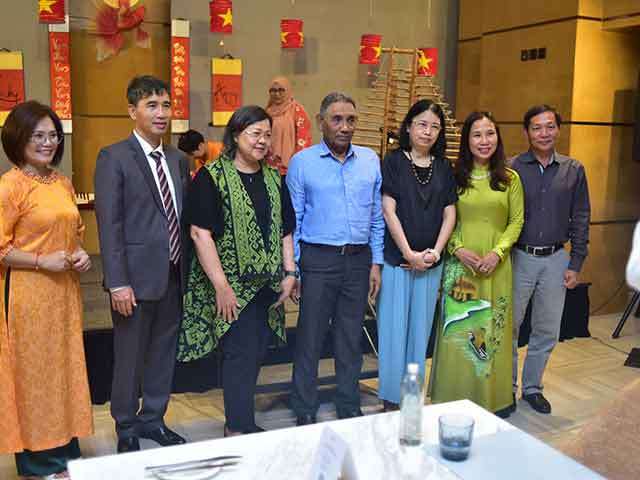
Unspoken Cycles: Thilini Jinadasa at “Take a Chillpill”
By Noeli Jesudas
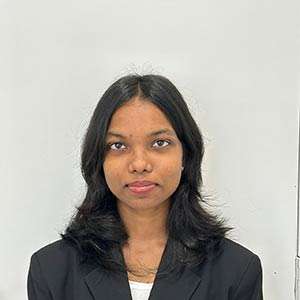
Thilini Jinadasa is a Colombo-based visual artist and designer whose practice brings together analytical precision and emotional depth. Holding a Bachelor of Design from the University of Moratuwa and with a professional background as a Lead UI/UX Designer, her work reflects a structured, systems-driven approach to composition, spatial organization, and visual rhythm, bridging design thinking with expressive artistic inquiry. Her work has gained both local and international recognition, with exhibitions including a dual showcase at Pristine Contemporary, India (2025), a group exhibition at Art Rhizome, Sri Lanka (2026), and the 7th Edition of Masterpieces by Nations Trust Private Banking in collaboration with the George Keyt Foundation (2025). She has also been featured in prominent Sri Lankan exhibitions such as Young Contemporaries (2019) and Kala Pola (2018–2025), and her practice was highlighted in The Architect Sri Lanka magazine in 2024.
Your work translates menstruation into abstract emotional landscapes. What does abstraction allow you to express that realism cannot?
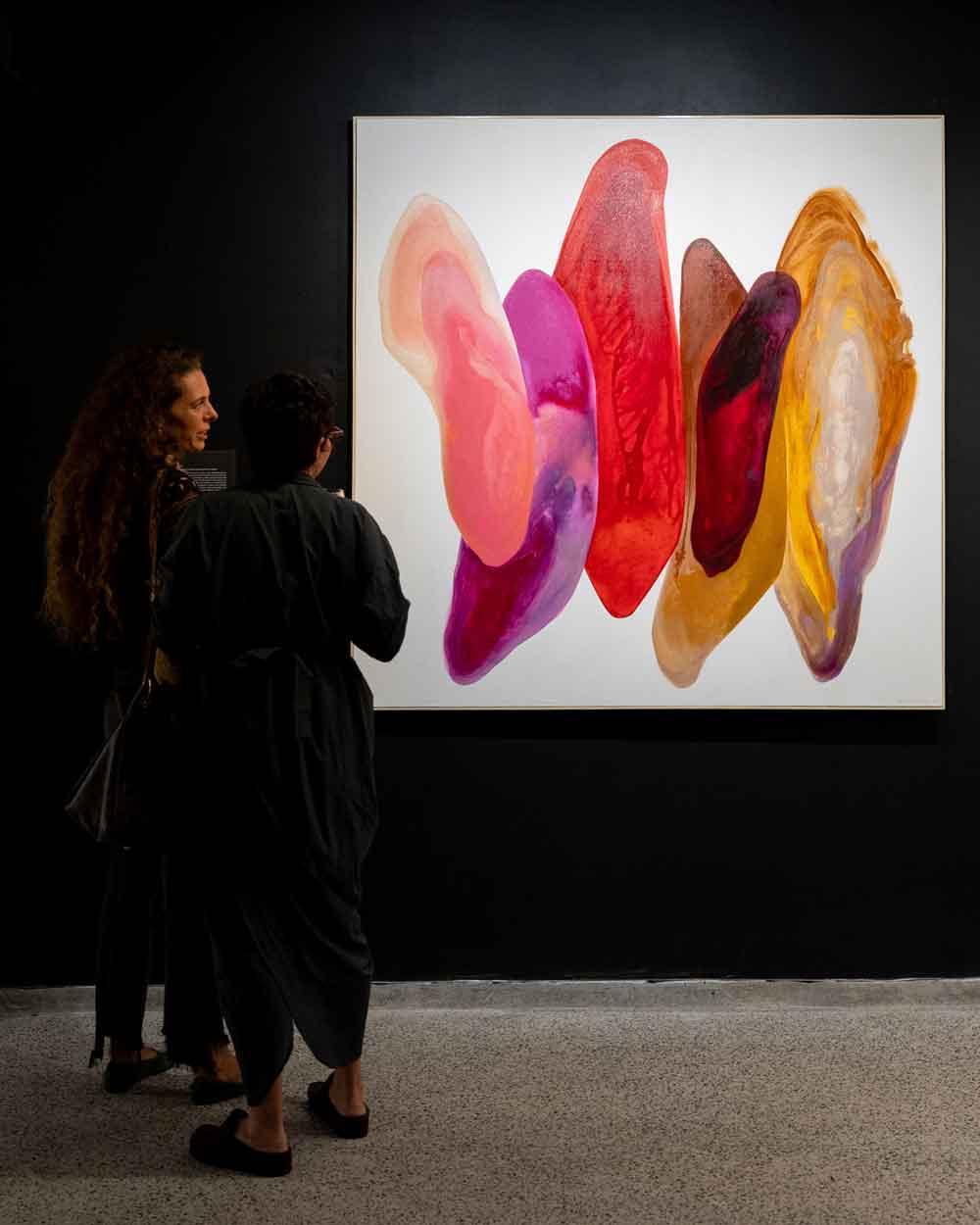
Abstraction allows me to move beyond the physical reality of menstruation and explore its emotional, psychological, and social dimensions. While realism describes what the body looks like, abstraction helps me express what the body feels; fear, discomfort, silence, vulnerability, resilience, and transformation. Works such as 28 Days, Hide it, but WHY?, and Yet Unavoidable reflect menstruation as a universal and unavoidable experience. Through abstraction, I explore the inner emotional landscapes of women and the social attitudes that often remain unspoken. Using colour, texture, layering, rhythm, and fragmented forms, I translate experiences that are difficult to articulate through direct representation. Rather than illustrating menstruation literally, the paintings embody the emotional weight, cultural stigma, and invisible tensions many women carry throughout their lives.
“Take a Chillpill” questions how much a woman is allowed to feel. How does your work confront the pressure to hide or suppress bodily experiences like menstruation?
“Take a Chillpill” interrogates how women are socially conditioned to regulate, soften, or silence their emotional and bodily realities to remain “acceptable.” The phrase itself often acts as a dismissal, used when a woman’s pain or vulnerability becomes visible and inconvenient to public comfort. Through abstraction, fragmented forms, and intensified colour fields, my work resists this silencing. Instead of concealing menstruation or emotional intensity, it amplifies them, transforming what is usually hidden into visual presence. The body is not treated as something to be controlled or corrected, but as a site of memory, endurance, and internal truth. This suppression is lived: a girl hiding period pain in school, a woman working through cramps in silence, or the routine concealment of discomfort to avoid judgment. These repeated experiences form an internal archive of “managed suffering,” where visibility is replaced by control.
The work asks: what is carried when bodily experiences are constantly edited for social acceptance? Are these memories erased, or stored beneath performance—and who decides which discomfort can exist publicly?
The cocoon appears as a recurring form in your work. How does this symbol reflect both vulnerability and transformation in women’s lives?
The cocoon appears throughout this work as a metaphor for both protection and restriction, vulnerability and transformation. It exists as a space shaped by social, physical, and emotional pressures, especially within a consumer-driven society that constantly demands adaptation. I’m interested in what kinds of “cocoons” are formed in order to survive, and how inner shifts occur as innocence transitions into a more aware, responsible adulthood. It represents a transitional state, something fragile and still forming yet holding the potential for change and renewal. In relation to women’s experiences, the cocoon reflects emotional and bodily conditions often navigated in silence, particularly around menstruation, social expectations, and cultural control. It carries isolation, concealment, and emotional containment, while also suggesting endurance, growth, and becoming. Transformation is rarely comfortable. Like a cocoon holding tension before emergence, women often carry invisible burdens while adapting, surviving, and evolving within restrictive environments. Through fragmented cocoon-like forms, I explore this duality of softness, fragility, and becoming.
Your compositions move between containment and expansion. How do these visual tensions mirror the way society regulates women’s bodies?
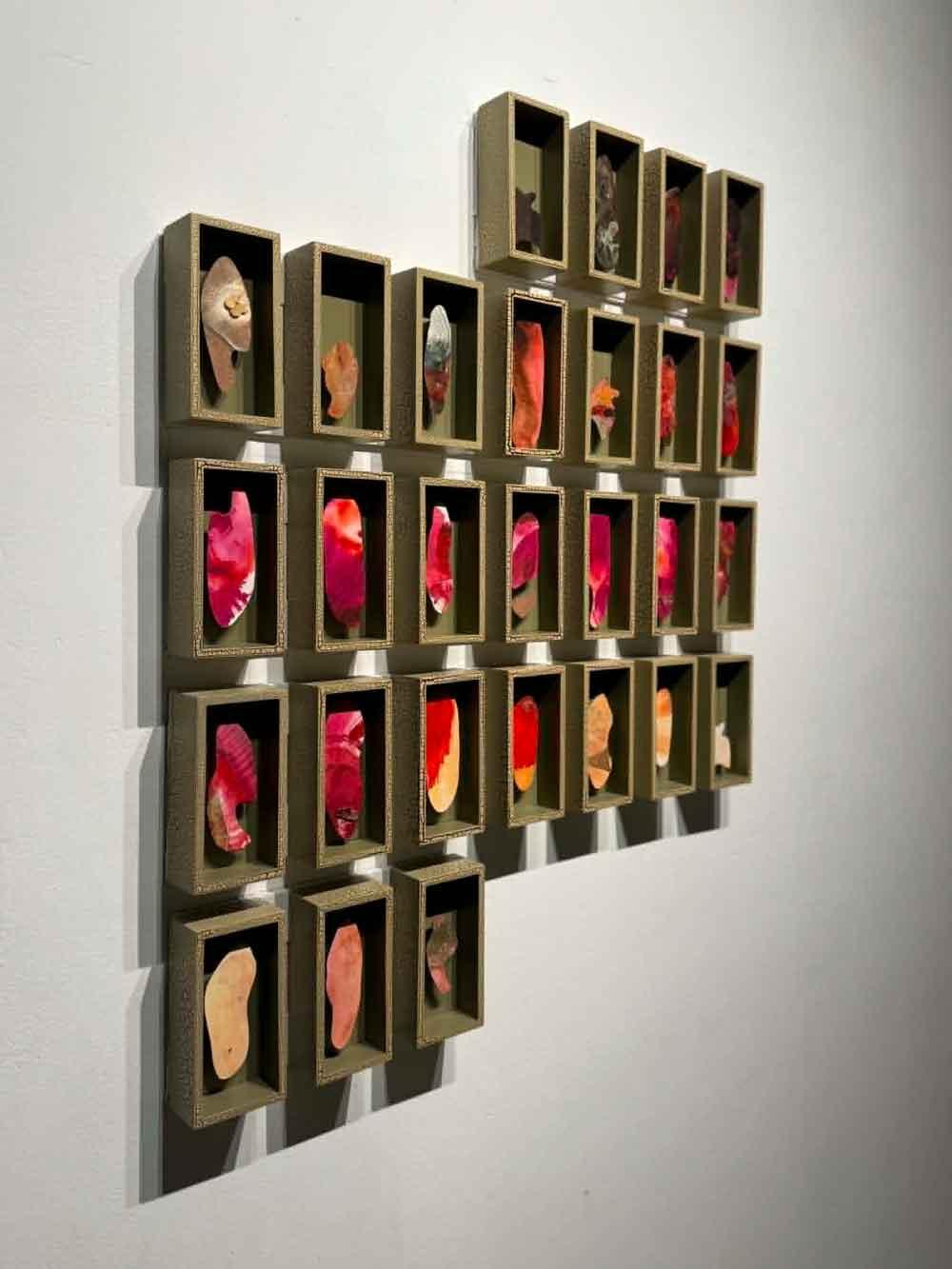
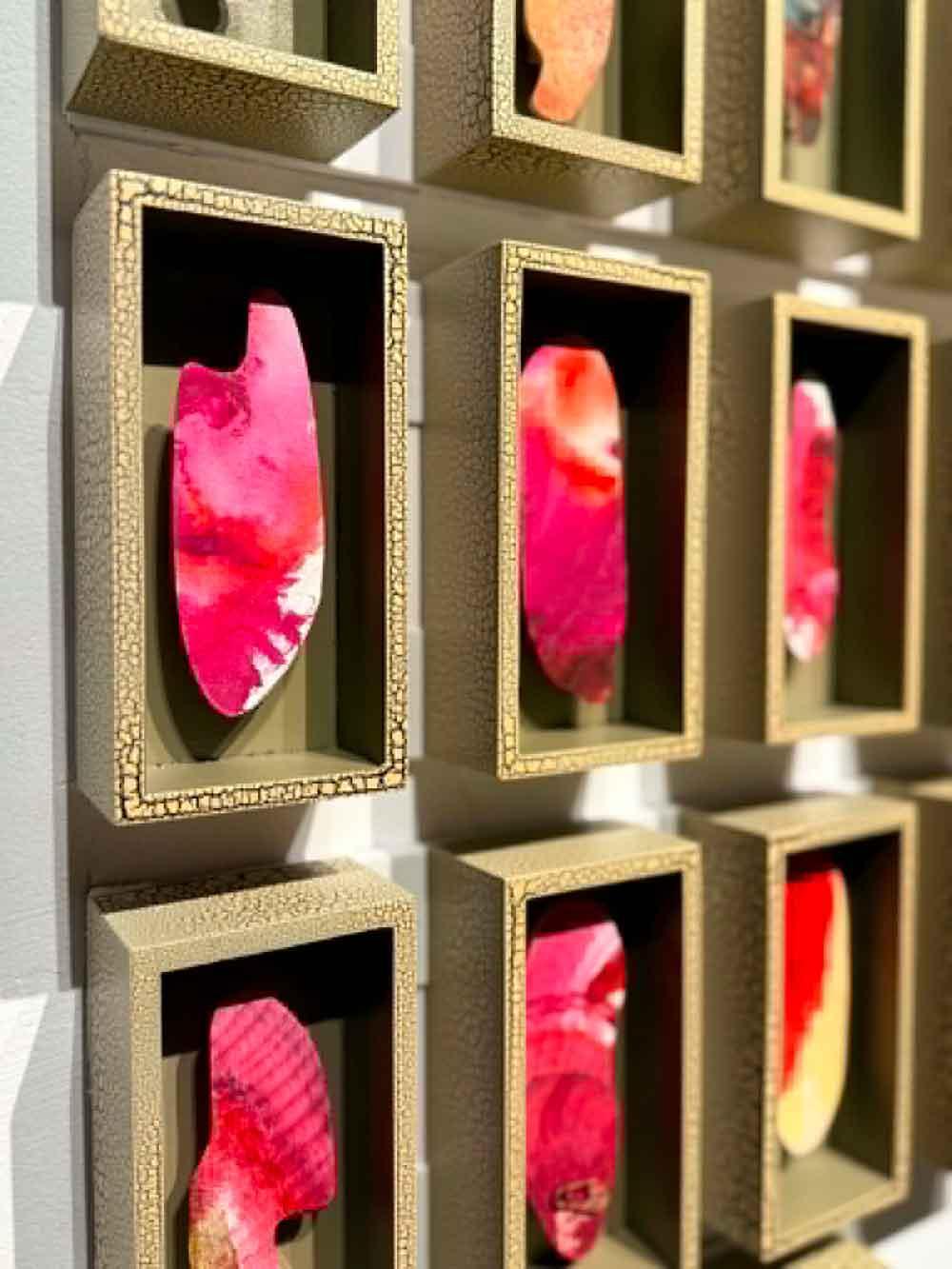
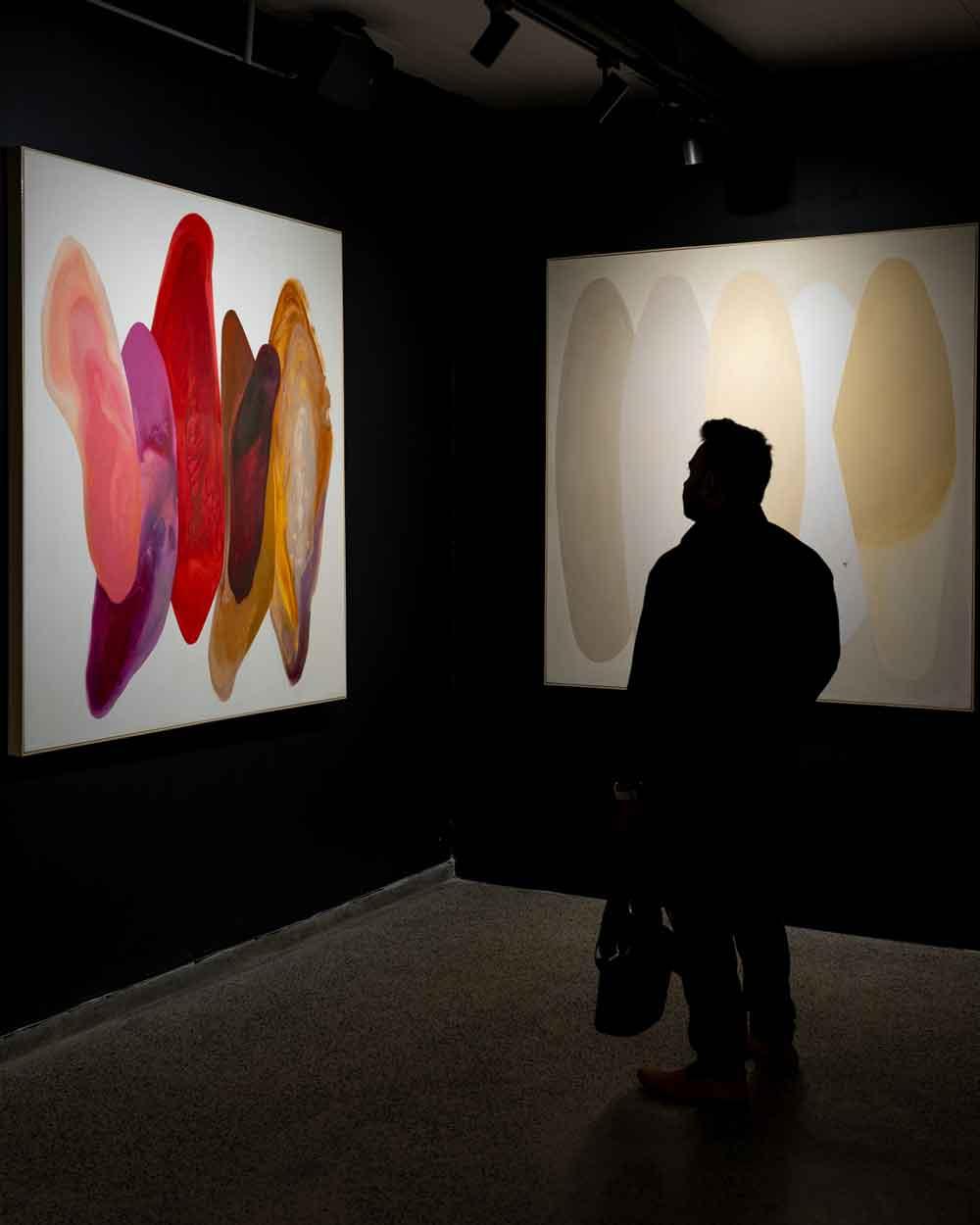
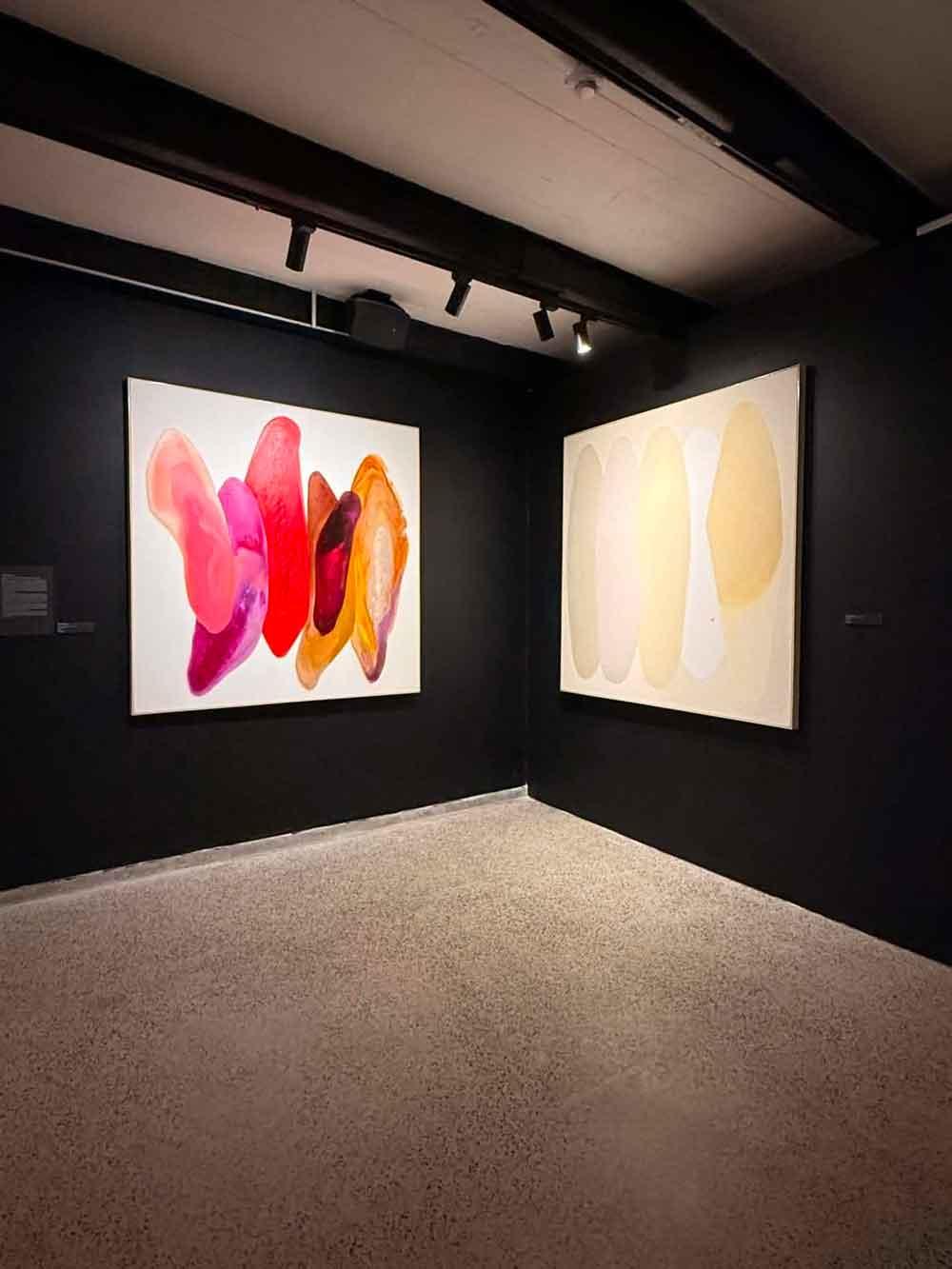
The tension between containment and expansion in my compositions reflects how society regulates women’s bodies through control, while expecting emotional labour, resilience, and responsibility. For example, my installation දින 28 (28 Days) explores physical and emotional experiences, health, school and work contexts, hygiene challenges, and social stigma across generations. Each section holds fluid textures and patterns within a fractured structure, suggesting what is hidden yet still present beneath the surface. I use spatial tension, fragmentation, and layered abstraction to mirror how women negotiate suppression and self-expression. The work suggests bodies and emotions pushing against imposed limits, questioning what is considered acceptable, visible, or “appropriate.” Ultimately, it reflects a body that is regulated yet continuously expands beyond restriction through resilience.
You draw attention to silence and stigma, especially in South Asian contexts. Was there a personal moment or memory that shaped this exploration?
Yes, this exploration comes from both personal memory and collective observation. Growing up in a South Asian environment, I saw how menstruation was often treated as something to be hidden, controlled, or spoken about in whispers.
In school, many girls carried the fear of staining a white uniform and becoming the subject of embarrassment or judgment. That anxiety became part of everyday life. Over time, I realized these experiences were not isolated but deeply connected to cultural attitudes surrounding women’s bodies. In Sri Lanka, the concept of Kili still associates menstruation with ritual impurity. Beyond Sri Lanka, the issue can have even more severe consequences. In the sugarcane-growing regions of Maharashtra, India, some women have undergone hysterectomies at a young age because missing work due to menstrual pain could threaten their livelihoods. These realities made me reflect on how silence and stigma continue to shape women’s lives. My work translates those experiences into visual form through abstraction, colour, and fragmentation, exploring not only menstruation itself, but also the shame, invisibility, and emotional burdens that many women are taught to carry.
Colour plays a powerful role in your work, particularly reds and flesh tones. How do these colours function as emotional and political statements?
Colour functions as both an emotional and political language in my work. In 28 Days and Yet Unavoidable, reds, flesh tones, and earthy pigments reference the body while evoking pain, vulnerability, fertility, endurance, and transformation. Red, in particular, becomes a bodily presence, symbolizing blood, emotional intensity, and survival. Reclaiming these colours challenges the stigma and invisibility often associated with menstruation. In Hide it, but WHY?, the muted whites, creams, and pale pinks evoke school uniforms, innocence, and conformity. The subtle red mark disrupts this calm surface, symbolizing exposure, shame, and the fear many girls experience around menstruation. Together, these colours reveal how stigma operates quietly within social and cultural structures.
Your background in UI/UX design brings structure and systems into your practice. How does that influence the way you construct something so deeply emotional and fluid?
My background in UI/UX design strongly shapes the structural foundation of my practice. I graduated from the University of Moratuwa and worked as a Lead UI/UX Designer, where I learned how systems function, how rhythm, hierarchy, repetition, spacing, and interaction can shape emotional and psychological experience. Although my paintings appear fluid and emotionally driven, there is often an underlying architectural logic guiding their composition. I’m interested in balancing control with unpredictability. Emotional content emerges through gesture, layering, colour, and material tension, while structure holds these intensities in place. I also held a dual exhibition last year at Pristine Contemporary in India, which was rooted in childhood memories from Sri Lanka.
Your work reclaims menstruation from shame to strength. What kind of conversations do you hope audiences walk away having after experiencing this installation?
I hope audiences leave with more empathy and openness toward conversations around menstruation and women’s emotional realities. The work challenges the silence and stigma surrounding the female body while also reclaiming menstruation as a symbol of resilience, endurance, and transformation rather than weakness.