Desi Aunties, Desi Uncles: A Match Made in Heaven The Art of Comparing and the Inability to Be Happy for a Child
By: Marian de Silva
In Sri Lankan households, it might not be as dramatic as Indian teledrama series, but we often witness this peculiar phenomenon: a group of adults, sometimes unqualified, sometimes unemployed, often limited to the four walls of their own insecurities, confidently offer mentorship, advice, solutions, and life blueprints on education, career, relationships, reproduction timelines, and occasionally, the geopolitical future of the country. And yet, in many South Asian households, degrees are treated as personality traits and job titles as moral superiority.
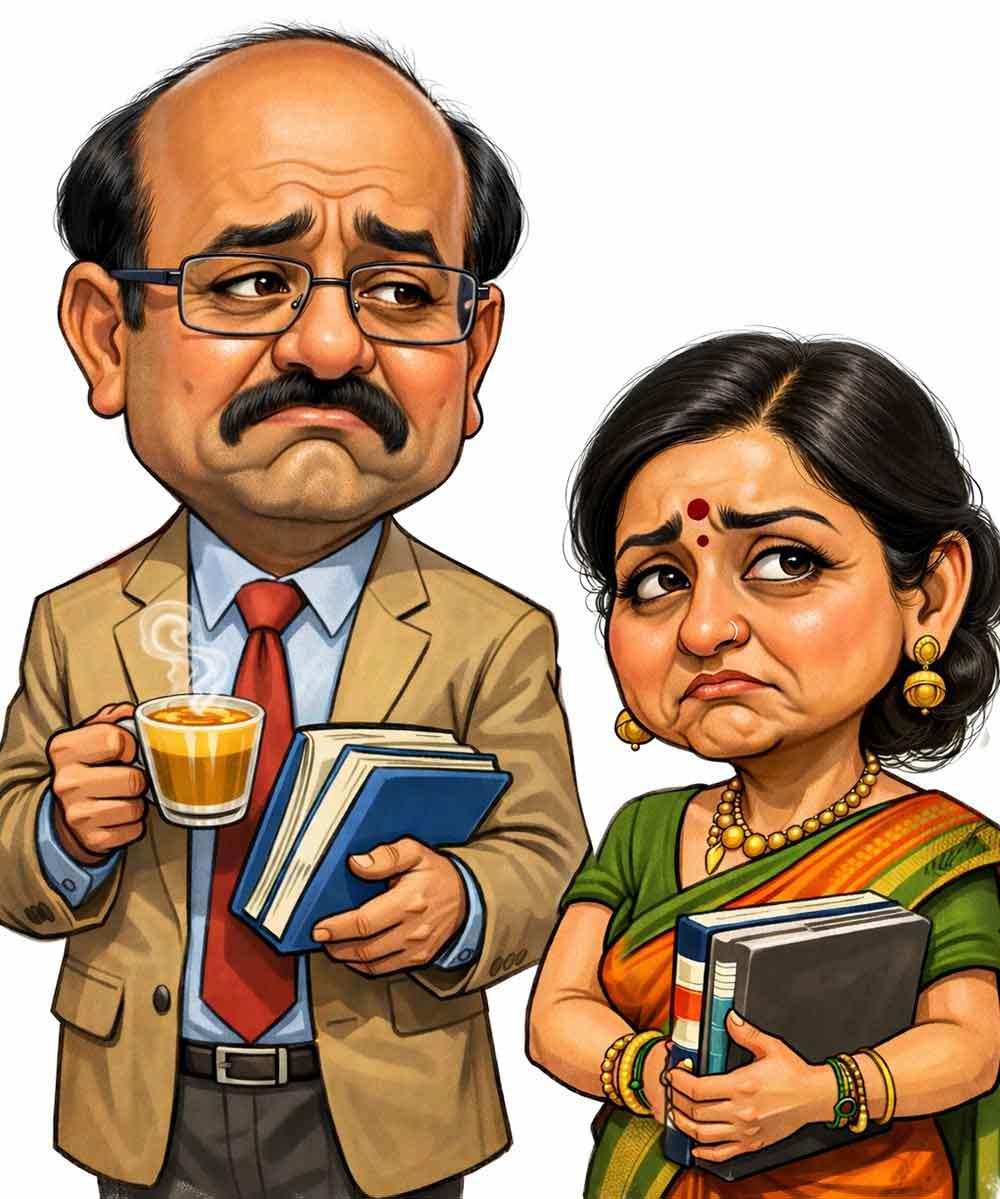
Desi aunties and uncles have mastered a rare art form: they mind our business as their own while poking their nose into every conversation except the one about their own shortcomings. After careful observation, to ace this art form, you should have:
- Experience? Optional.
- Self-awareness? Rare. Volume? Maximum.
For them, it’s a worry more gigantic than Sigiriya, one of the world’s wonders. If a young woman remains unmarried to focus on her career rather than marriage, in their heads, the alarm bells start ringing louder than church bells. “You might have to stop working when you get married!!” says the aunty who begs her husband for money to buy a hairclip. “Shall I start finding someone for your son?” How kind of these uncles and aunties to be more worried about the children of others. Truly South Asian, very considerate. “It’s time to have kids.” The irony is that we hear this from aunties who keep complaining about their own children. The irony is so thick you could butter toast with it.
On the news, I saw a group of old aunties, freshly returned from a serene religious event, dressed in white and radiating what I assume was spiritual purity, passionately commenting to the camera on how an unmarried woman should not co-lead a country. They were referring to Harini Amarasuriya during the controversy surrounding a Grade 8 English pupil’s book. Apparently, the prerequisites for leadership now include a husband and also the talent to babysit children, and sometimes a husband too. Degrees? Policies? Governance? Experience? Constitutional literacy? No. A wedding ring.
Among these circles, you will often find a particular subspecies: the well-educated Desi couple. This is not the stereotypical “uneducated gossiping elder” narrative. No. These ones hold degrees. Well-paid. They drive luxury cars. They are engineers, doctors, lawyers, entrepreneurs with impressive profiles. Shiny accolades. Framed certificates and graduation photographs displayed proudly in living rooms next to carefully curated family portraits. As parents, they work tirelessly around the clock, sacrificing sleep, comfort, and occasionally sanity to ensure their precious child becomes successful in their eyes.
But when their neighbour’s or sibling’s children succeed? There come the half and forced smiles, side-eyes, which are still better than subtle verbal comparison.
- “I wonder if people can understand what you are writing!!”
- “Haven’t heard of your degree. Is it valid??”
- “Writer? Not a proper job, noh!!”
- “Oh, she did law? Our son was accepted earlier, you know.”
- “Medicine? Yes, but in which university?”
- “Published an article? That’s nice… but is it paid?”
- “She can only write thanks to her seeya’s (grandfather’s) genes.”

It is almost as if success becomes a limited-edition commodity. One child’s achievement must threaten another’s worth. Applause is rationed. Praise is selective. Pride becomes competitive.
- Have we ever thought why? Well, that remains a question for you, dear reader.
- Personally, I wonder, is it fear?
- Perhaps it is insecurity disguised as tradition.
- Perhaps it is the lifelong accepted norm that love must be earned through comparison.
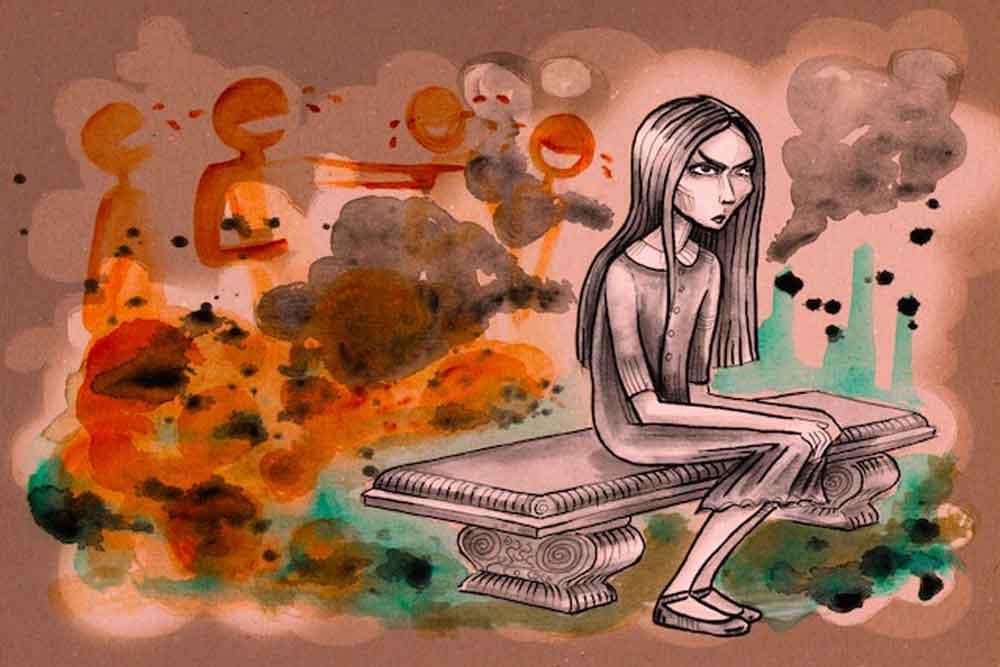
In many South Asian families, comparison is not a side dish. It is the main course.
- “Look at your cousin.”
- “Can you gain/lose weight?”
- “Try to be fair like your sister.”
- “See how well she behaves.”
- “He already bought a house.”
- “They have two kids already!!”
- “They’re in Australia.”
- “All the other kids have become reputable people, so you should too.”
The scoreboard never rests.
What is fascinating and mildly tragic is how this culture of comparison begins early. Children grow up not knowing self-worth, but relative worth. Not “Am I happy?” but “Am I ahead?” Not “Am I fulfilled?” but “Am I better?” All these comparisons, and in the end, these adults die after putting children against each other, as they were busy teaching kids to compete rather than to love and protect each other.
And the adults who perpetuate this are often victims of it themselves.
- The aunty who compares your salary was once compared for her complexion.
- The uncle who measures your career was once measured by his exam results.
- The mother who pressures her daughter was once pressured into marriage.
The father who pressures his son was once forced into a path he didn’t choose. Trauma, but make it generational.
Let me be clear: this is not an attack on culture. South Asian families are capable of extraordinary love. They show up. They sacrifice. They feed you until you physically cannot breathe. They will fight the world for you. But they will also compare you to the neighbour’s child while doing it. There exists a strange inability among some adults to be genuinely happy for a child who is not their own: a niece excelling academically, a nephew launching a start-up, a cousin writing for a national newspaper, a young woman choosing autonomy over matrimony.
Instead of pride, there is discomfort. Because if another child shines, it exposes insecurity about their own. And here lies the uncomfortable truth: many adults confuse manipulation with care.
When a child chooses differently, career over marriage, passion over prestige, independence over obedience, it unsettles the carefully curated narrative of “how things should be.” It challenges the formula they lived by. It threatens the validation of their own sacrifices. So, what is their easiest defence mechanism?
- Criticise.
- Undermine.
- Question.
- Wrap it in “concern.”
Desi aunties and uncles rarely say, “I am insecure.” They say, “We are just worried about you.”

They rarely admit, “I feel threatened.” They say, “In our time, things were different.” Of course they were.
In your time, social media did not exist. In your time, women had fewer options.
In your time, you did not even know something called mental health existed. In your time, survival meant silence. But times evolve. And so must mindsets. The tragedy is not that they lack education. Many are highly educated. The tragedy is that emotional intelligence does not automatically accompany academic achievement.
- A degree does not guarantee empathy.
- A profession does not guarantee perspective.
- A wedding does not guarantee wisdom.
And perhaps the most fascinating dynamic of all is this: the same parents who demand their children “be the best” are sometimes the least capable of applauding excellence when it appears outside their immediate bloodline.
What does that teach the next generation?
- That love is conditional.
- That pride is selective.
- That success must be monopolised.
And the cycle continues.
Young adults grow up anxious, hyper-aware, constantly performing. They curate their lives not for fulfilment but for approval. Careers are chosen to silence critics. Relationships are pursued to satisfy relatives. Achievements are posted online not for joy, but for validation. Because somewhere in the background, a chorus of aunties and uncles is watching. Assessing.
Comparing. Judging.
It would almost be comedic if it were not so deeply embedded.
And yet, here is the twist: many of these very adults will later complain that “children nowadays are distant.” That they do not visit. That they do not share. That they do not confide.
- But vulnerability cannot grow in soil constantly fertilised with comparison.
- You cannot shame a child into closeness.
- You cannot compete your way into respect.
- You cannot belittle someone into becoming smaller so that you feel bigger.
Real pride is expansive. It celebrates without subtraction.
Imagine a family culture where a cousin’s success is communal joy rather than quiet rivalry. Where an unmarried woman is seen as autonomous, not incomplete. Where leadership is measured by competence, not marital status. Where concern is not weaponised.
It is possible.
But it requires something radical: introspection.
It requires aunties and uncles to pause before commenting. To ask, “Am I guiding, or am I projecting?” To consider whether their words uplift or undermine.
And perhaps most importantly, it requires recognising that a child’s life is not a competition bracket.
The next time an elder says, “Look at your cousin,” perhaps the response should be, “Yes. Look at them. Isn’t it wonderful?”
Because here is the revolutionary idea: another child’s success does not diminish your own.
- There is room.
- Room for multiple doctors.
- Room for multiple writers.
- Room for managers.
- Room for women who marry and women who do not.
- Room for engineers, activists, entrepreneurs, artists.
- Room for pride without poison.
So, to the Desi aunties and uncles, the loving, meddling, well-meaning, occasionally insufferable pillars of our communities, here is a gentle suggestion: Be happy. Not strategically happy. Not politely happy. Not competitively happy. Just happy, genuinely. You might be incapable of knowing whether your opinion is good or not. Just because you believe it is, it might not be. Because the true mark of intelligence is not how well you compare; it is how well you celebrate. And that, unlike degrees or luxury cars, cannot be framed on a wall.
Dedicated with love to many aunties and uncles with comical criticism energy.