The Sri Lankan Leopard Brown Eyes Hidden Among the Ceylon Green
Marian de Silva
A presence that settles into the spine before the eyes can confirm it. Somewhere between shadow and light, something shifts. It is so precise, so deliberate, it feels less like movement and more like awareness itself. And then, if you're lucky, you catch it. Not fully; never fully. Just a gaze. A stillness. A body folded so seamlessly into the wild it feels as though the forest has learned how to watch.
For an icon so powerful and deeply embedded into the rhythm of our island, it is disappearing in ways far less visible than its movements. Sri Lanka has always been a place where the wild feels intimate. It is not distant or unreachable, but close enough to brush against your everyday life. The forests breathe beside roads. The ocean hums at the edge of cities. And somewhere within this layered, living landscape, the leopard has always existed, not as a spectacle, but as a quiet constant. A keeper of balance. It is a presence you don't question because it feels as though it has always been there.
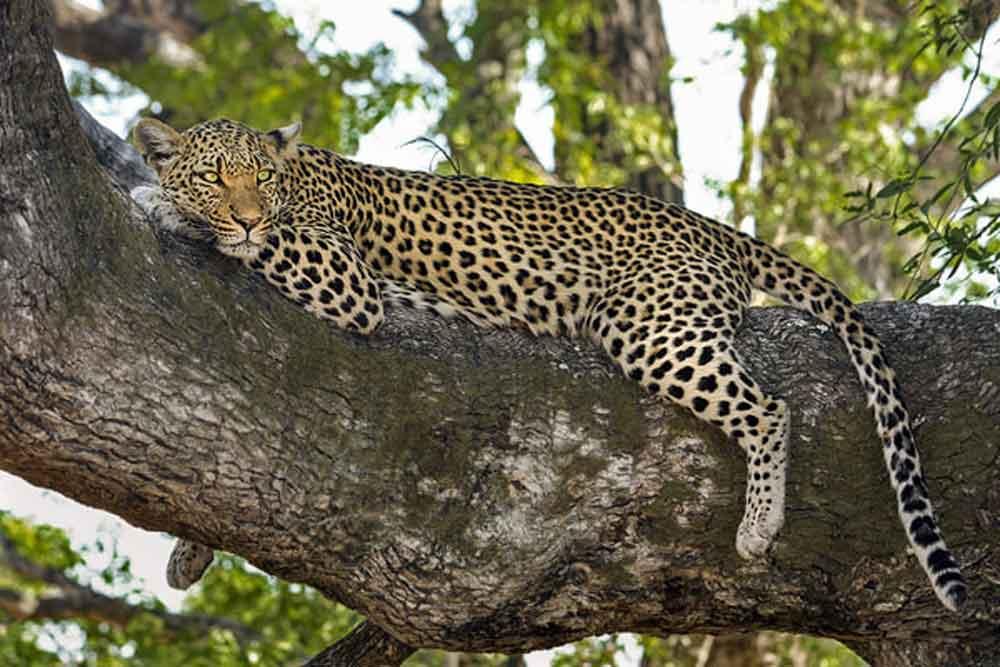
Endemic to the island, the Sri Lankan leopard, also known as Panthera pardus kotiya is found nowhere else in the world. It is not just another big cat; it is ours, shaped by the contours of this land and adapted to its shifting climates, its dry zones, its rain-soaked forests, and it’s cool highlands wrapped in mist. In wild homes like Yala National Park, it is seen more often, moving with a confidence that borders on indifference. There, it walks in daylight, drapes itself across branches, and allows itself to be witnessed briefly, selectively, and always on its own terms.
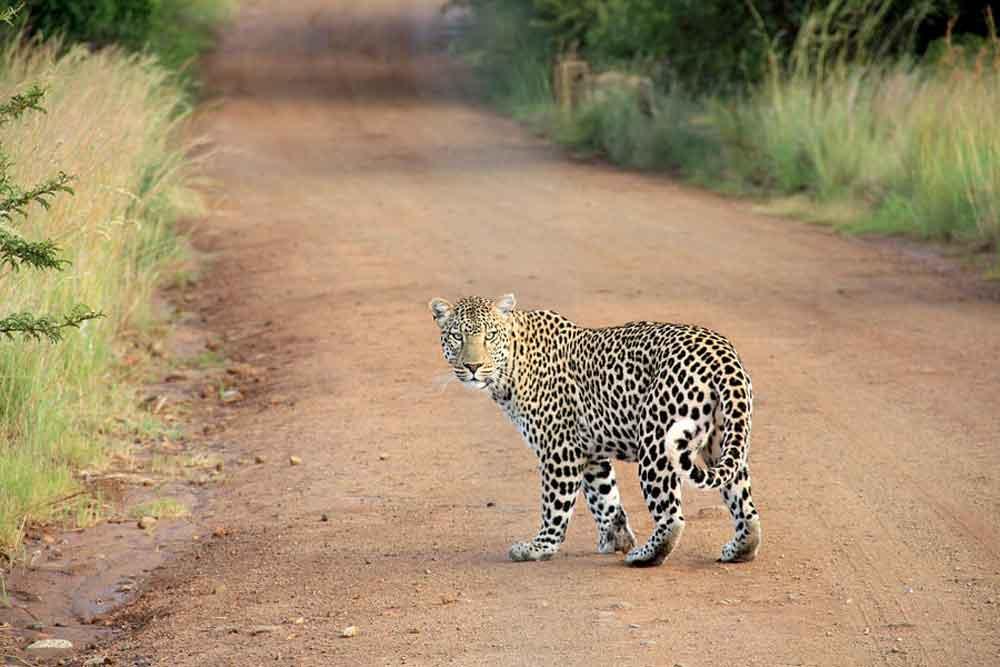
But even in visibility, it remains elusive. In quieter landscapes like Wilpattu National Park, the leopard becomes something else entirely. It is less an animal and more an idea. A flicker between trees. A suggestion in the undergrowth. It is a presence that exists just beyond certainty. You could spend days searching and leave with nothing but the feeling that you were never alone. This is the paradox of the leopard: it has never needed to be seen to be known.
It sits at the top of Sri Lanka's food chain, an apex predator without natural rivals. There are no lions and no tigers. This absence has shaped it into something uniquely composed. It does not fight for dominance in obvious ways. It does not need to prove itself. Its power is quiet, controlled, and absolute. It moves with the assurance of something that understands its place in the world without needing to defend it. And in doing so, it maintains a balance most of us will never notice. Deer populations are kept in check. Ecosystems are regulated. The invisible threads of life are held in place by a predator that rarely announces itself. Remove the leopard, and the forest does not immediately collapse, but it begins to shift. Slowly. Subtly. Irreversibly.
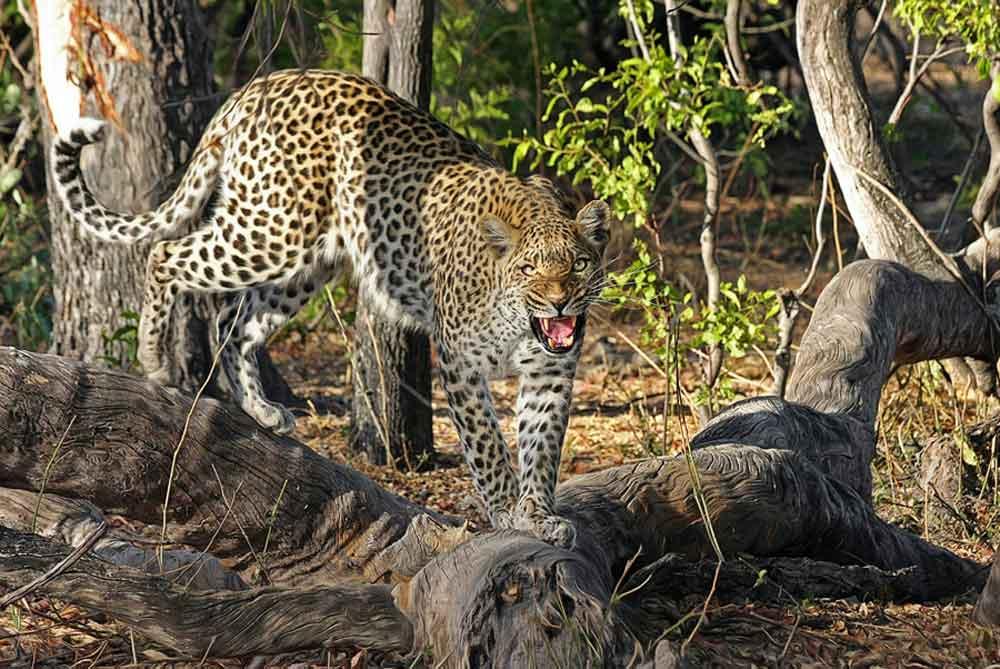
And yet, we are already pulling at those threads. The forests it once moved through without interruption are no longer whole. Roads cut through them. Settlements press against their edges. Land is cleared, divided, and repurposed. What was once a continuous stretch of territory becomes fragments: isolated, shrinking, and insufficient. For an animal that depends on space, this is not just an inconvenience. It is an absolute crisis. With less room to move, the leopard comes closer. Closer to villages. Closer to roads. Closer to us. And this is where coexistence begins to fracture. A missing goat. A taken dog. A shadow seen too close to home. These moments, small in isolation, build into something heavier: fear, frustration, and retaliation. Snares are set, often not even for the leopard, but it finds them anyway. Steel tightens where it should never be. It is a slow suffering hidden deep within the same forests it once ruled effortlessly.
There is something almost cruel about it, the way such a powerful animal is undone not by strength, but by circumstance. Poaching, too, lingers in the background. It is not always visible or spoken about, but it is present. A skin, a body part, a transaction that reduces something magnificent into something marketable. And just like that, another presence disappears, not loudly or publicly, but quietly removed from a landscape that needed it. And still, the leopard endures. That is perhaps the most haunting part of this story: not how quickly it is disappearing, but how quietly it continues to survive. It adapts to tea estates. It moves through the edges of human settlements. It exists in spaces that were never meant to hold it. There have been sightings where there should not be sightings, and movements where there should not be movement. It is trying, persisting in a world that is steadily making less room for it.
But persistence is not the same as security. Today, the Sri Lankan leopard is classified as vulnerable. It is not endangered yet. It is not critically at the edge, but it stands at a threshold that feels dangerously easy to ignore. Because nothing about its decline is dramatic enough to demand urgency. There are no mass die-offs that dominate headlines. There are no sudden vanishings that shock the public into action.
Just a slow reduction. A presence that was once certain has become uncertain. Perhaps that is why it is so easy to overlook. How do you measure the loss of something that was never fully seen to begin with? It was never an animal we encountered daily. It was never something that existed in obvious abundance. It lived in glimpses, in rare sightings, and in stories passed between those who had seen it and those who had not. So, when those glimpses become rarer, and when the stories become fewer, there is no immediate alarm. Only silence. But silence, in this case, is not peace. It is an absence in the making. Conservation efforts across Sri Lanka are working against this quiet disappearance. Protected areas like Yala National Park and Wilpattu National Park remain critical strongholds. Researchers track movements, study behavior, and attempt to understand how these animals navigate an increasingly human-dominated landscape. There are conversations about coexistence, about reducing conflict, and about protecting not just the leopard, but the space it needs to exist.
But conservation is not just policy. It is perception. It is how we choose to see, or not see, the wild around us. The truth is the Sri Lankan leopard does not need admiration. It does not need to be romanticized or turned into a symbol of something larger than itself. What it needs is far simpler and far more difficult: space, understanding, and restraint. It needs us to recognize that its presence is not an intrusion, but a continuation of something that existed long before us. It needs us to accept that not everything within this island belongs to human convenience. One day, if this quiet decline continues, the forests will still stand. The trees will still rise, leaves trembling in the same familiar winds. The pathways will remain. The light will fall through branches in the same fractured patterns. Everything will look the same. But something will be missing. It will not be loud enough to alarm us. It will not be sudden enough to shock us. It will not be visible enough to demand grief. It will be just the absence of being watched. And perhaps that is when we will realize what was lost, not in the moment it disappeared, but in the long, unnoticed stretch of time where it was simply... no longer there. Until then, somewhere among the Sri Lankan green, it still moves.