Looksmaxxing: Because Apparently Your Personality Wasn’t the Problem
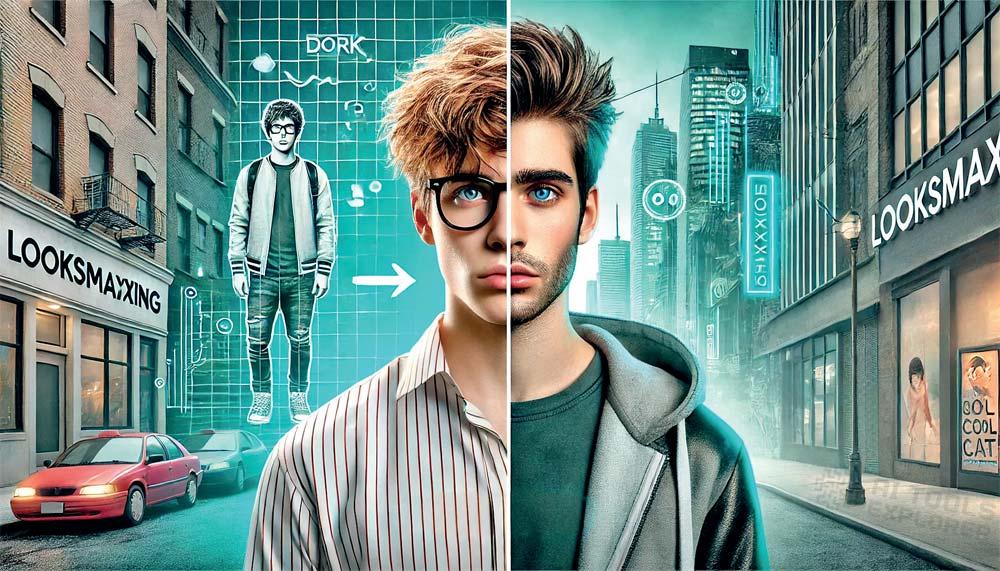
There’s a new gospel being preached across the internet, and it goes something like this:
“Your life isn’t falling apart because of your mindset, your worldview, or your inability to treat people like actual human beings. No, now that would require introspection. The real problem, obviously, is your jawline”
Welcome to the deeply logical world of looksmaxxing, where entire communities, particularly those orbiting the so-called “manosphere” and self-proclaimed incels have decided that the key to love, respect, and basic human connection lies in millimeters of bone structure and the angle of your cheekbones. Because why unpack emotional immaturity when you can contour it away?
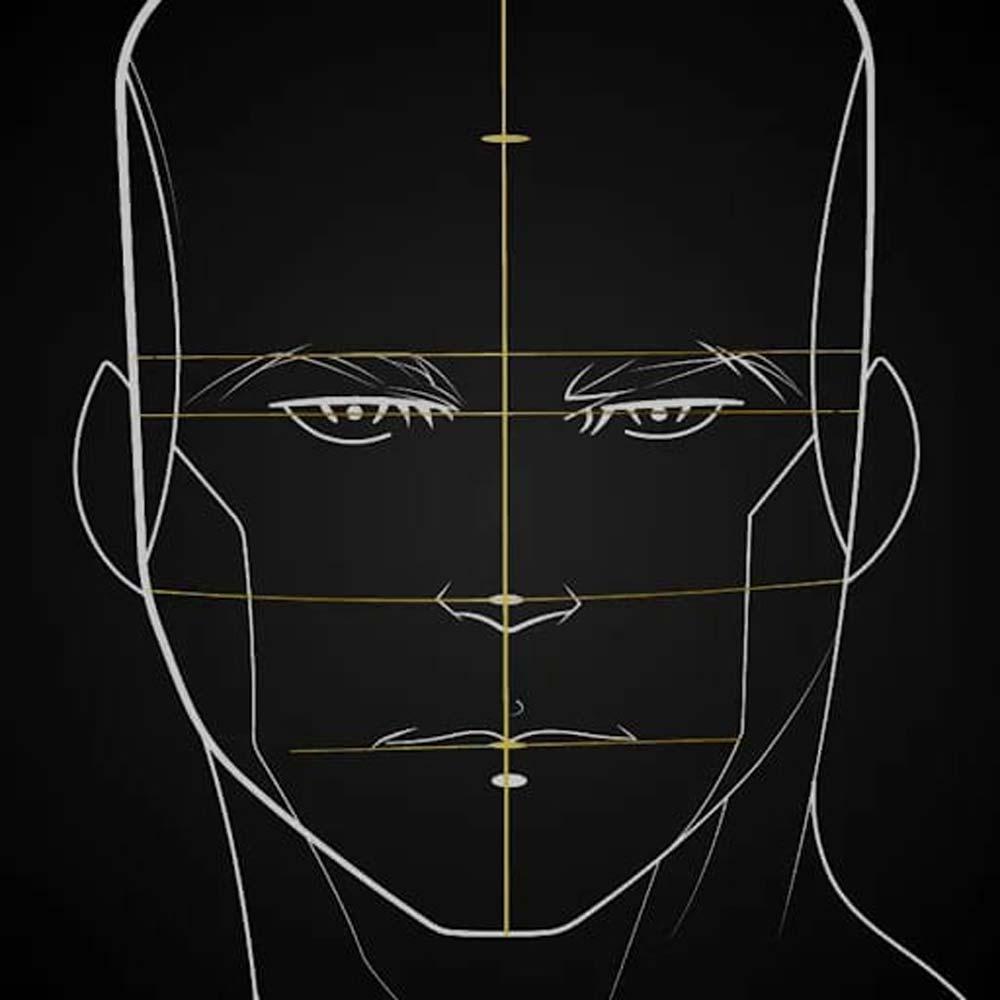 At its core, looksmaxxing pretends to be about self-improvement. Optimize your appearance. Upgrade your aesthetics. Become “high value.” It sounds productive, almost admirable, until you realize it’s often a carefully disguised avoidance tactic. A way to redirect blame outward and downward, onto something visible and measurable, instead of confronting what’s internal and uncomfortable. It’s much easier to believe “people don’t like me because I’m not attractive enough” than to sit with “maybe I need to rethink how I see and treat others.” And social media? It absolutely eats this up.
Algorithms don’t reward nuance. They reward extremes. So, what do you get? Hyper-edited faces, exaggerated features, and a conveyor belt of “before-and-after” transformations that promise you a new life if you just fix that one thing. Then another. Then another. Because there is always another. The result is a generation of people. Men in particular within these spaces, being sold the idea that their worth is purely aesthetic, while simultaneously being fed resentment toward those who meet those standards more easily. It’s a fascinating contradiction: “Looks shouldn’t matter, but also, looks are everything, and if you don’t have them, you’re doomed.” No wonder it spirals. What’s even more telling is what isn’t being worked on. Empathy? Optional. Communication skills? Overrated. Emotional intelligence? Irrelevant. But a six-step skincare routine and a bone structure analysis? Now that’s essential.
There’s something quietly tragic about watching people pour time, money, and energy into “fixing” features that were never the root of their struggles in the first place. It’s like repainting a house with a cracked foundation and wondering why it still feels unstable. And let’s be honest, the standards they’re chasing aren’t even real. They’re curated. Filtered. Surgically enhanced. Lit, angled, and edited within an inch of their lives. You’re not competing with other humans at this point, you’re competing with a digital illusion that shifts every time the algorithm gets bored. But sure, go ahead. Blame your nose. There’s also an uncomfortable layer of entitlement woven into this culture.
The idea that if you optimize your appearance enough, you’re somehow owed attraction, attention, or affection in return. As if human connection is a transaction, and all it takes is hitting the right visual benchmarks to unlock it. That’s not how people work. And deep down, I think they know that. Because even within these communities, there’s a constant sense of dissatisfaction. No matter how much someone “improves,” it’s never quite enough. The goalpost keeps moving, because the issue was never just the exterior. It’s the lens through which they see themselves, and others. Looksmaxxing doesn’t fix loneliness. It just repackages it. And in some cases, it deepens it. Because when you reduce yourself, and everyone around you to physical traits, you strip away the very things that make connection meaningful in the first place. You’re left with surfaces. Polished, perfected, and completely hollow.
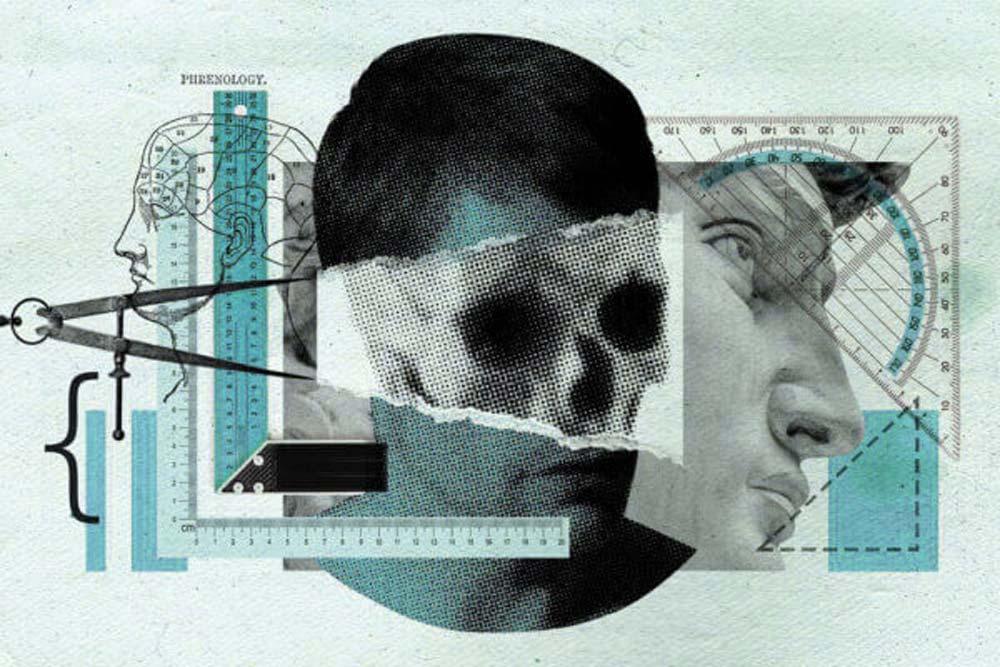
Now, none of this is to say that taking care of your appearance is inherently bad. Wanting to look good, feel confident, and present yourself well? Completely valid. Human, even. But there’s a difference between self-care and self-obsession. Between growth and fixation. Between enhancing who you are and trying to replace yourself entirely. And somewhere along the line, looksmaxxing stopped being about the former and became consumed by the latter. So maybe, the solution isn’t another “glow-up guide” or a more aggressive routine. Maybe it’s sitting with the uncomfortable idea that the thing holding you back isn’t your face. It’s your perspective. Because no amount of symmetry can compensate for a lack of depth. And no algorithm can manufacture genuine connection. But hey, at least your jawline will look incredible while you avoid the real work.
Here’s where it gets even more ironic, because for all its obsession with “optimization,” looksmaxxing rarely asks the most basic question: optimized for what, exactly? For attraction? From whom? For validation? From strangers scrolling past you in under three seconds? For a life that exists more convincingly on a screen than in reality? Because if the end goal is connection, then reducing yourself to a collection of angles and ratios is a strangely inefficient strategy. You don’t build intimacy through symmetry. You don’t sustain relationships through perfectly curated aesthetics. And you certainly don’t develop a sense of self-worth by outsourcing it to an audience that thrives on comparison.
But the illusion is seductive. There’s a certain comfort in believing that life can be engineered. If you just follow the right steps, fix this, enhance that, optimize everything, you can finally arrive at a version of yourself that is immune to rejection, immune to invisibility, immune to doubt. A version of yourself that is, in theory, enough. Except that version never arrives. Because “enough” is not a visual threshold, it’s a psychological one. And no amount of external modification can compensate for an internal standard that keeps shifting every time you get close. So, the cycle continues. You analyze your face under harsh lighting. You compare it to curated images that were never meant to be benchmarks. You convince yourself that the difference between your current life and the one you want is a matter of refinement, just a few tweaks away. And when those tweaks don’t deliver the transformation, you were promised?
- You don’t question the system.
- You question yourself.
- Maybe you didn’t try hard enough.
- Maybe you missed something.
- Maybe there’s still more to fix.
- There’s always more to fix.
And that’s how it keeps you hooked. Because looksmaxxing, at its core, isn’t just selling improvement, it’s selling perpetual dissatisfaction. A mindset where you are both the problem and the project, constantly under construction, never quite complete. It’s exhausting. Quietly, relentlessly exhausting. And yet, it thrives, because it taps into something very real: the fear of being overlooked. The fear of not being chosen. The fear that who you are, as you are, might not be enough in a world that seems to reward perfection. Those fears aren’t imaginary. They’re amplified daily by platforms that turn human beings into content and self-worth into engagement metrics. Likes, shares, comments, tiny digital signals that start to feel like proof of value. Or the lack of it.
So, when looksmaxxing enters the picture, it feels like a solution. A way to regain control. To play the game better. To finally “win.” But here’s the catch, the game itself is broken. Because it’s not designed for you to win. It’s designed for you to keep playing. Every trend you catch up to will be replaced. Every standard you meet will be raised. Every improvement you make will be normalized until it no longer stands out. You’re not chasing a goal, you’re chasing motion. And motion, by itself, is not progress. When you spend enough time in spaces that reduce human value to physical traits, it starts to bleed into your interactions. People become categories. Ratings. “High value” or “low value.” Attractive or not. Worth attention or not. It strips away nuance.
Suddenly, conversations become transactional. Interest becomes conditional. And empathy, the ability to see someone as a whole, complex individual, starts to erode. Because why invest in understanding someone when you’ve already decided their worth based on a glance? It’s a shallow framework, but it’s a powerful one. And once you adopt it, it doesn’t just affect your dating life or your self-image, it affects how you move through the world. It narrows it. And ironically, the very people chasing connection through looksmaxxing often end up isolating themselves further, trapped in a mindset that makes genuine connection harder to recognize, let alone sustain.
Because real connection is messy. It’s unpredictable. It requires vulnerability, patience, and the willingness to engage with people beyond surface-level traits. It cannot be optimized into existence. And that’s perhaps the most uncomfortable truth of all, because it means there’s no shortcut. No hack. No guaranteed formula. Just effort. Internal work. Growth that isn’t always visible or easily measurable. The kind of work that doesn’t get viral attention. The kind of work looksmaxxing quietly encourages you to avoid.
Now, let’s zoom out for a second. This isn’t just about individuals making questionable choices. It’s about a broader culture that increasingly equates visibility with value, aesthetics with worth, and perfection with success. Looksmaxxing is simply one expression of that culture, an extreme one, yes, but not an isolated one. We see it in the pressure to curate every moment. In the obsession with “glow-ups” and transformations. In the way people are celebrated not for who they are, but for how they appear. It’s a system that rewards surfaces. And punishes authenticity, unless that authenticity is aesthetically pleasing. So, people adapt. They edit themselves. Filter themselves. Optimize themselves. Not always because they want to, but because it feels like the only way to keep up. To be seen. To matter. And in that process, something gets lost. Not all at once. But, gradually. The ability to exist without evaluation. The comfort of being unpolished. The freedom to be imperfect without feeling like it’s a failure. Looksmaxxing doesn’t just distort how you look at yourself, it distorts how you experience being yourself. And that’s a high price to pay for an aesthetic that was never stable to begin with.
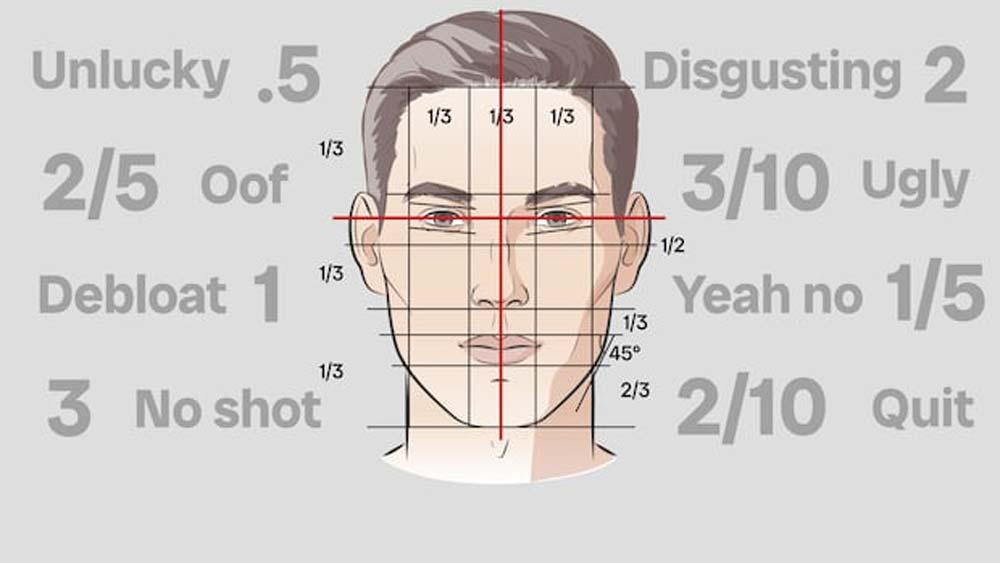
So where do we go from here? Not toward rejection of self-care or self-improvement, but toward reclaiming them. Away from the idea that you are a problem to be solved, and toward the understanding that you are a person to be developed. Because there is a difference. One approach dissects you. The other builds you. One is driven by insecurity. The other by intention. And intention matters more than any routine, any product, any so-called “hack.” You can take care of your appearance without being consumed by it. You can want to look good without tying your entire worth to how you look. You can improve aspects of yourself without erasing the core of who you are. But that requires awareness It requires stepping back and asking: Why am I doing this? Who am I trying to impress? What am I hoping this will fix? And being honest with the answers. Because sometimes, what you’re really trying to fix isn’t your face, it’s how you feel about yourself. And no external adjustment can fully resolve an internal conflict. That doesn’t mean you’re stuck. It just means the solution is different from what you’ve been sold. Less visible, perhaps. Less glamorous. But far more sustainable. And maybe, in a world obsessed with optimization, choosing sustainability over spectacle is the most radical thing you can do.
- To exist without constant self-correction.
- To allow yourself to be seen as you are, flawed, evolving, human.
- To build confidence not from comparison, but from consistency in how you treat yourself and others.
It’s not flashy. It won’t go viral. But it might actually work. Because at the end of the day, people don’t connect with perfection. They connect with presence. With authenticity. With depth. With the things that can’t be filtered, edited, or measured in symmetry. And that’s something looksmaxxing, for all its precision and obsession with detail, fundamentally fails to understand. So yes. Optimize your skincare routine if you want. Hit the gym. Dress well. Take care of yourself.
But don’t confuse that with becoming someone worthy of connection. You already are. The real work isn’t in becoming acceptable to others. It’s in unlearning the idea that you weren’t acceptable to begin with and making sure that, in the process of trying to “maximize” yourself, you don’t minimize everything that actually makes you human.