Dear Jo March and Eloise Bridgerton, You would have been best friends.
By: Marian de Silva
“Women, they have minds, and they have souls, as well as just hearts. And they’ve got ambition, and they’ve got talent, as well as just beauty. I’m so sick of people saying that love is all a woman is fit for.” Jo March, Little Women
“Why must our only options be to squawk and settle or to never leave the nest? What if I want to fly?” Eloise Bridgerton, The Duke & I, Season 1, Episode 4
Reading Little Women by Louisa May Alcott back in 2018 when I was a teenager was a turning point in my life. I remember my English teacher being incredibly observant and analytical when discussing the novel, pointing out small details that carried enormous meaning. At the time, I was busy highlighting the quotes, themes, and techniques. I did not fully realise how deeply those discussions would shape the way I looked at literature, people, social institutions, societies, cultures, and even the expectations placed upon women and men. Some books do more than tell stories. They quietly rearrange your thinking. Little Women was one of those books for me.
I might be considered rather unusual and boring among people who passionately discuss films and television series. I am, admittedly, a very selective watcher. Unless the plot, the characters, or the actors truly inspire me, I rarely sit through an entire series. I have always been the kind of person who chooses the book before the screen. There is something irreplaceable about the intimacy of reading, how a story unfolds slowly in your own imagination. However, when Greta Gerwig brought Little Women to life on screen back in 2019, she and the cast outdid themselves. The film did not simply adapt the novel; it honoured its soul. Watching the story felt like watching familiar pages breathe again, as though the characters I had carried in my mind for years had finally stepped into the light.
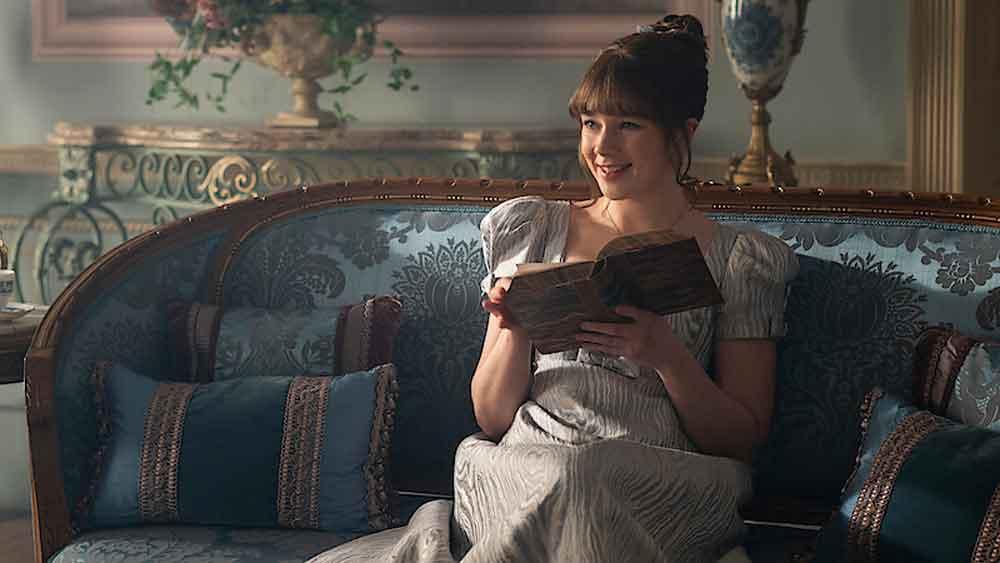
Then came Bridgerton, the wildly popular series that arrived in 2020 with dazzling costumes, grand ballrooms, and a cast that seemed to step straight out of a Regency dream. The world of the Ton was colourful, extravagant, and dramatic, and naturally it captured the attention of audiences everywhere. It took me nearly two years before curiosity finally won and I decided to explore that Regency world myself. I began with the novel The Duke and I by Julia Quinn before watching the first season of the series. Since then, through several magnificent seasons and the captivating prequel Queen Charlotte: A Bridgerton Story, the universe of Bridgerton has only expanded further. While many viewers were captivated by the romances, the piping-hot brewing tea, and the infamous scandals of high society, I found one character who mirrored myself and, of course, many other ambitious young women out there.

Eloise Bridgerton does not move through the glittering ballrooms of London with the same ambitions as the rest of society. She does not dream about securing a wealthy husband or becoming the season’s most admired debutante. Instead, she walks through those grand halls with curiosity burning in her mind.
In a world where young women are expected to master polite conversation, embroidery, and graceful dancing, Eloise asks questions that make people uncomfortable. Why must a woman’s future be confined to marriage? Why is curiosity often treated as an inconvenience in a lady? Why is intellect admired in men but regarded as troublesome in women? Her rebellion is not loud or theatrical. It exists in her relentless curiosity, in the books she reads, in the political pamphlets she secretly collects, and in the conversations she insists on having even when society would prefer silence. Eloise is not trying to destroy the traditions around her. What she is doing is something perhaps far more dangerous to rigid systems: she is questioning them.
Long before Eloise wandered through the gilded drawing rooms of Regency London, another young woman was already challenging expectations in a far quieter but equally powerful way. Jo March was never meant to be the model of conventional femininity in nineteenth-century America. She preferred writing stories to practising ladylike accomplishments. She climbed trees, spoke her mind without hesitation, and occasionally let her temper get the better of her. Jo’s world was far removed from the glittering aristocracy of Bridgerton. It was modest, grounded in everyday struggles, and shaped by financial uncertainty. Yet within those simple surroundings lived a young woman whose ambitions stretched far beyond the boundaries placed before her.
It may seem like a modest ambition by modern standards, but for a young woman in the nineteenth century, such a dream required courage. Writing meant independence. It meant stepping outside the roles traditionally assigned to women. It meant claiming a voice in a world that often preferred women to remain silent. Jo March did not always behave like the ideal young lady of her time. She was outspoken, energetic, occasionally impulsive, and fiercely protective of her individuality. She valued creativity and personal freedom more than social approval. And yet, despite her imperfections, or perhaps because of those imperfections, she became one of literature’s most beloved characters. What makes figures like Jo March and Eloise Bridgerton so compelling is not simply their defiance of social expectations. It is the authenticity with which they experience their struggles.
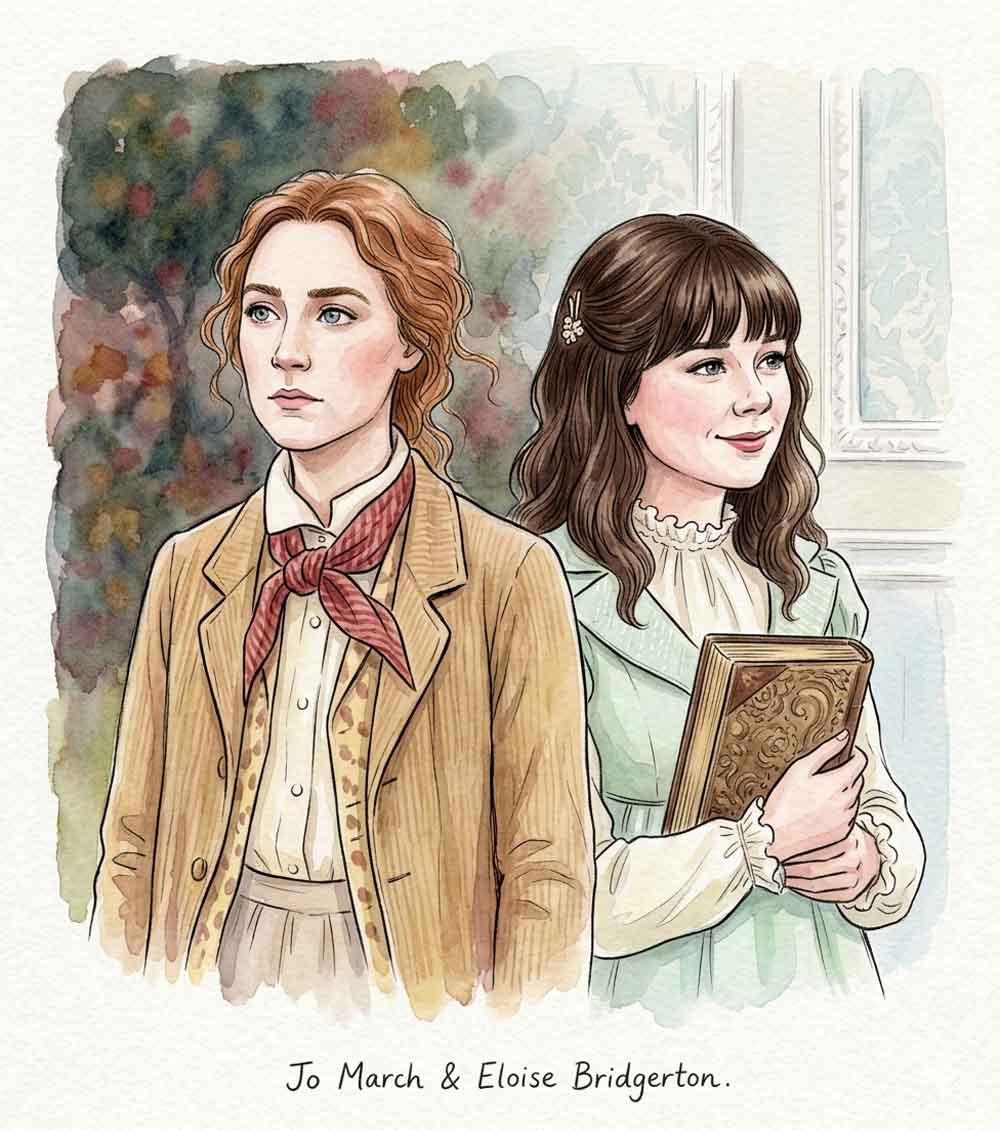
Jo and Eloise are perfect examples, in my view, that prove heroes and heroines are never flawless. They feel uncertain about their futures. They make decisions they later regret. But they continue moving forward, refusing to abandon their sense of self. Readers recognise something familiar in these moments of vulnerability. Fictional characters become memorable not because they are perfect, but because they feel real and relatable. For centuries, stories have often portrayed women within limited roles: the devoted wife, the gentle and calm daughter, the poor girl, the wicked stepmother, or the elegant lady whose greatest achievement is securing a respectable marriage. These narratives reflected the expectations centuries. Yet literature has also quietly preserved voices that resist those expectations.
Jo March, with her ink-stained hands and ambitious spirit, reminds readers that creativity can flourish even in restrictive environments. Eloise Bridgerton, wandering through lavish ballrooms with a mind full of questions, reminds viewers that curiosity has always existed, even in societies determined to suppress it. Their worlds may belong to different centuries and entirely different forms of storytelling, yet both characters carry something remarkably similar: a refusal to shrink themselves in order to fit comfortably within social boundaries. That refusal is what keeps them alive in the minds of audiences long after their stories end.
Generations of readers continue to open Little Women, discovering Jo March for the first time. New viewers continue to watch Bridgerton, finding Eloise’s voice refreshingly bold among the polished manners of high society. Perhaps that is the true power of storytelling. Fiction allows characters to travel through time, influencing people who live in entirely different eras from the ones in which those characters were created.
A teenager reading Little Women today, might still feel inspired by Jo’s determination to pursue her dreams. A viewer watching Bridgerton might recognise the familiar frustration of being told what one should or should not aspire to. Stories do not merely entertain. They shape the ways in which we imagine possibilities. So, dear Jo March and Eloise Bridgerton, you continue to exist in the imaginations of readers and viewers across the world. One of you writes passionately in a modest household, surrounded by sisters and the quiet hope of literary success. The other navigates the dazzling yet restrictive society of Regency London, armed with curiosity and a mind that refuses to stay silent. Both of you represent something quietly extraordinary: the belief that a woman’s thoughts, ambitions, and ideas deserve space in the world.
Perhaps somewhere beyond the pages of novels and the scenes of dramas, there exists a quiet library untouched by time. In that imagined place, Jo March might sit at a desk covered in manuscripts while Eloise Bridgerton wanders through the shelves searching for something interesting to read. I suspect the conversation that would follow would be lively, thoughtful, and perhaps slightly rebellious. And the rest of us would sit quietly nearby, grateful that literature and storytelling allowed us to meet you both.