Nanda Malini: The Voice of a Nation Falls Silent at 82
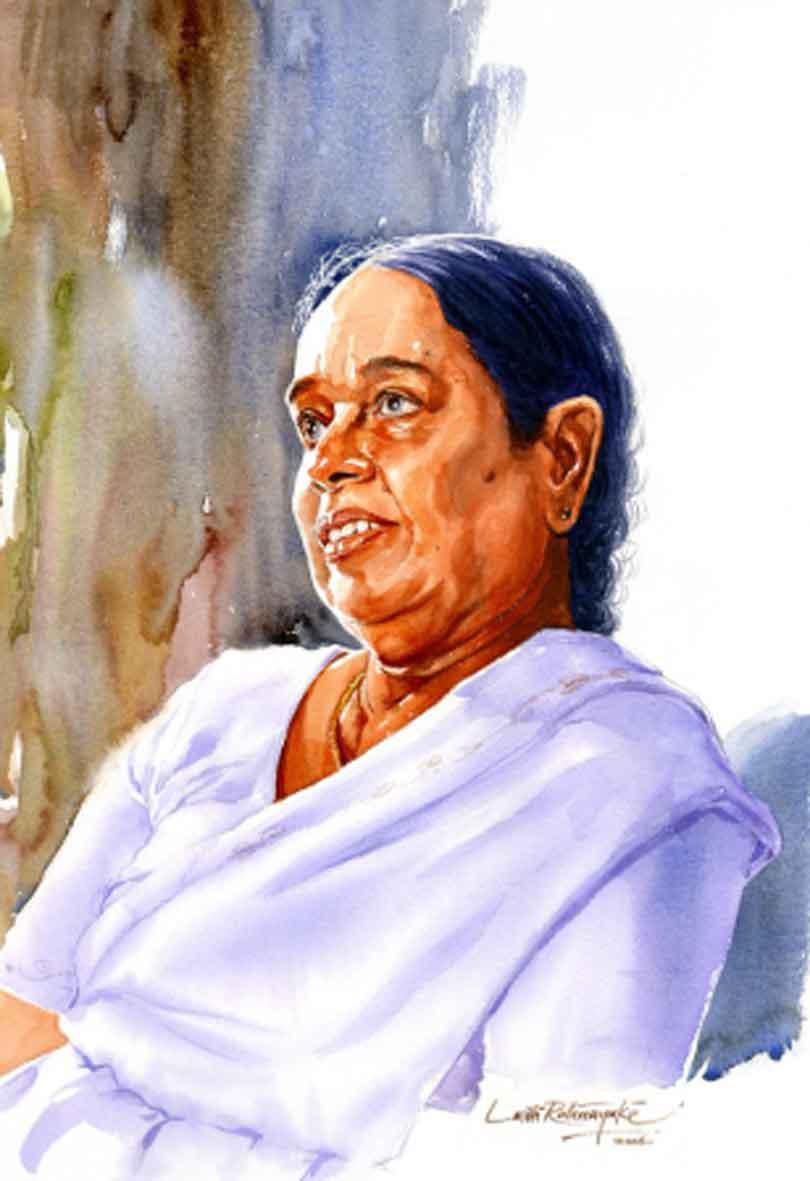
Sri Lanka has lost one of the defining voices of its cultural history. Dr. Nanda Malini, the legendary singer whose extraordinary voice carried the emotions, anxieties, aspirations and contradictions of generations of Sri Lankans, has died at the age of 82.
Her passing marks the end of one of the longest and most influential careers in Sri Lankan music. For nearly seven decades, Nanda Malini was not simply a singer who happened to belong to several generations. She was an artist who helped give those generations their musical vocabulary, a teacher who passed that knowledge on, and a cultural figure whose songs often became inseparable from the historical moment in which they were heard.
Born on August 23, 1943, in Aluthgama, Kalutara, Nanda Malini was the fourth child in a family of nine. Her early life was far removed from the grand stages and national recognition that would later become part of her story. Her family eventually moved to Colombo, where she attended Sri Gunananda Vidyalaya in Kotahena..
In 1956, as a young schoolgirl, she won a poetry-singing competition organized by the Young Men's Buddhist Association in Borella. The achievement opened a door that would change the course of her life. Her talent came to the attention of figures at Radio Ceylon, and she was introduced to the world of broadcasting and musical training.
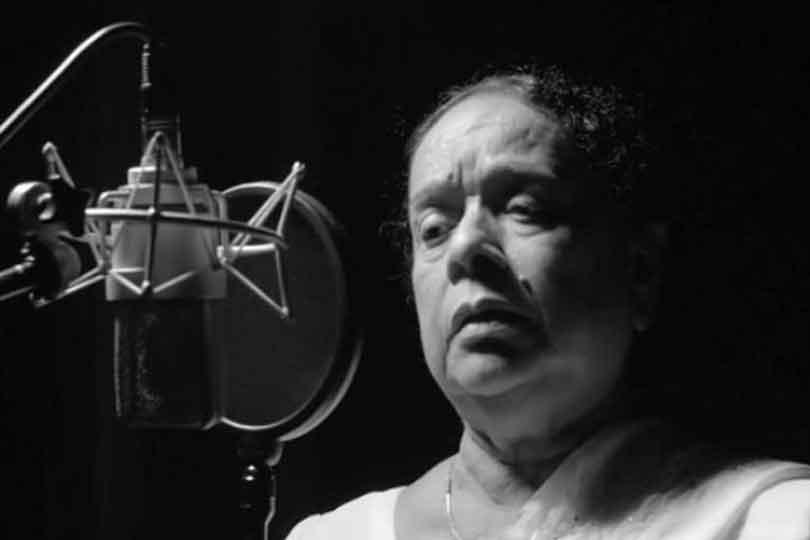
Her early association with the radio was significant. At a time when television did not yet exist and radio was one of the most powerful cultural forces in the country, a young singer who found a place on the airwaves could reach homes across the island. Nanda Malini's voice quickly distinguished itself.
She was invited by W.D. Amaradeva to sing for the film Ran Muthu Duwa, Sri Lanka's first full-length Sinhala colour film. Her rendition of “Galana Gagaki Jeewithe” with Narada Disasekara became one of the important early milestones in her career. The film went on to make history, and Nanda Malini emerged as one of the country's most promising young voices.
But becoming a famous singer was never the end of her musical education.
Nanda Malini continued to study and refine her craft, training under musicians including B. Victor Perera and later studying at the Heywood Institute of Art. In 1963, she travelled to India to study at the Bhatkhande Music Institute in Lucknow. She eventually obtained her Visharada qualification with distinction in 1984.
That commitment to education became one of the less frequently discussed but deeply important dimensions of her legacy.
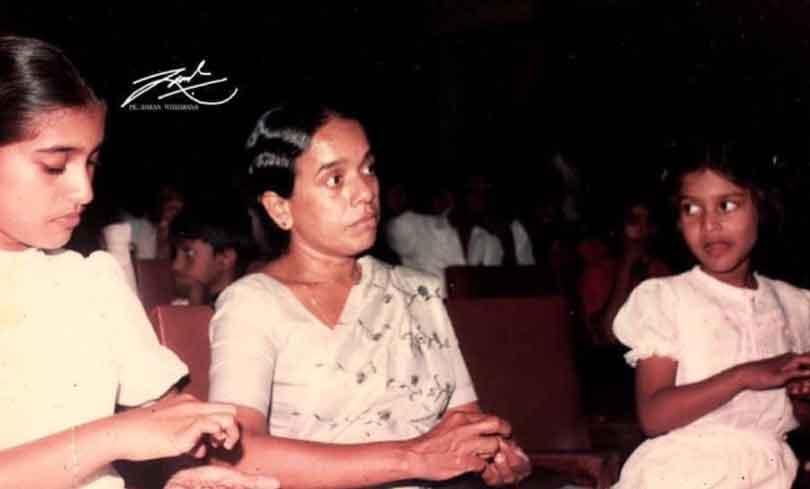
Nanda Malini was not only a performer. She became a teacher and mentor, passing her understanding of music to younger generations. Over the decades, she trained thousands of children and students in music, extending her influence beyond the audiences who heard her perform.
This part of her life matters because her legacy cannot be measured only by the number of recordings she made or awards she received. It also lives in the generations of students who encountered music through her teaching, in young voices that were encouraged by her, and in the musicians who carried forward traditions that she herself had spent a lifetime studying and preserving.
In 1984, she established the Nanda Malini Ashram, further developing her work in music education. Her influence consequently travelled in two directions: outward, through the songs heard by millions, and forward, through the students and younger musicians who came under her guidance.
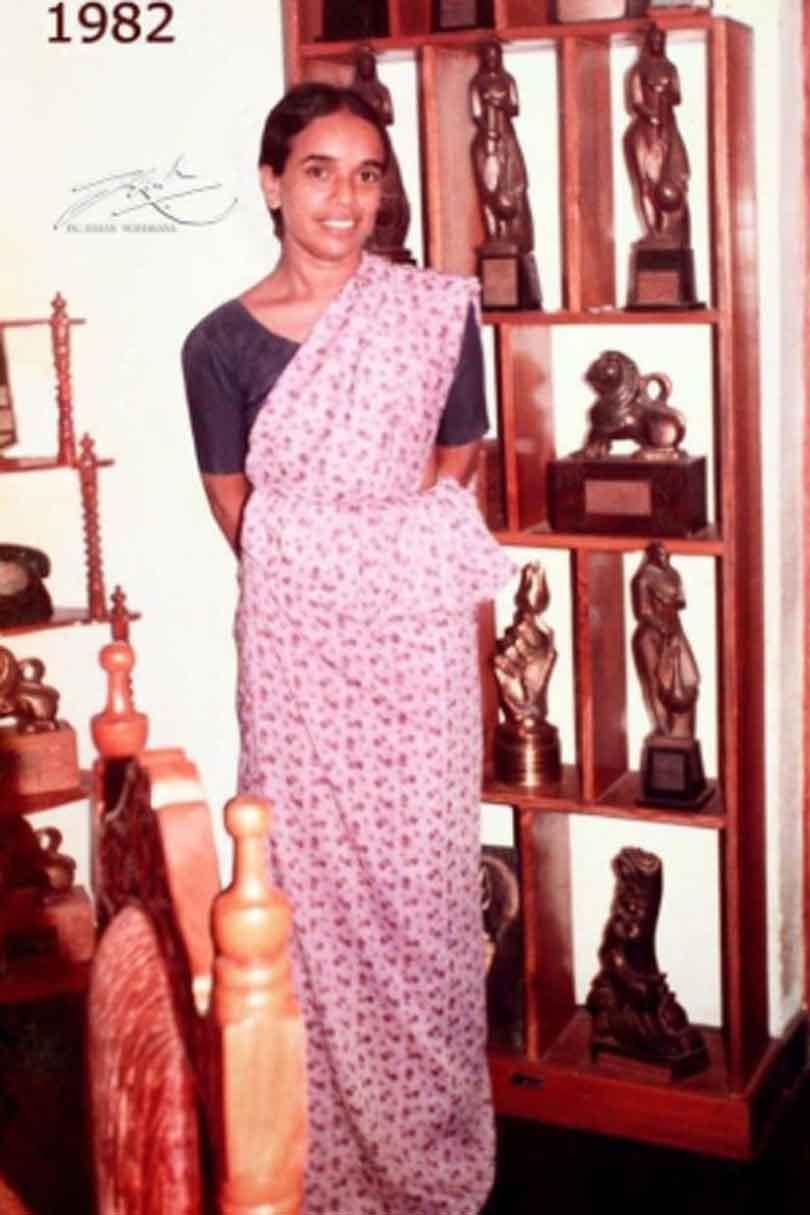
Her professional achievements were considerable. She received numerous major awards during her career, including Sarasaviya and Presidential awards, and was repeatedly recognised as one of Sri Lanka's leading female vocalists. Yet awards alone cannot explain the place she occupies in the country's cultural memory.
Her repertoire moved through love, longing, relationships, loneliness and the ordinary experiences of human life. But alongside these intimate songs was another body of work that confronted the wider realities of the country.
During the 1970s and 1980s, Sri Lanka was experiencing profound political and social upheaval. Youth unrest, unemployment, inequality, political violence and growing ethnic tensions created a country increasingly divided by fear and uncertainty. Nanda Malini responded to that environment not by retreating from it, but by making music that engaged directly with the society around her.
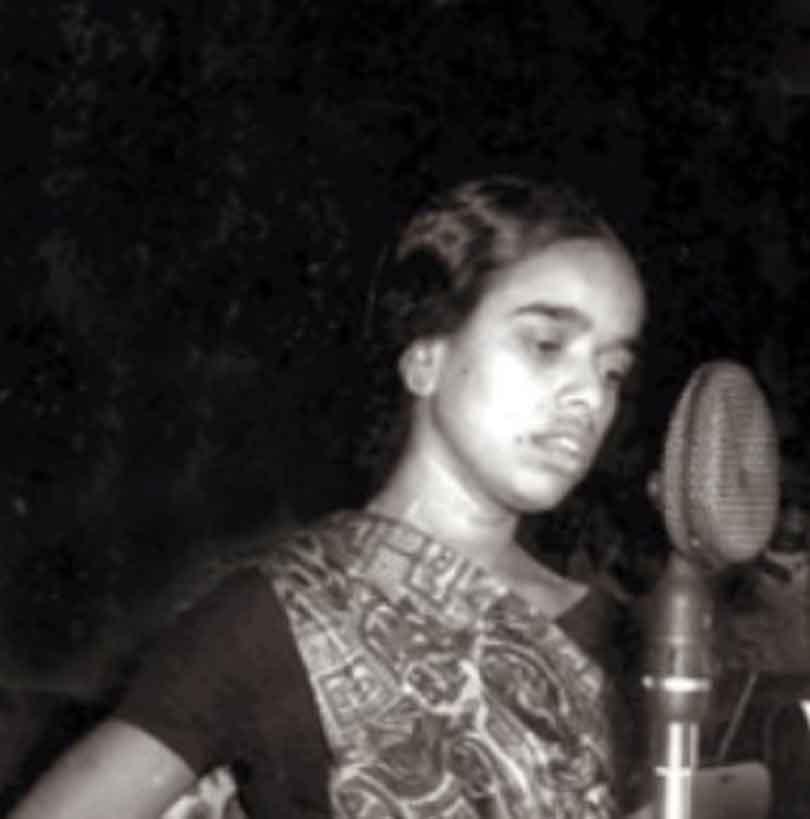
She became one of Sri Lanka's most recognizable voices of social conscience.
Her songs questioned injustice, corruption and oppression. They addressed the divisions between communities and urged listeners to look beyond the boundaries of race, religion and political allegiance. In doing so, she demonstrated the unusual capacity of music to become a form of public conversation.
Her Pawana concert and album became particularly associated with this period. The songs confronted questions of human rights, political repression and social injustice at a time when such subjects carried considerable risk. The music was banned from national broadcasting, and the concert itself faced restrictions.
Yet banning a song could not necessarily silence it.
The songs travelled from person to person, through recordings, private listening and live performances. What authorities attempted to remove from the airwaves remained present in the memories of listeners.
That history is essential to understanding Nanda Malini. She was not a protest singer simply because she sang about politics. She became a protest singer because she understood that the artist could not always remain separate from the society in which the artist lived.
Her music gave expression to experiences that many people could feel but could not articulate.
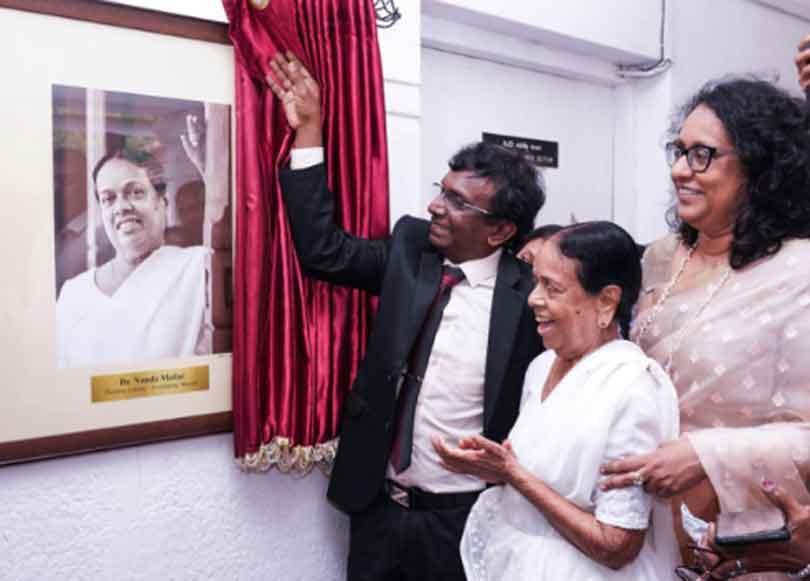
At the same time, it would be too narrow to remember her only as a political voice. Nanda Malini was capable of extraordinary tenderness. She sang of the private world as perceptively as she sang of the public one. Her songs about love, family, womanhood, loneliness and human relationships became part of the emotional inheritance of generations.
This ability to move between the personal and the political was one of the reasons her music endured.
A mother could hear one of her songs and find something of her own life in it. A young person could discover in another song a language for feelings that had not yet found words. A generation living through political turmoil could hear its anxieties reflected back at it. The same voice could occupy all of these spaces.
Nanda Malini also belonged to a remarkable generation of Sri Lankan musicians who helped establish Sinhala music as a serious artistic form capable of carrying poetry, classical discipline, social commentary and popular appeal at once. Her career was intertwined with some of the most important figures in Sri Lankan music, including Amaradeva, while her own work helped shape the careers and musical education of those who came after her.
In 2017, the University of Visual and Performing Arts conferred on her the honorary degree of Doctor of Philosophy in Fine Arts, recognizing the extraordinary contribution she had made to Sri Lankan music. It was reported at the time as the first occasion on which a female artiste had received such recognition from a Sri Lankan university.
By then, her place in the country's cultural history was already firmly established.
But even in her later years, Nanda Malini did not become a figure confined to nostalgia.
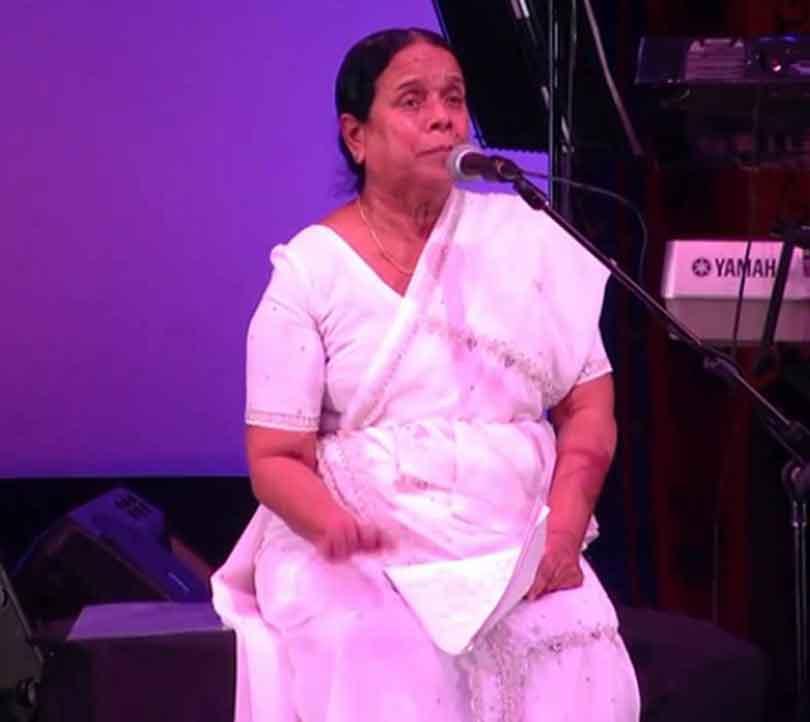
In 2022, during Sri Lanka's unprecedented economic and political crisis, she publicly supported the mass protest movement and performed before demonstrators. Decades after Pawana, her voice once again entered a moment of national upheaval.
Nanda Malini understood something that few artists manage to understand so completely: that music can survive the moment that produces it.
The political circumstances surrounding a song may eventually change. Governments fall. Movements disappear. Generations grow older. Yet a song can remain, carrying with it the memory of what a country once felt.
That is perhaps why her music became so deeply embedded in Sri Lankan life.
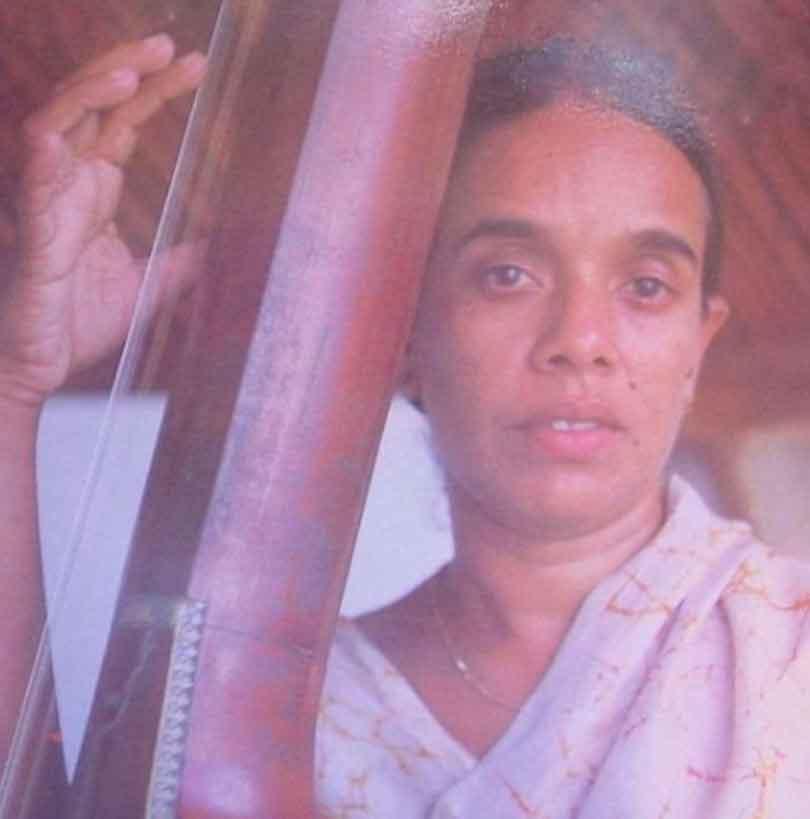
For generations, her voice was heard in family homes, on radios, at concerts, in classrooms and at national events. It accompanied weddings and funerals, celebrations and moments of grief, private heartbreak and public struggle. Children who first heard her songs from their parents eventually introduced those same songs to their own children.
The remarkable thing about Nanda Malini's legacy is that it does not end with her recordings.
She gave Sri Lanka songs that became part of its history and helped generations understand that music could be beautiful without being indifferent, popular without being superficial, and powerful without having to raise its voice.
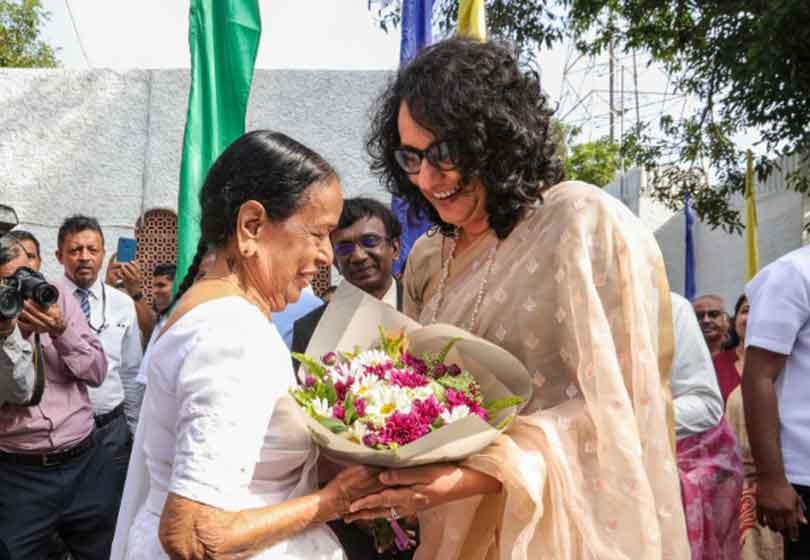
Nanda Malini leaves behind a body of work that belongs not to one generation, but to many.
Sri Lanka will continue to sing her songs.
And somewhere in those songs will remain the voice of the country she spent a lifetime listening to.