We’ve Used Up the Earth’s Annual Budget. Fashion Helped Spend It.


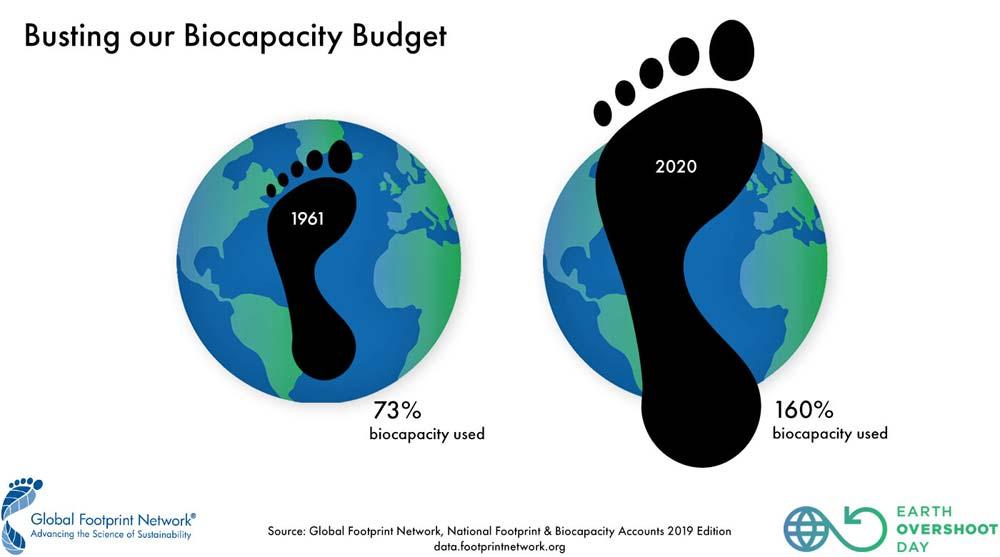
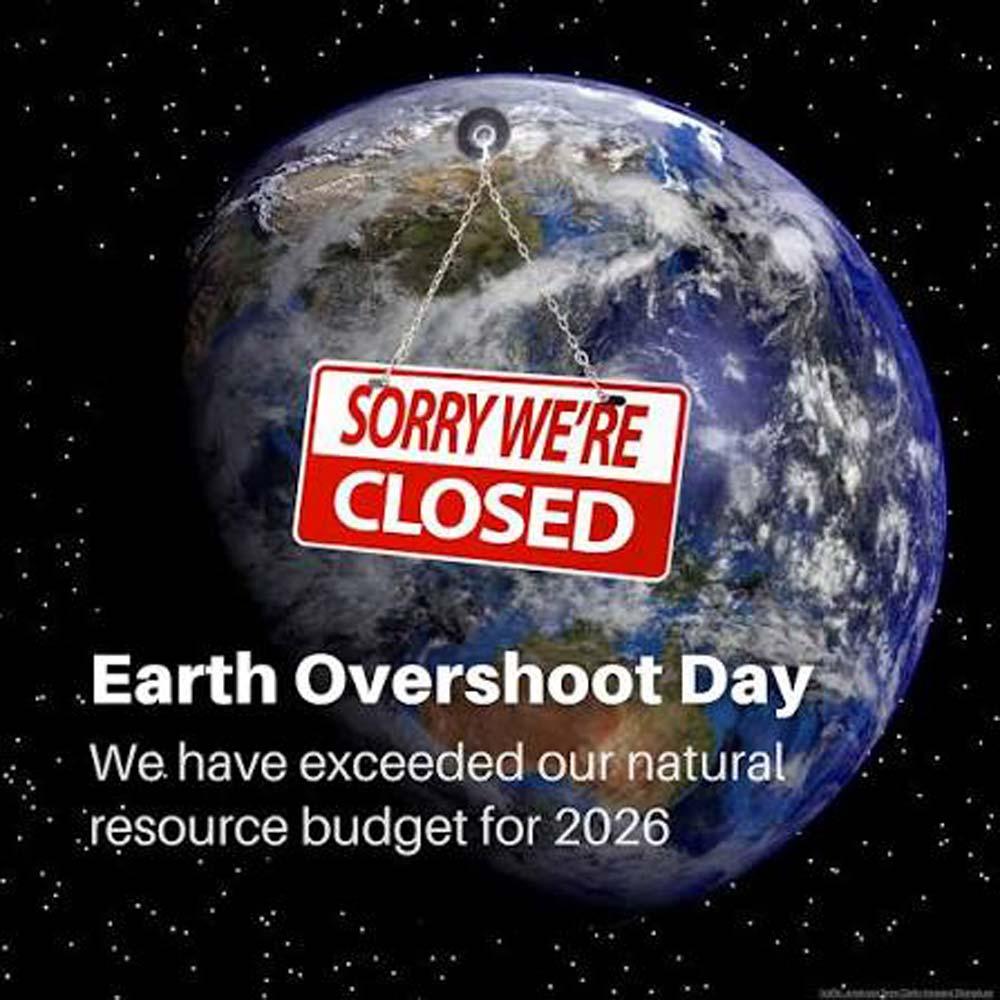
On the 30th of July, humanity quietly reached a milestone that should concern every one of us. It is called Earth Overshoot Day, the date when we have used more ecological resources than the Earth can regenerate in an entire year. From that day until the end of December, we are effectively living on borrowed time, consuming forests faster than they can regrow, extracting freshwater more quickly than nature can replenish it, catching fish faster than oceans can recover, and releasing more carbon into the atmosphere than the planet's natural systems can absorb. In just seven months, we have spent an entire year's ecological budget.
 The most alarming part is that this wasn't always our reality. Before the 1970s, Earth Overshoot Day didn't exist because humanity lived largely within the planet's ecological means. We consumed what nature could regenerate. Over the decades, however, population growth, industrialization, and an economic model obsessed with continuous expansion have steadily pushed that date earlier on the calendar. Today, humanity uses resources at a rate that would require approximately 1.8 Earths to sustain. Unfortunately, we only have one.
While Earth Overshoot Day represents a global average, the responsibility is far from equally shared. If everyone on the planet consumed resources at the same rate as the average American, we would require around five Earths to support that lifestyle. Other high-income nations also consume far beyond sustainable levels, while millions of people elsewhere still struggle to meet their most basic needs. This imbalance exposes one of the greatest contradictions of our time:
some societies have more than they could possibly use, while others have less than they desperately need.
Few industries illustrate this contradiction more clearly than fashion. Clothing is often dismissed as a superficial subject when discussing environmental issues, yet every garment carries an enormous ecological footprint. Cotton requires vast amounts of water to grow. Polyester is made from fossil fuels. Dyeing and finishing processes pollute rivers, factories consume enormous amounts of energy, and garments travel thousands of kilometers through complex global supply chains before arriving in our wardrobes. Every inexpensive T-shirt carries hidden environmental costs that rarely appear on the price tag.
The fashion industry has become exceptionally efficient at producing clothing. Unfortunately, it has become equally efficient at producing waste. More than 100 billion garments are manufactured each year, far more than humanity actually needs. Retailers introduce new collections not just every season, but every week, and in some cases every day. Clothing is no longer designed simply to meet a practical need. It is designed to create a constant desire for something newer.
This is where the conversation becomes more complicated than simply blaming capitalism. The problem is not only that capitalism has enabled us to produce enormous quantities of products. The greater problem is that it has incentivized the production of the wrong products. We are producing mountains of disposable clothing instead of garments built to last. We manufacture trends rather than timelessness. We reward speed over craftsmanship, volume over quality, and novelty over durability.

 Fast fashion has mastered the psychology of dissatisfaction. Consumers are constantly told that what they bought a month ago is already outdated. Social media amplifies this message, rewarding endless "hauls," trend cycles and new purchases. Many people now feel uncomfortable wearing the same outfit repeatedly, not because their clothes have worn out, but because they fear appearing repetitive online. Fashion has shifted from serving our wardrobes to feeding algorithms.
Ironically, despite producing more clothing than at any point in human history, the industry still fails to meet many of humanity's most basic needs. Millions of garment workers continue to work long hours for wages that cannot support a decent standard of living. Many communities living near textile factories continue to suffer from polluted waterways and contaminated air. At the same time, consumers in wealthier nations often own wardrobes overflowing with clothes they rarely wear. The system simultaneously creates excess and scarcity. It overproduces garments while underdelivering dignity.
Perhaps that is the greatest irony of all. We have become remarkably good at making things people don't truly need while still failing to provide many people with what they genuinely do. We have built supply chains capable of producing billions of garments annually, yet we continue to struggle with poverty, inequality and environmental degradation. More production has not necessarily translated into greater wellbeing.
Earth Overshoot Day should force us to ask a simple but uncomfortable question: what is enough? At what point does another purchase stop improving our lives and simply add to our ecological debt? Modern consumer culture rarely encourages satisfaction because satisfaction does not drive sales. If consumers were genuinely content with what they owned, many business models built around constant replacement would begin to falter.
This does not mean fashion itself is the problem. Fashion is one of humanity's oldest forms of creativity, identity and cultural expression. The problem lies in treating clothing as disposable. There is a profound difference between buying a beautifully made jacket that will accompany you for the next twenty years and purchasing five poorly made jackets because they happened to be on sale. One celebrates craftsmanship. The other celebrates consumption.
Fortunately, change is possible. Designers around the world are embracing slower production models, creating limited collections, repairing rather than replacing garments, incorporating deadstock fabrics and designing pieces intended to last for decades instead of months.
Consumers are also beginning to rediscover the value of buying less but buying better. Renting, repairing, swapping and purchasing second-hand clothing are no longer niche ideas but increasingly mainstream alternatives.
Every purchase we make sends a signal about the kind of fashion industry we wish to support. Choosing quality over quantity tells brands that durability still matters. Repairing a favourite garment instead of replacing it says that craftsmanship has value. Wearing the same outfit proudly reminds us that style is not measured by how often we buy something new, but by how confidently we wear what we already own.
Earth Overshoot Day is not a reminder that the Earth is failing. The Earth has survived volcanic eruptions, ice ages and mass extinctions. Given enough time, nature will recover. The real question is whether our societies can continue to thrive if we keep demanding more from the planet than it can possibly provide.
The encouraging news is that Earth Overshoot Day is not fixed. It can move later in the year if we reduce waste, consume more thoughtfully and rethink the systems that encourage endless consumption. Fashion has the opportunity to become part of that solution by valuing longevity over speed, craftsmanship over disposability and people over volume.
Perhaps the most fashionable choice we can make today is not buying something new at all. It is rediscovering the value of what we already own. In a world that constantly tells us more is better, choosing enough may become the most radical statement of all.