The Enduring Legacy of Krishna and Rukmini
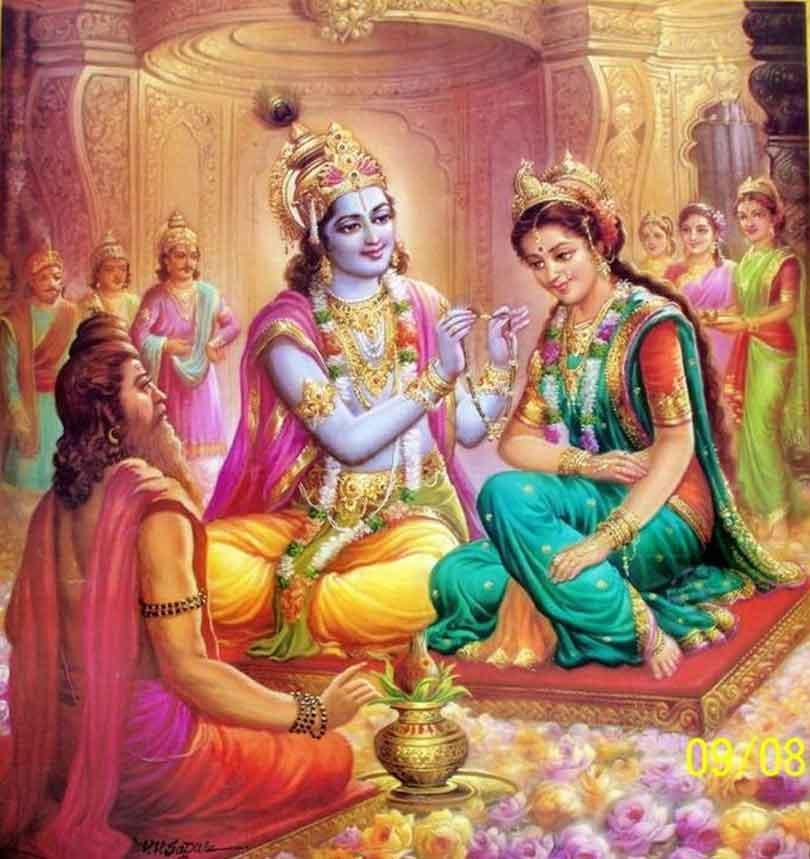
Among the many captivating stories found in Hindu mythology, the tale of Krishna and Rukmini remains one of the most beloved and enduring. Preserved in revered Hindu texts such as the Bhagavata Purana, Harivamsa and Vishnu Purana, it is a story woven from devotion, courage, determination and divine destiny. For millions of Hindus across the world, the narrative continues to hold profound spiritual and cultural significance.
While Krishna's association with Radha is often celebrated as the highest expression of spiritual love and devotion, his marriage to Rukmini represents another equally important dimension of life: commitment, companionship, duty and unwavering faith. Together, these traditions illustrate the many facets of love and devotion that occupy a central place in Hindu belief.
Krishna, regarded as the eighth avatar of Lord Vishnu, is among the most revered deities in Hinduism. Known by numerous names including Keshava, Gopala, Govinda and Kanhaiya, he is worshipped as the divine protector who appeared on earth to restore righteousness and uphold dharma. His life story encompasses a remarkable range of roles; playful child, beloved friend, wise statesman, warrior, philosopher and divine teacher.
His teachings, particularly those contained in the Bhagavad Gita, have guided spiritual seekers for centuries. Krishna's message of duty, devotion and selfless action continues to influence millions of people and remains one of the foundational pillars of Hindu philosophy.
Rukmini, meanwhile, was the princess of Vidarbha, an ancient kingdom frequently mentioned in Hindu scriptures. She was renowned not only for her extraordinary beauty but also for her intelligence, grace and deep spiritual nature. Traditional accounts describe her as a woman of exceptional virtue whose devotion to Krishna began long before she ever met him.
According to the scriptures, sages, travellers and learned Brahmins often visited the royal court of Vidarbha. Through them, Rukmini heard countless stories about Krishna's noble character, courage, compassion and divine nature. She learned of his victories over powerful enemies, his protection of the innocent and his role as a champion of righteousness.
As she listened to these accounts, admiration gradually transformed into profound devotion. Rukmini came to regard Krishna not merely as a great prince or hero but as the ideal husband and the divine being to whom she wished to dedicate her life. In her heart, she had already chosen him.
However, circumstances soon threatened to prevent this union. Rukmini's elder brother, Rukmi, strongly opposed any marriage between his sister and Krishna. Political alliances played a significant role in royal marriages, and Rukmi preferred to strengthen ties with Shishupala, the king of Chedi. Shishupala was a powerful ruler and ally, and Rukmi believed the marriage would serve the kingdom's interests. Despite Rukmini's wishes, preparations began for her wedding to Shishupala. The decision was made without her consent, leaving her distressed and desperate. Yet rather than surrendering to circumstances, Rukmini took a courageous step that would forever alter her destiny.
Determined to seek Krishna's help, she composed a secret message and entrusted it to a reliable Brahmin messenger. In the letter, she openly declared her devotion to Krishna and pleaded with him to rescue her before the marriage could take place.
The message is regarded as one of the most moving expressions of devotion in Hindu literature. Rukmini described Krishna as the only man worthy of being her husband and expressed complete faith that he would protect her. She also outlined a plan, informing him that she would visit a temple to offer prayers before the wedding ceremony. This, she suggested, would provide the perfect opportunity for him to intervene.
When the messenger reached Krishna and delivered the letter, Krishna immediately understood the urgency of the situation. Deeply moved by Rukmini's faith and sincerity, he resolved to act without delay. Accompanied by his brother Balarama and supported by trusted allies, Krishna set out for Vidarbha. According to the scriptures, he arrived just in time.
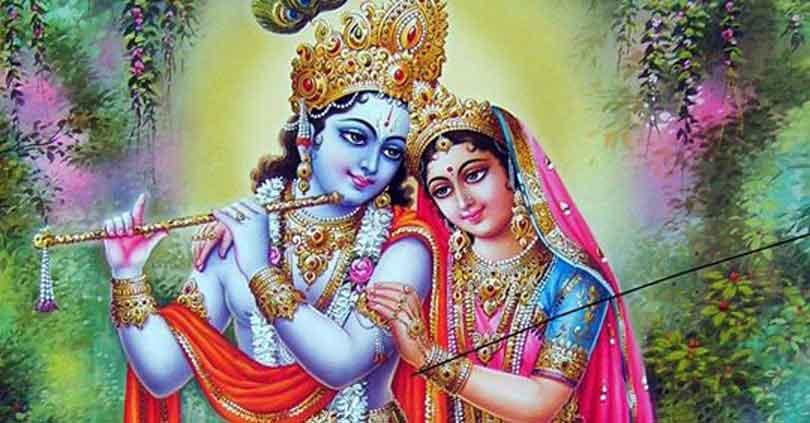
On the appointed day, Rukmini visited the temple as part of the wedding rituals. After completing her prayers and emerging from the temple, she encountered Krishna. In a dramatic and memorable moment that has been celebrated in art, literature and religious storytelling for centuries, Krishna placed Rukmini in his chariot and departed before the wedding ceremony could begin. The act is often described in Hindu tradition as a righteous rescue rather than an abduction, since Rukmini herself had requested Krishna's intervention and had freely chosen him as her husband.
News of the event spread quickly, provoking outrage among Shishupala, Rukmi and the many kings who had gathered for the wedding. Determined to reclaim Rukmini, they launched a pursuit. What followed was a fierce battle. Krishna and his allies successfully defended themselves against the pursuing armies. Numerous warriors challenged Krishna, but his skill and divine power enabled him to overcome every obstacle.
Rukmi, furious at what had happened, personally confronted Krishna. The confrontation ended with Rukmi's defeat. Some versions of the story state that Krishna spared his life out of respect for Rukmini's wishes, demonstrating both strength and compassion. Having overcome their adversaries, Krishna and Rukmini safely returned to Dwaraka, the magnificent city that served as Krishna's kingdom. There, surrounded by family, sages and well-wishers, they were married according to traditional Vedic rites.
The marriage of Krishna and Rukmini occupies a significant place in Hindu tradition. Devotees often regard Rukmini as the embodiment of steadfast faith and unwavering devotion. Her willingness to stand firm in her convictions despite enormous opposition serves as an enduring example of courage, determination and trust in divine guidance. For many believers, Rukmini's story illustrates the power of sincere devotion. Her faith never wavered, even when circumstances appeared impossible. Because of this, she is often revered as an ideal devotee whose trust in Krishna was rewarded.
Following their marriage, Krishna and Rukmini became the parents of several children. Traditional accounts mention ten sons: Pradyumna, Charudeshna, Sudeshna, Charudeha, Sucharu, Charugupta, Bhadracharu, Charuchandra, Vicharu and Charu. They also had a daughter named Charumati.
Among these children, Pradyumna occupies a particularly important place in Hindu mythology. He is often regarded as an incarnation of Kamadeva, the god of love. Numerous legends describe his remarkable bravery, wisdom and military prowess. His adventures and achievements form an important part of the larger narratives surrounding Krishna and the Yadava dynasty.
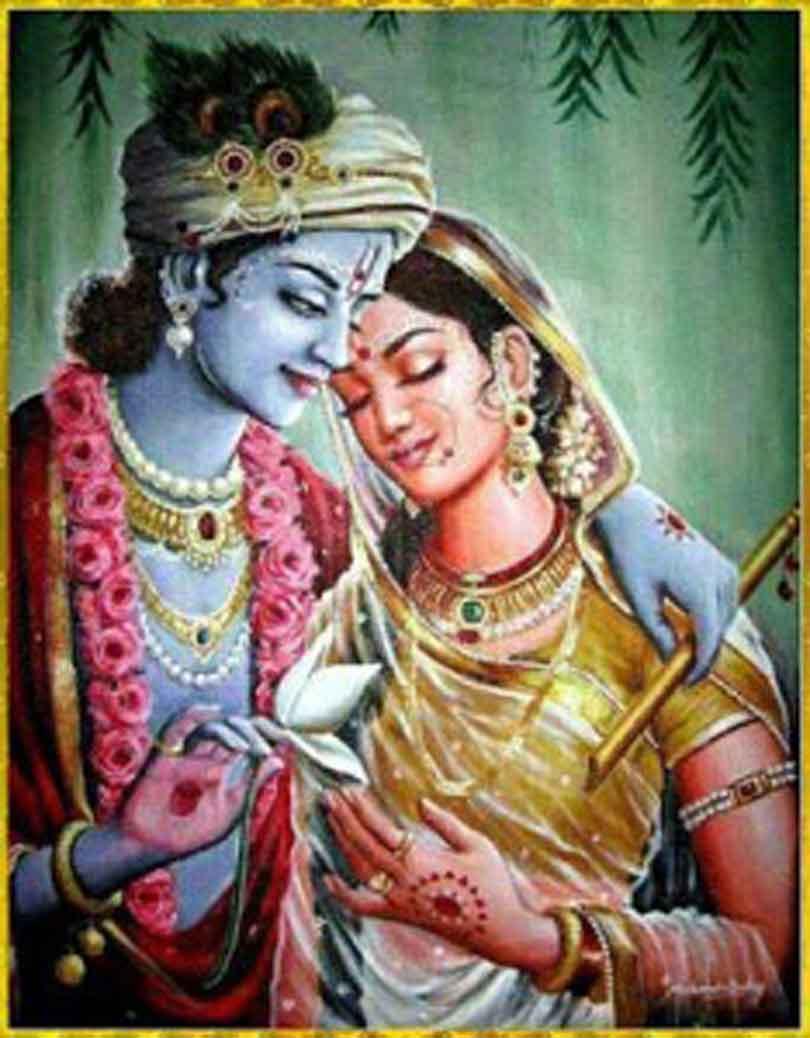
While Rukmini became Krishna's principal queen and lawful consort, another figure associated with Krishna came to occupy a unique place within Hindu devotional traditions; Radha.
Unlike Rukmini, whose story is firmly rooted in the narratives of marriage and royal life, Radha emerged as a central figure primarily through later devotional literature and Bhakti traditions. Although she receives relatively limited attention in some of the earliest texts about Krishna's life, her spiritual importance grew immensely over the centuries.
In devotional traditions, Radha is viewed as the ideal devotee whose love for Krishna is absolute, selfless and unconditional. Their relationship is generally interpreted symbolically rather than historically. For many theologians, poets and devotees, Radha represents the human soul while Krishna represents the Divine. The longing of Radha for Krishna is therefore understood as the soul's longing for union with God.
This spiritual symbolism became especially prominent during the Bhakti movement, a religious movement that emphasized personal devotion as the path to divine realization. Beginning in different regions of India and spreading across centuries, the movement inspired saints, poets and philosophers to express their devotion through songs, poetry and prayer.
Many of these devotional works celebrated Radha's love for Krishna as the highest expression of surrender to God. Through the compositions of saints and poets, the story of Radha and Krishna became one of the most influential themes in Hindu spirituality and culture. As a result, Krishna's relationship with Radha and his marriage to Rukmini are often understood as representing different but complementary dimensions of devotion.
Rukmini's story is associated with marriage, loyalty, duty and devotion within worldly life. It demonstrates faith expressed through commitment, responsibility and perseverance. Radha's story, by contrast, symbolizes spiritual longing and the soul's intimate relationship with the Divine. Her devotion transcends worldly concerns and points toward mystical union. Both traditions are deeply respected within Hinduism and continue to inspire millions of devotees worldwide.
Today, Krishna and Rukmini are worshipped together in numerous temples throughout India. One of the most renowned is the Rukmini Devi Temple in Dwaraka, Gujarat, a city traditionally associated with Krishna's kingdom. Pilgrims travel from across India and beyond to visit these sacred sites and participate in festivals dedicated to the divine couple. Religious ceremonies, devotional songs, processions and celebrations honour Krishna and Rukmini throughout the year. Their story remains an integral part of Hindu worship and cultural life.
Beyond religion, the narrative has profoundly influenced Indian literature, music, dance, theatre and visual art. Classical Sanskrit works, regional retellings, folk traditions and modern adaptations have all drawn inspiration from their story. Paintings depicting Krishna carrying Rukmini away in his chariot remain among the most popular themes in Hindu art.
Similarly, the symbolism of Radha and Krishna continues to inspire devotional poetry, classical dance traditions and spiritual discourse. Their relationship remains a powerful metaphor for humanity's search for divine truth and eternal love. The stories of Krishna, Rukmini and Radha have endured for centuries because they speak to universal human experiences. They explore themes of faith, courage, love, sacrifice, devotion and the pursuit of a higher purpose. These are values that transcend time, culture and geography.
Whether remembered through sacred scripture, temple worship, religious festivals or artistic expression, these figures continue to occupy a cherished place in Hindu imagination and belief. Together, Krishna, Rukmini and Radha represent different dimensions of love and devotion. They embody faith in divine guidance, dedication to a chosen path and the enduring relationship between humanity and the sacred. Their stories remain among the most celebrated narratives in Hindu mythology, continuing to inspire reflection, reverence and spiritual aspiration across generations.