If Young People Are Driving Tuks, What Has Sri Lanka Failed to Give Them?

By Thaliba Cader
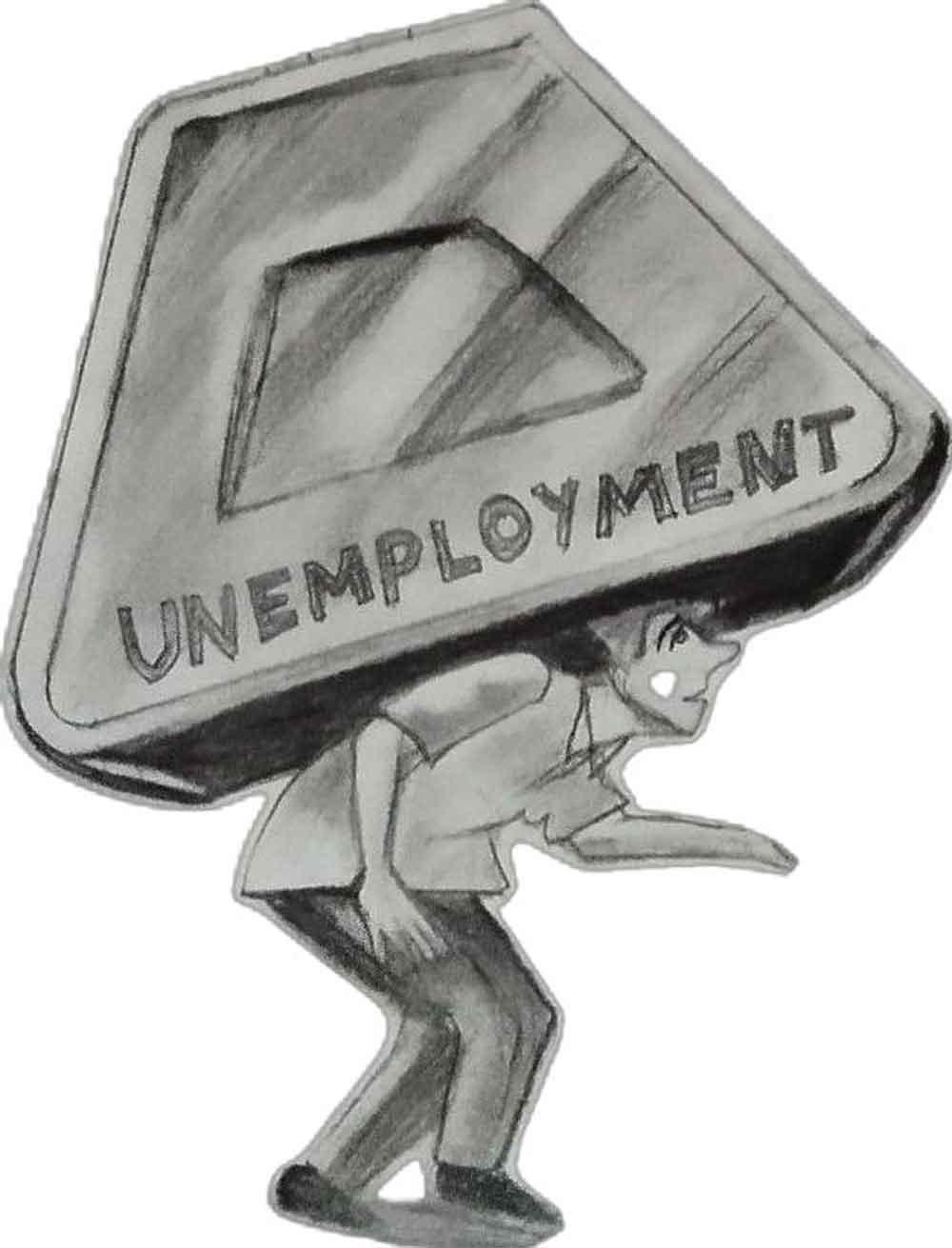
The debate over restricting young people from driving three-wheelers is really a debate about unemployment, skills, wages and the choices Sri Lanka gives its school-leavers.
A three-wheeler has become an unlikely symbol of Sri Lanka's economic anxiety. It is cheap enough to enter, flexible enough to accommodate family responsibilities and, for many people, capable of producing an income without years of formal training. For policymakers, however, that same accessibility has become a problem. If a young person can leave school and immediately begin earning behind a steering wheel, why would they spend years acquiring technical skills for industries that desperately need workers?
That question is legitimate.
But in a country where education is free and where the Government invests billions in the national education system, there is another question that is just as legitimate: If the Government wants young people to choose skilled employment instead, what exactly is it offering them instead?
The controversy erupted after Deputy Minister of Vocational Education Nalin Hewage said the minimum age for driving three-wheelers could be raised to 40 as part of efforts to regulate the sector and discourage school-leavers from immediately entering it. The statement triggered widespread public debate. Cabinet spokesperson Dr Nalinda Jayatissa subsequently clarified that the Government had not taken a final decision to raise the minimum age to 40.
So this is not, at present, a story about a 40-year-old licensing rule coming into force. It is more interesting than that.
It is a glimpse into how the Government thinks about Sri Lanka's young workforce, and how young Sri Lankans think about their own economic survival.
The Government Has a Point
It would be intellectually dishonest to dismiss the Government's argument simply because a proposed age of 40 sounds excessive.
Sri Lanka has a real skills problem.
The Institute of Policy Studies has previously documented labor shortages in sectors including manufacturing, construction and tourism, while noting the attraction of three-wheeler driving for young people looking for accessible employment. Its research found that young, low-skilled workers are drawn to the sector partly because it offers immediate earnings, flexible hours and comparatively attractive working conditions.
That creates a genuine policy dilemma.
A country cannot build a modern economy if too many workers remain concentrated in low-productivity activities while employers in productive sectors cannot find people with the skills they need. The Government's argument is therefore not simply that young people should stop driving tuks. It is that a young person entering the labor market should ideally acquire skills that increase their productivity and earning potential over time.
There is merit in that argument.
A 19-year-old who spends the next decade driving a three-wheeler may certainly earn an income. But unless that person simultaneously acquires another skill, qualification or business capability, their future earning power may remain dependent on the same occupation.
Vocational training can change that trajectory. A qualified electrician, machinist, welder, refrigeration technician, construction professional, automotive technician or IT specialist possesses a skill that can potentially be transferred across employers and, in some cases, across countries. Sri Lanka needs more people in those occupations.
The problem is that the Government's argument becomes much weaker when it assumes that preventing young people from driving three-wheelers will automatically push them towards those careers. It will not.
The Numbers Do Not Support an Easy Story
Sri Lanka's youth unemployment problem is far more serious than the three-wheeler debate sometimes suggests.
According to the Department of Census and Statistics, 161,652 people aged 15 to 24 were unemployed in the second quarter of 2025. The youth unemployment rate was 20.8%, compared with an overall unemployment rate of 3.8%. For young men, it was 17.5%; for young women, it was 26.2%.
Read that again.
Roughly one in five young people in the labour force who were seeking and available for work could not find employment.
For young women, the situation was considerably worse. These figures should fundamentally change how we talk about the tuk-tuk driver. A young person who chooses three-wheeler driving is not necessarily rejecting work. They may be choosing the work that is available. That distinction matters.
If a school-leaver has two choices, one being a three-wheeler that can produce immediate income and another being a vocational programme that requires time and possibly costs the family money before a job is guaranteed, choosing the first option is not necessarily irrational.
It is an economic calculation. And governments cannot legislate people out of making rational economic calculations.
But Is Driving a Tuk Really the Problem?
The popular image is that Sri Lanka has more than a million young people sitting in three-wheelers instead of becoming skilled workers. The data is more complicated. IPS research found that while Sri Lanka had more than one million registered three-wheelers by 2018, not all were used as taxis. Using Department of Census and Statistics data, researchers estimated that around 47% of registered three-wheelers were being used as taxis.
Their research also found that the largest share of three-wheeler drivers was actually among people aged around 30 to 40, rather than youth. That is important because it challenges one of the central assumptions behind an age-based intervention.
If the objective is to solve labor shortages, policymakers need to know exactly how many young people are leaving school and entering three-wheeler driving, how many are full-time drivers, how many use it as a secondary occupation and what happens to them afterwards.
Policy should be built on that evidence. Not on the visibility of thousands of tuks on Sri Lankan roads.
The Case for Restriction
There is nevertheless a strong case for regulating access to the sector.
Road safety is one. IPS research has previously noted concerns surrounding accidents, traffic violations and undisciplined driving practices associated with three-wheelers. But if safety is the justification, age alone is a weak proxy for competence. A 40-year-old driver is not automatically a safer driver than a 20-year-old.
A better policy would focus on training, licensing standards, defensive driving, medical fitness, enforcement and professional accountability.
There is also a valid economic argument for encouraging young people towards skills.
Sri Lanka has spent years struggling with the mismatch between what its economy needs and what parts of its workforce can provide. If industries cannot find technicians while young people struggle to find meaningful employment, the answer cannot simply be to allow the mismatch to continue indefinitely.
The Government therefore has every right to ask whether the country is using its young human capital effectively. It should encourage young people to train. It should promote technical occupations. It should make vocational education more prestigious. It should create pathways into industries experiencing shortages. But there is a difference between encouraging a better choice and eliminating the existing choice.
That is not simply a youth attitude problem. It is a labor-market problem.
If a factory wants a young person to work eight or nine hours a day for a salary that barely covers transport and food, while a three-wheeler offers flexible hours and immediate income, the question should not only be why the young person chose the tuk.
The question should be why the formal-sector job is so unattractive. The same applies to vocational education. Telling young people to obtain skills is sensible. But skills training must lead somewhere. A certificate without employment is simply another piece of paper.
And what happens if young people are no longer allowed to drive tuks but still cannot find skilled employment? They could remain unemployed. They could enter vocational training, collect a certificate and still return to driving a cab because the job market does not pay enough.
Why 40?
A restriction that prevents someone from entering three-wheeler driving until middle age is not a minor regulatory adjustment. It would fundamentally alter access to an occupation for an enormous portion of the adult population.
If the Government's concern is school-leavers entering the occupation immediately after education, a policy aimed at delaying entry for a limited period would at least correspond more directly to that objective.
If the concern is road safety, competence-based licensing makes more sense.
If the concern is labour shortages, improve the alternatives.
If the concern is youth unemployment, create employment.
That is rarely good policymaking.
What Should the Government Actually Do?
There is a middle ground, and it is considerably more practical.
The Government could strengthen the licensing requirements for commercial passenger transport without treating young people as inherently incapable of working. A young driver could be required to undergo stronger defensive-driving training, additional testing and periodic competency assessments. The Government could also introduce incentives for young people to enter vocational education rather than relying on restrictions. Imagine a school-leaver being offered a fully funded technical course, a monthly stipend, a meaningful apprenticeship and a clear route into a job.
That is competition the three-wheeler industry would struggle to beat. And that is precisely the point. The Government should make skilled work more attractive rather than making other work less accessible.
The Tuk Is Not the Enemy
There is another part of this conversation that needs to be said plainly. The three-wheeler may simply be the most visible form of a much bigger problem. The issue is not necessarily the tuk itself.
Give someone a car, and they can become a taxi driver too. Give someone a motorcycle, and they can enter delivery work. Even someone with a good education may eventually turn to driving if the alternatives do not provide sufficient income, flexibility or stability. The tuk is simply the most visible option because it is accessible.
So if the problem is behavior, regulate behavior. If the problem is road discipline, enforce road discipline. If the problem is informal employment, address the conditions that push people towards it. But do not mistake the most visible symptom for the entire disease. Because the person sitting behind the wheel may not be the problem. The economic choices available to that person may be.
The Real Debate Is About the Future
There is a temptation to reduce this entire debate to a generational argument.
Young people are lazy.
Young people do not want to work.
Young people want quick money.
Young people do not want vocational training.
Sri Lanka's own unemployment data tells us that the young are not simply refusing to participate in the economy. A significant proportion are struggling to find a place in it.
At the same time, policymakers are correct that the country cannot afford to waste a generation's potential.
Both things can be true.
A young person should not have to choose between feeding a family today and building a career for tomorrow.
If Sri Lanka wants fewer young people driving three-wheelers, it should not begin by asking how to keep them out of the driver's seat. It should ask why the driver's seat looks like such a good option in the first place.
Make technical work pay better.
Make vocational education accessible.
Make apprenticeships meaningful.
Connect training to actual jobs.
Improve working conditions.
Provide financial support during training.
Regulate three-wheeler driving for safety and professionalism.
Then let young people choose.
Because the ultimate test of a successful economy is not whether the Government can prevent a young person from driving a tuk.
It is whether that young person has better choices.
The three-wheeler is not the cause of Sri Lanka's youth unemployment problem.
It is, in many ways, one of the places where that problem becomes visible.
And if the Government wants to move young people away from it, the answer cannot simply be to close the road.
It has to build another one.