From Colombo to the Cosmos How Sri Lanka found its place in a historic women-led space mission
By Thaliba Cader
There are journeys that begin with a boarding pass, and there are journeys that begin much earlier, with an invitation to imagine something that does not yet exist. For 18-year-old Seneesa Goonewardena, the journey to space began not at an airport or a launch site, but in an online classroom. For Dr. Sulochana Segera, it began several months earlier, in a meeting in Delhi that would eventually bring together a schoolgirl from Colombo, women from 108 countries and an ambition that reaches far beyond the classroom.
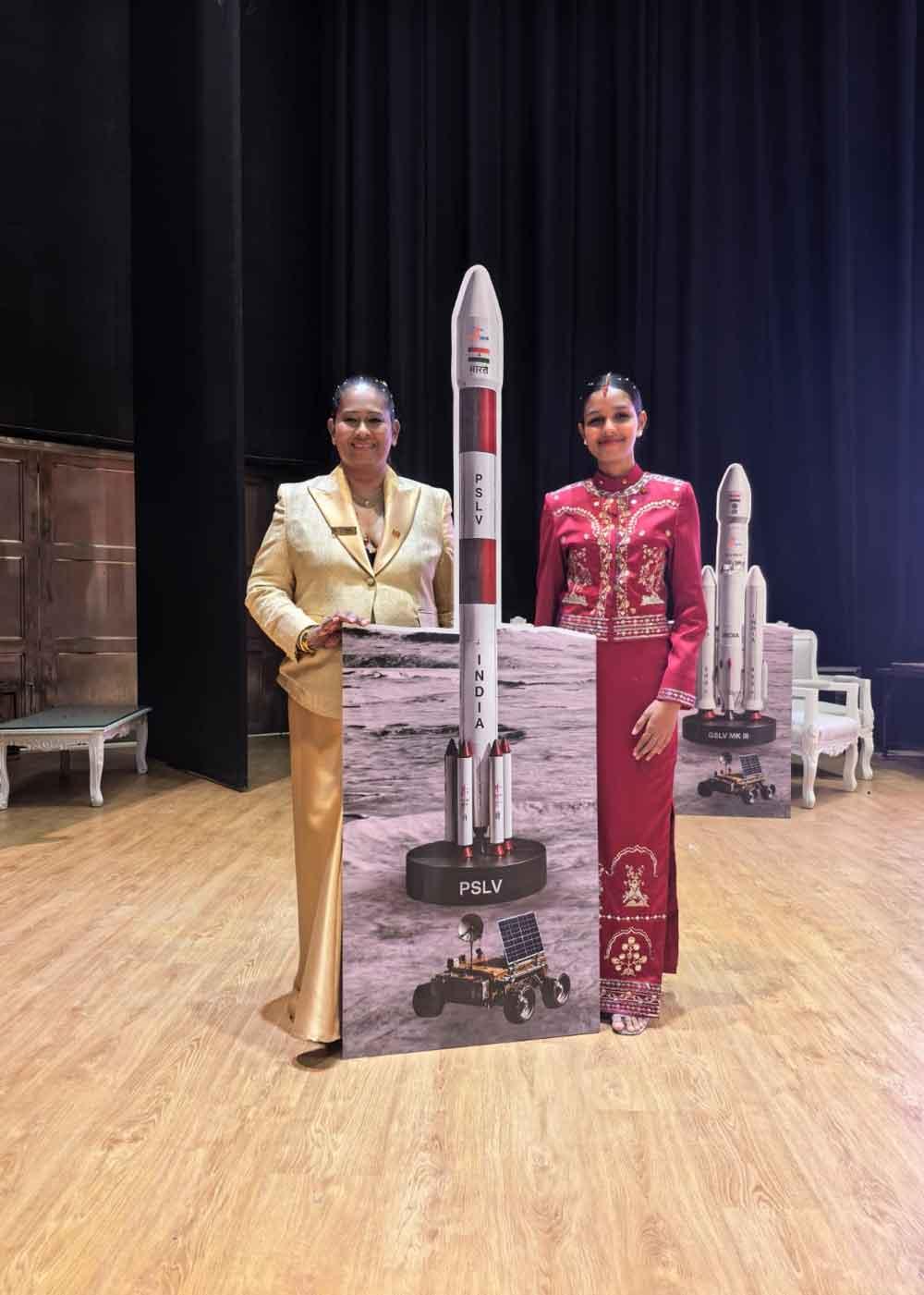
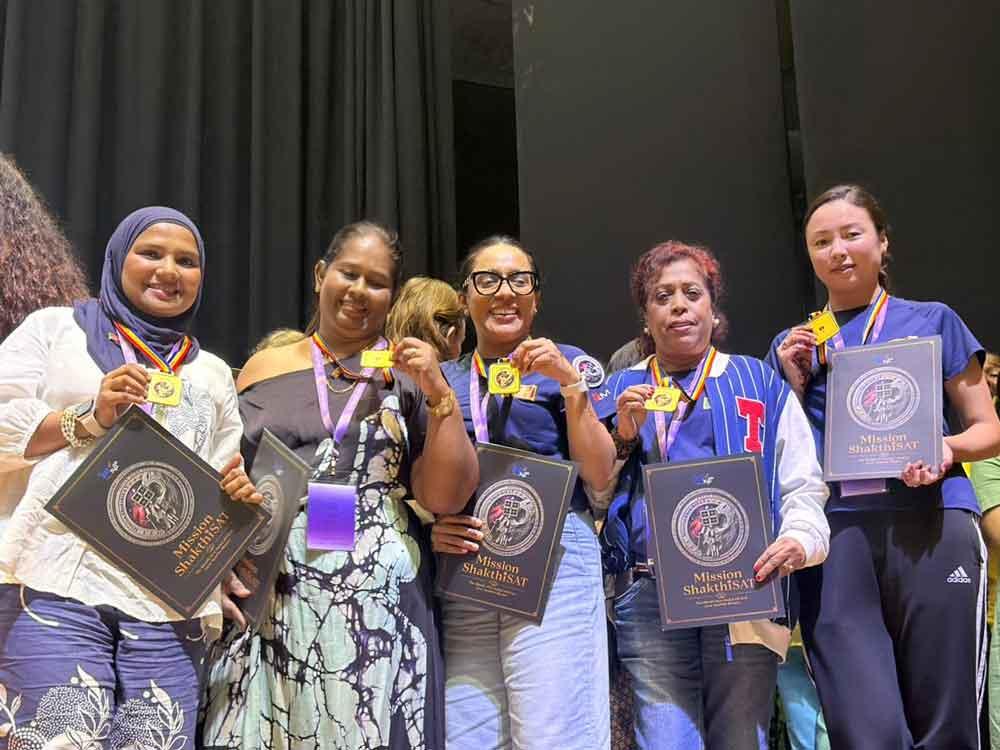
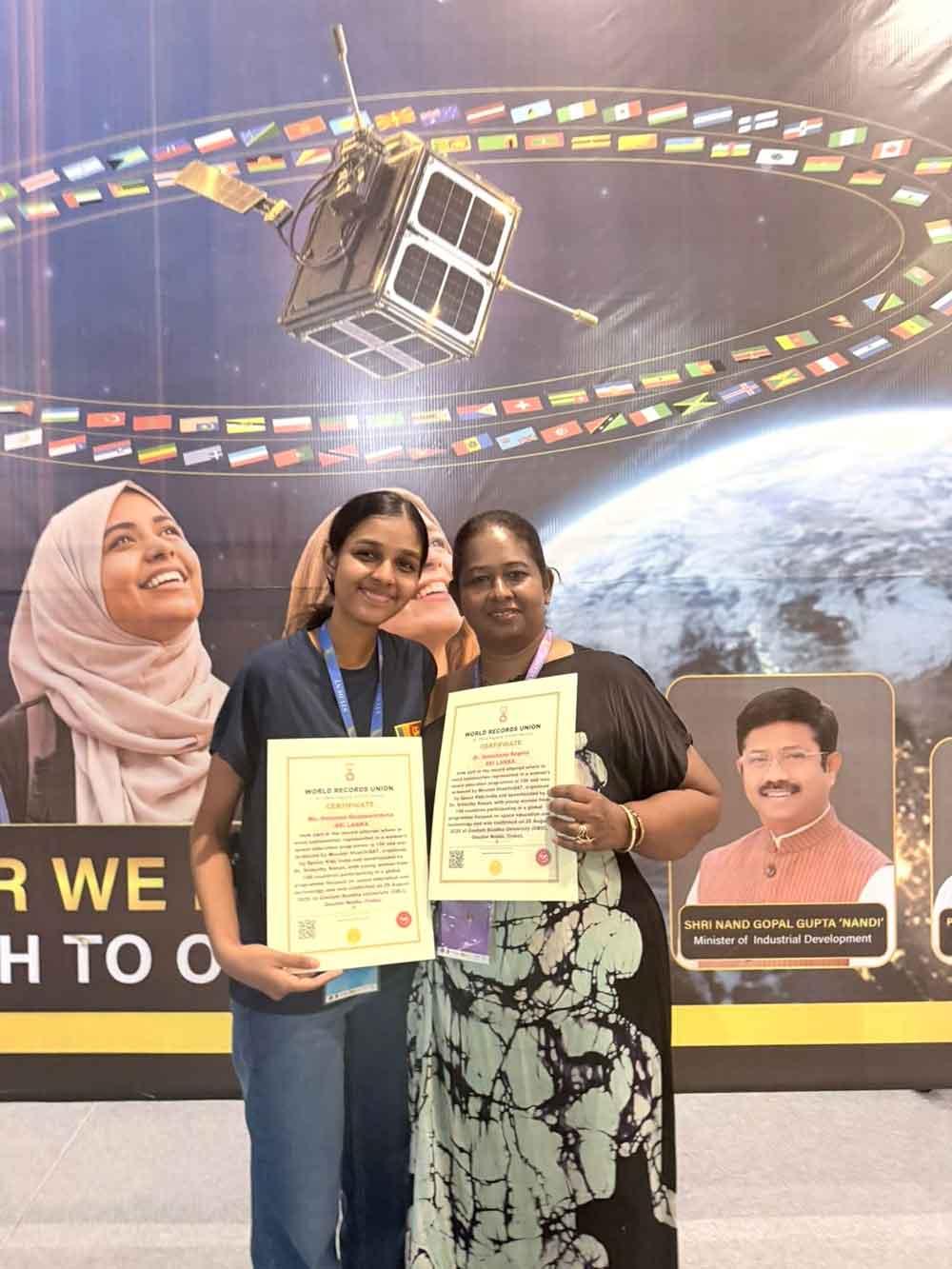
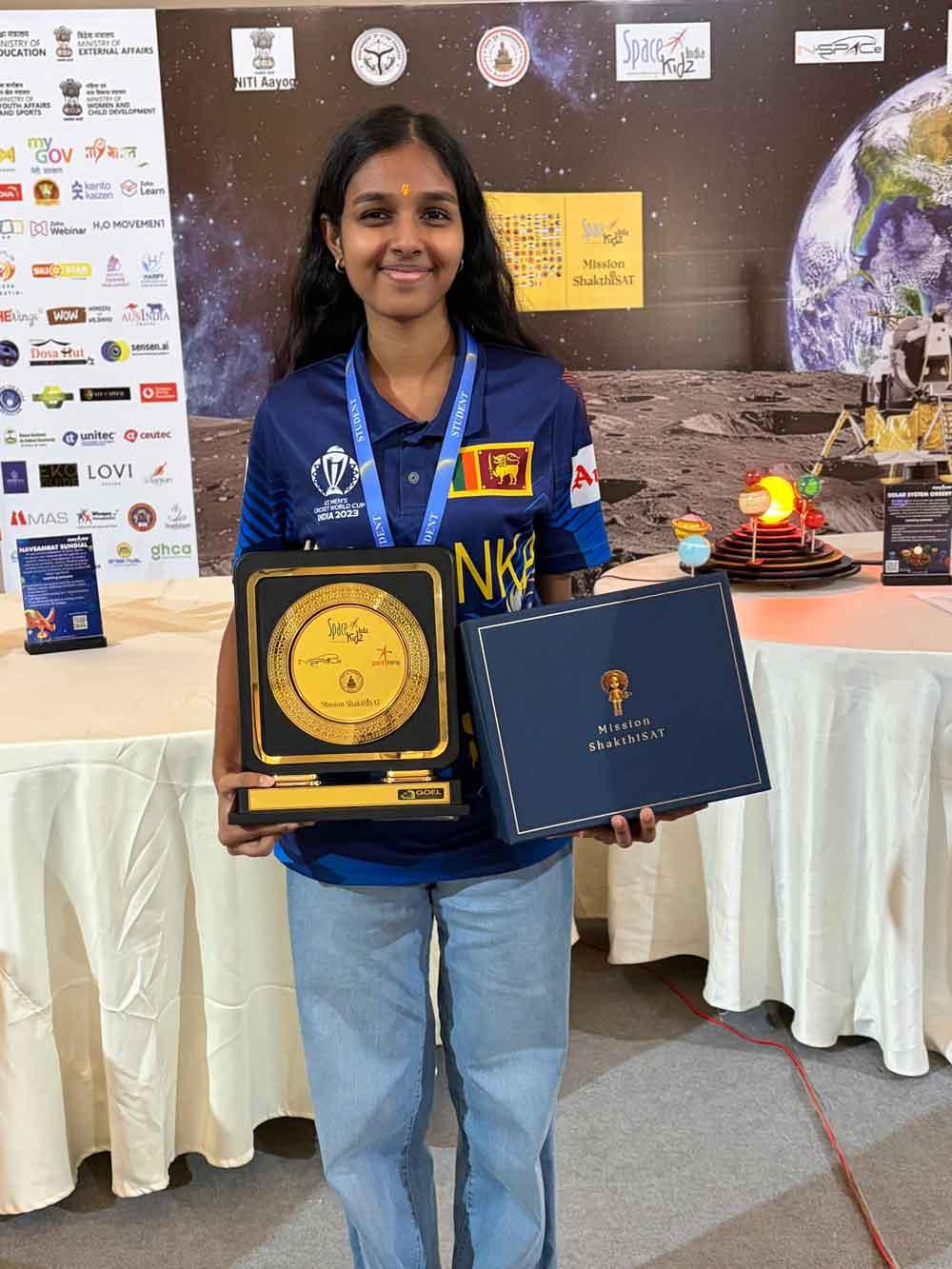
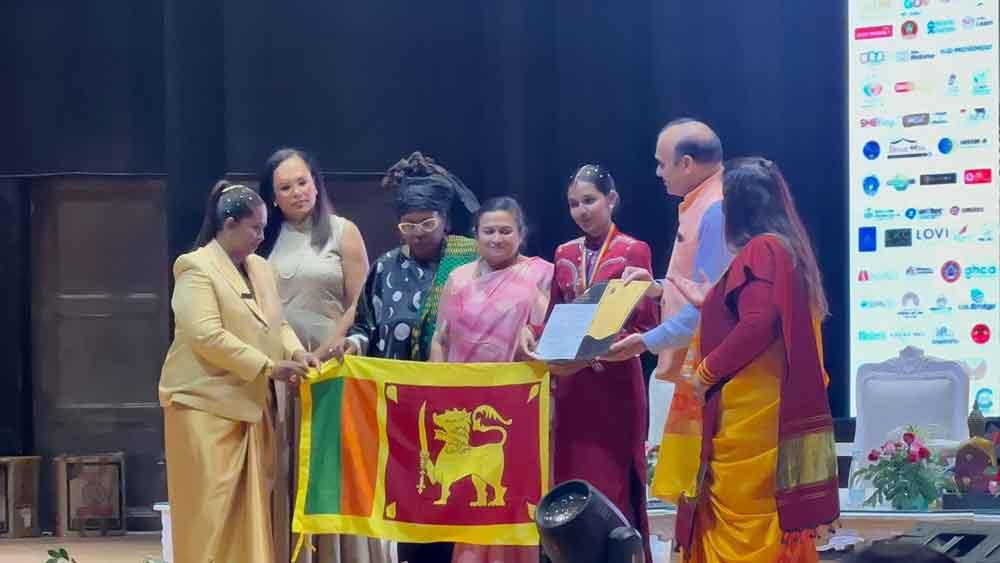
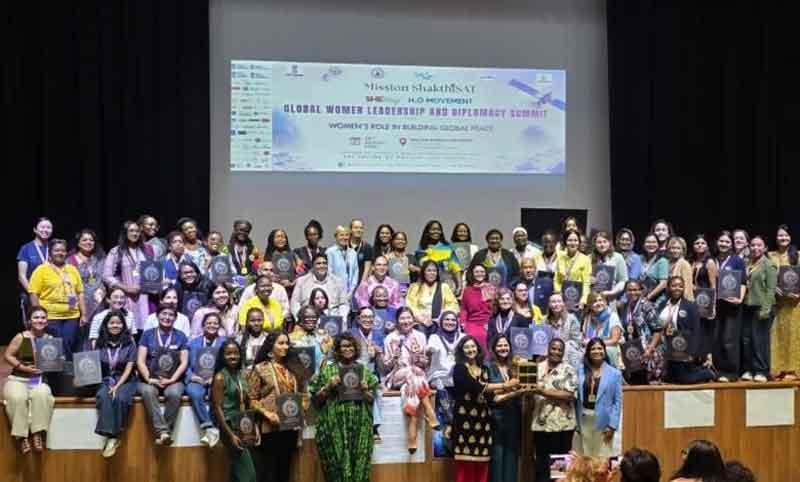
On August 28th, 2026, Mission ShakthiSAT was recognized with a world record for the most nationalities represented in a women's space education programme. Among those receiving that recognition were Sri Lanka's two representatives: Dr. Segera, who served as the country's ambassador to the mission, and Seneesa, who had spent five months learning about space science and satellite technology from home. The record was international. The journey to it, however, was deeply personal.
For Seneesa, much of it began with a screen. She completed 90 per cent of ShakthiSAT's online programme, including its practical components, as part of a 120- to 150-hour curriculum developed by Space Kidz India. The programme, delivered in English, Spanish, French and Portuguese through Zoho Learn, was structured around 21 modules intended to take students beyond the science they encounter in school and towards the practical disciplines behind space technology.
Then came the unexpected part. She was selected to travel to India and represent Sri Lanka in person. There was another distinction to carry with her. Seneesa had already achieved nine A passes at her local O/L examination. Two days before she left for India, her London A/L results arrived: two A*s and a B in Mathematics. But none of those results quite prepared her for what came next.
For Seneesa, the journey to India was filled with firsts. It was her first time on a plane. Her first time meeting people from so many different countries. Her first media interviews. Her first experience of being asked to speak not simply as a student, but as a representative of a country. “When I registered for the training, I did not know this was going to be this big,” she said. “But it was a lifetime exposure.” It was, in some ways, an education in things that cannot be measured by an examination.
The meeting that opened the door
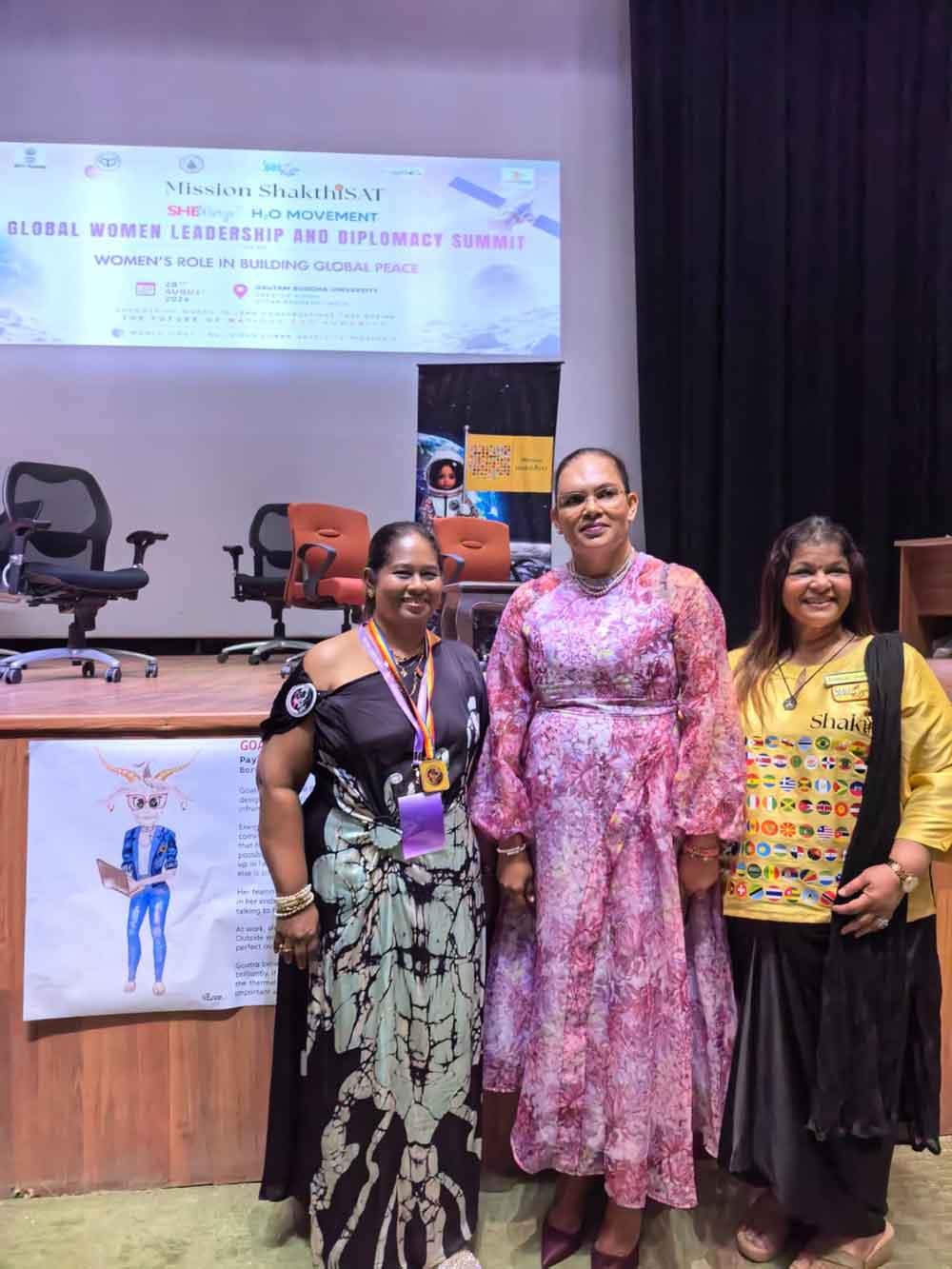
The Sri Lankan chapter of ShakthiSAT can be traced to Delhi in March, when Dr. Segera travelled to the city as a speaker at the BRICS CCE event. There she met Dr. Srimathy Kesan, the founder and CEO of Space Kidz India, who introduced her to the idea behind Mission ShakthiSAT: a global initiative intended to give young women access to STEM education, space science, satellite technology and engineering, while addressing some of the gender and economic barriers that continue to shape who gets to enter these fields.
The opportunity was subsequently launched at the BRICS event. Dr. Segera became Sri Lanka's ambassador for the mission and brought the programme home through Women in Management Global, making the online programme available free of charge to 100 Sri Lankan children. The response quickly exceeded that number. More than 200 young people registered. That response mattered for a reason beyond the numbers. In a country where access to specialized opportunities can depend heavily on circumstance, geography and resources, a space programme can sound impossibly distant. A satellite is something most children encounter in a textbook or in the occasional photograph from a launch site. The engineering behind one belongs, in the popular imagination, to another country, another education system, another kind of student. ShakthiSAT attempted to make that distance smaller. The idea was not merely to tell girls that they could enter STEM, but to give them a route towards doing so. And for one student in Colombo, that route eventually led to India.
Ten days, 108 countries
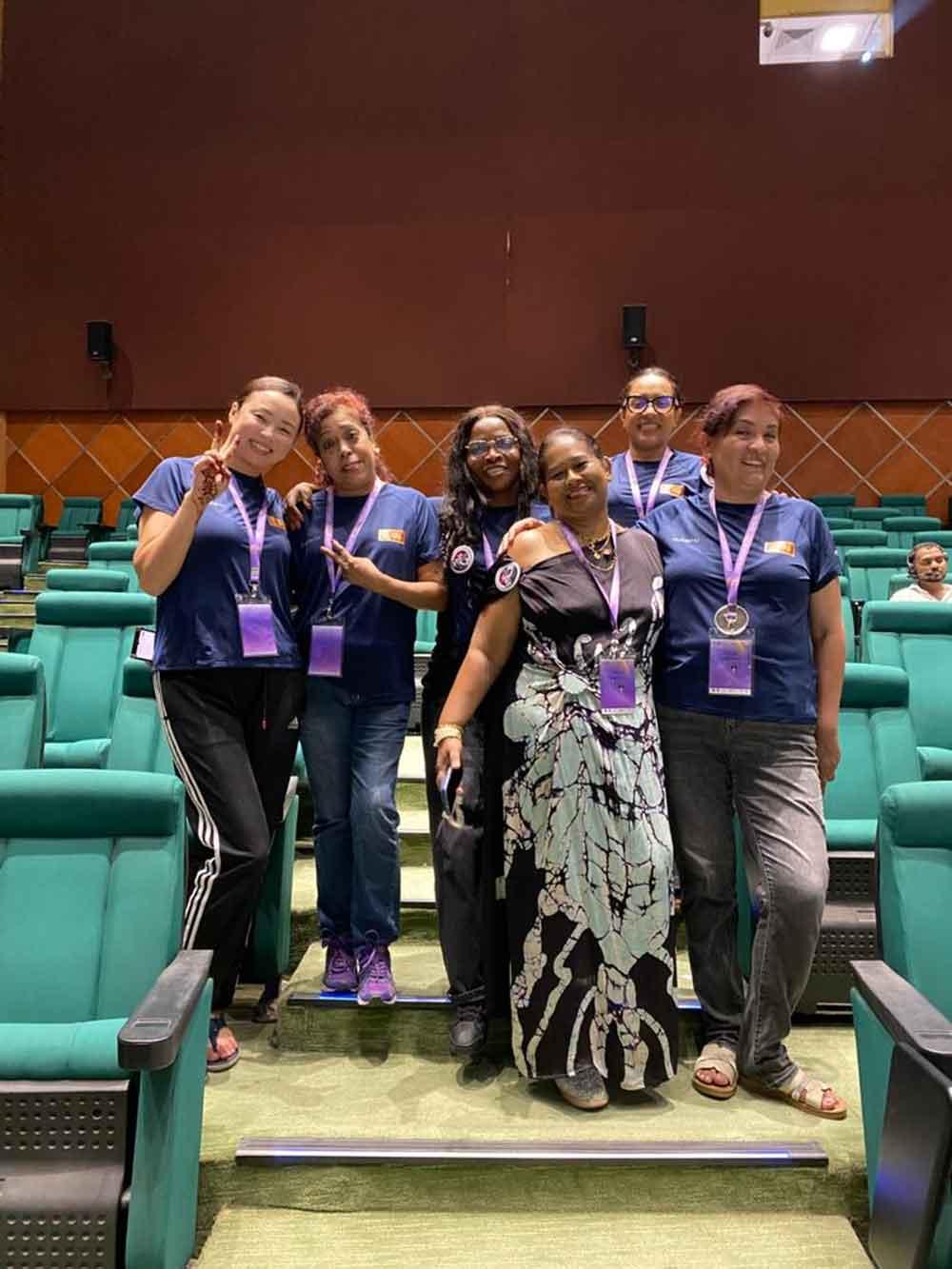
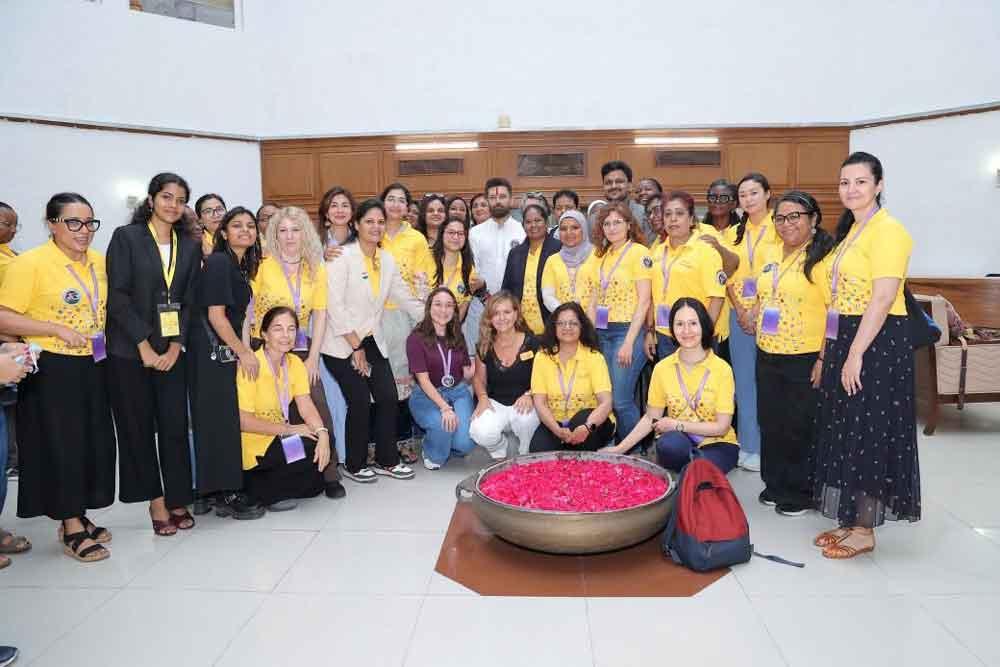
The physical phase of the programme brought together young women representing 108 nations for ten days of workshops, practical sessions and space education. The scale of the gathering was striking, but its meaning was found in the details: students learning alongside one another, encountering satellite technology, exchanging experiences and being introduced to the institutions and people behind a field that can otherwise seem remote. The programme involved Space Kidz India and contributors associated with India's wider space ecosystem, including ISRO. Its architecture also drew on international partnerships involving UK-based Meridian Space Command and France's Alpha Impulsion.
For Seneesa, the experience eventually culminated in a 30-credit diploma from ISRO in Fundamentals of Satellite Technology Education. She was also recognised by the India Women Pilot Association alongside other participating students for her commitment to the programme. Yet the most lasting part of the experience may have had little to do with the diploma. It was the realisation that the world of space was no longer something she could only look at from a distance. “I did not know this was going to be this big,” she said. That sentence carries the particular innocence of a young person discovering, almost in real time, the size of the world she has stepped into.
A country carried in more than a flag
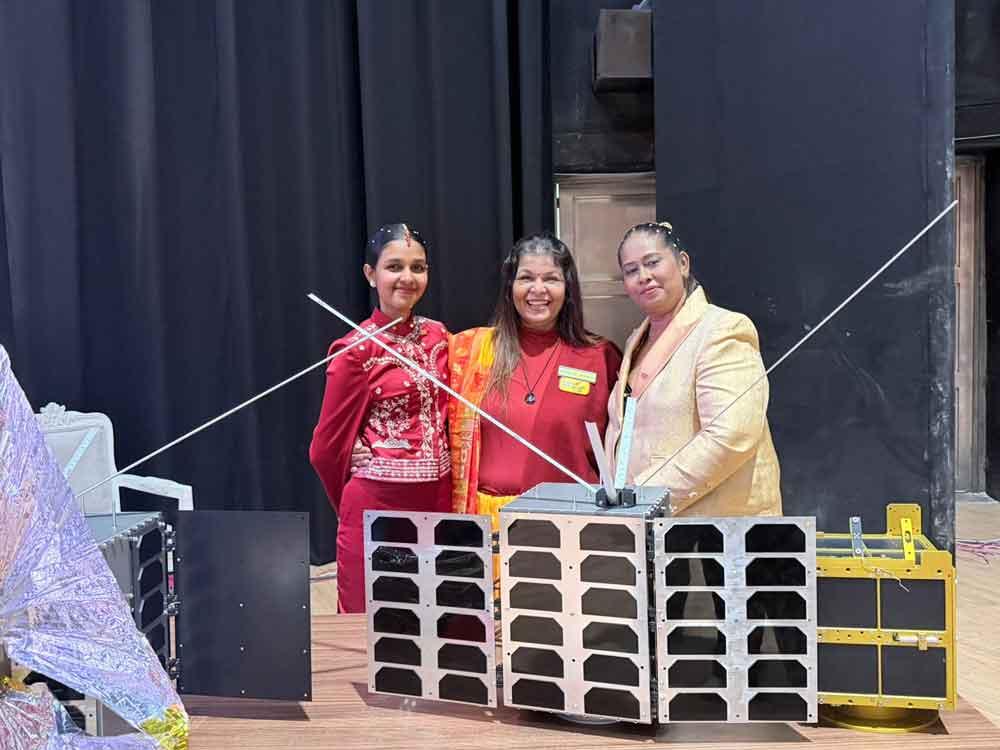
Seneesa was not the only person carrying Sri Lanka into the mission. Dr. Segera travelled as the country's official ambassador, representing both Sri Lanka and Women in Management Global. Through WIM Global's international network, she also helped bring countries including the Maldives, Canada, Türkiye and Ghana into the initiative.
“It is not about me”
For Dr. Segera, that distinction appears to be central to the entire experience. The recognition on August 28th may have carried Sri Lanka's name onto an international record, but she sees the achievement as belonging to a generation rather than to two individuals. “For me, it is not just about me being part of this mission,” she said. “It is ensuring our motherland is part of this mission, not for today, but for tomorrow's young girls.”
Then she spoke about Seneesa. “Seneesa represented our girls' future, not just herself.” It is a deceptively simple sentence. A student can be selected for a programme because of her own abilities. She can complete the modules, pass the assessments, travel abroad and receive a diploma. But representation carries another weight. It asks a young person to understand that her presence can alter what another young person believes is possible.
Seneesa said Dr. Segera made that responsibility clear to her. “Dr. Segera ensured that I was groomed, mentored and able to stand proudly as a Sri Lankan,” she said. “She told me, ‘It is not just you. It is so many young girls in Sri Lanka that are with you.’” For someone who had never been on a plane before, it was a large idea to carry.
But perhaps that is precisely why these experiences matter. A young woman does not need to begin by knowing everything about space. She needs, first, to encounter a world in which space is something she is permitted to study.
The next journey is already waiting
Mission ShakthiSAT did not end with the graduation ceremony. Its first Low Earth Orbit satellite is scheduled for launch on October 11, 2026, from the Sriharikota Launch Center in India. Beyond that lies a more ambitious proposal: a lunar initiative involving a 12U ShakthiSAT satellite, with organizers envisioning a coordinated payload journey towards the Moon. The distance between Colombo and the Moon is, obviously, enormous. But the distance between a schoolgirl looking at the night sky and a young woman learning how a satellite works can be crossed one classroom at a time. That may ultimately be the more important achievement of ShakthiSAT. The world record is measurable. So are the hours of training, the number of countries, the credits on a diploma and the date of a launch.
What is harder to measure is what happens afterwards. A girl returns to school carrying a different idea of herself. Another hears her story and begins to imagine studying engineering. A teacher sees a student who might once have been described simply as “good at science” and begins to wonder what else she might become. A country begins to understand that participation in the future of technology is not something reserved for larger nations. This is why the story of Seneesa Goonewardena is larger than Seneesa. And why Dr. Segera's insistence that “it is not about me” may be the most important thing said about the entire mission.
On August 28th Sri Lanka's name appeared among 108 nations on a world record. But records fade into archives. What remains is the image of an 18-year-old girl from Colombo standing among young women from across the world, having travelled farther than she had imagined when she first opened an online course. She went to India carrying a flag. She returned carrying a possibility. And perhaps that is how a country enters the cosmos: not all at once, and not by pretending the distance is small, but by showing its daughters that there is, after all, a path across it. When a girl looks at the sky, the most powerful thing we can give her is not a promise that she will reach the stars. It is the knowledge that she is allowed to try.