100 days of Chemmani excavations and accountability is still buried?
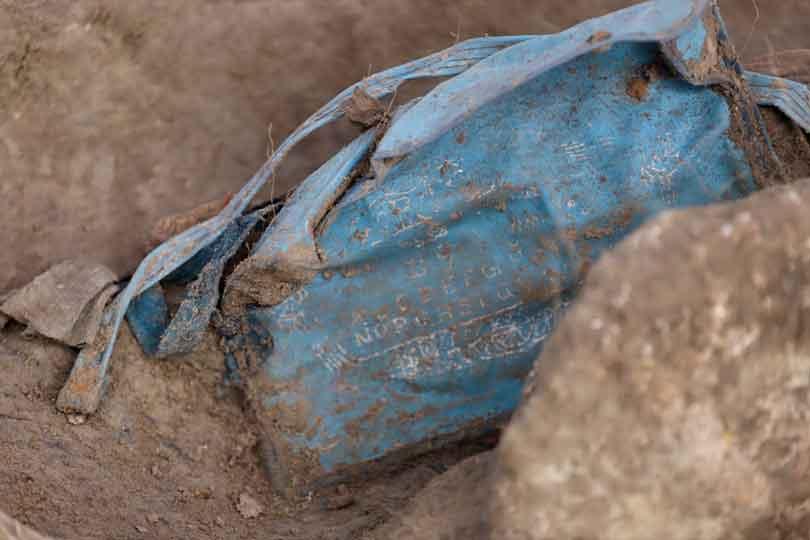
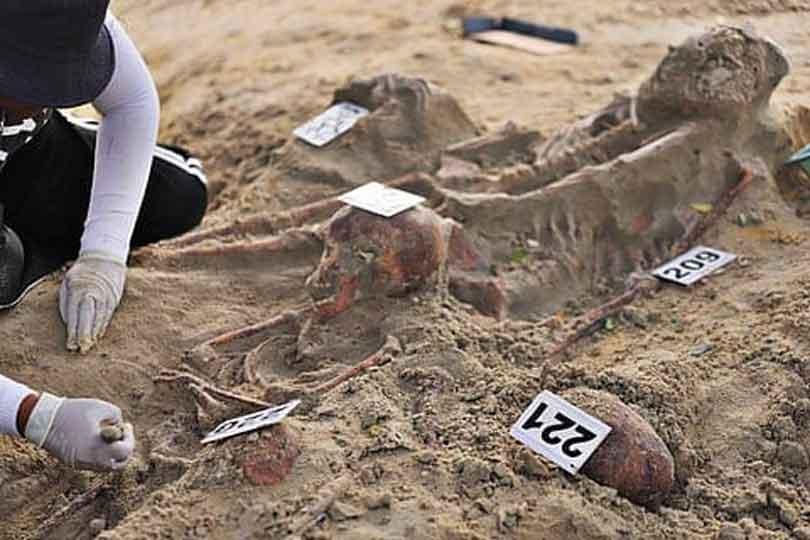
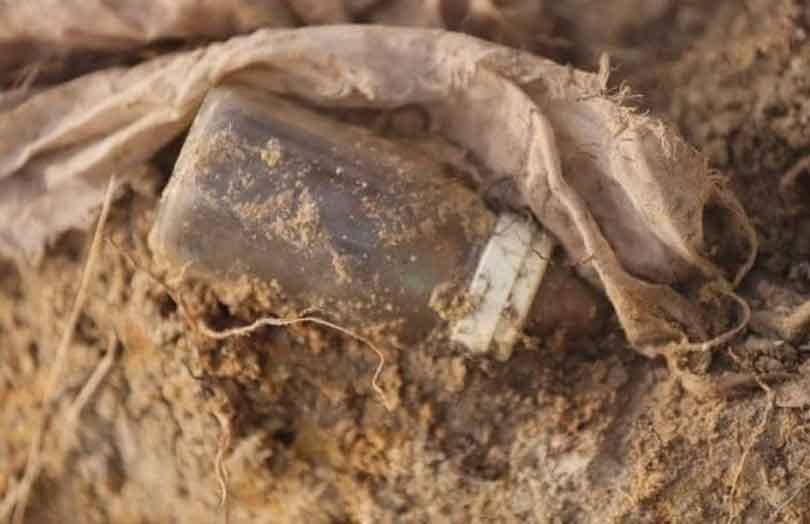
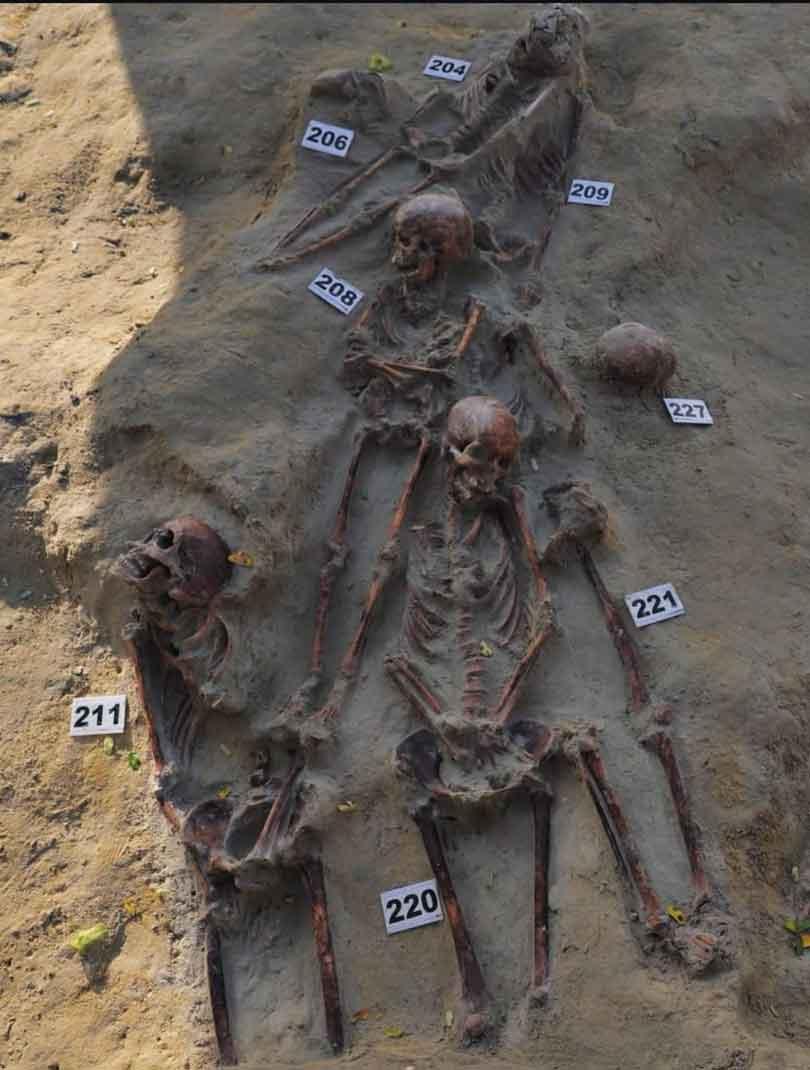
There's a scene from Michael Ondaatje's "Anil's Ghost" that I want to recall as I write this. A forensic anthropologist comes home to Sri Lanka to investigate a skeleton found inside a government-protected archaeological zone, a body someone tried to hide among centuries-old bones so a modern killing would just disappear into the noise of history. The whole novel sits on one terrifying idea: that in Sri Lanka, the dead from the war and the dead from a thousand years ago can end up in the same pile of earth, and the state prefers it that way. Easier to call it archaeology. Harder to call it a crime scene. I thought about that book a lot while going through a hundred days of news out of Chemmani. Because that's basically what's happening there, except it isn't fiction and nobody needs to disguise anything. Over 500 people are buried, some of them babies still with their feeding bottles, most of them with no clothes on. And a hundred days into digging them up, we still don't know who put them there.
The number, as of right now
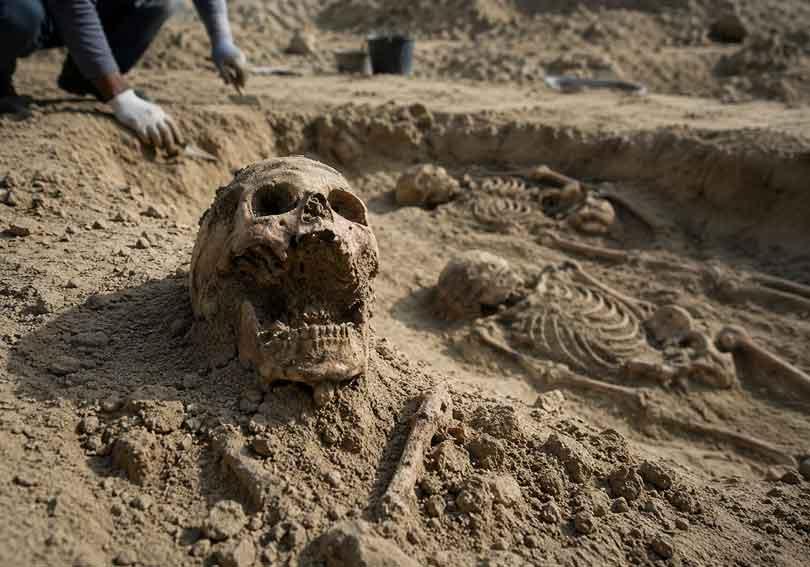
7 August 2026 marked the 100th day of the current excavation phase. Eight more skeletons were confirmed that day. Total count: 507 sets of human remains identified, 501 fully exhumed. That makes Chemmani the largest mass grave ever found in Sri Lanka, bigger than Mannar, bigger than Matale, and it's sitting right next to a fresh discovery in Colombo Port where over 100 more skeletons have turned up. The government's own justice minister has confirmed there are 17 recorded mass grave sites across the island. Independent monitors put the real number closer to 32. Almost 90% of the Chemmani remains had no clothing on them at all. Forensic teams say that's not what you find in a normal burial. That's what you find after an execution.
How we got here
None of this is new. It's a story that's been told before and quietly closed down before. In September 1996, an 18-year-old named Krishanthi Kumaraswamy was raped and murdered by Sri Lankan Army personnel while cycling home from school in Jaffna. Her mother, her 16-year-old brother, and a neighbour who went looking for her were killed too. Nine soldiers were charged over it. Seven were convicted. Every single one of them was a regular soldier. Not one officer. In 1998, one of those convicted men, Lance Corporal Somaratne Rajapakse, facing a death sentence, told the court that hundreds of bodies from Jaffna's disappeared were buried at Chemmani. A court-ordered dig followed in 1999. They found 15 skeletons. Two were identified as men who'd gone missing in 1996. Forensic examiners found signs of torture. Charges were filed against seven military personnel.
And then it just stopped. In 2000, the Attorney General's Department stepped in and the whole investigation was shut down. No more digging. No senior officer was ever charged. For 25 years, that was the end of the Chemmani story, as far as the state was concerned.
The reopening, phase by phase
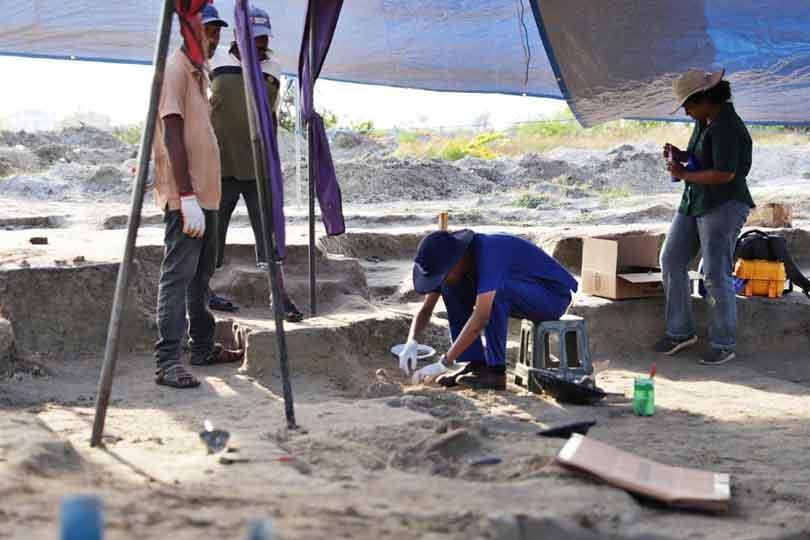
In February 2025, workers building a crematorium at the Chemmani-Siththupaththi cemetery hit bone. The Jaffna Magistrate's Court ordered a proper excavation, with judicial medical officers, police, and forensic archaeologist Professor Raj Somadeva on site. A nine-day test dig in May 2025 found 19 sets of remains, three of them infants under ten months old, buried shallow and scattered, no clothes. The court declared the site a crime scene.
From there:
- June 2025, 19 bodies confirmed, including babies. A three-day protest called the Anaiya Vilakku, the Imperishable Lamp, is held near the site. UN High Commissioner for Human Rights Volker Turk visits.
- July 2025, the count climbs to around 104. The International Commission of Jurists puts out a formal statement demanding international oversight.
- 6 September 2025, phase two ends at 240 skeletons identified, 239 exhumed. Officially paused for the monsoon. Actually, paused because the money ran out.
- September 2025 to April 2026, seven months of nothing. The Jaffna High Court asks the Ministry of Justice for Rs. 21 million in February 2026 to keep going. The funds only get released in the final days before the deadline, which delays everything again anyway.
- 27 April 2026, phase three finally starts. Court approves 56 days.
- June 2026, the toll passes 412. Digging pauses briefly for the team to rest, set to resume 15 July.
- 1 July 2026, 427 skeletons are marked with 427 torches at a vigil. Attorney Ranitha Gnanarajah, who represents the families, says plainly that no DNA samples have ever been collected from relatives of the disappeared. Not in 1999. Not now.
- 31 July 2026, the International Truth and Justice Project releases a report called "The Chemmani Mass Grave: We Are Still Searching" and holds a panel in Geneva with OHCHR's Sri Lanka Accountability Project, senior lawyer K.S. Rathnavel, and researcher Ingrid Massage. They call for a criminal investigation to start immediately.
- 30 July 2026, Tamil Catholic clergy and civil society groups hold demonstrations in Jaffna and Colombo, demanding an independent international probe, and hand an appeal to Volker Turk's office.
- 7 August 2026. Day 100. 507 identified. 501 exhumed. The current 56-day court window is only on day 46, which tells you the pace has been slow enough that even the legally allotted time hasn't run out.
What's actually been done
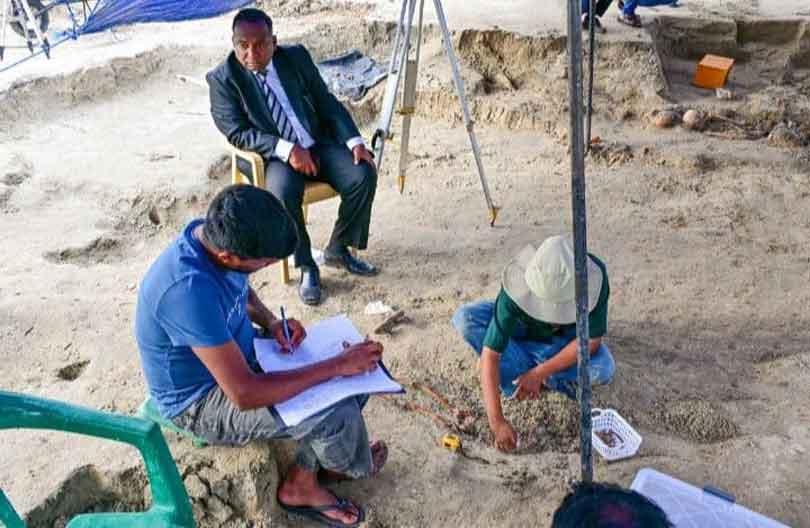
To be fair about it, the Jaffna Magistrate's Court has kept legal control of the whole process and treated the site as an active crime scene throughout. Judicial medical officers, police, and a forensic archaeology team led by Professor Somadeva have done the physical digging, using the same archaeological methodology first tried at Chemmani back in 1999.
The Office on Missing Persons has attended as an observer. It has not put out a formal statement on its own role. It has not started collecting DNA samples from any family.
Justice Minister Harshana Nanayakkara has visited the site twice and told Parliament in June 2026 that the government would seek international forensic help for DNA identification once excavation is finished. He said there was no need to protect anyone or hide anything.
Foreign Minister Vijitha Herath told the UN Human Rights Council in Geneva in September 2025 that Sri Lanka would handle accountability through domestic processes, and that outside involvement would only create division.
The UN Human Rights Council extended the OHCHR's Sri Lanka Accountability Project mandate for two more years in October 2025, through 2027, and specifically flagged the importance of funding mass grave excavations. Sri Lanka voted against that kind of resolution the year before and has opposed the mechanism the whole way through.
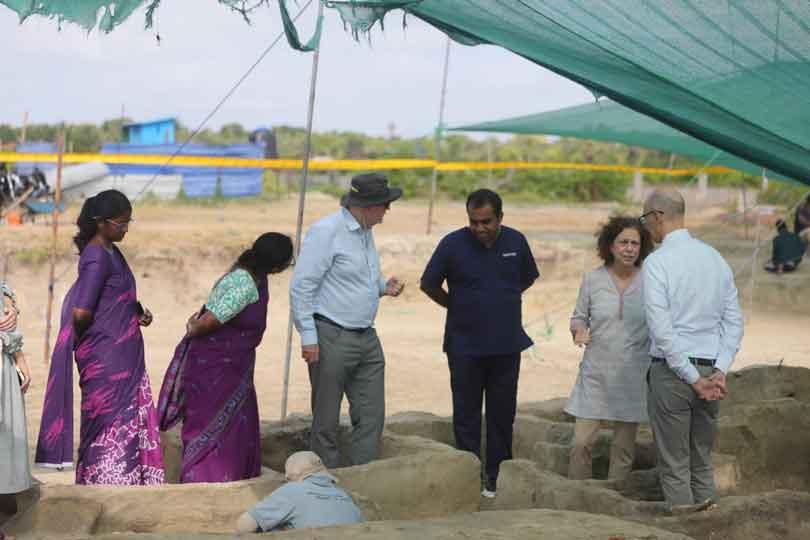
Families do at least have legal representation during the digging. International officials, the UN High Commissioner, EU ambassadors, have visited and observed.
What's missing, and it's most of what matters
No DNA process. Not one sample has been taken from a single family, despite some of them searching for thirty years. Without that, 507 skeletons stay a number instead of becoming 507 names handed back to 507 families.
No criminal investigation. OHCHR's Johan Soufi said it straight in Geneva: digging up bodies and investigating a crime are two different jobs. In 1999, with only 15 bodies found, the Criminal Investigation Department had already opened a case and questioned over 300 witnesses. In 2026, with more than 500 bodies found, there is no criminal case open at all.
No one above a foot soldier has ever answered for any of this. Jaffna was under military occupation from 1996 onward. Senior lawyers involved in the case have said outright that it isn't credible for killings on this scale to have happened without the military hierarchy knowing. And yet the only related conviction in history, the Krishanthi Kumaraswamy case, put seven ordinary soldiers in prison and touched no one above them.
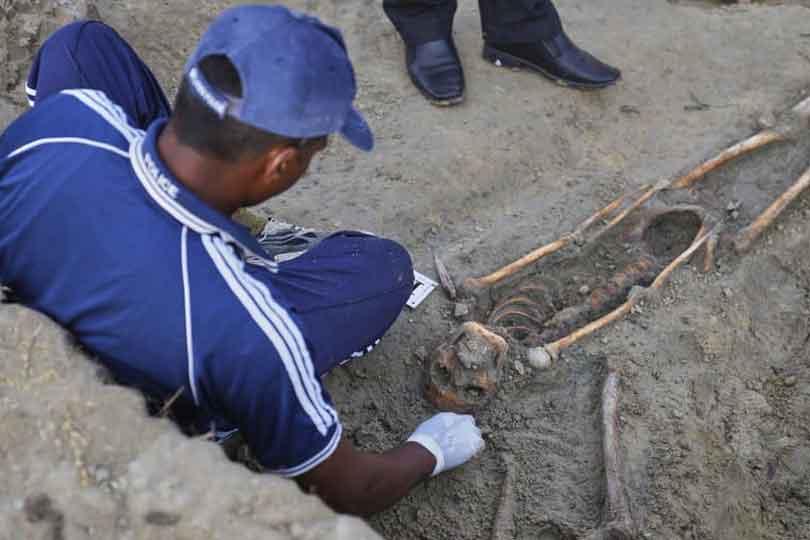
No international forensic team has been folded into the process, despite repeated offers from the UN, refused in 1999 and refused again now.
No steady funding. The dig has been stopped twice by money, not by evidence, once for seven months straight, officially blamed on rain, actually caused by the Ministry of Justice sitting on a Rs. 21 million release. The same thing has happened at Colombo Port.
No protection for memory either. A small memorial near the site, the Unextinguishable Lamp, has been torn down at least three times since June 2025. Locals rebuild it within a day, every time. Nobody has ever been identified for tearing it down.
And no honesty about the bigger picture. Seventeen recorded mass graves, by the government's own count. At least 32 by independent counts. Chemmani, Mannar with over 230 bodies, Matale with around 154, Kokkuthoduvai with 50, Colombo Port with over 100 now. Not one of them, not a single one, has ever produced a prosecution.
How much more do we dig?
What sat with me the whole time I was writing this was that the exact same week that Chemmani crossed its 100th day, Sri Lanka's former Inspector General of Police, Pujith Jayasundara, and former Defense Secretary Hemasiri Fernando were sentenced to death and taken to prison over their role in the 2019 Easter Sunday bombings. Whatever you think of that outcome, it happened in about seven years. Crime to conviction. Seven years. Chemmani has had 27 years since the first excavation was shut down, and closer to 30 since the killings themselves. Not one senior figure has been charged. Not one has even been named. The justice system that can move fast enough to sentence a former IGP to death in seven years has spent three decades failing to open a criminal file on the largest mass grave the country has ever found. That's not a resourcing problem. A state doesn't forget how to investigate. It chooses what to investigate. And when the victims are Tamil civilians from the North, buried by an army that was occupying their own town, the choosing gets very obvious very fast.
What we demand
A criminal investigation must start now, not after excavation wraps up, because that deadline has already proven meaningless once. DNA sample collection from families immediately, with international technical help if that's what's needed to actually make it happen. Funding for this dig and every other known mass grave site that isn't at the mercy of a ministry that has already used the money to stall things twice. Real international forensic participation, not just site visits, as the ICJ, OHCHR, and ITJP have all separately called for. An investigation that goes up the chain of command, not just at the people holding the shovels back in the 1990s, since that's exactly what let the 1998 prosecution off the hook. Protection for the memorial and for the people keeping it standing, and an actual inquiry into who keeps destroying it. A public, binding timeline from the Ministry of Justice and the OMP. Not another line in Parliament about how the truth will come out soon. Five hundred and seven skeletons is not a statistic. It's 507 families who now know, with more certainty than they had 100 days ago, that someone they loved didn't just vanish. They were killed and buried somewhere Hindus don't even bury their dead, without their clothes, some of them still children. What those families still don't have, after 100 days, is a single name. Sri Lanka has dug up the ground. It hasn't dug up the truth. We need accountability.