Dolly Parton: The Woman Who Turned a Rhinestone Life Into a Light for the World
By Thaliba Cader
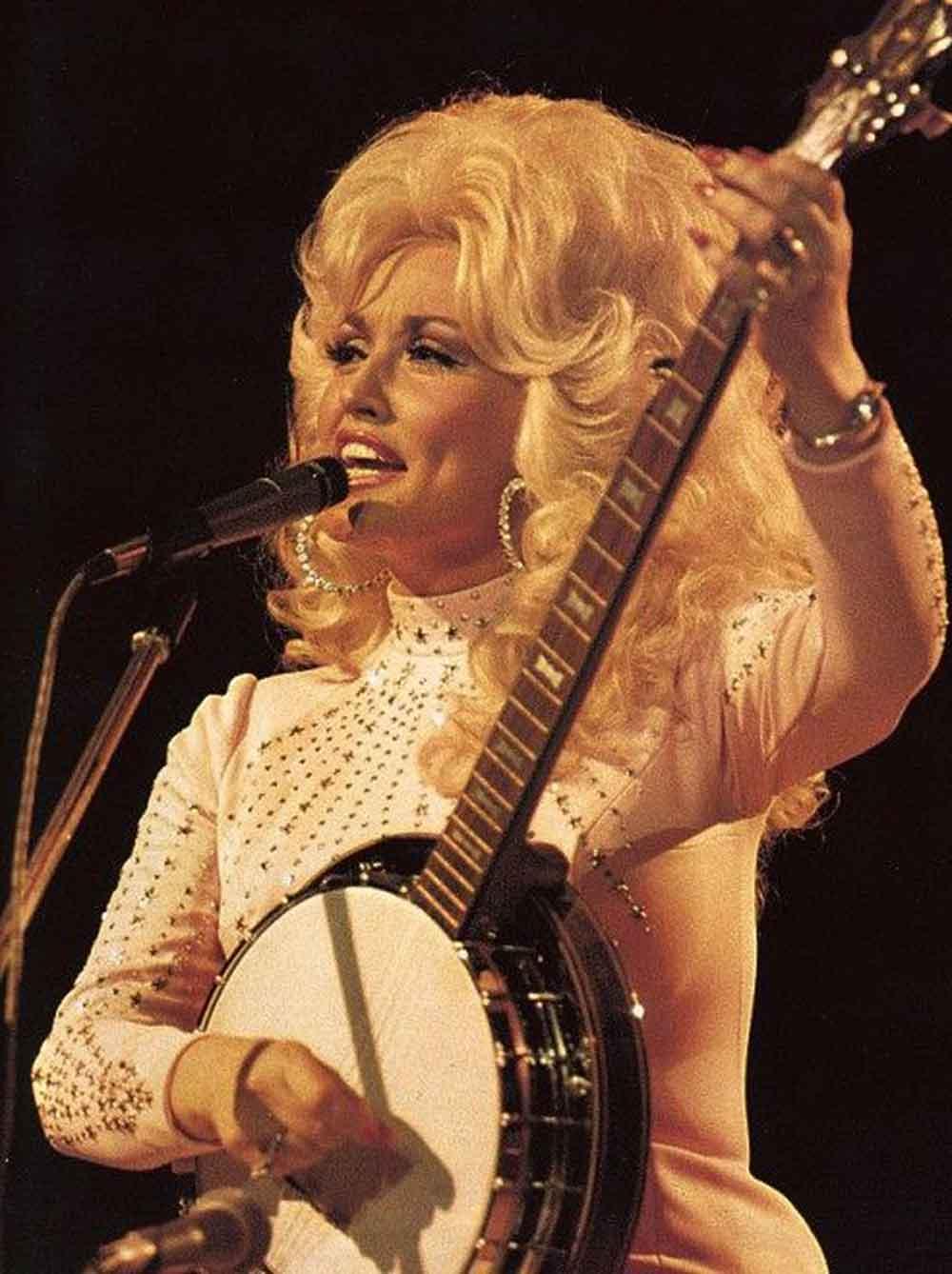
“A world without Dolly doesn’t feel possible, real, or right,” Taylor Swift wrote in tribute after the death of Dolly Parton. It is difficult to find a more fitting description of the strange emptiness left by the passing of a woman who had seemed, for generations, almost permanent. Dolly Parton was not simply a country singer. She was a songwriter, actress, author, entrepreneur, philanthropist and cultural force whose influence stretched across music, film, business, literacy and popular culture. She died in Nashville on August 25, 2026, aged 80, following what her team described as a brief battle with cancer.
For seven decades, Dolly made an extraordinary life out of ordinary beginnings. She came from the Smoky Mountains of East Tennessee, one of twelve children raised in a family where money was scarce but music, faith, storytelling and imagination were abundant. Born in Sevier County in 1946, she grew up in a small one-room cabin with her parents, Robert Lee Parton Sr. and Avie Lee Owens. Those beginnings never became a chapter she tried to hide. They became the foundation of her art. The mountains remained in her songs, her accent remained unmistakably Tennessee, and the memory of a childhood without much money became one of the deepest sources of her generosity.
Dolly began writing songs at around five years old. One of her earliest compositions, Little Tiny Tasseltop, was about a corncob doll made for her by her mother. Dolly could not yet read or write, so her mother wrote the words down as the little girl sang them. There is something almost prophetic about that image: a child who could not yet put her own words on paper already understood that stories could be saved through song. That instinct would eventually produce a catalogue of roughly 3,000 songs and some of the most enduring compositions in popular music.
By ten, she was performing on local radio and television, and at 13 she stood on the stage of the Grand Ole Opry. For the girl from Tennessee, Nashville represented possibility. She moved there as a teenager determined to become a songwriter, and it was in Nashville that she met Carl Dean outside the Wishy Washy Laundromat. They married in 1966 and remained together for nearly six decades, until Dean's death in March 2025. He deliberately stayed away from the celebrity world surrounding his wife, giving Dolly a private home life that she repeatedly described with affection.
Her professional breakthrough came in the 1960s. After signing with Monument Records, Dolly joined The Porter Wagoner Show in 1967, becoming part of one of country music's most successful partnerships. The exposure brought her into the national spotlight, but Dolly understood that being visible was not the same as being independent. In 1974, she left Wagoner's show to pursue her own career. The decision was professionally risky, but it produced one of the greatest songs of her life.
I Will Always Love You was written as Dolly's farewell to Wagoner, a song about leaving without erasing love or gratitude. Dolly's own recordings reached No. 1 on the country chart, but Whitney Houston's later recording for The Bodyguard transformed the composition into a worldwide phenomenon. Dolly's achievement was not simply that she had written a hit. She had written something emotionally universal enough to be reborn in another singer's voice, another genre and another generation.
Then came Jolene, a song whose brilliance lies in its simplicity. A woman speaks to the person she fears might take the man she loves, and within that conversation Dolly creates an entire psychological landscape of insecurity, jealousy and vulnerability. The song became one of her signature works and has continued to be interpreted by artists far outside traditional country music. In 2026, even as Dolly's life came to an end, Jolene was still gaining new global certifications, including Diamond status in Canada and the Netherlands.
But perhaps no Dolly Parton song reveals the philosophy of her childhood more clearly than Coat of Many Colors. Inspired by the coat her mother made from scraps, it transformed an experience of poverty into a story about love. The significance was never really the coat. It was the hands that made it. Dolly understood something profound about memory: material circumstances can be remembered differently when they are surrounded by love. A child may feel ashamed of having less, but an adult can look back and understand the richness that existed in the people who gave what they could.
That became one of Dolly's great gifts as a songwriter. She did not need grand characters to tell important stories. She wrote about workers, mothers, lovers, lonely people, poor families and people trying to survive ordinary days. Her songs gave dignity to lives that popular culture often ignored. She made the everyday feel worthy of attention.
By the late 1970s, Dolly had become a major star, crossing from country into pop and adult contemporary music while retaining the musical identity that had made her famous. But her ambitions were never confined to music. In 1980, she starred with Jane Fonda and Lily Tomlin in 9 to 5, a film that became a cultural landmark. Dolly's title song captured the frustrations of working women and became an anthem far beyond the cinema. It reached No. 1 on the Billboard Hot 100, country and adult contemporary charts, an extraordinary achievement that demonstrated her ability to turn a specific social experience into a song people could claim as their own.
Hollywood followed with films including The Best Little Whorehouse in Texas, Rhinestone, Steel Magnolias, Straight Talk and Joyful Noise. In Steel Magnolias, she showed that her warmth and humour could exist alongside genuine dramatic vulnerability. Acting expanded her audience, but it never displaced the songwriter at the centre of her identity.
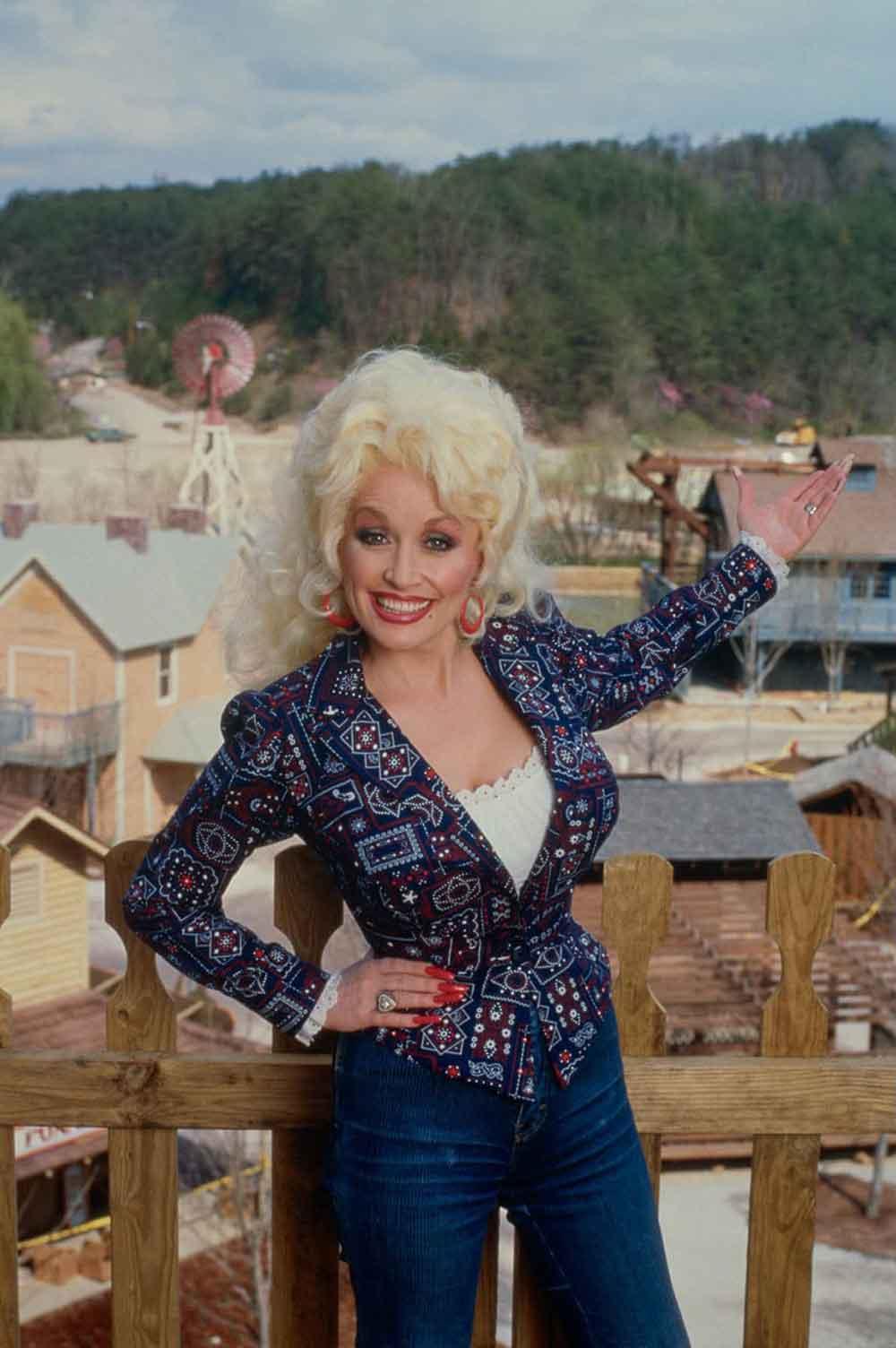
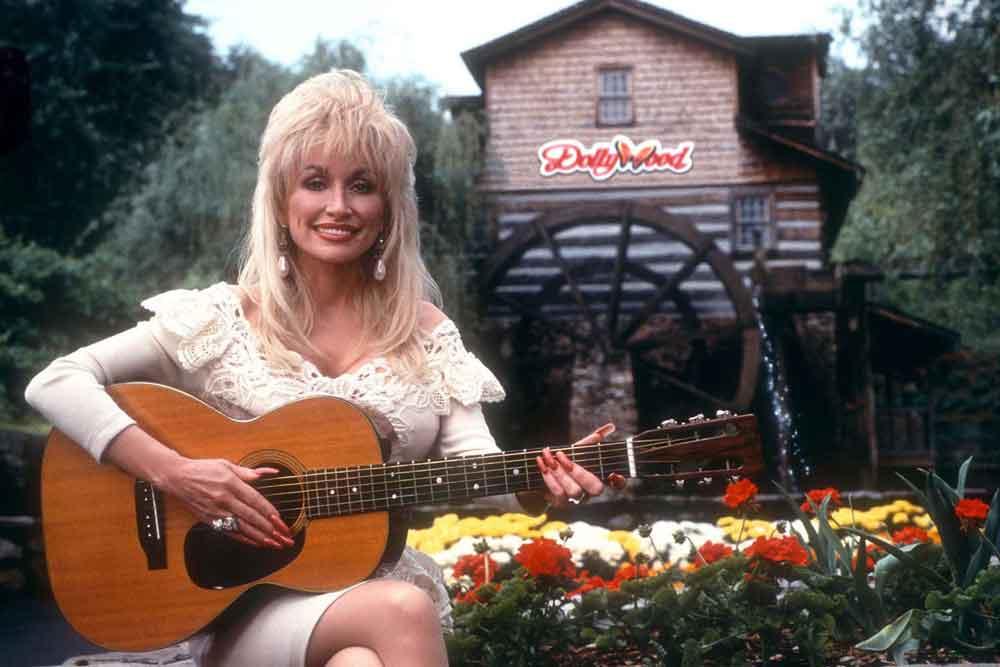
There was also a formidable business mind behind the sequins and humour. Dolly understood that celebrity could be converted into something more lasting than fame. In 1986, Dollywood opened in Pigeon Forge, Tennessee, transforming her connection to the Smoky Mountains into a major entertainment and tourism enterprise. The park became an important source of jobs and economic activity in East Tennessee, and Dolly continued building businesses across entertainment, hospitality, food and consumer products.
What made this particularly meaningful was that Dolly never treated success as an escape from home. She returned to it. She invested in it. She built around it. The mountains that could have been an embarrassing reminder of poverty became the landscape of an empire. She showed that leaving home and honouring home were not opposites.
Yet if her music made Dolly famous and her businesses made her powerful, her philanthropy revealed what she believed that power was for.
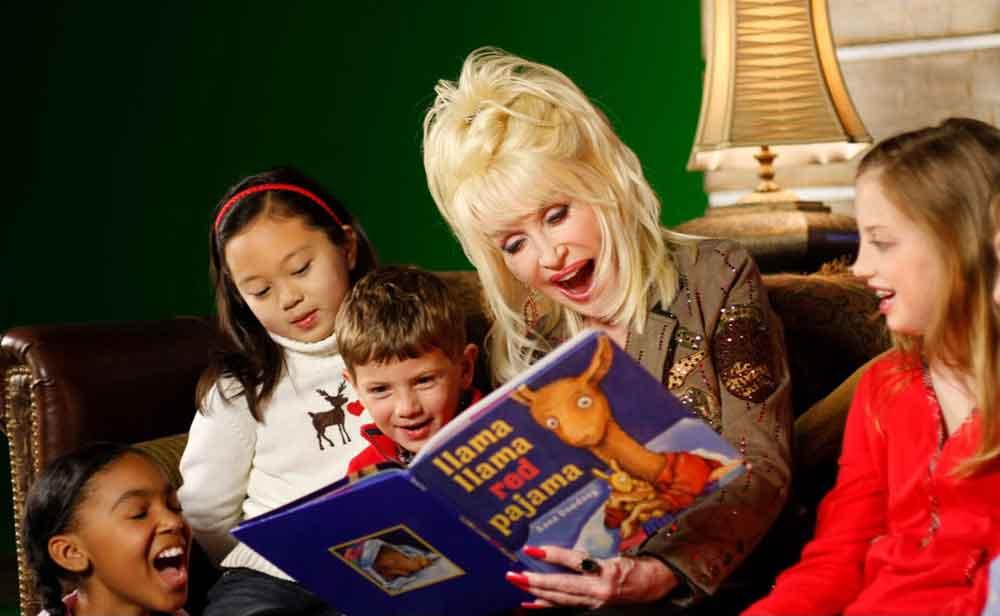
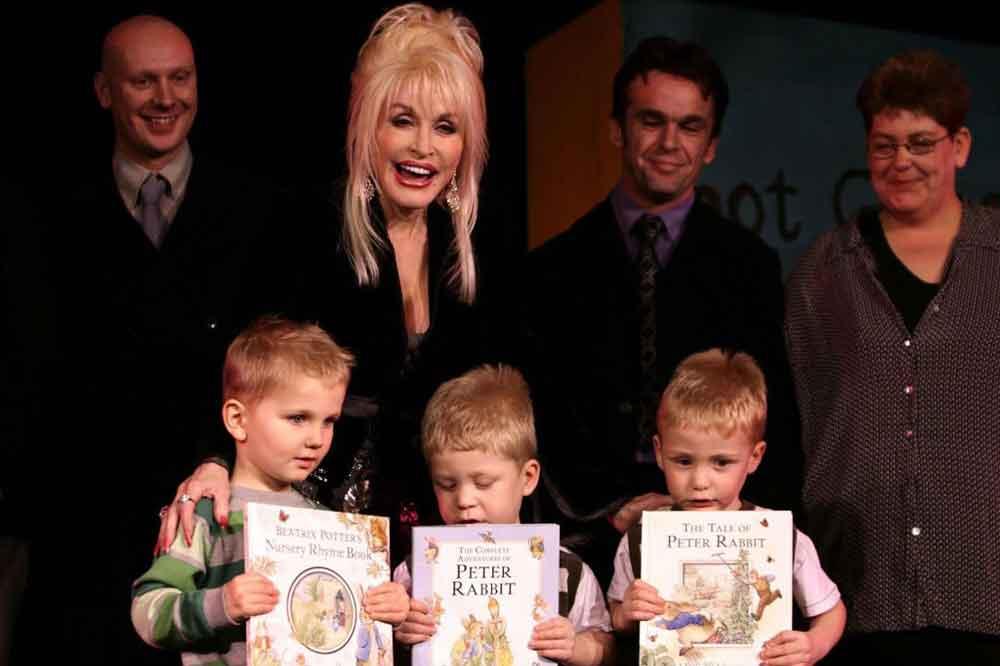
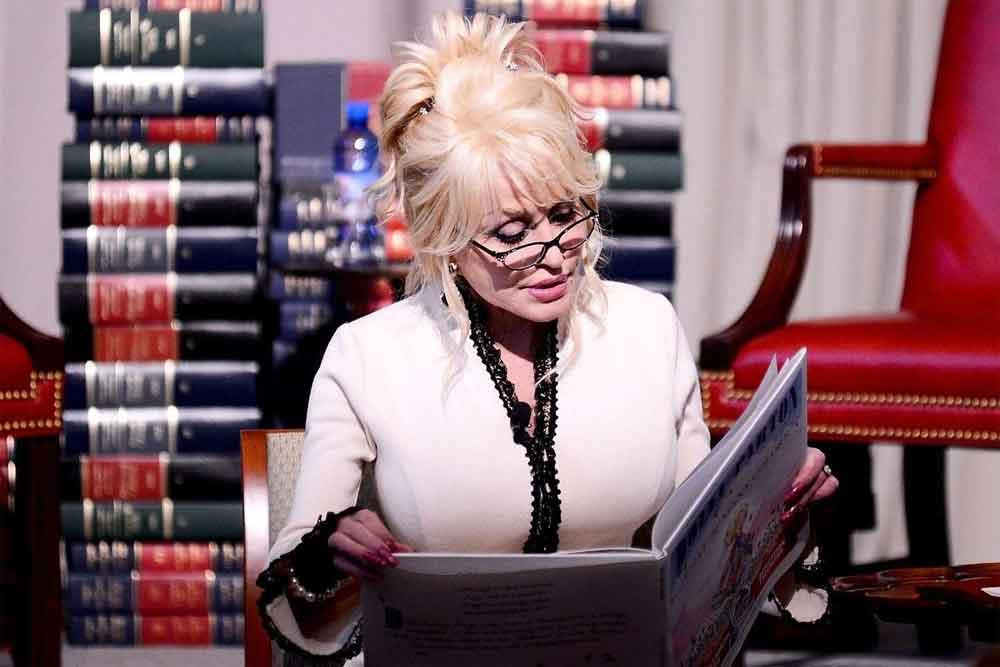
In 1995, she established Dolly Parton's Imagination Library, inspired partly by her father, who never learned to read or write. What began as a local book-gifting programme in Sevier County became an international literacy initiative, sending free, high-quality books to children from birth to age five regardless of their family's income. By 2026, the programme had gifted more than 300 million books, creating one of the most remarkable private literacy initiatives in the world.
That number is staggering, but the idea behind it is beautifully simple. Give a child a book. Give them a story. Give them language. Give them a doorway into somewhere else.
Dolly understood the power of that doorway because storytelling had been her own escape and education. Her father could not read, and she saw the limitations that created. Instead of simply remembering that sadness, she built something in response to it. Her philanthropy was often like that: deeply personal experiences transformed into public good.
She also supported healthcare, education and disaster relief. During the COVID-19 pandemic, she donated $1 million to Vanderbilt University research that contributed to the development of the Moderna vaccine. Her generosity repeatedly demonstrated that philanthropy did not have to be abstract. It could begin with a problem you understood and grow into something that helped people you would never meet.
Dolly once said, “Find out who you are and do it on purpose.” Few entertainers lived that philosophy more completely. Her famous joke that it takes “a lot of money to look this cheap” was more than a punchline. It revealed her extraordinary ability to control the joke before anyone else could. The glamour was deliberate. So was the humour. Beneath them was a woman who understood contracts, publishing, branding, business and ownership. She knew exactly how valuable her name was, but she also understood that the most powerful thing she could own was the ability to decide what that name represented.
Her femininity was part of that rebellion. Dolly did not fit the narrow image of what a serious female artist was supposed to look like. She was openly glamorous, unapologetically ambitious and deliberately larger than life. Yet she wrote her own songs, built her own businesses and became one of the most financially and creatively influential women in entertainment.
She collected the honours that come with a legendary career: Grammy Awards, Country Music Association Awards, the Kennedy Center Honors, induction into the Country Music Hall of Fame and, in 2022, the Rock & Roll Hall of Fame. She sold more than 100 million records worldwide. Billboard named her the greatest country music artist of all time in 2024. In August 2026, just days before her death, her official website announced 82 new global sales certifications across 14 countries, evidence that her music was still reaching new listeners around the world.
But numbers are inadequate when describing Dolly Parton.
They cannot explain why a song can outlive the person who wrote it. They cannot explain why a child receiving a book in the mail can become part of a legacy created by a woman they will never meet. They cannot explain why someone who has never visited Tennessee can feel that they know something about its mountains because Dolly sang about them.
There is a line in Dolly's philosophy that feels particularly poignant now: “The way I see it, if you want the rainbow, you gotta put up with the rain.” It is optimistic, but not naïve. Dolly never suggested that life would be easy. Her own life contained poverty, professional conflict, criticism, grief and the relentless pressure of celebrity. What she offered was something more useful than a promise of ease. She offered perspective.
The rain is part of it.
So is the rainbow.
So is the work of walking through both.
Dolly Parton spent eighty years doing exactly that.
And through it all, she remained recognizably Dolly.