Nepal Hit by Devastating Flash Floods Amid Growing Global Climate Disasters
By Yashmitha Sritheran
The world has faced a growing series of devastating natural disasters in recent years, from deadly floods and landslides to powerful storms, earthquakes and wildfires. Communities across continents have repeatedly been left struggling to recover from one crisis after another. Now, another major disaster has struck the Himalayas, with Nepal and Tibet facing catastrophic flash floods and mudslides that have killed more than 470 people and left more than 1,500 missing across the two sides of the border.
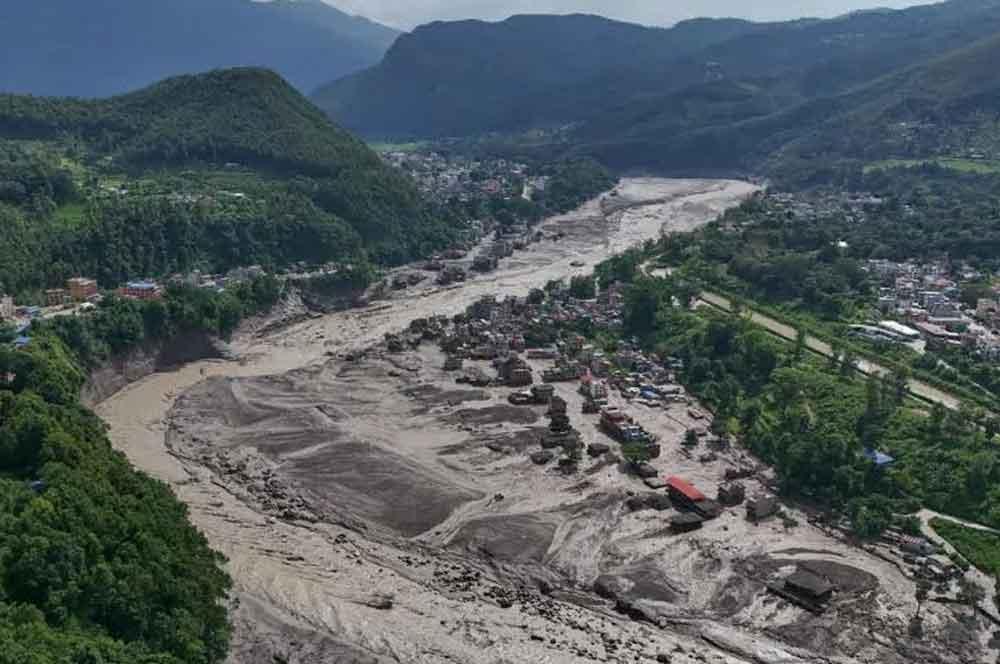
The disaster unfolded on Wednesday, August 26, along the Nepal-China border, when a massive collapse of ice, rock and debris sent a sudden surge of water through the Lhende Khola, feeding into the Bhote Koshi and Trishuli river systems. The torrent swept through villages, roads, bridges and infrastructure, leaving widespread destruction across the region.
As of Friday, Nepal’s Prime Minister’s Office reported that 469 people had been confirmed dead in Nepal, while 977 remained missing. In neighbouring Tibet, Chinese authorities reported at least five deaths and 558 people missing, including 260 foreign nationals. Taken together, more than 1,500 people remain unaccounted for on both sides of the border.
The toll is expected to change as rescue teams reach areas that remain difficult to access and authorities continue identifying recovered bodies.
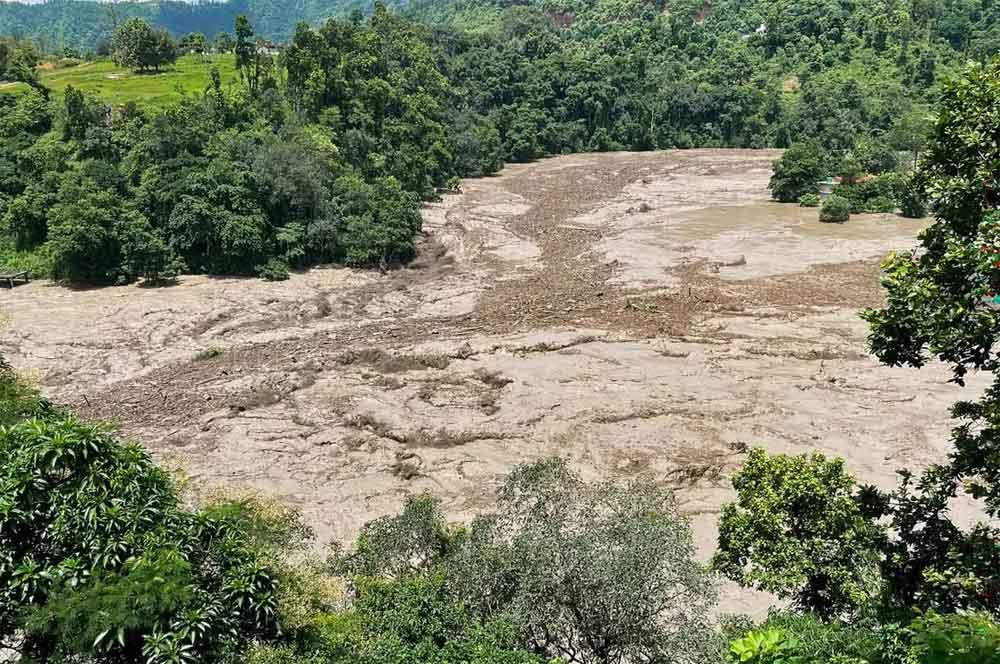
The hardest-hit areas of Nepal include Rasuwa, Nuwakot, Dhading, Chitwan, Gorkha, Tanahun and Nawalparasi. Rivers including the Lhende Khola, Bhote Koshi and Trishuli were overwhelmed by enormous volumes of water, mud and debris.
The Trishuli River reportedly rose by as much as nine metres in only 30 minutes, sending destructive floodwaters downstream through settlements and valleys.
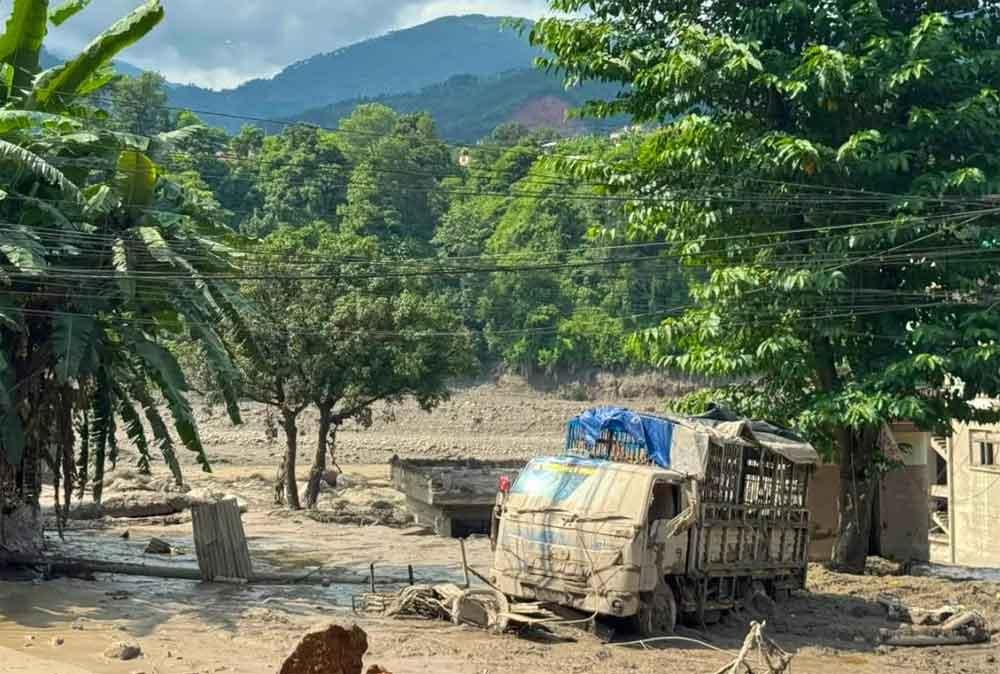
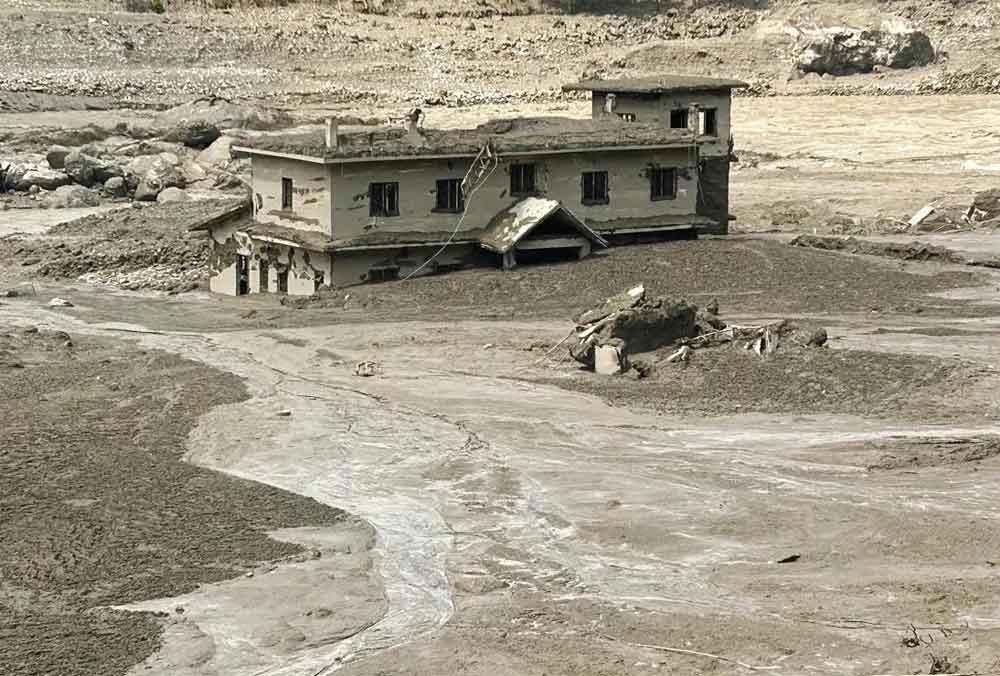
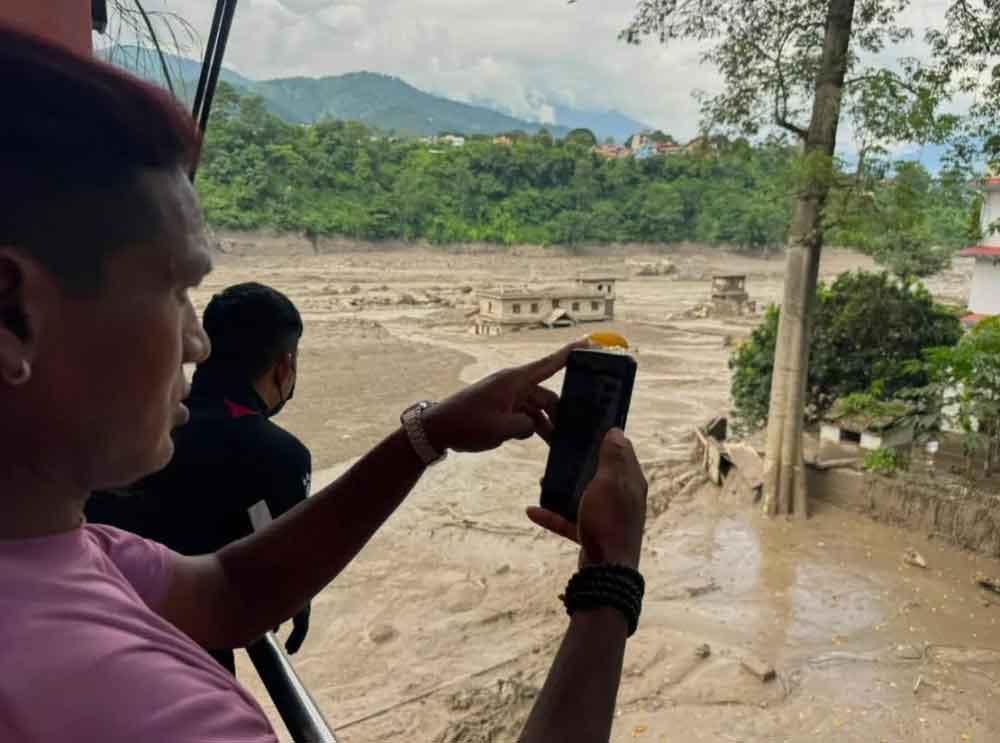
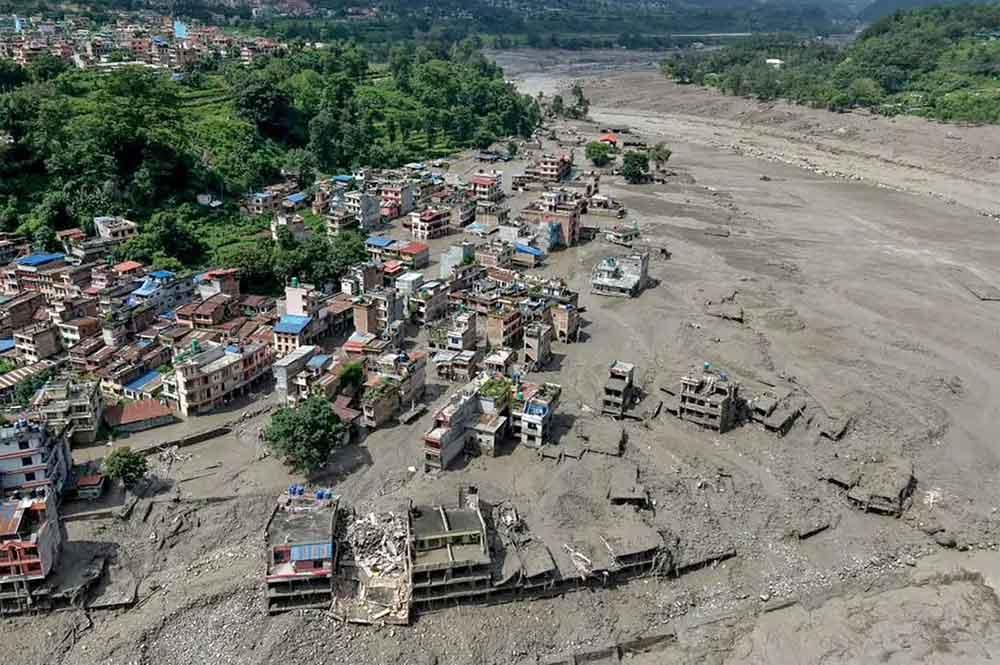
Homes were submerged or buried under thick layers of mud. Bridges were swept away and roads were destroyed, while vehicles, containers and other debris were carried through communities by the force of the floodwaters.
The disaster has also left hundreds of people unaccounted for, including tourists, pilgrims, local residents, security personnel and workers involved in hydropower projects.
The number of missing tourists has changed repeatedly as authorities reconcile information from police, tourism officials and foreign embassies. Nepal’s Department of Tourism reported that 668 tourists from 34 countries had been out of contact, with many travelling through the region on trekking or pilgrimage journeys.
Among the foreign nationals reported missing in Nepal are citizens of India, the United States, Australia, the United Kingdom, Canada, Ukraine and Malaysia. Nepal Police figures have also placed the number of missing Indians at around 178, while the United States has reported dozens of nationals still unaccounted for.
Many of those missing were travelling towards sacred destinations including Mount Kailash and Lake Mansarovar in Tibet. The region is a major pilgrimage route for visitors from Nepal, India and other countries.
Nepal’s security forces have also suffered losses. Earlier police figures listed 44 Nepali Army personnel, 28 Nepal Police personnel and 13 Armed Police Force personnel among those missing, alongside residents and other workers.
The flooding caused extensive damage to critical infrastructure. At least 19 bridges and around 40 kilometres of roads were reported damaged in the initial assessments, while later reports indicated that the destruction was even more extensive in several river corridors.
The country’s power infrastructure was also severely affected. Several hydropower facilities in the affected river systems were damaged or forced to suspend generation, adding to the disruption caused by destroyed roads and bridges.
Across the border in Tibet, the Gyirong area was struck by a powerful mudslide that damaged roads, communications and electricity infrastructure. Footage released by Chinese state media showed enormous quantities of mud and water sweeping through the border area.
The disaster has also created a new threat: temporary lakes formed when enormous quantities of rock and debris blocked river channels. One such barrier lake began overflowing on Friday, raising fears that another sudden flood could strike downstream communities. Rescue operations were temporarily disrupted because of the risk before authorities determined that work could resume.
Rescue efforts have been complicated by continuing rain, unstable terrain, damaged roads and bridges, high river levels and the threat of additional landslides and flooding.
Nepal has deployed thousands of members of its army, police and armed police forces, supported by helicopters, drones and other rescue equipment. More than 750 people were rescued in one reported phase of operations, while the overall number of people rescued from affected areas has continued to rise.
China has also deployed large numbers of emergency personnel and specialist equipment to the affected Tibetan region. Chinese rescue teams have faced major challenges because deep mud and destroyed infrastructure have restricted access to some of the worst-hit areas.
Chinese Premier Li Qiang visited the affected area in Tibet to oversee emergency rescue and relief operations, while President Xi Jinping called for intensive search-and-rescue efforts and stronger disaster monitoring and early-warning systems.
The cause of the disaster was initially unclear. Early reports linked the event to seismic activity and a possible earthquake, but subsequent analysis indicated that the seismic signal was associated with a massive landslide rather than a conventional earthquake.
Scientists now believe that a high-altitude glacier or ice-and-rock mass collapsed, sending an enormous quantity of material into the Lhende Khola. The resulting blockage and sudden release of water created a powerful flash flood that travelled downstream through the Bhote Koshi and Trishuli river systems.
The event illustrates how multiple hazards can combine in the fragile Himalayan environment. Scientists have warned that rising temperatures are contributing to glacier instability and changing conditions in high-altitude areas, potentially increasing the risk of glacier-related floods and landslides. However, researchers continue to assess the precise role of climate change in this particular disaster.
Nepal’s army, police and emergency responders continue to conduct large-scale search-and-rescue operations. Helicopters have been used to evacuate stranded residents and deliver assistance, although damaged infrastructure, high water levels and difficult terrain have prevented rescuers from reaching some areas easily.
Survivors have described the flood as sudden and overwhelming, with some saying they had only moments to escape as walls of muddy water and debris rushed through their communities.
Authorities have urged residents living near major rivers and unstable slopes to move to safer ground and remain alert to further flooding, landslides and possible outbursts from temporary lakes.
The disaster has also prompted concern downstream in India. The Trishuli eventually feeds into the Narayani River, which crosses into India and becomes the Gandak River. Indian authorities have prepared emergency measures and carried out evacuations in vulnerable areas because of concerns over rising water levels in the basin.
International assistance is also being mobilised. The United Nations has released emergency funding, while the International Federation of Red Cross and Red Crescent Societies has launched an emergency appeal to support communities affected by the disaster. The United States and other countries have also offered humanitarian assistance.
Nepal’s Ministry of Foreign Affairs has established an Emergency Response Team to coordinate information, search-and-rescue efforts and consular assistance for foreign nationals affected by the floods. Officials have urged families and diplomatic missions to rely on verified information because casualty and missing-person figures remain subject to change.
As rescue workers continue searching through mud-covered villages, damaged roads and collapsed infrastructure, hundreds of families remain waiting for news of missing loved ones.
The full scale of the devastation is still emerging. With 469 confirmed deaths in Nepal, additional deaths reported in Tibet and more than 1,500 people still missing across the two sides of the border, the disaster has become one of the most severe Himalayan flood catastrophes in recent years.
The continuing threat from unstable slopes and overflowing temporary lakes means the emergency is not yet over. The disaster has once again highlighted the growing vulnerability of communities living in high-risk Himalayan valleys, where glaciers, steep terrain, extreme rainfall and rapidly changing environmental conditions can combine to produce catastrophic events with little warning.