IN CONVERSATION WITH YOHANI. THE SOUND OF “AADAREI”, SYMPHONICALLY REIMAGINED

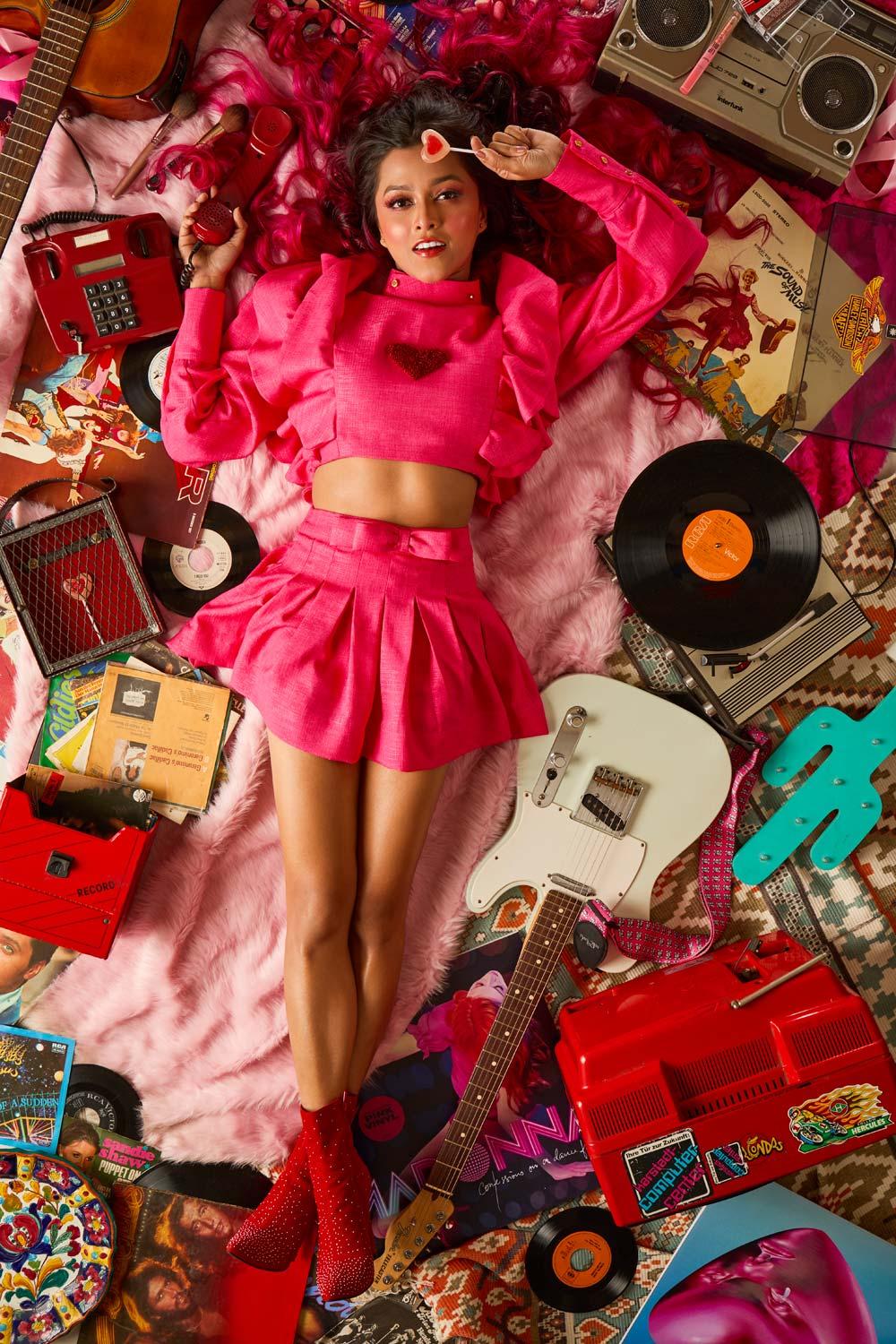
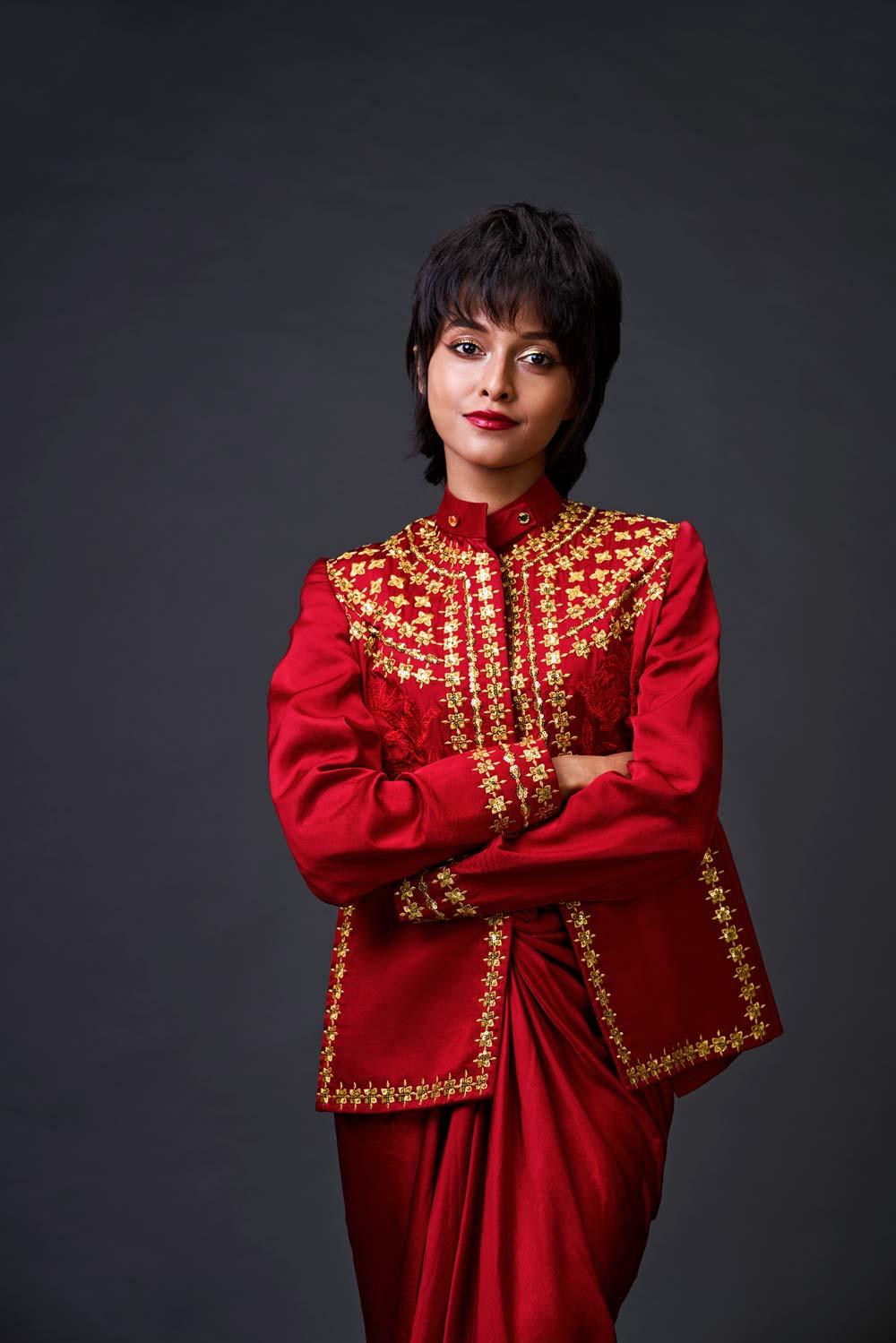
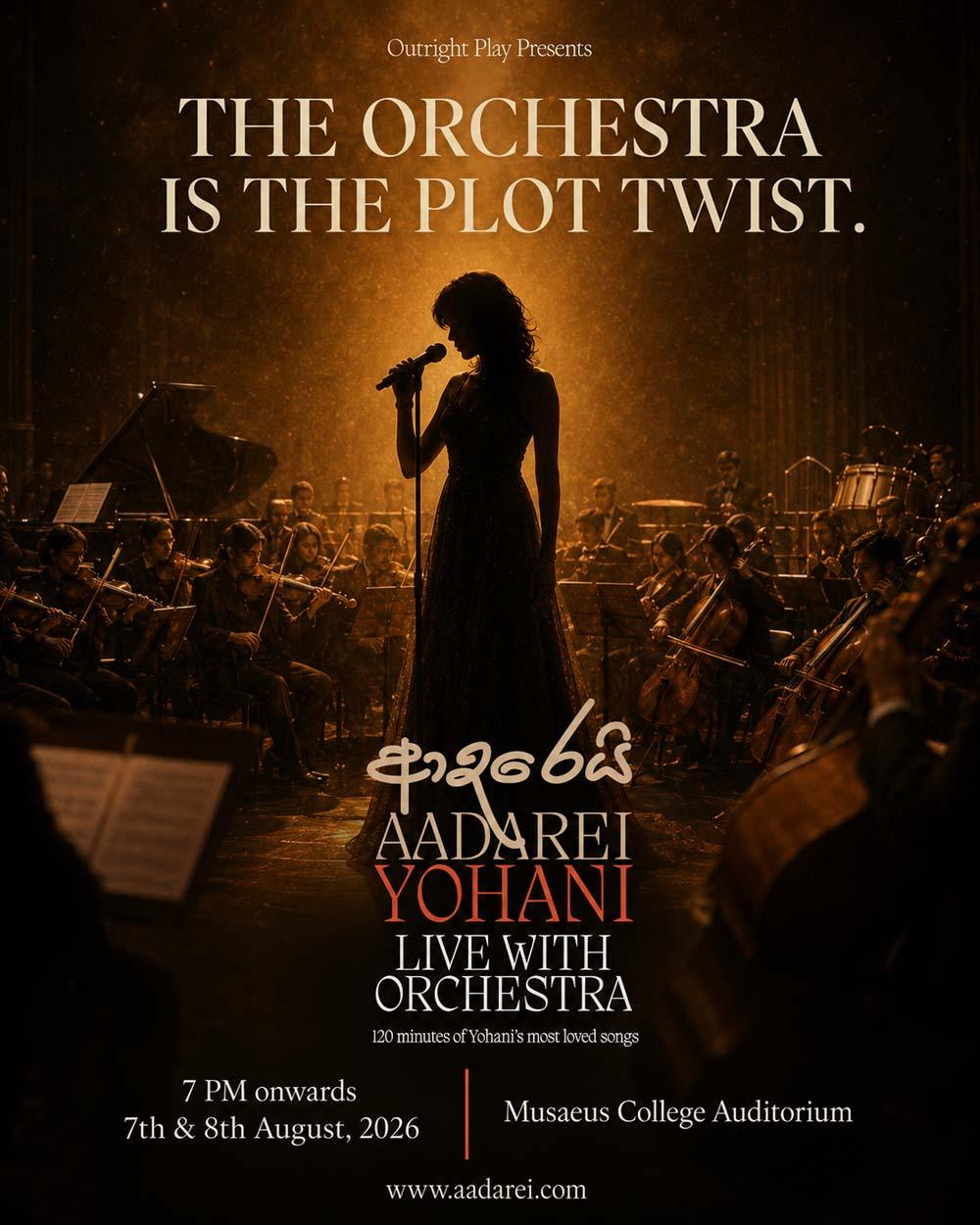
For a decade, Yohani’s music has travelled across borders, languages, and genres, carrying stories of love, longing, ambition, and identity. This August 7th and 8th, she returns to the stage giving them new life through the grandeur of a full orchestra. As she prepares for “Aadarei”, Yohani reflects on rebuilding the music that shaped her journey, embracing the beauty of imperfection, and discovering that sometimes, the most powerful way to say “I love you” is through a melody.
What does the word 'Aadarei' mean to you personally, and how did that feeling guide you to completely reimagine your music for a full orchestra?
It's the word I was trying to say the whole time. Ten years of songs, and if you boil them all down, they were just different ways of saying, "Aaderei." I named my second album after it because I ran out of other ways to put it. So, when we started planning this show, the question was never, "What's the biggest thing we can do?" It was, "What's the most honest thing?"
The most honest thing I could think of was to take the songs people have carried with me all these years and give them back, rebuilt, with nothing to hide behind. An orchestra doesn't let you fake anything. That felt right for a show named after love.
How did you go about choosing which tracks would make the cut for this orchestral production?
Painfully. I have close to sixty songs now, in Sinhala, English, Hindi, and a bit of Tamil and Telugu, spanning pop, rock, ballads, and whatever else I've wandered into. Cutting that down to thirty felt like choosing between children. In the end, the filter wasn't the numbers. Some of my most-streamed songs didn't make it, while some quieter ones did. The question we kept asking was, "Does this song have something to say when you strip it down to strings and a voice?" If it only worked because of the production, it stayed home. If it could stand in the room on its own, it got a seat.
Orchestral arrangements can completely shift a song's emotional weight. Which track surprised you the most once you heard it reimagined with live strings?
"Aaye." My debut single. It was a bouncy little pop-rap track, honestly a kid's song in my head, because I was a kid when I made it. Then, during an early rehearsal, the brass came in, and I had to stop singing for a second. The lyrics are about the start of my journey, and suddenly the song sounded like it knew how the story would unfold. It grew up without asking me. That one caught me completely off guard, and I suspect it'll do the same to the audience.
What was the biggest creative hurdle in translating songs originally built on electronic beats and pop production into something for a live orchestra to play?
Learning that you can't translate; you have to rewrite. Electronic production is precise. Everything is locked to a grid. The bass is a synth. The drop is a button. An orchestra is the opposite. It's dozens of humans breathing together, and its power comes from being slightly, beautifully imperfect. So, a synth bass had to become cellos. A drop had to become brass and percussion surging at the same moment. We basically took the songs apart, down to the melody, and asked, "If this had been been born in this room, what would it sound like?". Some songs fought us. The ones that surrendered became something better.
Was there one specific song you were absolutely determined to include in the setlist, no matter what?
"Aadarei," obviously. The night is named after it, so it was never up for debate. And "Chaudhary." I fought for that one. It already lives between two worlds: Rajasthani folk and pop, Mame Khan's voice and mine. I knew an orchestra could hold both of those worlds at once in a way a backing track never could. It's also a little reminder, for me, of the road I'm still walking in India. That song comes home with me in August.
You've described this as an 'intimate' 120-minute experience. How do you bring that sense of closeness when you're backed by the massive scale of a full orchestra?
I know how it sounds. Twenty musicians, and I'm calling it intimate. But intimacy was never about size. It's about how much you're willing to show. There are moments in this show where everything drops away, and it's just one instrument and my voice. No safety net. I can see actual faces in the room. I've spent years singing to people through screens. For two nights, there's no screen. That's the intimate part. Honestly, it's the most exposed I've ever been on a stage, and I'm nervous about it in a way I haven't been since my first pub gig.
Is there a specific moment or twist in the concert that you think will genuinely catch the audience off guard?
Yes, and I'm not telling you. What I will say is that there's a transition midway through where we cross a language and a genre in the same breath, and nobody will see it coming. A couple of songs people think they know by heart have also been flipped: different time signatures, a different emotional temperature. You'll recognise the words and lose the map. That's the fun of it. The orchestra knows things the recordings don't.
Your work on 'Chaudhary' with Amit Trivedi and Mame Khan brought a beautiful folk-pop sensibility to your sound. How has that experience shaped what you're bringing to 'Aadarei'?
That session taught me the biggest lesson of my career: emotion doesn't need subtitles. I watched Mame Khan sing in a folk tradition I didn't grow up in, and I understood every word without actually understanding any of them. Once you've felt that, you stop being scared of mixing things. Aadarei moves across Sinhala, Hindi, and English in one evening, and I trust the room to follow because Chaudhary proved to me that people listen with their hearts first and their dictionaries second. Amit and Mame gave me that confidence. I'm just spending it.
How would you describe the shift between Yohani the pop star, driven by studio beats, and Yohani the orchestral performer, locked in with a massive live ensemble?
With a track, the tempo is a machine, and the machine forgives you. With an orchestra, the tempo is a conductor's breath, and you either breathe with everyone or you're alone in front of two thousand people. It has forced me to actually listen, properly, every second. I can't hide behind energy or production. The voice has to carry the room, or nothing does. It's the most frightening discipline I've ever taken on, and weirdly, I've never felt freer. Terrified and free. That's the honest description.
Do you see 'Aadarei' as a one-off special event, or the beginning of a whole new chapter?
A chapter. The two nights in August are their own thing, built for that room and those people, and they won't be repeated as they are. But the process has changed me. Once you've heard your songs breathe like this, you can't unhear it. I'm already writing differently. I catch myself leaving space for strings that don't exist yet. So, the shows end on the 8th, but whatever I make next has already been changed by them.
Could this orchestral format become a permanent part of your identity? Is it something you see yourself returning to?
I hope so, and I'll say the dream out loud, even though it scares me: I'd love to take this format around the world one day, working with local orchestras in each city, letting our Sinhala songs sit inside their classical traditions and seeing what happens. Whether we get there depends on a lot of things I can't control. But the part I can control, wanting it and working for it, is settled. This isn't a costume I'm trying on. It fits.
Once the final curtain falls on 'Aadarei,' what is next for you musically?
Straight back into the studio, honestly. This project cracked something open, and I want to get in before it closes. New original music that keeps s 4ome of this live, human texture inside modern production. More cross-border work, because that road is only getting wider. And a few things I can't talk about yet without my team appearing out of nowhere to stop me. What I can promise is that nothing I make after August will sound like it was made by the person who existed before it.
---------------------------
As Aadarei prepares to take centre stage this August, Yohani stands on the threshold of a new chapter, one built on honesty, reinvention, and the timeless power of live music. Whether you have followed her journey from the very beginning or are discovering her artistry for the first time, these two evenings promise to be more than a concert. They are an invitation to experience familiar songs in an entirely new light. Wishing Yohani every success as she embarks on this exciting musical chapter, audiences are invited to be part of Aadarei and witness a performance where every note tells a story.