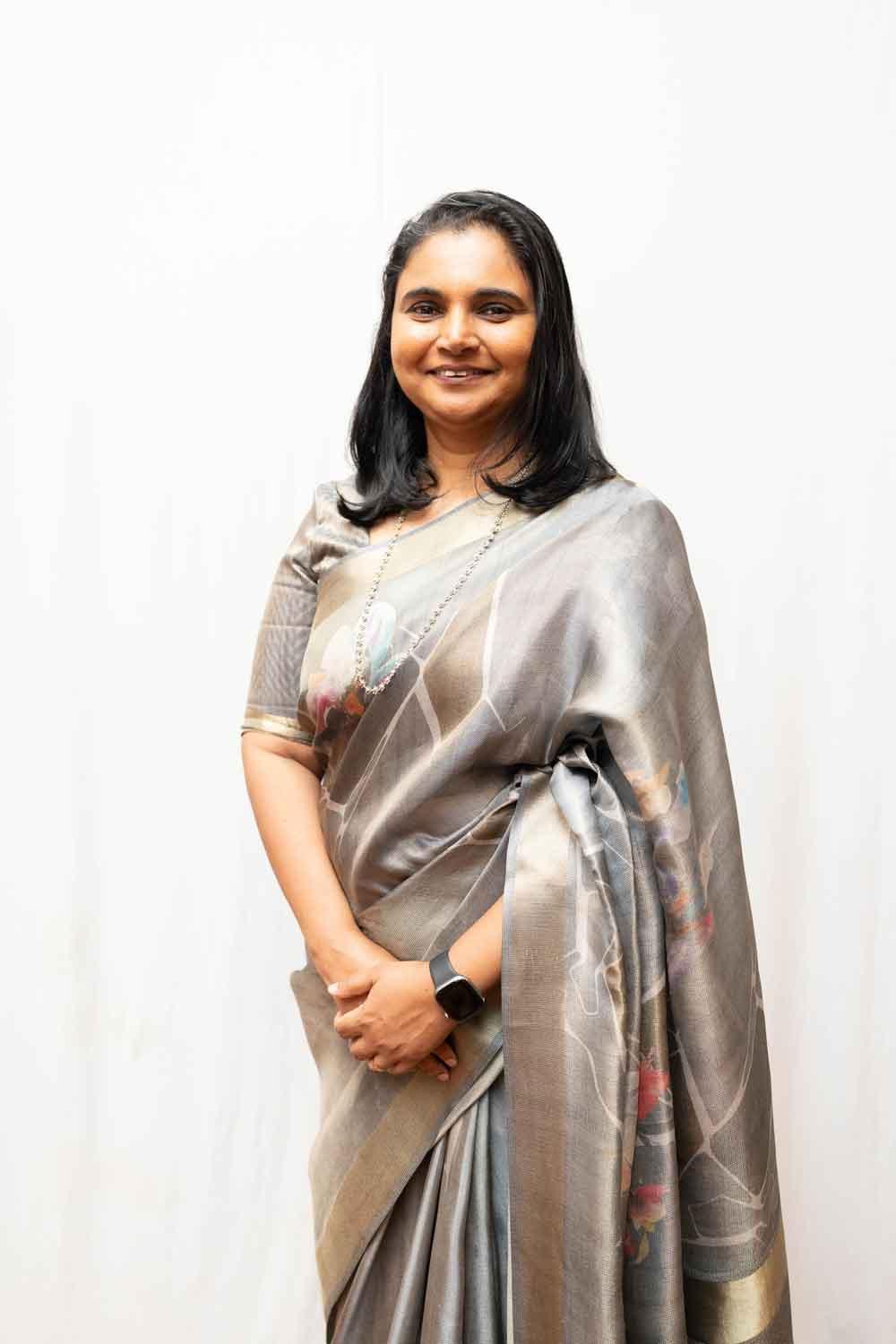
IN CONVERSATION WITH CHAMINDA DE SILVA, DIRECTOR, SLASSCOM
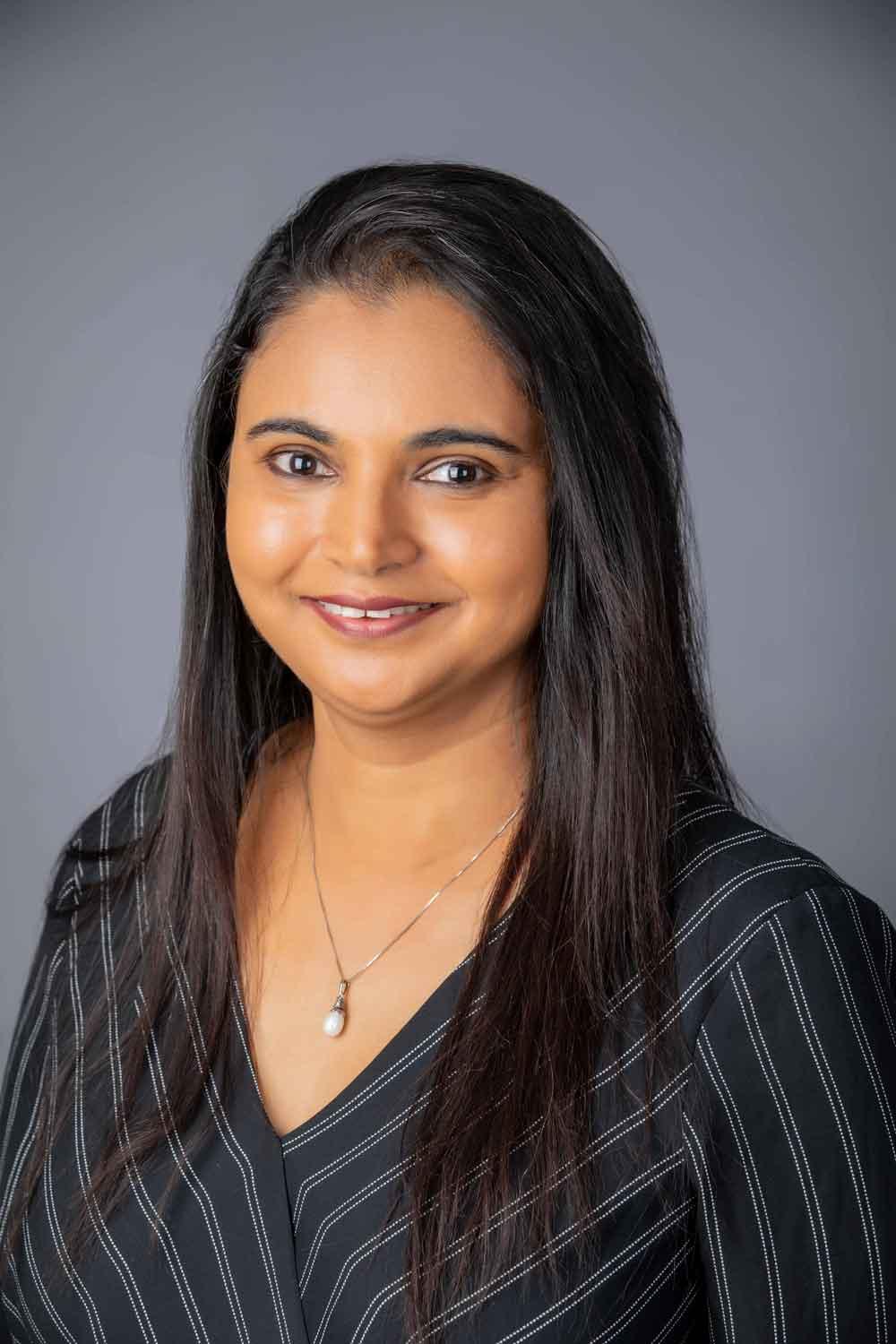
HER STORY. HER STRENGTH. BY: DR. SULOCHANA SEGERA
Chaminda de Silva is a seasoned business leader whose career spans more than three decades across investment banking, corporate governance, financial services, institutional leadership and the technology sector. As Executive Director of SLASSCOM, she provides strategic leadership to Sri Lanka’s IT and BPM industry, contributing to policy advocacy, industry development, talent advancement and the country’s wider digital economic ambitions. Her career has included senior positions such as CEO of the Sri Lanka Institute of Directors, Director of Horizon Partners Group and CEO of the investment banking arm of Asia Capital Group. Having worked across Sri Lanka, Australia and international markets, she brings a perspective shaped by diverse professional environments, complex leadership responsibilities and a strong commitment to continuous learning. Beyond her corporate career, her involvement in Rotary, healthcare and community initiatives reflects a belief that leadership also carries a responsibility to contribute meaningfully to society and create opportunities for others.
When you look back at your 30 plus year career, what moments do you believe shaped the woman and leader you are today?
When I look back, I do not think there was one defining moment. Rather, it was a series of experiences that gradually shaped who I am and how I lead. It began with my upbringing. My parents gave my siblings and me the freedom to find our own paths while instilling a strong sense of integrity, independence and responsibility. We were encouraged to question things, seek our own answers and focus on finding solutions rather than waiting for someone else to solve a problem. A major turning point came when I stepped away from an established professional trajectory and started again in a completely new environment without an existing network. It taught me that adaptability is not simply about coping with change. It requires a willingness to learn, build new relationships and find your footing in unfamiliar circumstances. It also gave me confidence in knowing that you can rebuild when necessary. As I moved through different professional environments and assumed greater responsibilities, I learned to manage ambiguity, work with different personalities and make decisions without always having perfect information. Most importantly, I learned that leadership is not about having every answer. It is about listening, asking the right questions and creating the conditions for better decisions. The qualities that have been strengthened most throughout my career are adaptability, resilience, independent thinking, continuous learning, sound judgement and responsibility. Circumstances may change and approaches may evolve, but your fundamental values should remain constant.
You have built a career across investment banking, corporate governance, institutional leadership and the technology industry. What gave you the courage to continually step into new and challenging spaces?
For me, it has always come down to being comfortable with learning. Moving between sectors often meant entering environments where I was not the subject matter expert. Instead of seeing that as a disadvantage, I viewed it as an opportunity to learn quickly, understand a new landscape and apply experience gained elsewhere.
I have never believed that a successful career must follow a straight or predictable path. Many important capabilities, including analytical thinking, judgement, relationship management and decision making under pressure, are transferable across industries. My confidence to make these transitions came from knowing that if I was prepared to work hard, learn and genuinely add value, I could establish credibility in a new environment. That mindset enabled me to move from finance and transactions into governance and institutional leadership, and eventually into leading a national industry body.
You have held leadership positions such as CEO of SLID and now Executive Director of SLASSCOM. How has your definition of leadership evolved over the years?
My understanding of leadership has changed significantly as my responsibilities have grown. Earlier in my investment banking career, leadership was closely associated with expertise, judgement and the ability to make the right decisions under pressure. As I moved into CEO and institutional leadership roles, I realised that leadership is less about personally having all the answers and more about establishing direction, making sound decisions and enabling others to succeed. Today, I see leadership as creating clarity around where an organisation needs to go, setting appropriate standards and giving capable people the trust and space to perform. The more senior the position, the less leadership is about personally doing everything. It becomes about building strong teams, making difficult decisions when required and creating an environment in which people can deliver their best work. Listening and adaptability have also become increasingly important to me. Different people and circumstances require different approaches, although integrity, accountability, sound judgement and respect should remain constant.
Your career spans Sri Lanka, Australia and international markets. How have different cultures and professional environments influenced the way you lead?
Working across different countries and professional environments has taught me that there is no universal formula for effective leadership. A leader must understand the context, adapt communication and recognise what works with different people and stakeholders while remaining consistent in personal values. International experience strengthened my focus on structure, discipline, evidence-based decision making and accountability. Working in Sri Lanka has reinforced the importance of relationships, trust and stakeholder alignment, particularly when engaging across business, government and regulatory environments. As a result, my leadership style has become more adaptable. I try to combine rigour in decision making and execution with an understanding that sustainable progress ultimately depends on people and relationships. Adapting does not mean changing who you are. It means understanding what a particular situation requires and finding the most effective way to bring people with you.
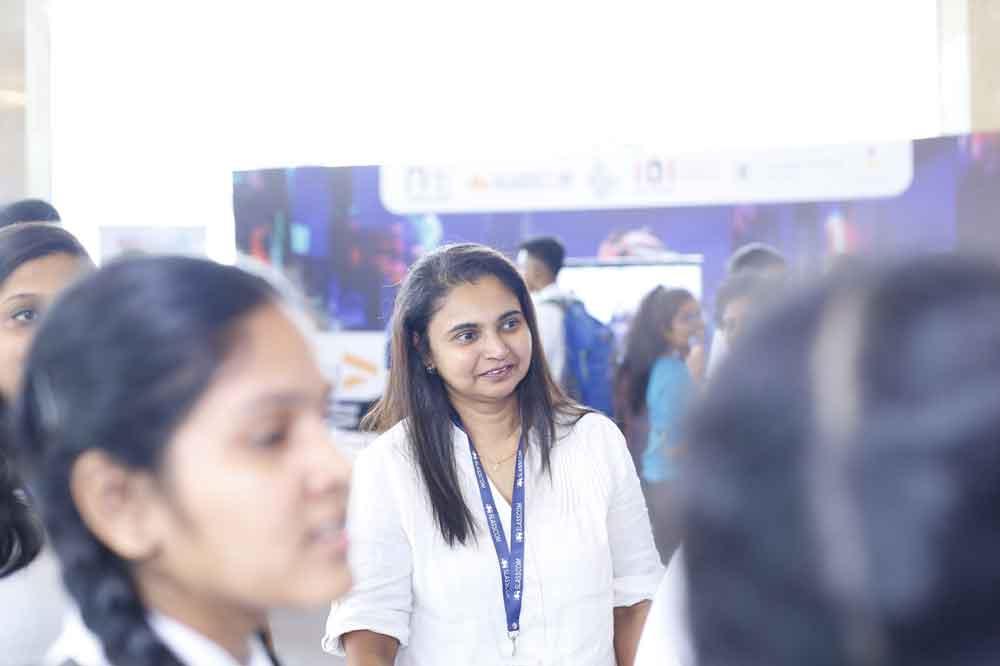
As a woman in traditionally male dominated areas such as investment banking, finance and corporate leadership, what barriers did you encounter, and how did you navigate them?
I want to answer this based on my own experience rather than give an expected response. Personally, I did not encounter significant gender discrimination during my career. I was fortunate to work with people in influential positions who recognised my abilities, trusted my judgement and gave me opportunities to contribute on an equal footing. That experience has influenced how I think about inclusion. It demonstrated how powerful sponsorship can be. When people in positions of influence are prepared to open doors, create opportunities and evaluate individuals based on ability rather than assumptions, they can significantly change career trajectories. I would like to see more of that approach, not only for women but for anyone whose potential might not always be immediately visible or recognised.
From your experience, what is the biggest misconception Sri Lankan corporates have about having women in board and senior leadership positions? Is the issue really a lack of capable women, or is it the way organisations identify, develop and select their successors?
I do not believe the issue is simply a shortage of capable women. A significant part of the challenge concerns how organisations identify potential, develop people and make succession decisions. Organisations can unintentionally reproduce similar leadership profiles because people naturally tend to identify successors who resemble those already in senior positions. Consequently, capable women may not always be identified early enough or provided with the experiences needed to prepare for senior leadership. However, responsibility does not rest entirely with organisations. Individuals must also be prepared to step forward and accept greater responsibility. The wider environment matters too, especially when responsibilities outside the workplace influence the choices people are able to make. Progress therefore requires deliberate succession planning, effective sponsorship and mentoring, appropriate flexibility and greater encouragement for women to recognise and pursue leadership opportunities.
How is SLASSCOM working to ensure that young people, particularly young women, from outside Colombo have equal access to technology, skills, entrepreneurship and leadership opportunities?
Sri Lanka’s technology talent base is already considerably more geographically diverse than many people assume. Around 70 to 75 percent of the industry’s knowledge workers come from across the country rather than exclusively from Colombo. The next opportunity is to deepen and strengthen this national talent pipeline. Through SLASSCOM’s Future Ready Workforce initiatives, we collaborate with government, universities, schools and other ecosystem partners to take programmes and opportunities into regional communities rather than expecting talented people to come to Colombo. Our focus extends beyond technical capabilities. Exposure, entrepreneurship, leadership, professional networks and access to the broader technology ecosystem are equally important. For young women especially, creating these connections early can influence how they perceive their own career possibilities and give them greater confidence to pursue opportunities within the technology industry.
What needs to change in Sri Lanka’s education, corporate and technology ecosystem to ensure that a talented young woman from a rural district has the same opportunity to become a technology entrepreneur or industry leader as someone growing up in Colombo?
Three areas need to progress together. First, the education system needs to develop digital capability, confidence and problem-solving skills from an early age, regardless of where a student lives. Second, companies need to broaden the ways in which they identify and develop talent. Employers should look beyond familiar networks and deliberately create opportunities for capable individuals from different regions and backgrounds. Third, the wider ecosystem, including industry, investors, incubators, universities and government, needs to establish a stronger presence in regional communities. Access to opportunity should not depend upon relocating to Colombo as the first step towards building a career. This is not about lowering standards or establishing separate pathways for different groups. It is about ensuring that talented individuals, wherever they come from, have a fair opportunity to compete, develop their capabilities and succeed.
What advice would you give to a young woman who is highly capable but hesitates to step forward, speak up or claim a leadership opportunity?
I would tell her not to underestimate herself and not to wait until she feels completely ready before putting herself forward. Preparation is important, but complete certainty rarely exists when a genuine leadership opportunity presents itself. I have observed that highly capable women can sometimes hold themselves back because they believe they must know everything before speaking or accepting a new responsibility. At the same time, confidence should never be confused with simply being the loudest person in the room. Effective leadership requires listening, judgement and understanding when and how to contribute. Prepare thoroughly, understand the situation, ask questions when necessary and do not be afraid to express a considered view or accept a responsibility that stretches your abilities. You do not have to pretend to know something that you do not. A willingness to learn is a strength rather than a weakness. I would also encourage young women to consciously build their networks and actively seek opportunities to learn and contribute. Join the committee, attend the conference, start the conversation and make yourself visible, but always do so with purpose and professionalism. You do not need to know everything before you earn the right to have a voice in the room. Prepare yourself, trust your judgement, contribute confidently and remain committed to learning throughout your career.