Fame Game Featuring Otara Gunewardene
By Thasmina Sookoor
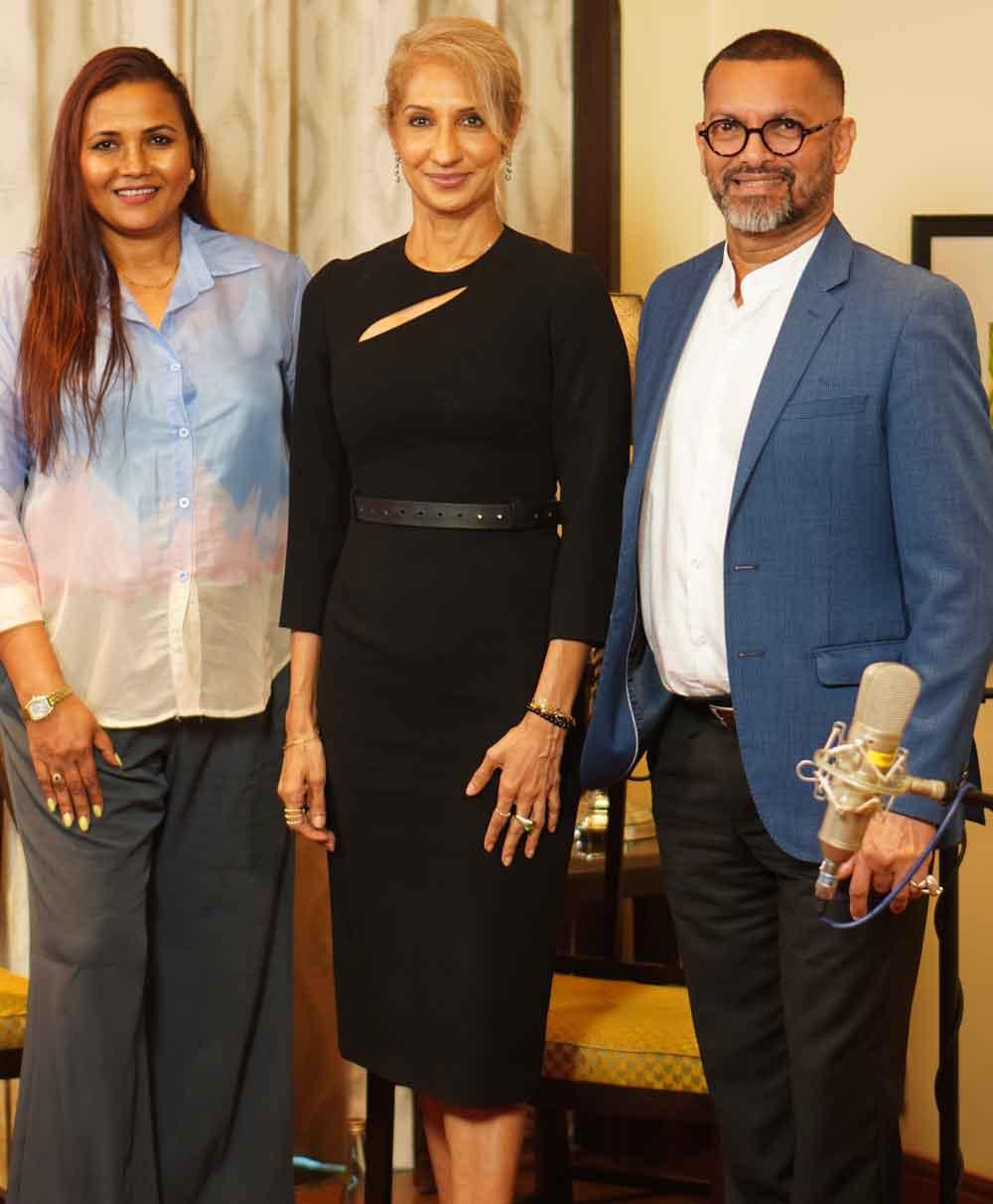
Entrepreneur and animal welfare activist Otara Gunewardene joined Fame Game hosts Kumar de Silva and Rozanne Diasz for an honest and reflective conversation about her life after Odel, her work with animals, social media, personal growth, and the importance of compassion. During the interview, Otara spoke extensively about her longstanding dedication to animal welfare, the evolution of Embark, her thoughts on freedom for animals and humans alike, and how her life has changed over the years.
Q: Animal rescue work has become a major part of your life today. Do you receive backlash for speaking so openly about animal welfare?
A: I would actually say it is the opposite. Of course, it depends on what I speak about, but overall I have received a lot of support. Animal welfare has been part of my life for many years, even during the early days of Odel. Back then, I carried out different campaigns to create awareness about kindness towards animals. Later, that focus evolved into Embark, which officially began in 2007. It became a platform that encouraged people to adopt street dogs, care for them, and live in harmony with them. Over the years, we have managed to bring about real change, not only for animals but also in people’s attitudes. Almost 7,000 dogs have found homes through Embark, and thousands more have received treatment and care. It has been a long journey spanning nearly two decades. After leaving Odel, I wanted to use my voice and my platforms more actively to speak for animals. I wanted people to understand the cruelty animals often face, whether it is chaining dogs, keeping them caged, or mistreating them in different ways. One of the major issues I speak about is elephants in captivity. That subject naturally creates controversy because there are very divided opinions. However, I truly believe every individual will come to their own understanding in their own time. I personally believe humans do not have the right to hold animals captive or treat them cruelly for entertainment or financial gain.
Q: Does growing up with pets make children better human beings?
A: I definitely think it helps. Children who grow up around animals learn compassion, empathy, and coexistence. Over time, human beings have disconnected themselves from nature and animals. We have been taught to believe that we are separate and somehow superior, but in reality, we are simply one species among many. Living in harmony with animals is important because their wellbeing reflects our own wellbeing. If they are suffering because of our actions, that ultimately affects us too. I was very fortunate to grow up surrounded by animals and nature. It shaped the person I became.
Q: Did your parents influence your love for animals?
A: From the time I was a child, I always felt a deep connection with animals and nature. Before Odel even existed, my dream in life was to help animals and live close to wildlife. I actually applied for a job in Kenya because I wanted to become a wildlife ranger.
As a child, I constantly rescued animals. If birds fell into our garden or squirrels needed help, I would care for them and release them back into nature. Even then, I never believed in keeping animals confined in cages. Maybe this connection was something I was meant to use to create awareness for others as well.
Q: What does Embark mainly focus on today?
A: Today, our focus is mostly on rescuing and treating injured street dogs. Earlier, we carried out many large-scale adoption drives and awareness programmes in different parts of the country, but now the main priority is rescue and medical treatment. The difficult reality is that we cannot help every single case we receive. We get countless calls every day. At the same time, I also believe animal welfare should not rest on one organization or one person. Everyone has a responsibility to do their part. The good thing is that awareness has improved tremendously over the years. Earlier, many people ignored injured animals, but today people actually stop to help and contact organisations for assistance. The biggest challenge for many people is finances. Some genuinely care but cannot afford treatment, transport, or veterinary care. Sometimes families cannot even afford medical treatment for their own pets. In such cases, we try our best to assist.
Q: There has been ongoing debate about elephants in captivity. Do you think things will ever change?
A: It is a very sensitive subject because opinions are deeply divided. However, awareness today is far greater than it was years ago. More people now understand that captivity, chains, and cruelty are not acceptable. Many elephants go through extremely traumatic processes where their spirit is broken so they can be controlled through fear and pain. Similar things happen with animals used in circuses or entertainment industries around the world, which is why many countries have now banned such practices. For me, this conversation is ultimately about freedom. Every form of captivity reflects something within humanity itself. When we normalize cruelty and control over animals, it also reflects the way we view freedom and power in our own lives. I believe the future should be about freedom for all living beings.
Q: Your rescued cows Violet, Ruby, and Tara have become very popular online. How did they come into your life?
A: Violet was the first cow I rescued. She was at a slaughterhouse and had just given birth to her calf. Someone contacted me and asked if I wanted to save them. When I went there, another cow nearby kept crying continuously while looking at me. I felt she was asking for help too, so I rescued her as well. That became Tara. Unfortunately, Violet’s calf later died after what we believe was a snake bite. It was heartbreaking. Later, I rescued several more cows. One of them was Ruby and her mother. Ruby’s mother was in extremely poor condition, and, despite treatment, she did not survive, so we raised Ruby ourselves. At one point, I had rescued nearly eight cows altogether and found safe homes for many of them. Today, I still care for three of them.
Q: Do you miss Odel?
A: I had an incredible journey with Odel for 25 years, and leaving was a carefully considered decision. I wanted to make sure I was emotionally ready before moving on because I did not want to live with regrets afterward. Of course, there are moments when I miss it. I loved creating spaces, developing products, building brands, and working with large teams. Creating things has always been something I enjoy deeply. Today, I still create in different ways, but it is not the same as having a large retail platform and multiple stores.
Q: What made you embrace social media so strongly?
A: I have always been interested in social media and technology since the early days of Facebook itself. Over time, the platforms evolved, and so did the way we communicate. Initially, I never imagined I would enjoy TikTok, but eventually I started having fun with it. You have to evolve with changing times and enjoy the process. The audiences on each platform are very different. Some trends work on TikTok but may not connect with Facebook audiences. So, I adjust content according to the platform. Apart from entertainment, I also use social media to spread awareness about animal welfare, compassion, and positivity.
Q: What does a typical day in your life look like now?
A: Most of my days revolve around animal rescue work, content creation, and awareness campaigns. I also create lighthearted and humorous content because I think people need positivity and laughter as well. By the end of the day, I often wonder where the time went because there is always something happening.
Q: Has your relationship with fashion changed over the years?
A: Definitely. Fashion once consumed almost my entire life because my work revolved around buying, styling, and retail. Today, the focus is much smaller. I no longer shop the way I used to, and I recycle many of my clothes instead of constantly buying new ones. I enjoy sustainability and also appreciate the value of keeping things I genuinely love. Of course, I still enjoy fashion and updating my wardrobe occasionally, but it no longer defines my life the way it once did.
Q: What are your memories of modelling and working in fashion shows?
A: Modelling was a wonderful chapter of my life, and I feel grateful for those experiences. I travelled to different countries for fashion shows and shoots, and it exposed me to so many opportunities. I remember one fashion show where I wore a very unusual outfit made from cane. It was difficult to walk in, and I almost fell on the runway. Thankfully, I managed to recover quickly. Those moments are now beautiful memories.
Q: People often see a very composed and elegant version of you. Is there also a more carefree side?
A: Of course. I think everyone has different sides to their personality. Social media, especially TikTok, allows me to express a lighter and more playful side as well. I enjoy travelling, spending time near the beach, listening to music, and exercising. Those things help me relax and recharge.
Q: Are you still interested in movies and entertainment?
A: I used to watch many movies, but not so much anymore. Today, I spend more time learning about global developments, creating content, focusing on family, and working on different projects. By the time everything is done, the day is usually over.
Q: What advice would you give young entrepreneurs who want instant success and fame?
A: One of the biggest issues today is that many people expect very fast results. Everyone wants immediate success, fame, and money. Building something meaningful takes patience, consistency, and hard work. When people try to grow too fast without strong foundations, it often becomes difficult to sustain. Real success takes time, effort, and resilience. It cannot always happen overnight.
-------------------------------------
Throughout the conversation, Otara reflected not only on her entrepreneurial success but also on personal transformation, compassion, and purpose. While many still associate her with the retail empire she built through Odel, her focus today is clearly centred on animal welfare, mindful living, and using her voice to inspire kindness and awareness.