Fame Game: Featuring Nihara Jayatilleke
By Thasmina Sookoor
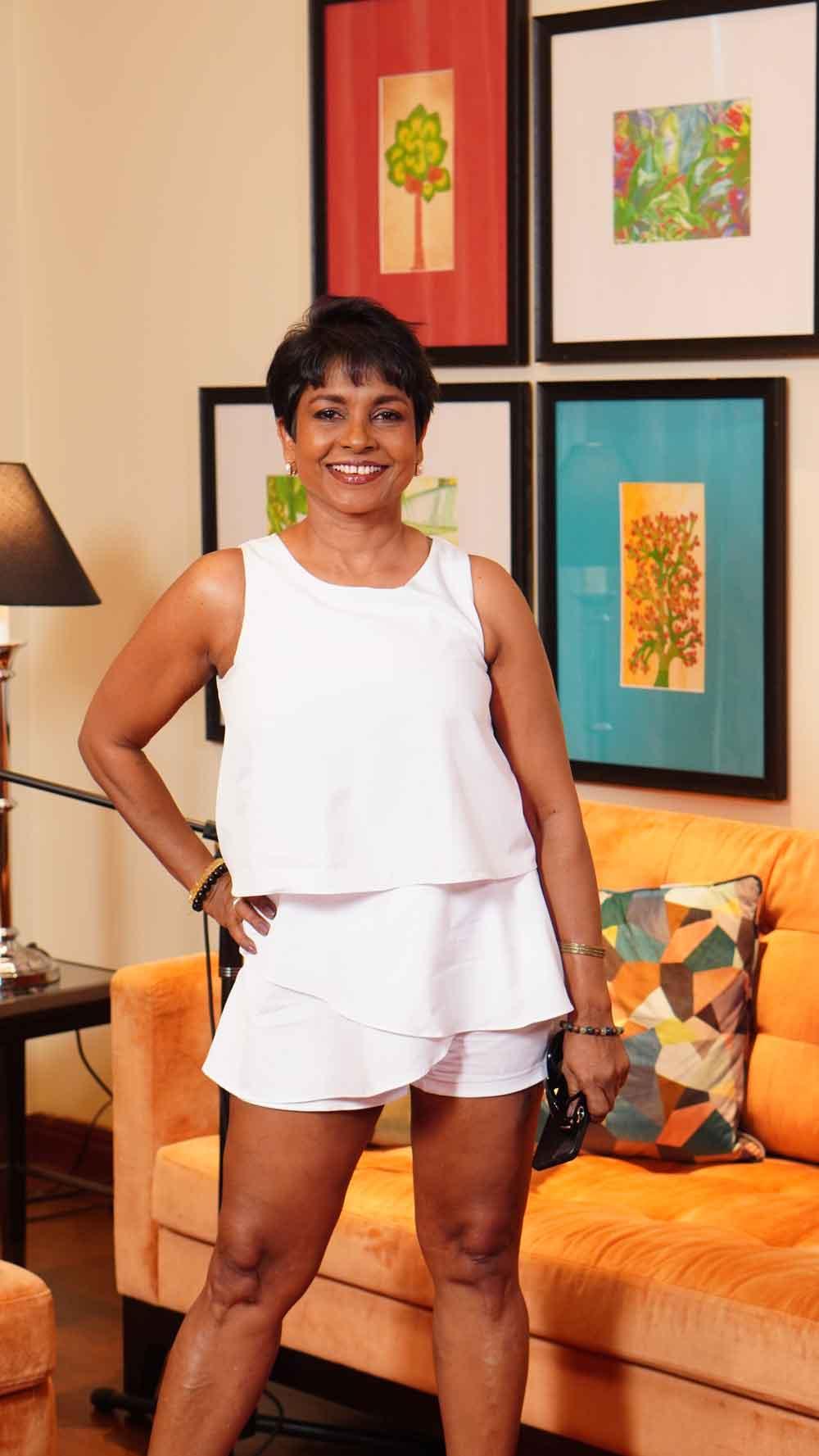
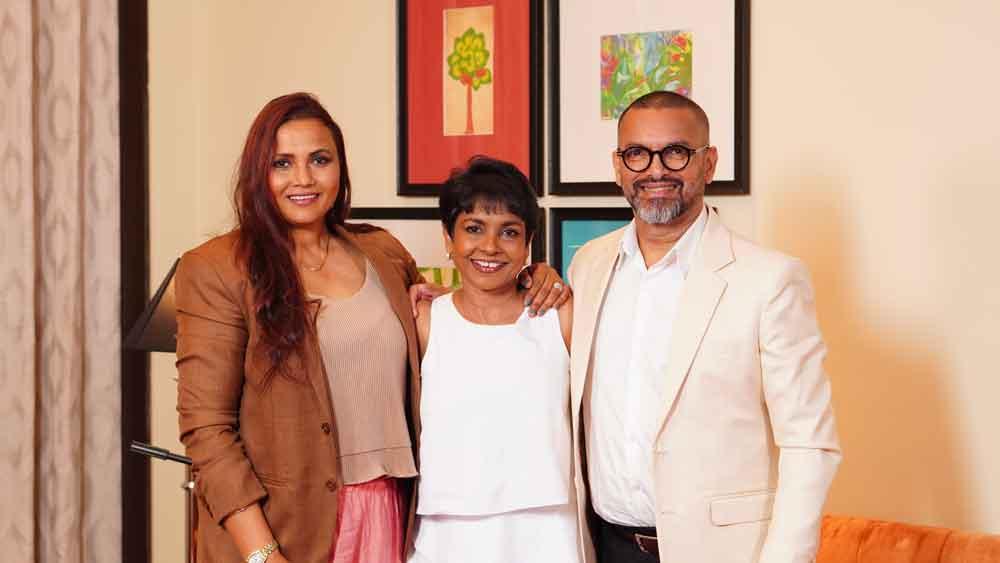
In this episode of Fame Game, hosts Kumar de Silva and Rozanne Diasz sit down with Nihara Jayatilleke for a candid conversation covering identity, marriage, motherhood, aviation, horse riding, fashion, film and personal philosophy.
The discussion reveals a woman who has always chosen to live life on her own terms. Independent, outspoken and unafraid of challenging convention, Nihara reflects on the experiences that have shaped her journey.
Q: You have always kept your own surname instead of taking your husband's. Was that a deliberate decision?
A: Yes, it was. I have always remained Nihara Jayatilleke. There was no dramatic reason behind it, but it was a conscious decision. I have always believed that a woman should not have to give up her identity simply because she gets married. I did not see why I should stop being who I was because I had a husband.
I worked hard to build my own career and create my own path. I have done many of the things men do in professional and public life, so I never felt the need to adopt my husband's surname to feel accepted. That tradition belonged to a different era when women depended more on their husbands. Today, women are educated, financially independent and capable of building successful lives on their own. Marriage should never erase a woman's identity.
Q: Has that belief in independence influenced the way you are raising your daughter?
A: Absolutely. I want my daughter to understand that she can stand on her own. I never want her to believe that she needs a relationship to feel complete or respected. Having a partner can be wonderful, but no woman should feel that her worth depends on another person.
Q: You have had many adventurous experiences, especially with horses. Where did that passion begin?
A: My love for horses began in childhood. One of my earliest memories involved what I thought was a little grey horse. I climbed onto it only to discover it was actually a goat. It jumped, I fell, and I ended up needing stitches. That was my first riding experience.
Even before that, I was fascinated by horses. Whenever my mother took me shopping in Pettah, I would stop and admire the mounted police horses. That fascination never faded and eventually developed into a lifelong passion.
Q: One of the most remarkable stories from your life is your horse ride to Jaffna. How did that come about?
A: It was an unforgettable experience. We rode from Vavuniya to Jaffna over four nights and five days. It was physically demanding, but it was also incredibly rewarding.
The idea came from a British friend named Christine, who loved horse riding. She wanted to ride around Sri Lanka, but I explained that we did not have the same infrastructure available in countries like England. At that time there were discussions about the peace process, so I suggested organising a symbolic peace ride to Jaffna instead.
Once the idea was formed, I contacted the Red Cross and also spoke to a close friend who headed GTZ in Jaffna. Lion Air was operating flights to Jaffna at the time, which helped with planning. We also needed approval from the Government and permission from the LTTE because of the conflict. We travelled to Kilinochchi, presented our proposal through the Red Cross and eventually received approval.
The journey became much more than a riding expedition. It represented hope during an important period in Sri Lanka's history, which made it especially meaningful.
Q: You have worked in aviation, horse riding, business and the racing industry, all traditionally male dominated fields. How did you navigate those spaces?
A: I have always enjoyed challenging limits, both my own and those imposed by society. If someone said something was not suitable for women, it only made me want to prove otherwise.
I never entered those industries looking for permission. I entered because I believed I belonged there and knew I had something to contribute.
I was fortunate to have a mother who encouraged me to explore the world and discover my own strengths. She never expected me to stay within traditional boundaries. That freedom gave me the confidence to take on opportunities others considered unconventional.
Q: You have often said you enjoy controversy and do not worry too much about what people think. How do you maintain that attitude?
A: Life is simply too short to live according to other people's opinions. People will always have something to say. If you spend your life trying to satisfy everyone, you will never truly live or grow.
Q: Where does that confidence come from?
A: Much of it comes from my mother. She was strong, courageous and very broad minded. She raised me as a single parent and gave me the freedom to travel, make mistakes and learn from experience. She trusted me to discover the world for myself, and that shaped who I became.
Q: What are your plans for the future, particularly in business?
A: I do not believe in creating rigid ten-year plans because life changes too quickly. However, I do have ambitions and plenty of things I still want to accomplish.
I definitely want to expand my business interests. Sri Lanka's aviation industry is growing and receiving greater international recognition, so this is an exciting time. We need to think strategically and continue raising standards.
While I may not have a detailed roadmap, I know exactly the direction I want to move in.
Q: If you could speak to your twenty year-old self, would you tell her to change anything?
A: Honestly, no. I have lived the life I wanted to live. My mother gave me the freedom to take risks, travel and gain experience, and I embraced those opportunities.
Not every decision was perfect, but every experience taught me something valuable. I have no desire to rewrite my past because it has shaped the person I am today.
Q: You are married to filmmaker Chandran Rutnam. How involved are you in his creative work?
A: I am involved, although not in the sense of wanting to be in front of the camera. I have made a few brief appearances over the years, but acting has never been my passion. I would not describe myself as a film enthusiast either, although I always watch his work and offer honest feedback.
Where I contribute most is behind the scenes. I enjoy reading scripts, discussing ideas and, especially, casting. Casting can make or break a film, and I think I bring a fresh perspective because I am not influenced by industry habits. My opinions come from instinct and how the story connects with me.
One of Chandran's greatest strengths is that he listens. He never dismisses an idea simply because it comes from someone else. If he believes a suggestion improves the project, he embraces it, whether it comes from me, a young filmmaker or anyone else. That openness is something I truly admire.
Q: You are also known for your distinctive fashion sense, particularly your love for hats and heels. Has fashion always been important to you?
A: Yes, it has always been something I genuinely enjoy. I love hats, shoes and dressing well. Fashion is not the centre of my life, but it is certainly one of my favourite ways to express myself.
Whenever I travel, especially to Paris, I make time to shop for hats because I absolutely adore them. I have always loved France for its style, atmosphere, food and appreciation of beauty. To me, hats are more than accessories. They complete an outfit and add personality. They also fit naturally into the racing world, where dressing elegantly is part of the tradition.
As for heels, I have become accustomed to wearing them. I even prefer dancing in heels because they improve my posture and give me confidence.
Q: Your daughter has a very different personality from yours. How has that influenced your approach to parenting?
A: That was something I had to learn over time. I am naturally energetic, adventurous and outgoing, so I expected my daughter to enjoy many of the same things. I imagined she would love dancing and outdoor activities, but she turned out to be very different. She enjoys reading, prefers quieter interests and has a more reserved personality.
At first, I found it difficult because, like many parents, I had created an image of what my child would be like. Eventually I realised that was unfair. She is not here to fulfil my dreams. She has her own personality, interests and ambitions.
I made a conscious decision not to become the kind of parent who pressures a child into following a predetermined path. I do not want to tell her what career she must choose or what society expects of her. My greatest wish is for her to become a kind, grounded and compassionate person. Everything else should be her own decision.
Q: You spoke openly about Karma and your belief that life unfolds in ways we cannot always control. How important is that philosophy to you?
A: It is very important. I am a Buddhist, and I strongly believe in Karma. That does not mean I believe people should sit back and wait for life to happen. I believe in working hard, acting with integrity and taking responsibility for your choices.
At the same time, I also believe there are limits to what we can control. We can make plans, put in our best effort and do everything possible, but some things will still happen beyond our control. If something is meant to happen, it will. If something is meant to leave your life, it will. There is no value in exhausting yourself by worrying about every possible outcome.
That belief gives me peace. It allows me to focus on what I can control while accepting what I cannot.
Q: Do you have insecurities or fears that people may not know about?
A: Honestly, I do not spend much time thinking about fear. I have always tried to accept life as it comes. Over the years, we have all experienced events that nobody could have predicted, from the Easter attacks to the pandemic and the economic crisis. Life can change overnight.
Instead of trying to prepare for every uncertainty, I choose to focus on resilience. Human beings have an incredible ability to adapt. We face challenges, recover and move forward. Sri Lanka itself is proof of that. Despite everything this country has endured, its people continue rebuilding and finding hope.
I believe I have developed that same resilience in my own life. Challenges are inevitable, but they do not have to define us. What matters is how we respond, how we learn and how we continue moving forward.
Throughout the conversation, Nihara Jayatilleke emerges as someone guided by independence, resilience and authenticity. Whether speaking about family, career, adventure or personal beliefs, she remains committed to living according to her own values rather than society's expectations. Her story is one of embracing opportunity, challenging convention and encouraging others, especially women, to define success on their own terms.