Who Is Really Thinking: Us or the Algorithm?

Marian de Silva
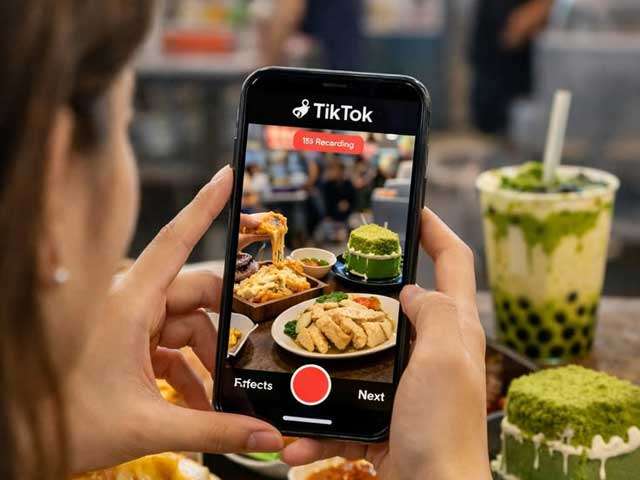
I spend most of my time on Instagram. Which is definitely not a flex. On any given morning, millions of people wake to the familiar glow of a smartphone screen. Before breakfast has been prepared or a word has been exchanged with another person, a series of decisions has already been made. A headline appears at the top of a news feed. A song begins to play. A short video starts automatically. A product that was casually mentioned in conversation yesterday suddenly appears in an advertisement. It all feels effortless, almost comforting, as though the digital world has somehow learned to understand us.
Yet beneath that comfort lies a question we rarely stop to ask. Are these truly our choices, or are they choices that have been quietly prepared for us?
Algorithms have become so deeply woven into modern life that they are almost invisible. We seldom notice them because they do not announce themselves. They do not interrupt our day or demand our attention. Instead, they work silently in the background, observing our habits with extraordinary patience. Every search, every click, every pause while watching a video, and every purchase contributes to a profile that grows increasingly detailed over time. The more information we provide, the better these systems become at predicting what we are likely to do next. Prediction, however, is only one part of the story.
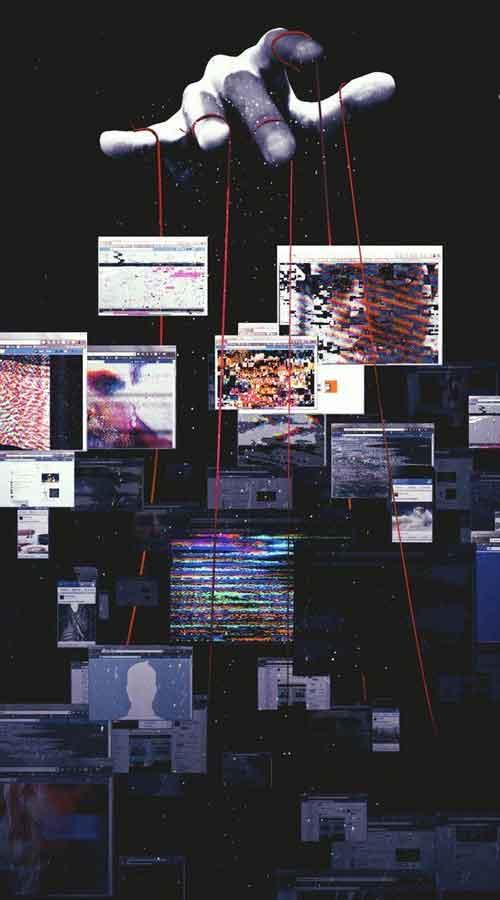
The greater influence of algorithms lies in their ability to shape our behaviour. We often imagine ourselves as independent thinkers navigating an endless ocean of information, selecting whatever interests us. In reality, most of us are sailing through waters that have already been charted. The content presented before us has usually passed through layers of automated decision making long before it reaches our screens.
This is not necessarily the result of a sinister conspiracy. Algorithms are not conscious beings with ambitions of their own. They are mathematical systems created to fulfil particular objectives. A streaming platform wants viewers to remain watching for as long as possible. An online retailer wants customers to make another purchase. A social media company wants users to continue scrolling. These goals are neither mysterious nor malicious. They are commercial.
The difficulty arises when commercial objectives begin to influence personal judgement.
There was a time when discovering something new often required curiosity and effort. Finding a favourite author involved wandering through the shelves of a library or accepting recommendations from friends. Music lovers waited for radio presenters to introduce unfamiliar artists. Newspapers encouraged readers to encounter stories they had not planned to read simply because they appeared on the next page.
Today, discovery has largely been replaced by recommendation.
Recommendation feels efficient because it saves time. Why search through thousands of films when a platform can identify the one it believes you will enjoy? Why browse countless articles when a news feed can assemble a personalised selection within seconds? Convenience has become one of the defining luxuries of the digital age.
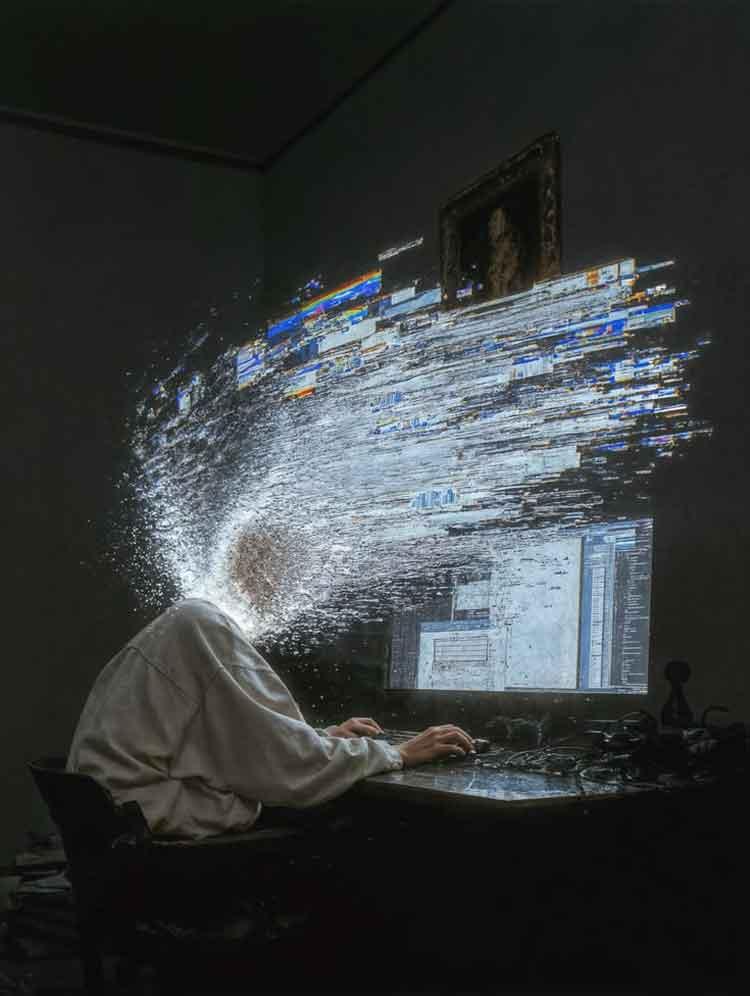
Like many luxuries, it carries a hidden cost.
Convenience gradually reduces the need for deliberate choice. We watch what is suggested. We listen to playlists generated for us. We purchase products labelled as recommended. We trust navigation systems without questioning whether a different route might be more enjoyable. Individually, these decisions appear insignificant. Collectively, they represent a subtle shift in the relationship between human judgement and technology.
The irony is striking. We have more information available than any previous generation in history, yet much of what we encounter has already been filtered before reaching us. Our digital experience is increasingly personalised, but it is also increasingly selective.
Perhaps nowhere is this more apparent than in the way we consume news.
Every reader believes they are keeping up with current events, but few receive exactly the same version of the world. Two people living in the same neighbourhood may open the same social media platform and encounter entirely different headlines. One sees stories about economic uncertainty. Another sees celebrity gossip. A third is shown political commentary that aligns almost perfectly with views they already hold.
This is not an accident. It is the result of systems designed to maximise engagement by presenting material that users are most likely to interact with.
The consequence is subtle but profound.
If we repeatedly encounter opinions similar to our own, they begin to feel universally accepted. Views that challenge us become less visible, not because they have disappeared, but because algorithms have concluded that we are less likely to click on them. Over time, our understanding of public opinion becomes narrower without us ever noticing the walls closing in.
Psychologists have long recognised that people naturally seek information confirming their existing beliefs. The digital world amplifies this tendency. Instead of encouraging curiosity, many online platforms reward certainty. Outrage spreads faster than nuance. Emotional reactions generate more engagement than thoughtful reflection. A sensational headline attracts more attention than a careful explanation.
The result is an environment where speed frequently triumphs over understanding.
One only has to observe the lifespan of an online controversy to recognise this pattern. A rumour emerges. It spreads rapidly through recommendations and reposts. Thousands react before verifying its accuracy. Corrections eventually appear, but by then the original claim has often travelled much further than the truth. Algorithms did not create the rumour, yet they accelerated its journey because controversy keeps people engaged.
In this sense, technology is not changing human nature. It is magnifying it.
Perhaps the greatest misconception surrounding algorithms is the belief that they simply reflect who we already are. In reality, they also influence who we become. Every recommendation strengthens certain habits while quietly weakening others. A person who continually watches one type of content is offered even more of it. Interests deepen. Perspectives narrow. Curiosity slowly gives way to familiarity.
This process rarely feels restrictive because it is presented as personalisation.
Yet there is an important difference between being understood and being confined.
Human beings have always surprised themselves. A reader browsing a library might discover a book in an unfamiliar section and leave with an entirely new passion. A traveller taking an unexpected detour might encounter a place that changes their understanding of the world. Some of life's most meaningful experiences begin with accidents rather than predictions.
Algorithms are remarkably efficient at reducing accidents.
If every recommendation is based upon previous behaviour, then the future increasingly resembles the past. The unexpected becomes less common because the system has learned that familiarity is more likely to secure another click, another purchase, or another hour of attention.
Without intending to, we risk exchanging exploration for efficiency.
The arrival of generative artificial intelligence has made this conversation even more urgent. Until recently, algorithms mainly decided what information reached us. Today, they are beginning to produce that information as well. They write emails, summarise reports, generate artwork, answer complex questions, and offer advice on everything from relationships to career choices. For many, these tools are nothing short of revolutionary. They save time, simplify difficult tasks, and make knowledge more accessible than ever before.
There is no denying the remarkable opportunities they present. Students can receive explanations tailored to their level of understanding. Small businesses can compete with larger organisations by automating routine work. Researchers can sift through enormous volumes of information in minutes rather than weeks. Technology has always reshaped society, and artificial intelligence is simply the latest chapter in that story.
Yet every technological leap invites a new responsibility.
The greatest danger may not be that artificial intelligence becomes more intelligent than humans. It may be that humans become less willing to think for themselves.
Thinking has never been easy. It demands patience, curiosity and, above all, uncertainty. It requires us to wrestle with difficult questions that often have no simple answers. Algorithms, on the other hand, thrive on certainty. They offer quick responses, immediate recommendations and polished conclusions. In a world where speed is celebrated, taking the time to think deeply can feel almost inconvenient.

This convenience creates a quiet temptation. Why struggle through a challenging article when a summary is available in seconds? Why compare multiple viewpoints when an algorithm has already selected the most relevant information? Why spend hours reflecting on a problem when artificial intelligence can produce an answer almost instantly?
These are not unreasonable questions. The problem begins when convenience replaces curiosity rather than supporting it.
History reminds us that progress has always depended upon people who questioned accepted ideas. Scientists challenged long-held beliefs about the universe. Journalists exposed truths that powerful institutions wanted hidden. Writers, philosophers and activists asked uncomfortable questions that transformed societies. None of these achievements emerged from accepting the easiest answer available. They were born from persistence, doubt and independent thought.
If we gradually lose the habit of questioning, we risk surrendering one of the qualities that defines us as human.
This does not mean technology should be feared. It would be difficult to imagine modern medicine without advanced computing or disaster response without sophisticated data analysis. Algorithms help detect diseases earlier, improve road safety, translate languages, and connect communities separated by thousands of kilometres. Their benefits are real and deserve recognition.
What deserves equal attention is the way these same systems influence our everyday decisions.
When a teenager spends hours consuming content shaped by algorithms, what ideas about success, beauty or happiness are being reinforced? When political discussions are increasingly filtered through recommendation systems designed to maximise engagement, what happens to respectful disagreement? When every purchase, search and interaction is recorded to predict future behaviour, where does personal freedom end and digital persuasion begin?
These are not questions for technology companies alone. They are questions for teachers, parents, policymakers and ordinary citizens. Most importantly, they are questions for every individual who reaches for a phone dozens of times each day without considering what is happening behind the screen.
Digital literacy in the twenty-first century is no longer just about learning how to use technology. It is about understanding how technology uses us.
That understanding begins with small acts of awareness. Reading beyond a headline before sharing it. Seeking out perspectives that challenge rather than comfort us. Visiting a library instead of relying solely on recommendations. Turning off notifications long enough to complete a thought without interruption. Choosing a book because it sparks curiosity rather than because an application predicts we will enjoy it.

These are simple habits, but they reclaim something valuable. They remind us that attention is not an unlimited resource. Every moment we spend looking at one thing is a moment not spent looking at something else. Every recommendation accepted without question is a decision that quietly narrows the possibilities before us.
Perhaps the most remarkable characteristic of the human mind is its unpredictability. We change our opinions. We discover unexpected passions. We abandon ideas that once seemed certain. We surprise ourselves. Algorithms, no matter how sophisticated, are built upon patterns from the past. They are exceptionally good at predicting what we are likely to do. They are far less capable of imagining who we might become.
That possibility belongs to us alone.
As artificial intelligence continues to evolve, public debate will understandably focus on regulation, privacy, employment and ethics. These are essential conversations. Yet amid discussions of technological progress, we should not overlook a more personal question. Each day, in ways both obvious and invisible, we are deciding how much of our thinking we are prepared to outsource.
The future will not be shaped solely by the intelligence of our machines. It will also be shaped by the determination of people to remain curious, sceptical and willing to think beyond what is placed before them.
Algorithms may know what we liked yesterday. They may accurately predict what we will click tomorrow. They may even anticipate the words we are about to type. But they cannot replace the uniquely human ability to question, to imagine and to choose a different path.
The answer to the question, Who is really thinking: us or the algorithm? is not fixed. It depends on the choices we make every single day.
If we surrender our curiosity for convenience, the algorithm grows stronger. If we continue to question, explore and think independently, technology remains what it was always meant to be: a tool that serves humanity rather than a force that quietly shapes it.
In an age where every click is measured and every preference recorded, perhaps the most radical act is not disconnecting from technology altogether. It is refusing to let it do all the thinking for us.