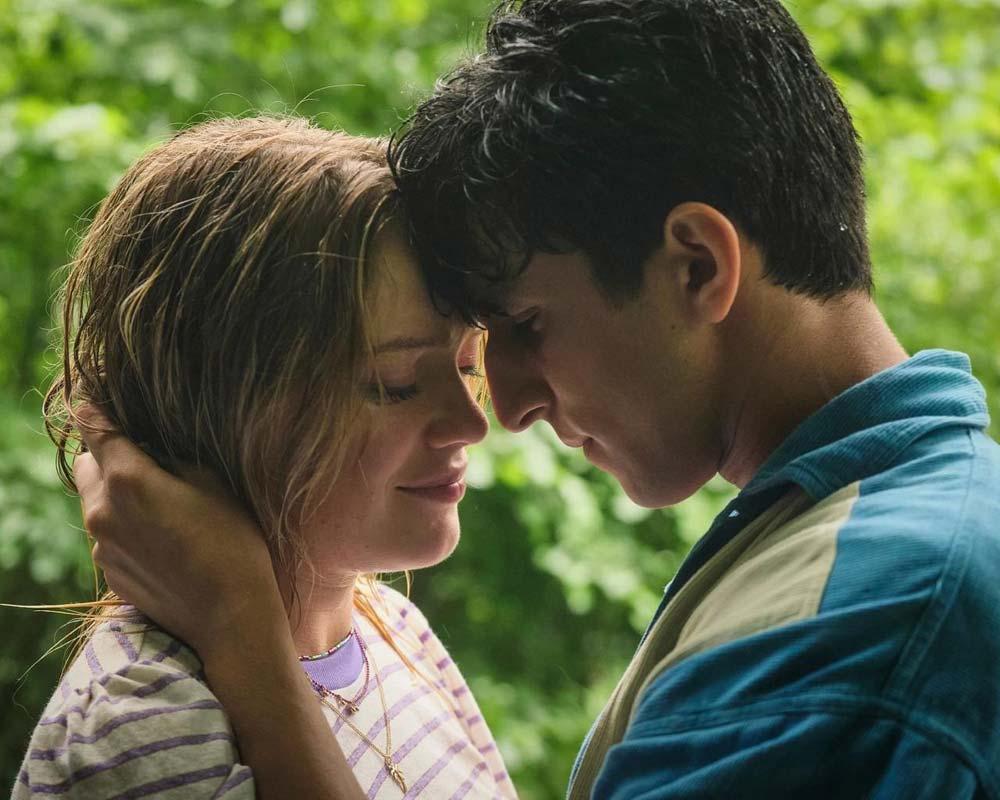
The Good Girl Who Refused to Be Quiet: Pippa ’’Pip’’ Fitz-Amobi

Sometimes, a town does not need the truth. It only needs a story that is easy enough to repeat. A beautiful girl disappears. Her boyfriend becomes the obvious suspect. Evidence gathers around him. A confession appears. He dies before he can defend himself. Soon, grief becomes certainty, suspicion becomes fact and one family is left to live inside a crime their son did not commit.
Five years pass. People learn how to lower their voices when they mention Andie Bell. They learn how to avoid the Singh family. They learn which version of the story is safe to believe. The case is closed, the town has moved on, and everyone seems satisfied with the ending.
Everyone except Pippa Fitz-Amobi. Holly Jackson’s A Good Girl’s Guide to Murder begins as a teenage murder mystery, but beneath its interviews, threats and carefully placed evidence lies a deeper question: what happens when being a “good girl” means accepting what you have been told, while doing what is right requires you to disobey?
Pip first approaches the case under the respectable cover of a senior capstone project. Officially, she is studying the murder of Andie Bell by Sal Singh. Privately, she is investigating whether that sentence should exist at all. She remembers Sal not as the monster Fairview created, but as the boy who once showed her kindness. That memory is small compared with the supposed mountain of evidence against him, yet it is enough to create a crack in the town’s story.
Sometimes justice begins that quietly. Not with proof. With doubt. Pip’s doubt matters because girls in crime stories are so often placed on the other side of the investigation. They are the missing photograph, the grieving girlfriend, the frightened witness or the body around which someone else’s intelligence is displayed. They are searched for, spoken about and mourned, but rarely allowed to control the search themselves.
Pip refuses that role. She asks uncomfortable questions and follows evidence adults dismissed. She is intelligent and brave, but her strength does not come from being fearless. Fear follows her through anonymous warnings, threats against her family and the killing of her dog. Her courage exists precisely because she continues while afraid.
This makes her investigation more than a school project. It becomes an act of resistance.
The title itself carries an irony. Society often rewards the “good girl” who is agreeable and easy to manage. She may be clever, but not disruptive. Curious, but not intrusive. Pip begins as the organised, responsible student adults trust. Yet the closer she moves towards the truth, the less useful conventional goodness becomes.
To solve the case, she must cross the boundaries drawn for her. She must question journalists, police conclusions, family friends and the collective memory of her town. She must become inconvenient.
Perhaps that is Jackson’s most powerful feminist argument: a girl does not become strong by abandoning her goodness. She becomes strong by refusing to let obedience define it.
Pip wants to return Sal’s name to him. After his death, Fairview turns him into a symbol before remembering he was a person. He becomes a “killer,” a “monster” and a cautionary tale. Ravi Singh must carry both the grief of losing his brother and the humiliation of watching strangers rewrite him.
Race is inseparable from this rewriting. Sal is an Indian boy accused of killing Andie, a white girl whose beauty and popularity make her an ideal victim in the public imagination. The local reporting repeatedly stresses Sal’s heritage while using language that presents his guilt as settled. The official narrative feels believable partly because it fits an older and uglier story: the dangerous outsider threatening the innocent white girl.
The evidence against Sal is manufactured, but the prejudice that makes it convincing is already there. Elliot Ward understands this. After killing Sal, he plants Andie’s blood, places her phone in Sal’s pocket and sends a false confession. He does not merely create evidence; he creates a narrative. Each detail is placed like a word in a sentence until the town can read only one ending.
 The lie succeeds because it sounds familiar. That is the frightening power of a convincing story. Once people accept it, every fact begins bending towards it. Contradictions are ignored and questions appear disrespectful. Fairview reorganises itself around the belief that Sal killed Andie.
Meanwhile, Andie is transformed in the opposite direction. In death, she becomes beautiful, innocent and uncomplicated. Yet Pip gradually discovers a life hidden behind that polished image. Andie bullied Natalie da Silva, spread humiliating material online, blackmailed people and sold drugs. These discoveries do not mean she deserved to die. A victim does not need to be perfect before their death becomes tragic. However, they reveal how eagerly society flattens girls into categories: angel or villain, innocent victim or girl who “brought it upon herself.”
The novel refuses both simplifications. Andie can be cruel and still be a victim. Becca can cause her sister’s death and still be a traumatised girl failed by the people around her. Nat can be publicly humiliated and privately carry an assault no one properly investigates. These women do not fit neatly into the roles Fairview assigns them, because real pain rarely arrives in neat shapes.
The deeper Pip investigates, the more she uncovers voices that were ignored. Nat and Becca were drugged and assaulted by Max Hastings at parties where exploitation hid behind popularity and privilege. Their memories are fractured, their evidence limited and their suffering kept quiet. The institutions meant to protect people do not hear them clearly enough. Their silence is then mistaken for absence, as if a crime becomes less real when its victim cannot present pain in the correct form.
Here, justice is no longer only about identifying who killed Andie. It is about asking whose pain is believed, whose reputation is protected and whose voice must become impossibly loud before anyone listens.
Pip listens. She does what the police, press and town failed to do: she treats people as more complicated than the stories told about them. Her investigation is built through interviews and case files, but its most important instrument is empathy. She looks at Sal and sees a person beneath the accusation. She looks at Andie and sees a person beneath the halo. She looks at the girls harmed by Max and recognizes truths that official certainty left behind.
Yet knowledge does not leave Pip untouched. Every answer pulls her further from the safety of who she was before. The case enters her friendships and home. Solving it requires her to lose the comfort of believing that adults are competent, institutions are fair and truth naturally rises to the surface.
Truth does not always rise. Sometimes it has to be dragged into the light by someone everyone else keeps telling to stop. At the end of the novel, Sal’s name is cleared, Elliot is exposed and the carefully preserved image of Fairview breaks apart. During Pip’s final presentation, Ravi reminds the town that it collectively turned “a beautiful life into the myth of a monster.” His words place responsibility beyond the individuals who committed the crimes. A false narrative needs an author, but it also needs an audience willing to repeat it.
That audience was Fairview. It may also be us. We encounter finished stories every day: headlines, rumours, viral posts and accusations compressed into a few confident sentences. We decide who appears innocent, who seems suspicious and whose pain looks convincing. Often, we do so before the truth has had time to speak. “A Good Girl’s Guide to Murder” reminds us that certainty can be comforting without being correct, and that a community can participate in injustice simply by preferring the easiest version of events. Pip’s greatest strength, then, is not that she always knows the answer.
It is that she refuses to stop asking the question. Being good was never supposed to mean being quiet. It means listening when the world has decided not to hear. It means standing beside a family everyone else has abandoned and reopening a story that has been sealed shut for five years. Maybe goodness, at its bravest, looks a little like disobedience. Fairview already had an ending. Pip chose the truth instead.