Sea Sand Dredging and Coastal Erosion: Who Is Accelerating Sri Lanka’s Disappearing Beaches
By Moira Alfred
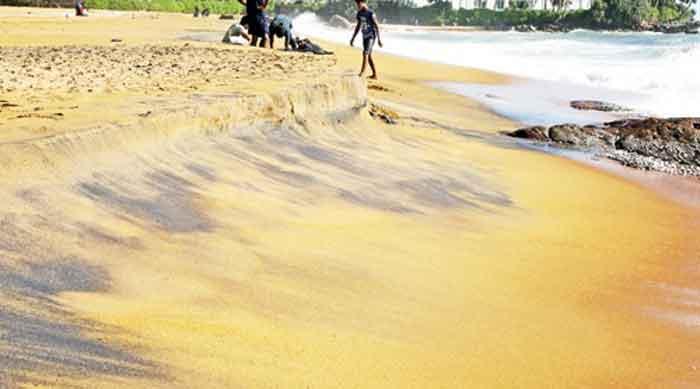
Sri Lanka has a coastline of approximately 1600 kilometers where about one-third of Sri Lanka’s population lives. As of late, natural and man-made phenomena have heightened coastal erosion, causing danger and environmental degradation along many coastlines. Recent studies indicate that approximately 62.6% of the shoreline experienced significant erosion, while 36.9% witnessed gradual accretion. The beaches are disappearing, and the culprits are not hard to identify.
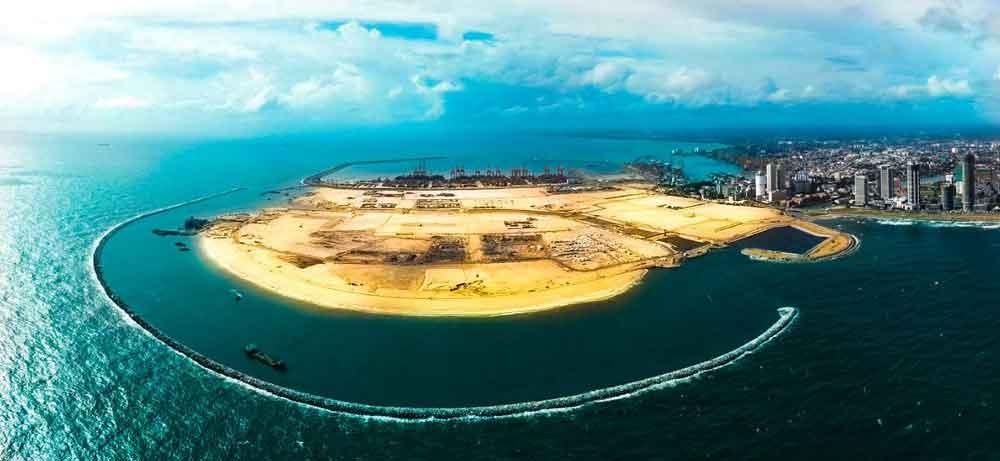
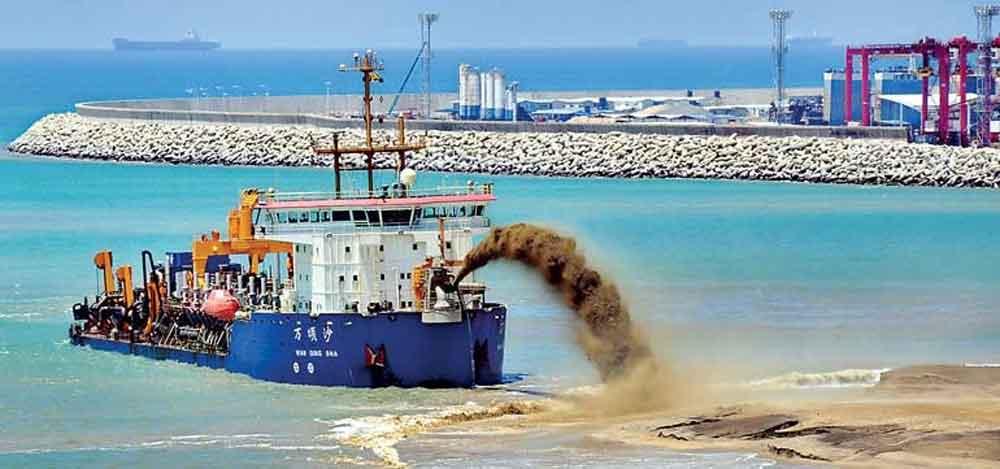
Sand mining stands at the center of the crisis. The Colombo International Financial City, commonly known as the Colombo Port City, built on 269 hectares of land reclaimed from the sea in 2016, utilized 65 million cubic meters of sand. Sand was dredged from about 3 to 4 kilometers offshore, creating a sedimentation vacuum on the sea bottom that needs to be filled over time by sediment or sand moving into that area. This causes sand that should replenish the beaches to instead fill the dredged vacuum, leading to beach sand depletion. The result is visible along Colombo's beaches, Mount Lavinia and stretches south to Panadura, where residents have watched the shoreline retreat year after year.
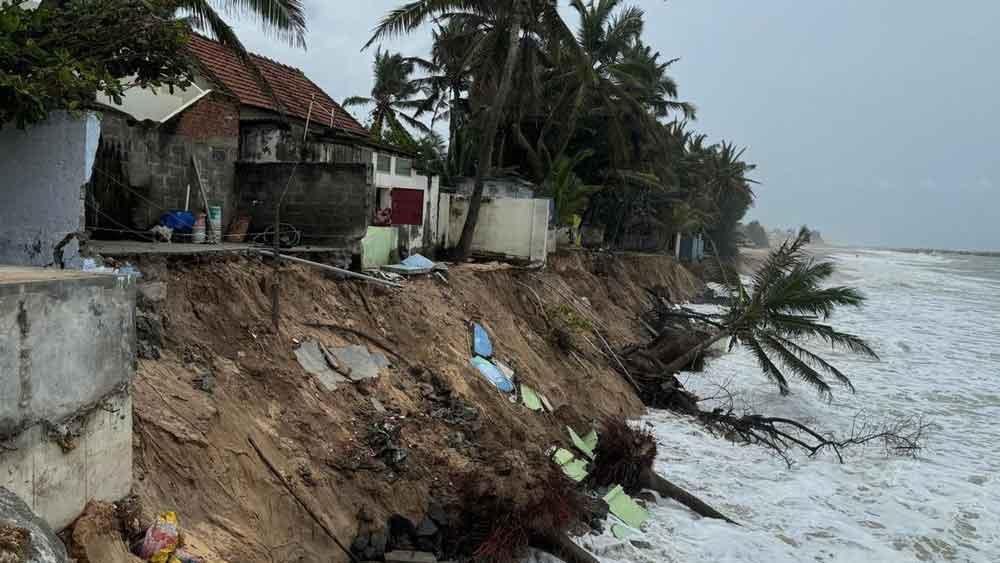
Residents in areas like the Negombo-Pitipana coastal belt in Morawala, Udappuwa in Puttalam, Calido Beach in Kalutara and the coastal belt in Mount Lavinia, Dehiwala and Ratmalana have been left unsafe and destitute after their houses and properties were washed away by the sea. The loss is not just environmental. Tourism, a pillar of the national economy, depends on pristine beaches. As the sand disappears, so does the economic foundation of coastal communities.
River sand mining adds another layer of destruction. River sand mining has been an illegal money-spinning business filling the pockets of politicians and many other stakeholders in related industries. Rivers like the Maha Oya and Deduru Oya have been exploited for decades to meet construction demand. The Geological Survey and Mines Bureau issues permit that specify extraction limits, but enforcement is weak and illegal mining is rampant. When transport permits were suspended by a previous government, control evaporated entirely. Trucks moved sand without restriction, roads deteriorated underweight, and nobody tracked how much was being taken or from where.
The mechanisms are well understood. Sand moves along the coast through longshore drift, a natural process governed by waves and currents. When sand is extracted offshore or rivers are dammed or mined, the supply chain breaks. Beaches depend on constant replenishment from rivers and offshore sources. Remove the supply and erosion accelerates. Beach nourishment projects at Port City and Mount Lavinia, where sand was dredged from Angulana, along with other coastal constructions requiring sand, have contributed to erosion. Efforts to restore one beach often degrade to another.
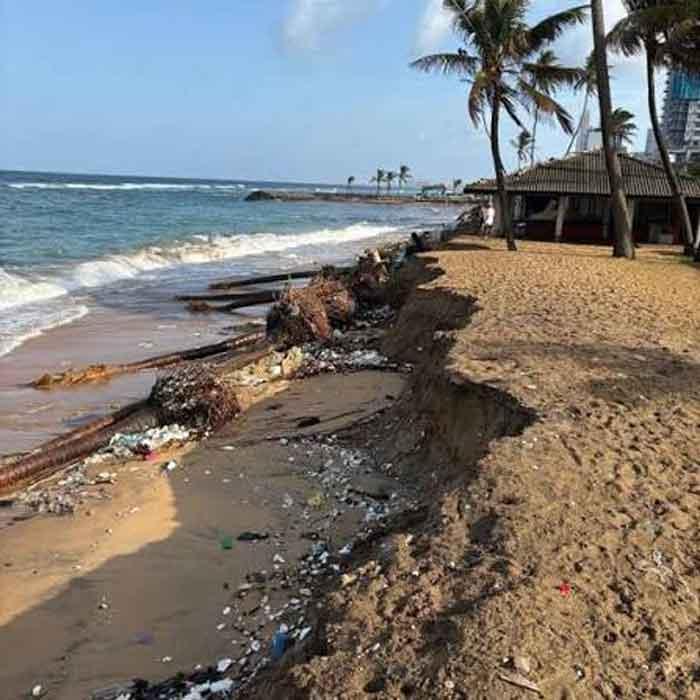
Regulation exists but lacks teeth. The Coast Conservation Department permits offshore mining only if conducted 3 kilometers offshore and from depths exceeding 15 meters. In practice, monitoring is inadequate, and violations go unpunished. The economic incentives are too strong. Construction booms, port expansions and land reclamation projects create insatiable demand for sand. Legal and illegal operators meet that demand with little regard for long-term consequences.
Certain areas including Vankalai, Naruvilikulam and Kondachchikudah were identified as high-risk zones prone to erosion, with maximum erosion rates reaching 4.7 to 5.3 meters per year. In some villages, up to 10 meters of land is lost annually. Fishermen lose access to launching sites. Hotels watch the sea advance toward their foundations. Families abandon homes that stood for generations.
Efforts to address coastal erosion have focused on hard engineering solutions like breakwaters and seawalls, which often shift erosion elsewhere rather than solving it. The first beach nourishment project in Sri Lanka was carried out in 2012 over a 1.8-kilometer stretch in the Uswetakeiyawa area by the Coast Conservation Department. About 300,000 cubic meters of offshore sand in the Indian Ocean was pumped using a dredging vessel for the nourishment. Three breakwaters were constructed afterward. The results have been mixed. Sand accretes in some areas and erodes in others, and the fundamental problem of sand supply deficit remains unresolved.
The political will to confront sand mining interests is absent. Too many people profit from the status quo. Politicians receive contributions, contractors win lucrative contracts and enforcement officials look the other way. Meanwhile, the coastline shrinks, beaches vanish, and coastal communities pay the price. This is not a crisis of knowledge. Science is clear. This is a crisis of governance, economic priorities and the willingness to regulate an industry that operates with near impunity. The beaches are disappearing and everyone knows why.