REVERSE EMIGRATION: GOING BACK TO WHERE WE CAME FROM.
BY: DEVIKA BRENDON
Reverse Emigration is not a topic often discussed in Sri Lanka, as people are currently more concerned about the loss of so many professionals in the mass emigration from the island in recent years. When people ask a returnee: ‘So which country is better? Have you decided?’ The answers do not come easily.
There is an insulting and ignorant general belief that people from Asia and Africa and countries termed ‘Third World’ are clamouring to come into Australia, Britain, Canada and the USA; and a complete disregard and disrespect shown for the historical and cultural backgrounds from which the immigrants come. Anyone emigrating to a historically colonised country from Asia or Africa or the Middle East should be aware that they are entering a landscape in which today they would be classified as lesser, or as a threat, based on the colour of their skin or the difficulty in pronouncing their name. These are democratic countries, but they are also currently undergoing a backlash against progressive politics, and diversity, inclusion and equity policies. Differences between people are tolerated today, and often suspected, rather than celebrated. Political correctness is a superficial and external controlling policy, and many resent having to conform to it. Many immigrants seem indistinguishable from each other to a racist or threatened eye.
As climate change increases its impact, as economic resources previously taken for granted are seen as non-renewable or diminishing, countries which were previously open and welcoming now look differently on their immigrant citizens, and question their right to be here, their conformity to law and custom, and their contribution to the country. This is entirely predictable.
It’s an opportunity cost, on each side. Not emigrating means FOMO, career blockages or delays, frustrations of various kinds, and lower income status. But immigrants often experience precariousness of a cultural kind: outsider status, not belonging, not fitting in, not being fully accepted, not being recognized. And living expenses, utilities, and taxation levels are high: no household help is readily affordable, the way it is in Sri Lanka, and two incomes are needed to maintain a stable life.
The hard work required to maintain the good life immigrants desire means long working hours and sustained stress, and very little time for family life and the vibrant social activity many enjoy in Sri Lanka. This level of social connectedness we are used to, via our close-knit cousin groups and extended families, is not possible to sustain in such a work-oriented economy.
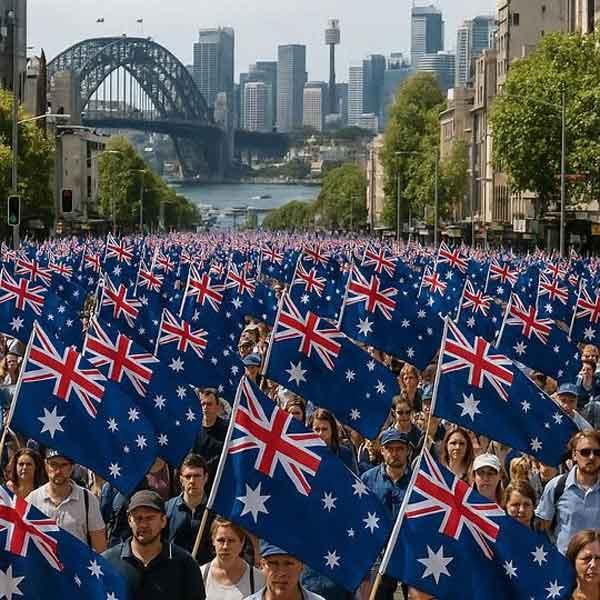
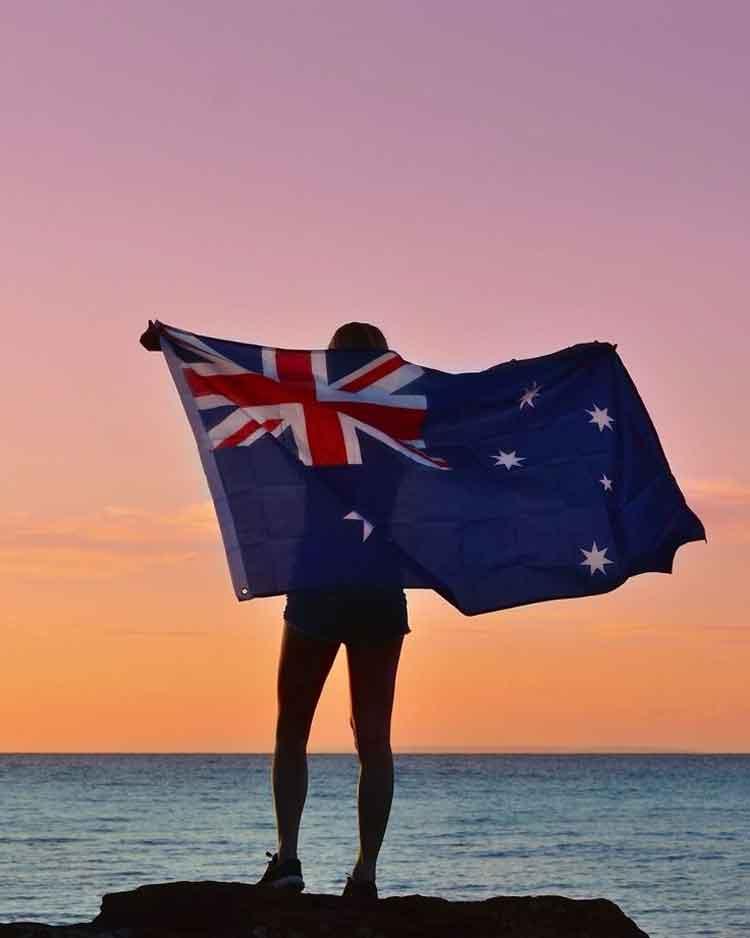
Australia, despite its own colonial settler history, was a better prospect than the UK or USA.While Enoch Powell was making his dire predictions, that Britain would be overrun by immigrants, in 1968, in Australia, in contrast, The White Australia Policy was in the process of being overturned. Australia previously had a policy of promoting British and European immigrants for citizenship status and discouraging those from other countries. But in the 1970s, educated immigrants from South Asia, with a shared colonial history and good ability to speak English, were welcomed into a prosperous economy.
Multiculturalism became a policy during the Labour Government years of Hawke and Keating during the 1980s and 1990s. This broad embrace was made possible because, in the 1970s, Gough Whitlam’s multicultural perspective also had bipartisan support from the Liberal PM Malcolm Fraser who succeeded him. Australia in those years was a meritocracy. Immigrants who entered with a positive mindset, and a will to contribute to the community, flourished. Immigrants were recognised for their contributions with national honours, and very few senior appointments were seen as tokenistic.
The first wave of immigrants were displaced post War Europeans. The second were people displaced by the Vietnam War, in the 1970s and 80s. All were attracted by economic security and social stability. The prospect of experiencing racist attitudes did not deter them.
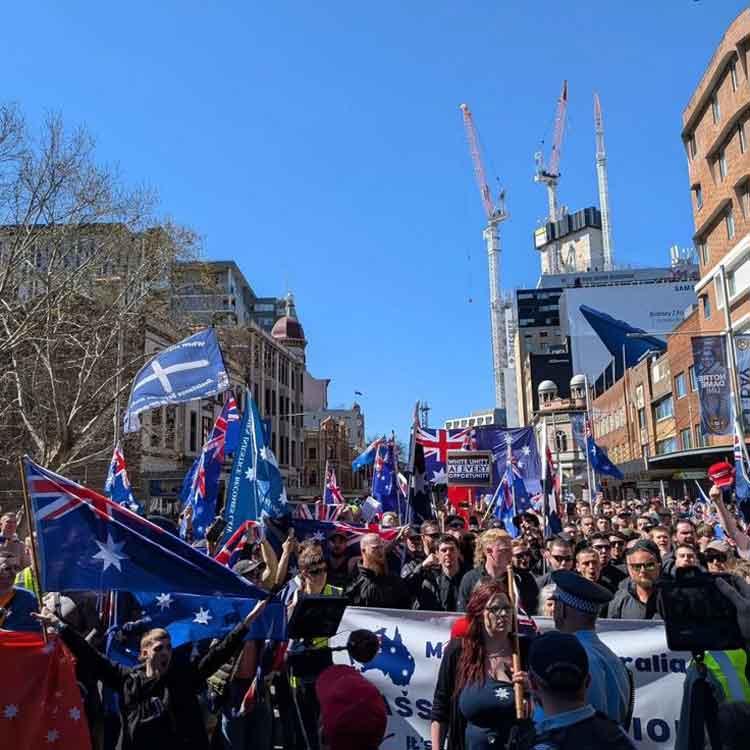
In 1996, Pauline Hanson entered Australian politics on a platform of distrust of outsiders. Hanson is an opportunistic racist: she started by claiming Aborigines were welfare parasites and had smaller brains than the European settlers who colonised the country in 1788. After 9/11, as anti-Muslim feeling rose globally due to identification of the terrorists as Muslims, she performed Islamophobia, saying people whose faces cannot be seen cannot be trusted. And now in 2026, with Indians being the largest immigrant group in Australia, she has Asians as her target. Tapping into the underlying racism and bigotry of Anglo-European Australians who are feeling threatened that they are losing their place in their own country, Hanson aims to contest the next Federal Election, on a platform advocating ‘monoculturalism’. Empathy that had risen for indigenous people was eroded by the portrayal of them as welfare parasites and an alcohol and drug abusing underclass. Their generational physical segregation and otherisation from mainstream society did not assist the process of reconciliation.
The famous soprano Kishani Jayasinghe evoked a storm of reprisal when she sang the song ‘Danno Budunge’ in a European style on the National Day, at Galle Face Green in 2016. It’s important to note that the Sri Lankans who wrote more than 500,000 emails of hate to Kishani Jayasinghe at that time were attacking not a foreign-born immigrant but one of their own citizens, who was born and educated in Sri Lanka.
A year later, on Anzac Day in 2017, a former Young Australian of the Year, Yassmin Abdel-Magied, a young woman of Sudanese ancestry, was furiously criticised for publishing a seven-word social media post. ‘Lest We Forget’ is the deeply respected phrase associated with the soldiers who defended Australia in international wars, especially commemorated on Anzac Day. She added four names, including detention camps and ongoing conflict zones, suggesting that Australia should recognise the significance of these as well. ‘Manus, Nauru, Syria, Palestine…’ She was drummed out of the country. The racism evident in the anger expressed against her was overt, and it was not seen as ‘un-Australian’. She had made herself an enemy in the minds of many with her perceived disrespect. Migrants are supposed to be grateful, not critical.
These incidents show the development of exclusionary concepts of national identity: who is regarded as authorised to be representative of the country, or worthy of being honored by a country, who decides the manner in which they represent the country, who is entitled to speak, and innovate and criticize, and who is not. Nationalist majoritarian politics, which Australia is recently manifesting, has created havoc in Sri Lanka for 70 years and splinters the community. If the people of this country learn not to fall prey to opportunistic race-baiting, respect the histories of all communities, and actively engage in social upliftment and protection of the vulnerable, Sri Lanka can step out of the cycles that hold us back.
Just two years after the outcry against Abdel-Magied, in Sri Lanka, after the Easter Attacks, hundreds of instances of hate speech against Muslims were orchestrated on social media in Sri Lanka. In fact, the whole of the 2010s and 2020s have seen the normalization of vitriolic attacks, cyber bullying and harassment on the rise in Sri Lanka, with minority ethnic and religious communities and women being most often the targets of hate speech and disrespect, by a majoritarian sector.
The ‘rivers of blood’ referred to by Enoch Powell in 1968 as his terrible prediction for Britain were unfortunately created in this country by our own people turning on ourselves, and otherising our minority communities.
There has in recent times been a rise of emigration from Australia to Asia, due to Australia’s expensive housing and lifestyle costs. In an age where birthright citizenship may be enforced by white supremacist right-wing regimes, and immigrants forcibly told to go back to where they came from, a home country’s relatively affordable life becomes very attractive, except in times of natural disaster or political and economic chaos.
The West is not the stable and orderly civilised sphere it likes to portray itself as being. So called First World countries are rife with substandard municipal government, outdated infrastructure, and decaying health and education systems, and the gap between social classes is sharply increasing. In Sri Lanka, partly due to the disruptions the country has experienced, there is active involvement by citizens in demanding accountability and improvements in government performance. All generations have their say on social media. Citizens' voices and opinions and quest for justice are robust. If social media is intentionally used for education and awareness rather than political panhandling and personal venting, positive outcomes will result.
The nationalistic replacement of English with Sinhala had its origin in protest against centuries of brutal oppression. Understandable as that is, ignorance of English as an international link language is a real deficit in terms of employment options and access today. To become fully postcolonial, and deal with the modern world with sovereignty and awareness instead of victimhood and grievance, the Sri Lankan citizenry needs to equip ourselves with education and a growth mindset. We need to apply a humanitarian lens, not merely an economic and commercial one, to ourselves. And we need to refrain from exploiting and depleting our own natural resources, as well as preventing others from doing so. We are not a minor character on a world stage created by European empire-builders. By dealing openly and boldly with our own issues, we can take and hold our own place in the sun. All we have to do is improve our own internal infrastructure, and respect and value our internal diversity and strengths. Civil society has a great role to play in this.