Let Your Arrow Fly
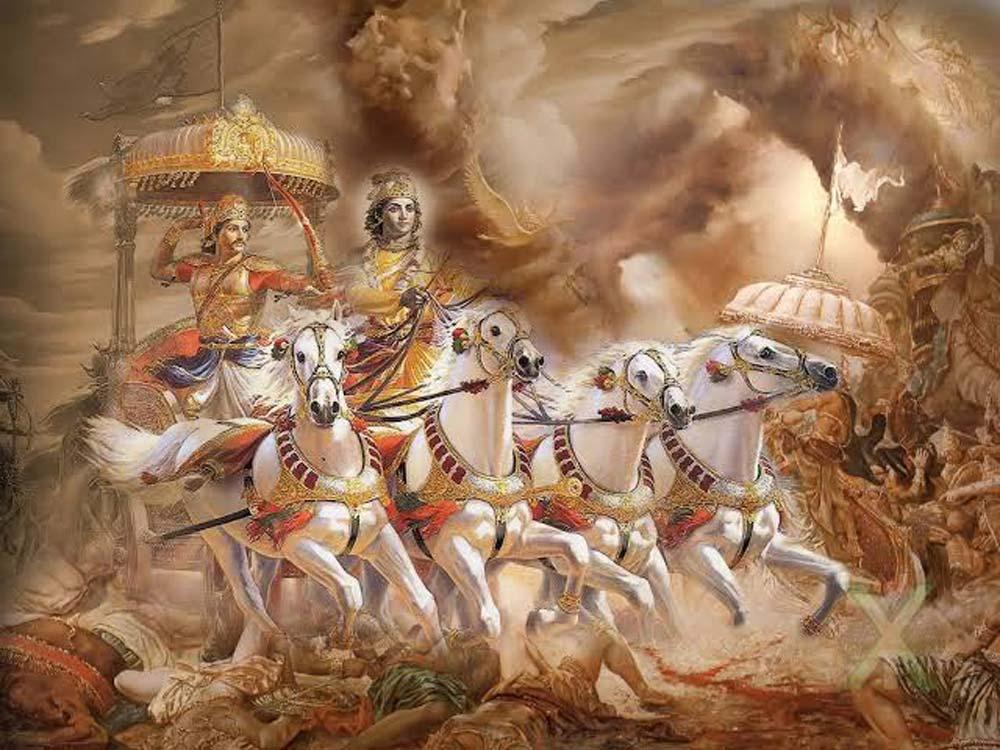
When my brother and I were little, our mother read us stories. The ones we most loved were myths and legends, and the ones I remember most clearly were the stories from The Mahabharata. We were thrilled by the stories of exile, of treachery and betrayal, of Queen Draupadi’s invocation of the never-ending saree bestowed by Sri Krishna to protect her dignity, and of the house, which was treacherously saturated in oil by their enemies, to end the lives of the brothers, but from which they escaped at night, in the dark, together and alive. Which of the brothers was my favourite? I know everyone loves Arjuna. But I secretly liked Karna. However, the story of how Arjuna won the archery competition remains my favourite. He was the most outstanding young warrior being taught by the revered military teacher, Drona, who favoured Arjuna over his own son.
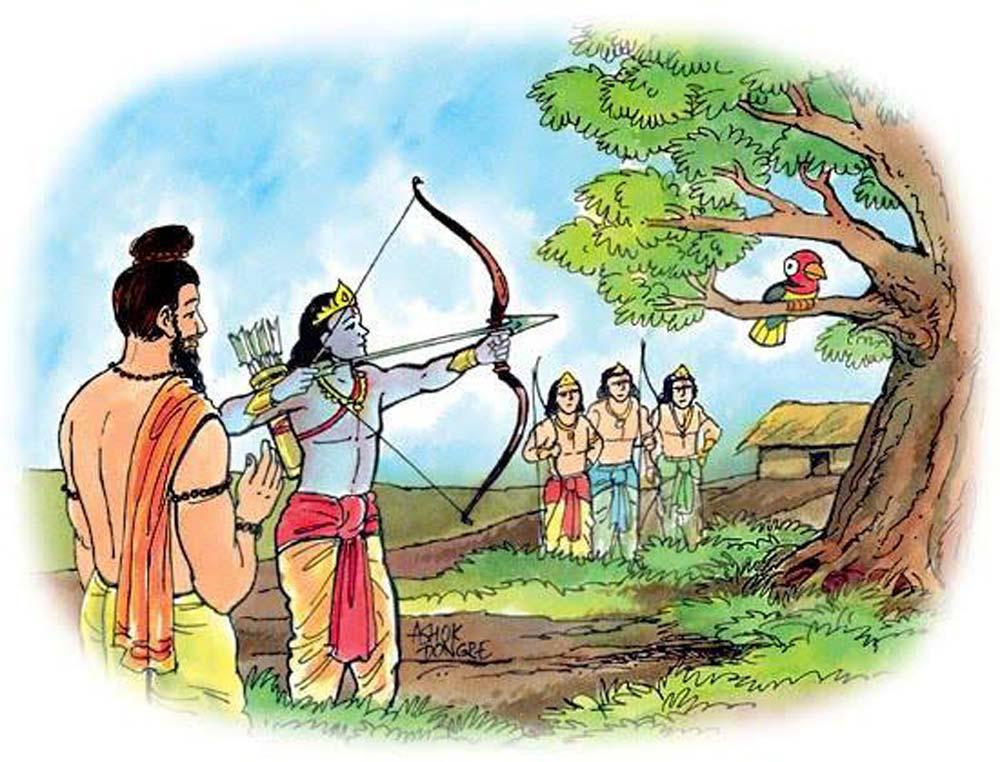
In my mind’s eye, outlined in the beloved voice of our mother, I saw the palace and its grounds, filled with hopeful warriors from all over the known world, the sun glittering on their bright armour and weapons. It’s always morning, in my imagination. Drona outlines the rules of the archery tournament to all in the vast courtyard. He indicates a tree, at the centre of the building. On a high branch of the tree, he indicates a bird, made of a shiny metal. The warriors are instructed to aim for the bird and bring it down. Everyone assumes this is a test of strength, of capability, of skill in wielding a heavy bow. But one by one, as the warriors are called up and take their stance and prepare to string their bow, some of which are legendary weapons of generational renown in their clans, Drona asks them each a question, which cannot be heard by anyone standing more than a metre away. One by one, after they respond, the young men are declared disqualified by Drona and required to sit down. Some, who have never experienced rejection in their lives, storm off with their retinues in attendance. But the majority stay, out of genuine curiosity, until the final warrior is called. Drona’s son too had been disqualified by his father. All eyes were on Arjuna, as he respectfully approached his teacher. This time, as he was the last, the question and answer was asked aloud, so all could hear them. As Arjuna strung his bow, and declared himself ready, Drona asked him: ‘What do you see?’ All the others had said: ‘I see this palace courtyard, I see my fellow warriors, I see the people watching, I see the blue sky, and the radiant sun, I see the tree, and the bird in the tree.’
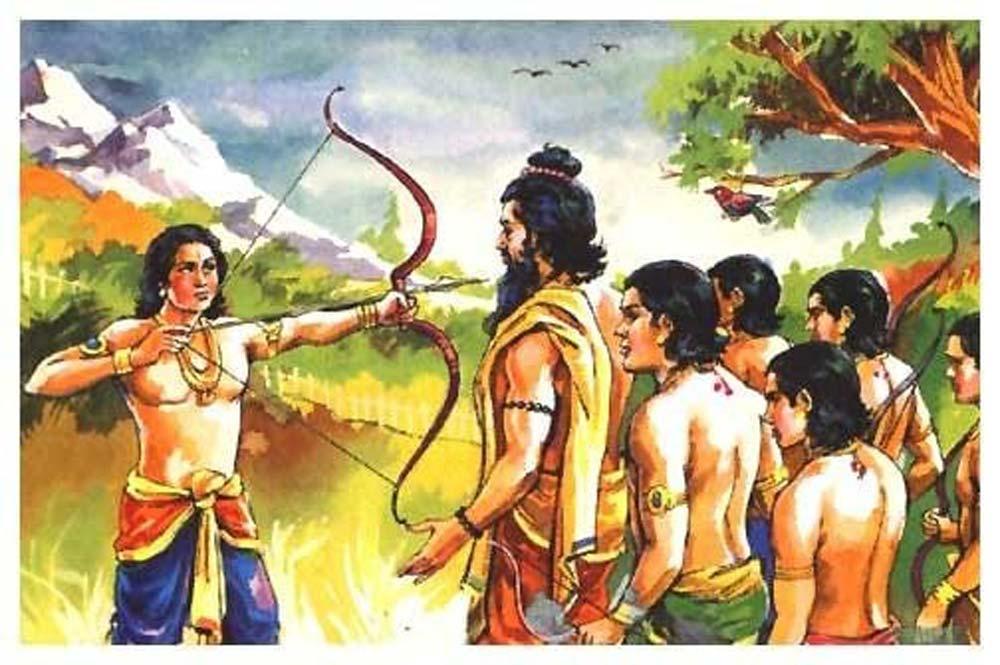
- Arjuna said: ‘I see the bird.’
- And his teacher said: ‘What part of the bird do you see?’
- And Arjuna said, ‘I see only its head. And on its head, only its eye.’
- And Drona in delight said: ‘Let your arrow fly!’
In the complete silence that ensued, all heard the twang of the bow, and the whirring of the
arrow, and the sound of the metal bird as it fell to the ground underneath the tree. Drona explained: ‘This was not a test of skill or even accuracy, the ability to measure distances with the eye. This was a test of focus.’
Arjuna won because he was not distracted by the colour and the chaos and the emotional
energy all around him, or by his own excitement and anxiety and anticipation. He cleared
away all concerns but the one that was right in front of him. Over the past several years, with the hullabaloo or Covid and the violent consequences of natural disasters and shortages of essential fuel and goods and services, and the imminence of the end of the world, I have often thought of this epic courtyard tournament.
While waiting in queues, at airports, at passport offices, at taxi ranks, at cinemas, and while being besieged by incoming emails and messages on my smartphone. I think: ‘What do I see?
What is most important? And of this, which is the most important part?’ I think of myself, an ordinary girl, with no supernatural or legendary powers, in my daily body armour, preparing for everyday skirmishes and battles, trying to focus on what matters most, in each moment, so I am not bewildered by the noise and the confusion of mixed messages and concurrent incidents and deadlines pressing on my mind. I try to sort everything out in my environment before I start any venture, so my mind is clear, and I know where everything is. I am a veteran of grief, having lost all my family members in the space of four years, the last of them being my mother, who first read those stories to us. These are lifelines and harnessing them is how we deal with deadlines. Perhaps it is our very mortality that prompts us to try and clear everything up as much as we can, the knowledge that if we do not make the effort now, to streamline, to downsize, to minimize and to distill our possessions and our accoutrements, the materials available to us, never fully utilized, will be left in a jumble for less mindful individuals to sort through.
Before seizing the day, or any day, we must first set our gaze and align it with our will and our strength. Many people are not used to this sort of hard mirror being held up to them, and it’s a shock, but really it is a necessary calibration at the start of each day. It is the same principle as taking time to sharpen your blade before cutting a tree or cutting vegetables for cooking. The refining and preparation process takes time, but it greatly increases the effectiveness of the action that results.