Love Letters: The Dying Art of Romanticizing Intention
 Nichol Fernando
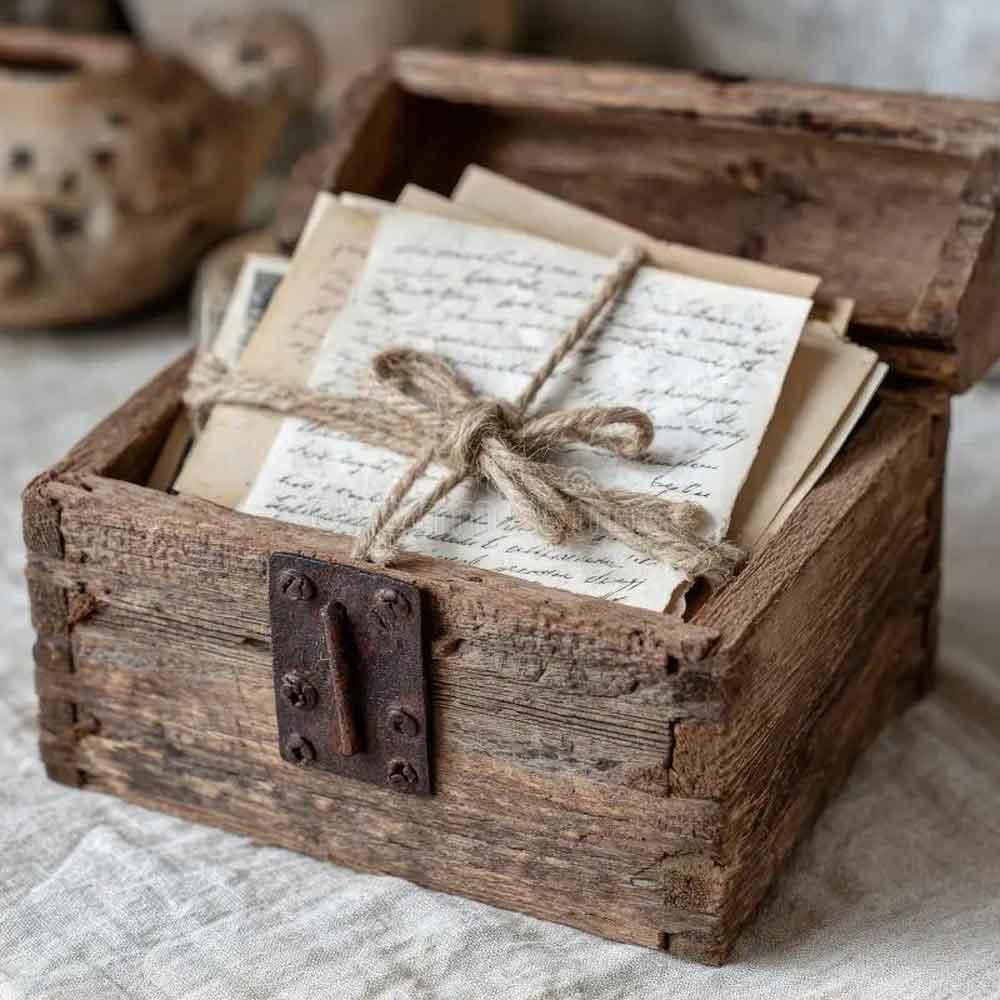
Imagine your grandkids running around your house one day, playing hide-and-seek. One of them hides beneath a pile of vintage clothes in your closet, only to stumble upon a wooden box filled to the brim with browned envelopes. He knows he should leave it alone, but curiosity gets the better of him. He picks one up and reads it at lightning speed, skimming over words he can barely pronounce and making faces at the ones he does understand. Forgetting the game entirely, he runs downstairs and into your arms, snickering about the love you once shared as a naïve young adult, madly and hopelessly in love.
Suddenly, what was once just a private piece of your past becomes proof that love used to be something people took their time with. Not a quick text. Not an Instagram highlight. Not a heart sent between distractions. A love letter was deliberate. It was messy handwriting, crossed-out words, folded paper and the courage to turn feelings into something permanent. In a world where romance is becoming faster, easier and more disposable, love letters remind us of a dying art: the art of romanticizing intention.
When did an emoji begin to replace a handwritten confession of undying love? Before love could be delivered straight to our DMs in an instant, it had to be felt slowly. Romance once lived in the quiet moments between thought and action, in the pause before a pen touched paper and in the careful choosing of words that could not simply be deleted with a backspace button. To write a love letter, someone had to sit with their feelings long enough to understand them. They had to write, rewrite, fold and give away a piece of themselves in the form of ink and paper.
That patience made love feel intentional. A letter was never accidental. It was not something written out of boredom, convenience, or habit. It required time, effort, and vulnerability. Every sentence carried weight because it had been chosen. Every word had to earn its place on the page. Whether it was handed over during a shy interaction in public, slipped into a school bag when no one was looking, left on a bedside table in a shared home or mailed cautiously at a busy post office, a love letter carried something texts often struggle to hold: presence.
In today’s world, affection often moves faster than feeling of love itself. A heart emoji, a quick “miss you,” a reposted TikTok, or a like on a story can all suggest love, but they rarely demand much from us. We can communicate constantly and still say very little. In a world of instant replies, romance has become easier to express, but perhaps harder to feel deeply. Love letters remind us of a time when affection was not rushed, when love had to be patient before it could be poetic.
 There is something deeply intimate about knowing that someone paused their day just to put their feelings into words. A love letter is not powerful because it is perfect. In fact, its beauty comes from everything imperfect about it. The uneven handwriting, a crossed-out sentence, a misused comma or a spelling mistake reminds us that a real person sat at a table with a pen in hand, feeling too much and trying their best to word it properly.
That is what makes love letters feel so human. They carry the presence of the person who wrote them. You can see where their hand pressed harder into the paper, where they hesitated, where they changed their mind and where their emotions became too big for neat grammar. A typed message may be clean and instant, but a handwritten letter holds traces of effort and patience. It feels touched, thought through, and lived in.
Even the small details become romantic. A faint scent of the writer’s perfume, a page folded carefully into four or ink slightly smudged by rushed hands. These are not grand gestures in the dramatic sense, but they are intentional ones. They say, “I thought about you,” and sometimes, that is what romance really is. It is not perfection, but proof that someone cared enough to try.
Although romance in the modern world has not disappeared, it has become easier to perform. We can say “I miss you” in seconds, send a song that reminds us of someone, react to a story, share a post or type out a heartfelt confession at 2 a.m. without ever touching paper. In many ways, technology has made love more accessible. Distance feels smaller, silence feels less permanent, and affection can reach someone almost instantly, but maybe that is where we run into a problem. When everything becomes easier to say, it can also mean less. We are constantly connected, yet somehow many people still feel emotionally distant. A conversation can last all day and still avoid honesty. A person can send good morning texts, heart emojis and silly relationship reels, but still never sit with their feelings long enough to be able to express them properly. Messages also have a strange way of disappearing while still existing. They get buried under new chats, lost in screenshots, or deleted in moments of anger. They are there, but they are not there. A love letter, on the other hand, becomes something physical. It can be hidden in a pillowcase, kept inside a book, treasured in a box or rediscovered years later with the same nervous handwriting still waiting on a page from a different timeline.
 This does not mean modern love is fake or that technology has ruined romance. A message can still be meaningful if there is intention behind it but love letters make us question whether convenience has replaced effort. Perhaps romance was never about how quickly love could be expressed, but how carefully someone chose to express it. Love letters still matter because they turn something invisible into something permanent and tangible. Feelings are usually temporary in the way they are expressed. They are spoken in passing, typed in a rush or hidden behind small gestures but a letter takes those feelings and gives them a place to live. It turns emotion into something that can be folded, touched, kept and returned to when the memory begins to fade. There is also a quiet honesty that comes with writing a letter. It forces a person to slow down. You cannot hide behind typing bubbles, quick replies or perfectly timed texts. You have to sit with what you feel and decide what deserves to be written down. That process alone makes the emotion feel more deliberate and thought out. A love letter proves that the writer cares enough to make their feelings real.
This is where a letter transcends simple communication. It becomes evidence of a moment. It is a version of someone’s heart captured on paper. Years later, even if the people have changed, the letter remains exactly as it was. The handwriting does not grow older. The words do not rewrite themselves. It stays there quietly, preserving a feeling that once mattered enough to be proudly expressed on a piece of paper. Bringing back love letters does not mean pretending we live in another century. It does not mean rejecting technology or acting as if modern romance is meaningless. Love letters do not have to be dramatic, poetic or written on expensive paper. They can be a note slipped into someone’s bag, a birthday letter, a handwritten card or even a few honest sentences written simply because someone crossed your mind.
The point is not really the paper. It is the pause you put on everything around you as you write it. It is the decision to express love with care instead of convenience. In a world where affection can be sent in seconds, choosing to write something down feels almost rebellious. It says that this feeling deserved more than a quick reply. It deserved time out of someone’s day, constant careful thought and effort. A hundred texts may keep a conversation alive, but one sincere letter can keep a memory alive. That is the beauty of intentional romance. It is not about grand gestures or perfect words. It is about making someone feel remembered, chosen and worth the extra effort. Love letters are not outdated. They are simply waiting for us to care enough to write again.
 As bell hooks once said, “Love is an act of will-namely, both an intention and an action.” Years from now, when that grandchild stands in front of you with a browned envelope in his hand, he will not fully understand the words written inside it. He may laugh at the dramatic sentences, the old-fashioned language or the embarrassing honesty of two people who once loved with their whole hearts but somewhere between the faded ink and the folded paper, he will understand one thing. He will understand that this love was kept, and he will want a version of this love for himself. That is what makes love letters so powerful. They outlive the moment they were written in. They become small proof that someone once cared enough to pause, to think, to feel and to leave behind something that could be held. In a world where messages vanish into screens, where conversations are deleted or buried under newer notifications, a letter remains. Quietly. Patiently. Stubbornly. In the end, love is not most beautiful when it is perfect. It is most beautiful when it is intentional. Perhaps, love letters are a dying art because intention is too.