“He Won’t Bite”: Being Deathly Afraid of Man’s Best Friend
Nichol Fernando
“He won’t bite.”
It is a reassuring sentence, in theory. A generous little promise offered by someone who knows the dog, loves the dog, and cannot quite understand why you are standing behind another human being as though preparing for battle.
I would like to believe them.
Unfortunately, my fear has never been particularly interested in references.
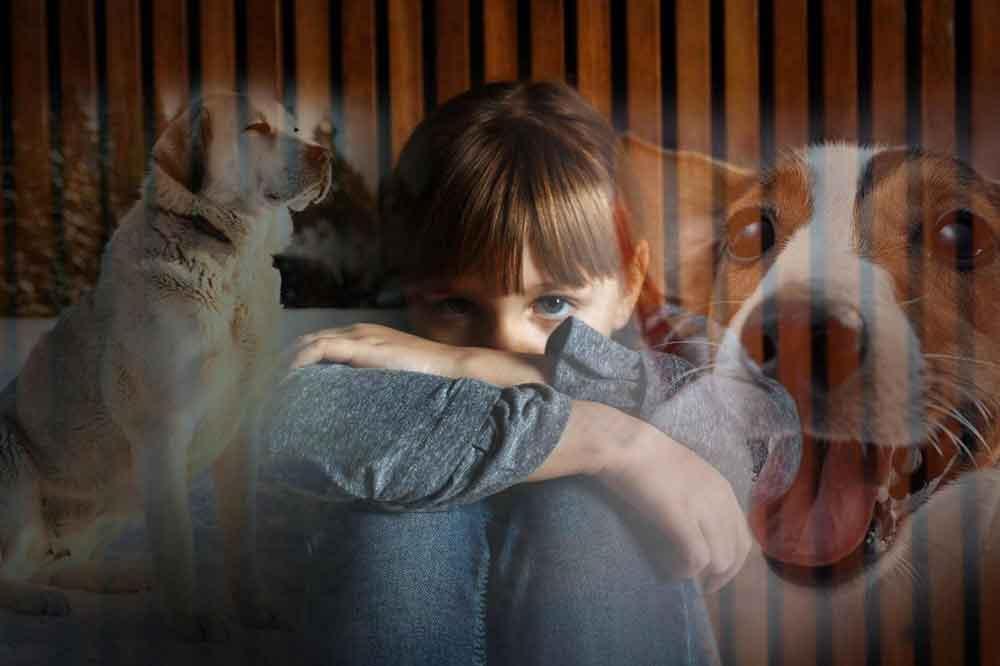
I have been scared of dogs for as long as I can remember. On the streets of Sri Lanka, encountering a stray dog often means quietly rearranging the people around me. A friend becomes a barrier. A family member becomes a shield. I find the side of the group furthest from the dog with a level of commitment that would be impressive under almost any other circumstances.
Visiting friends’ houses comes with its own small negotiation. Before I can properly settle in, the dog usually has to be kept somewhere else. I have come to see my friend. Somehow, my arrival requires an additional household arrangement.
There is humour in this. I know how it looks.
But finding something funny afterwards does not mean it was not frightening while it happened.
That is one of the difficulties of being afraid of dogs. The fear exists in a world that has largely agreed that dogs are wonderful. They are companions, family members, sources of comfort. People show you photographs with the tenderness usually reserved for babies. A dog entering a room can make everyone visibly happier.
Then there is the person trying to work out whether the room has another exit.
Neither response cancels out the other. The same animal can be someone’s safest place and someone else’s reason for feeling unsafe.
An intense, persistent fear of dogs is known as cynophobia. It is a specific phobia, not simply another way of saying that someone does not like animals. When fear becomes overwhelming and interferes with ordinary life, it deserves more attention than a request to stop being dramatic. That does not mean every person who feels cautious around a dog has a phobia; the degree of fear and its effect on daily life matter.
Dislike and fear are different things.
Dislike says, “I would rather not.”
Fear can make “rather not” feel like the only available option.
For some people, the reaction includes shaking, a racing heart or an overwhelming urge to escape. Others become still. Sometimes the worry begins before the encounter, simply because they know a dog might be there. The animal does not have to be doing anything threatening for the person’s distress to be real.
From the outside, this can look unreasonable. From the inside, there may barely be time to reason at all.
People often want an explanation. Was there a bite? A chase? A frightening childhood incident that would make the reaction understandable?
The question makes sense. We like fear to have a clear beginning. If there is an event, there is a story. If there is a story, perhaps we can understand why someone is still carrying it.
But “for as long as I can remember” does not offer that neatness. It describes a fear that already seems to be there when you look back.
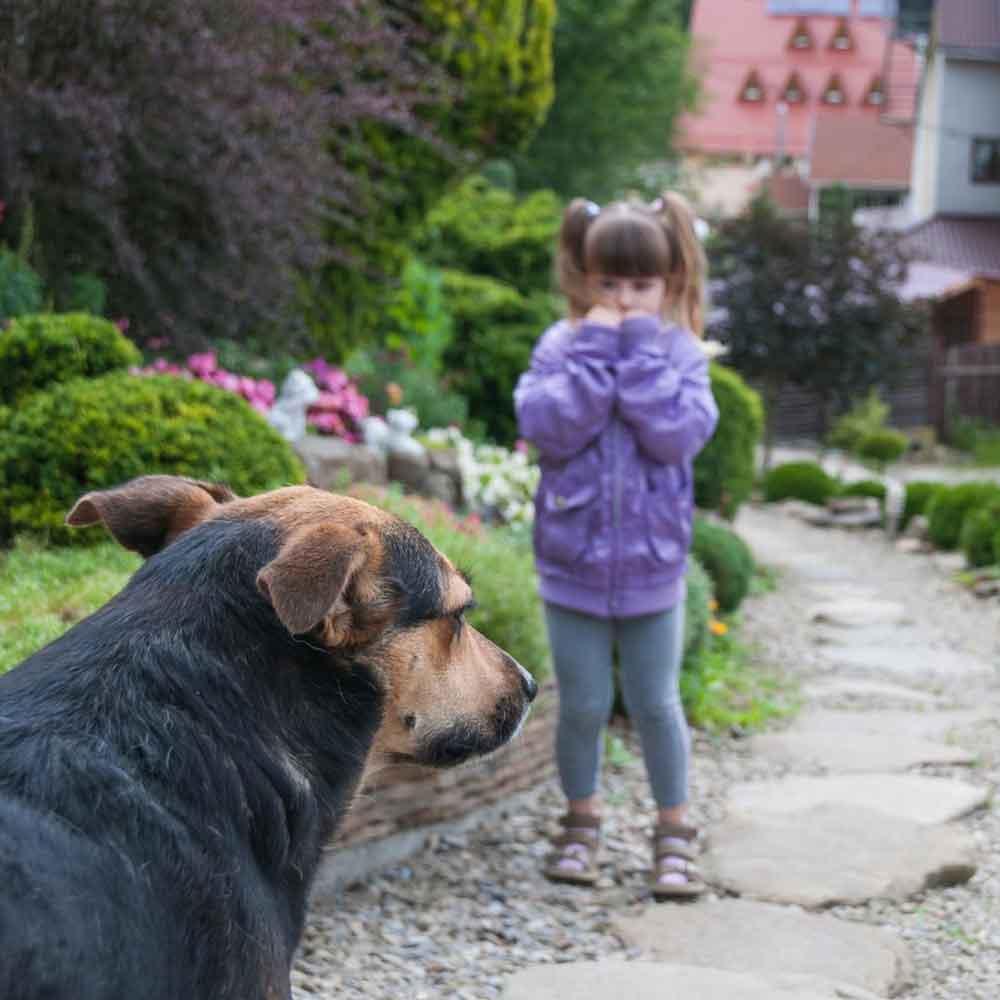
Research suggests that its origins are not always straightforward. In their study of fear of dogs in adults and children, Sharon Doogan and Glyn Thomas found that fearful and non-fearful groups did not differ overall in how frequently they reported attacks. Fearful adults more often recalled having had little contact with dogs before their fear began. These were questionnaire findings, not a universal explanation, but they complicate the idea that a frightening encounter inevitably produces a lifelong fear.
There is no single story that everyone must be able to tell.
And not remembering a beginning does not make the feeling in the present less real.
What can make the experience lonelier is the expectation that affection should be contagious. Someone loves their dog so completely that they assume meeting it will settle the matter. Look at its face. Look how small it is. Look how excited it is to see you.
But excitement still moves towards you. Small animals still move unexpectedly. Being told that a dog wants to play does not necessarily make someone comfortable with being approached.
To the owner, the movement may be familiar and affectionate. To the frightened visitor, it may simply be difficult to predict.
The gap between those interpretations is where reassurance sometimes fails.
There is also an awkwardness in being the person who needs accommodation. Asking a friend to keep their dog in another room can feel like asking them to temporarily put away something they love. That is not the intention. The request is not a judgement of the animal, or of the person who cares for it.
It is an attempt to stay.
Without that small arrangement, the visit may become less about enjoying someone’s company and more about monitoring every movement nearby.
At the same time, fear should not require us to describe dogs as villains. A stray dog on a Sri Lankan street is not automatically aggressive, just as an unfamiliar dog is not automatically safe to approach. Ordinary caution has a place. Learning to manage a phobia does not mean abandoning sensible boundaries around animals.
Compassion does not require physical closeness. It is possible to want an animal treated kindly while also wanting some distance between you.
Still, there is a difficult part to acknowledge: avoiding every safe encounter can help keep a fear in place. The immediate relief of getting away may leave little opportunity to discover that a situation could have been manageable. This is one reason treatment often involves gradually approaching feared situations with professional support.
That is not an invitation for a well-meaning friend to bring a dog closer while insisting that nothing bad will happen.
Surprising someone is not the same as helping them.
Exposure therapy can involve agreed, manageable steps with a trained professional, sometimes beginning with pictures or videos before carefully planned encounters with a suitable, controlled dog. Cognitive behavioural therapy can also help people work with the thoughts and responses surrounding their fear. It is not a test of how much distress someone can endure to prove that they are trying.
The goal need not be to become the person who stops to greet every dog.
It might simply be having more choice.
Being able to visit a friend without spending the afternoon bracing yourself. Walking somewhere without fear making every decision. Letting an ordinary moment remain ordinary.
I cannot offer a beautiful ending in which I suddenly stop hiding behind my friends and discover that I was a dog person all along. That would be a convenient conclusion, but it would not be an honest one.

For now, the fear is still part of my experience.
What I can say is that it deserves to be understood without becoming my entire identity. A frightened person is not necessarily unkind. A boundary is not an insult. And a fear does not have to make sense to everyone in the room before someone takes it seriously.
Perhaps the most helpful response begins there.
Not with another promise about what the dog will not do.
But with a little patience for what the person cannot yet do.