Germany’s Political Earthquake: The AfD’s Historic Victory and What It Means for Europe
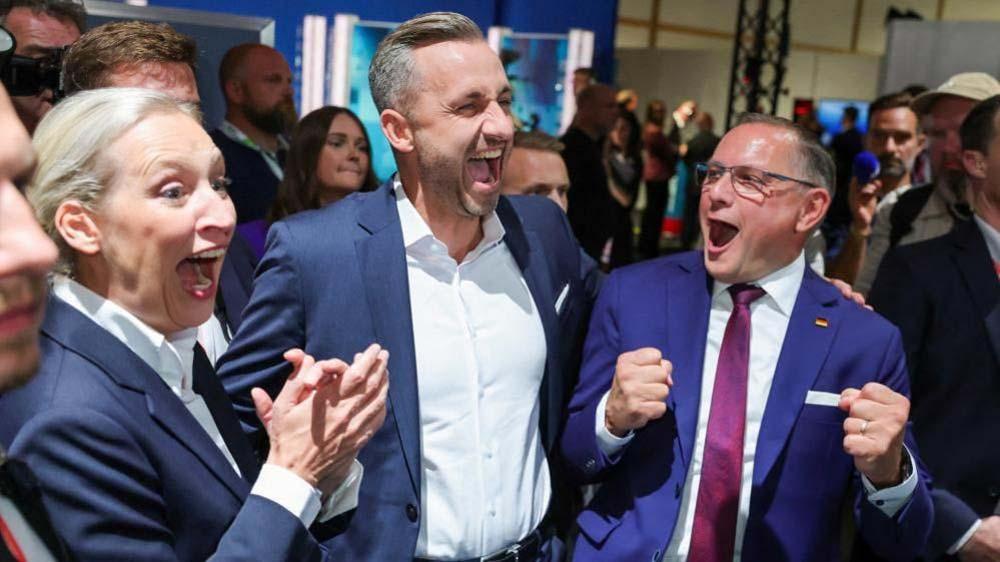
Germany’s political landscape shifted dramatically on Sunday (6th September) as the Alternative for Germany swept to a historic victory in the eastern state of Saxony Anhalt, delivering the strongest performance the party has ever achieved in a German state election. The result carries significance far beyond the borders of a state of just over two million people. The Alternative für Deutschland, better known as the AfD, has spent much of its thirteen-year existence challenging Germany’s political establishment from opposition. Now, after capturing about 45 percent of the vote in Saxony Anhalt, it is confronting an entirely different question.
At the time of writing late on Sunday evening, with most ballots counted, the scale of the AfD’s victory was already unmistakable. Official figures from the state election authority put the party on 44.8% of the second vote, while Chancellor Friedrich Merz’s Christian Democratic Union trailed far behind on just 16.8%. Although the count was still under way and the figures had yet to become the official preliminary final result, there was no longer any doubt about the winner.
The magnitude of the political shift was extraordinary. The AfD had more than doubled its 20.8% share of the vote from the 2021 state election. The CDU, by contrast, had fallen dramatically from the 37.1% it secured five years earlier to less than half that level. The result represents far more than a change of government fortunes in one eastern German state. It is a potentially significant moment for German politics, demonstrating the extent to which the country’s traditional political order is being challenged. Its implications also reach beyond Germany. At a time when nationalist and populist parties have been gaining influence across parts of Europe, the AfD’s breakthrough in Saxony Anhalt adds another powerful example of how rapidly the continent’s political landscape is changing.
FROM PROTEST MOVEMENT TO POLITICAL POWERHOUSE
The AfD was founded in 2013, initially as a Eurosceptic movement dominated by opposition to the euro and Germany’s involvement in European financial bailouts. It did not remain that party for long. Immigration, national identity and dissatisfaction with Germany’s political establishment gradually moved to the centre of its appeal, particularly following the migration crisis of 2015 and 2016. Today, the AfD combines hardline immigration policies with German nationalism, social conservatism, opposition to much of the country’s climate agenda, hostility towards further European integration and a markedly different approach to Russia and Ukraine from Germany’s mainstream parties. It is widely described as far right. The AfD rejects that characterisation and portrays itself as a patriotic, democratic and conservative alternative to a political establishment it argues has become detached from ordinary Germans. The controversy surrounding the party is particularly intense in Saxony Anhalt. The state branch has been classified as a confirmed right wing extremist organisation by the regional domestic intelligence agency. The AfD disputes such classifications and accuses Germany’s institutions of attempting to politically marginalise it. None of that prevented hundreds of thousands of voters from supporting it on Sunday.
THE FACES OF THE AFD
At national level, the party is led jointly by Alice Weidel and Tino Chrupalla, who were returned as its federal leaders at the AfD congress in Erfurt in July 2026 Weidel has become the AfD’s most internationally recognisable politician. Born in 1979, she is a trained economist with a doctorate and has been a member of the Bundestag since 2017. She became one of the AfD’s national leaders in 2022 and was the party’s candidate for chancellor in Germany’s 2025 federal election. Her political style combines economic criticism of the German government with uncompromising attacks on immigration policy, bureaucracy and the political establishment.
Chrupalla represents a somewhat different political background. Born in 1975 in eastern Germany, he trained as a master painter before entering national politics. He has been an AfD national leader since 2019 and, like Weidel, has served in the Bundestag since 2017. He has been particularly associated with the AfD’s strong eastern German identity and with arguments for a less confrontational German relationship with Russia. But the man at the centre of Sunday’s extraordinary result was neither Weidel nor Chrupalla.
It was Ulrich Siegmund. The 35-year-old AfD politician was the party’s candidate to become minister president of Saxony Anhalt. His campaign blended familiar AfD themes on immigration and national identity with promises of sweeping changes to schools, cultural institutions, policing and state administration. After the scale of the result became apparent, Siegmund presented the victory not simply as a regional success but as part of the AfD’s journey towards national government. That ambition is no longer easily dismissed. The AfD finished second in Germany’s 2025 federal election. Its latest success demonstrates just how deeply the party has established itself in parts of eastern Germany.
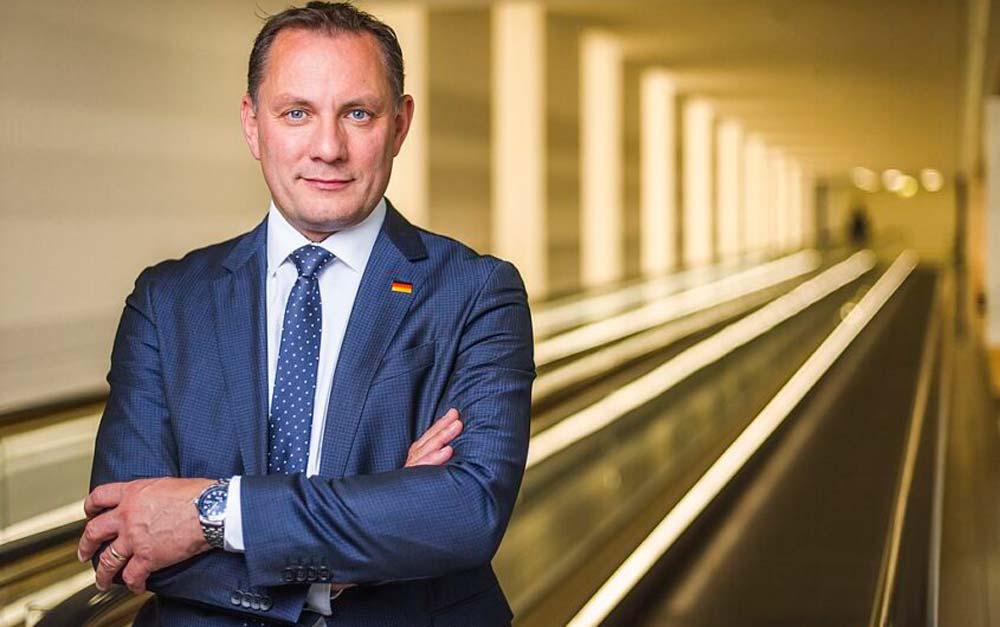
Tino Chrupalla
IMMIGRATION AT THE HEART OF THE AFD PROGRAMME
No issue has defined the modern AfD more powerfully than immigration. The party wants much tighter control of Germany’s borders, stricter asylum policies and a substantial increase in deportations of foreign nationals who do not have a legal right to remain in the country. The AfD frequently uses the politically explosive term “remigration.” The party says the concept refers to the lawful return of foreign nationals who are required to leave Germany, including rejected asylum seekers and people whose protection status has expired. Critics fear that the concept could be interpreted more broadly by elements of the party and argue that some AfD rhetoric about migration threatens the position of minorities and Germans with immigrant backgrounds. In Saxony Anhalt, immigration policy was among the most uncompromising parts of the AfD campaign. Siegmund’s programme proposed an intensified deportation campaign and policies designed to reduce the attractiveness of the state to asylum seekers. It also proposed significant changes to the treatment of refugees within the education system. For supporters, these proposals represent the restoration of border control and the enforcement of immigration law. For opponents, they represent something considerably more troubling. That divide goes to the heart of the battle over the AfD itself.
A VERY DIFFERENT VISION OF GERMANY
The party’s challenge to the political consensus extends far beyond immigration. The AfD remains deeply Eurosceptic. It opposes further transfers of sovereignty from Germany to European institutions and favours a Europe in which nation states reclaim considerably greater control over their own affairs. Its historical opposition to the euro also remains important. That makes the AfD’s rise relevant not only to Berlin but to Brussels. Germany is Europe’s largest economy and has traditionally been one of the central forces behind deeper European integration. A future German government containing a powerful AfD would potentially alter debates over European integration, migration, climate policy and relations with Russia. Russia is one of the clearest areas of disagreement. The AfD generally favours restoring closer relations with Moscow, opposes sanctions and has criticised German military assistance for Ukraine. The Saxony Anhalt campaign went further. The party proposed closer cultural relations with Russia and a greater role for Russian language education. Such policies place the AfD sharply at odds with the foreign policy establishment in Berlin and with much of the European Union.
CHALLENGING GERMANY’S CLIMATE AGENDA
Energy is another battlefield. Germany has spent years pursuing its Energiewende, the transformation of its energy system towards renewable sources. The AfD argues that the policy has imposed excessive costs on German households and industry while weakening the competitiveness of Europe’s largest economy. It favours nuclear energy and opposes many restrictions associated with Germany’s climate policies. In Saxony Anhalt, the party proposed stopping the construction of new wind farms. This message has found an audience in regions where voters worry about energy costs, industrial decline and the future of manufacturing. The AfD presents climate and energy policy as part of a wider argument that Germany’s political establishment has prioritised ideological objectives over economic prosperity. Its opponents argue that abandoning renewable energy expansion would leave Germany further behind in the global transition towards low carbon technologies.
SCHOOLS, FAMILIES AND GERMAN IDENTITY
Perhaps some of the most striking proposals in Saxony Anhalt concerned education and culture. The AfD wants schools to place considerably greater emphasis on German history, culture and national identity. Its programme proposed displaying the German flag at schools and singing the national anthem at school celebrations. It also called for restrictions on rainbow flags and proposed separate educational arrangements for some refugee children. The party promotes the traditional family as a central institution of society and argues that Germany should confront its demographic decline by making it financially easier for families to have children rather than relying heavily on immigration. These policies illustrate why the AfD inspires both intense loyalty and intense opposition. Supporters see a party willing to defend national identity, traditional values and social order. Critics see an increasingly exclusionary political movement challenging the liberal principles that have shaped Germany since the Second World War.
WHY DID SO MANY PEOPLE VOTE AFD?
Reducing Sunday’s result to immigration alone would miss a much larger political story. Voters in Saxony Anhalt cited declining confidence in established political parties, social security, economic conditions and migration among their major concerns. The state is part of the former communist East Germany, where economic and political grievances have persisted more than three decades after reunification. Many eastern Germans believe their experiences and concerns receive insufficient attention from the political establishment in Berlin. The AfD has become exceptionally effective at turning that dissatisfaction into votes. Sunday’s result also reflected broader frustration with the federal government. For voters who believe mainstream parties have failed on migration, energy prices, economic growth or relations with Russia, the AfD increasingly offers something more powerful than a protest vote. It offers the possibility of replacing the political establishment altogether.
A HUMILIATION FOR FRIEDRICH MERZ
The result is particularly painful for Chancellor Friedrich Merz and his CDU. Saxony Anhalt had been a CDU stronghold. Five years ago, the party won 37.1% of the vote. On Sunday evening it stood at only 16.8% in the official intermediate count. The scale of that collapse transforms the election into a national problem for Merz. His conservatives have attempted to counter the AfD while maintaining a strict refusal to govern with it. That policy is known in Germany as the Brandmauer, or firewall. For years, the principle was straightforward. Even if the AfD became the largest party, every other major party would refuse to form a coalition with it. Saxony Anhalt exposes the mathematical weakness of that strategy. A firewall can isolate a party with 20 or 25% of the vote. It becomes much harder when that party approaches 45%.
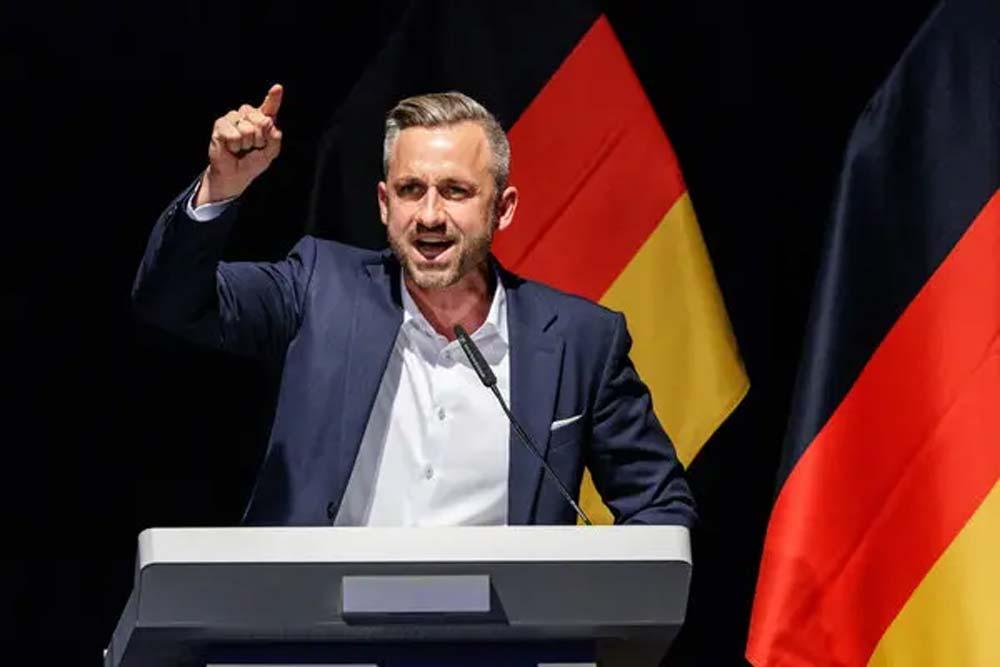
Ulrich Siegmund
WHY THE WORLD SHOULD PAY ATTENTION
Saxony Anhalt is not Germany. It contains only a small fraction of the country’s population, and the AfD has historically performed far better in eastern Germany than in many western states. But dismissing the result as a regional curiosity would be a mistake. Germany is the European Union’s largest economy, its most populous member state and one of the central political powers on the continent. The AfD questions important elements of the consensus that has shaped German policy for decades.
- It wants dramatically tighter immigration controls.
- It challenges the direction of European integration.
- It favours a different relationship with Russia.
- It opposes much of Germany’s climate and energy programme.
- It promotes a more explicitly nationalist conception of German identity.
And now it has demonstrated that such a programme can attract almost half the electorate in a German state.
THE QUESTION GERMANY CAN NO LONGER AVOID
For much of the AfD’s history, German politics revolved around a relatively simple question. How could the established parties contain it? After 6th September 2026, the question is changing. What happens if they cannot? The AfD has travelled an extraordinary distance since its creation in 2013. What began as a Eurosceptic protest movement has evolved into a nationalist political force capable of dominating an election in an eastern German state. Its opponents regard that development as one of the greatest challenges facing Germany’s postwar democracy. Its supporters regard it as evidence that voters are finally overturning a political system that has ignored them for too long. The final composition of the Saxony Anhalt parliament will determine whether Ulrich Siegmund can convert Sunday’s extraordinary electoral victory into political power. But one conclusion is already unavoidable. The AfD is no longer a party that Germany can treat simply as a movement on the political margins. On 6th of September, it won about 45% of the vote in a German state and left Chancellor Merz’s conservatives trailing far behind. Whether it enters government or remains isolated by the firewall, the political earthquake has already happened. The aftershocks will be felt far beyond Saxony Anhalt.
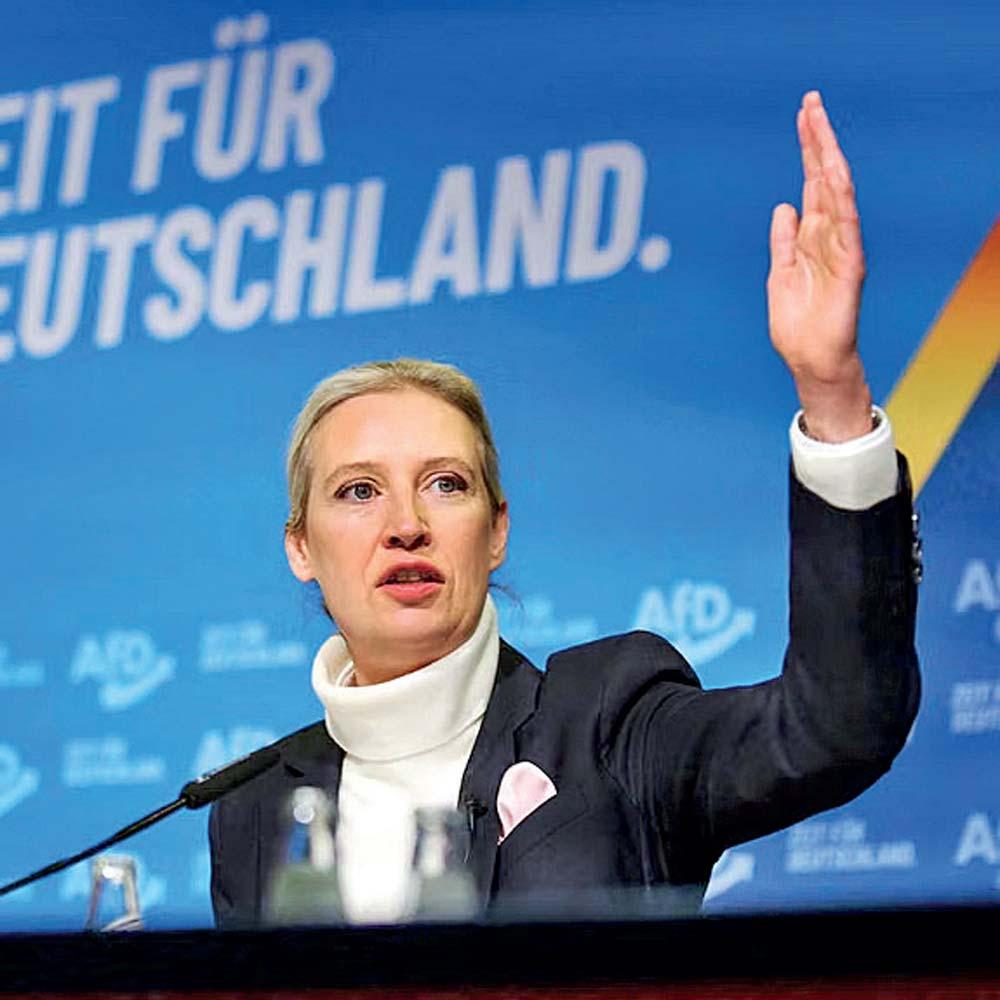
Alice Weidel