Athnan Cassim: From Pottuvil to Purpose
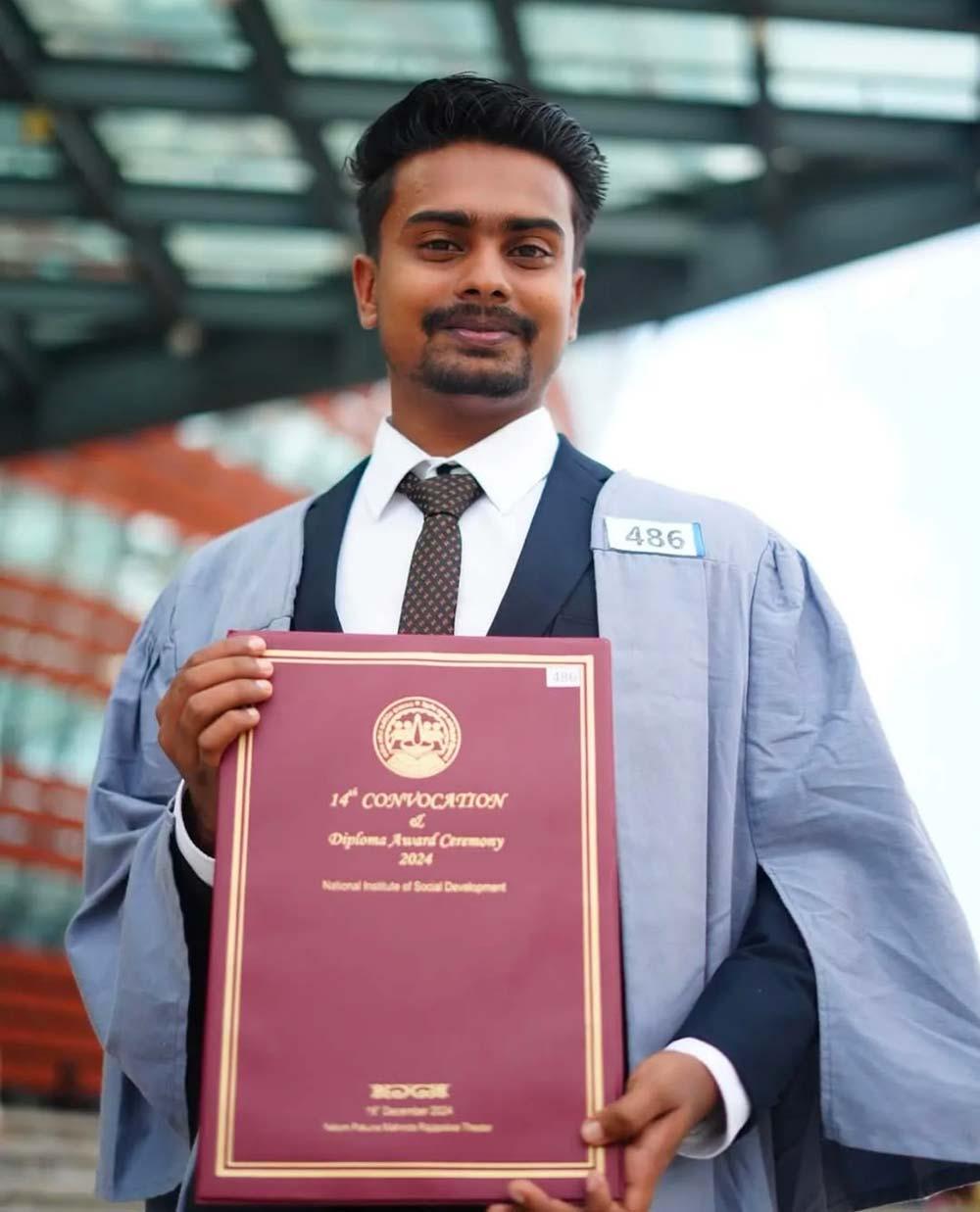

Growing up in the coastal town of Pottuvil, Athnan Cassim’s journey is one shaped by quiet resilience, disciplined ambition, and an unwavering belief in the power of education. Raised in a community where tradition often defined one’s path, he chose instead to question, adapt, and carve out a direction of his own. His story is not simply one of personal success, but of transformation through perspective. From limited school resources and language barriers to navigating life in Colombo and building a career in the aviation industry, each chapter of his life reflects persistence and self-belief. Today, Athnan channels those experiences into mentoring young people who face challenges similar to his own, helping them see possibilities beyond their immediate surroundings. In this conversation, he reflects on his upbringing, the choices that defined him, and the responsibility he feels to uplift the next generation.
Can you take us back to your childhood in Pottuvil. What was home life like growing up in an isolated coastal area?
Growing up in Pottuvil, I was raised in a simple, yet supportive environment shaped by strong community values. Although geographically isolated, the area produced many successful individuals, showing us the importance of education early on. My father, a farmer, strongly encouraged me to study and aim higher despite his demanding work. That support shaped my ambitions and mindset. I grew up in a disciplined setting where hard work and perseverance were valued. These experiences taught me humility and resilience, and helped me understand that regardless of one’s background, education can create opportunities and open doors to a better, more fulfilling future.
What were some of the biggest struggles your family faced, and how did those experiences shape your mindset?
Growing up, I faced the challenge of navigating a community rooted in traditional education and career paths, where high achieving students were expected to pursue science streams and secure government jobs. Despite strong O Level results, I chose the Arts stream and later a non-state pathway into the corporate sector, decisions that were often questioned. I responded with patience and respect, understanding these views came from familiarity. These experiences shaped my mindset, teaching me independent thinking, courage, and accountability. They reinforced my belief that while tradition offers stability, true growth requires openness to change, new opportunities, and the confidence to follow one’s own path.
How did limited access to school resources and opportunities affect your early ambitions?
Limited access to school resources significantly shaped my early ambitions. Although I was interested in biological sciences, shortages of teachers, lab facilities, and infrastructure made it difficult to pursue that path fully. Opportunities were limited, so our goals were often defined by what was available rather than what was possible. This changed when I moved to Colombo and met peers with greater exposure to academics, sports, and extracurricular activities. I realized how access influences confidence and direction. Instead of seeing my limitations as setbacks, I began to view them as motivation to adapt, seek opportunities, and believe that with the right support, anyone can achieve their potential.
Moving to Colombo must have been overwhelming. What were the hardest personal challenges you faced during that transition?
Moving to Colombo marked a major shift from dependence to independence, requiring me to take full responsibility for my education, career, and personal growth while staying grounded in my values. Language barriers were an early challenge, as I had to quickly adapt to English and Sinhala. I also navigated a traditional system while pursuing non-traditional pathways in a non-state university. Adjusting to city life brought cultural and financial responsibilities, strengthening my resilience and decision making. I share my journey with my community to show that it is possible to embrace new opportunities while remaining connected to one’s roots and traditions.
How did language barriers impact your confidence and daily life when you first arrived in Colombo?
When I first arrived in Colombo, language barriers were a major challenge. Having studied in my mother tongue, I struggled with English and the national language, making daily interactions and academic work intimidating. This affected my confidence, and I often hesitated to speak or engage socially. Building connections was also difficult. However, I treated these challenges as opportunities to grow. I focused on improving my language skills, sought guidance, and practiced consistently. Over time, my confidence increased alongside my ability to communicate. These early struggles became a turning point, teaching me persistence, adaptability, and the importance of communication in personal and professional development.
Was there a specific moment when you almost gave up. What kept you going?
After completing my internship in the aviation industry, I faced over a year of uncertainty, applying for many corporate roles with limited success. Some offers did not meet the cost of living in Colombo, while others did not align with my goals.
I considered working abroad for financial stability but chose to stay committed to building a career locally. I trusted my skills and the effort I had invested in my development. Through persistence and consistency, I eventually secured a role in the aviation industry. This period taught me that success requires patience, resilience, and belief in yourself, even when opportunities seem limited.
How did your family influence your resilience and determination to succeed?
My family played a pivotal role in shaping my resilience and determination. After my A’Level results, they placed full trust in my decisions and gradually stopped seeking advice from traditional guides in our hometown. This shift allowed me to take ownership of my path, from choosing my field of study to pursuing a career outside conventional expectations. Whenever I made a decision, they supported me financially and emotionally, always encouraging me with words like you can do this, we believe in you. That unwavering trust and motivation gave me the confidence to face challenges head on, make independent choices, and remain persistent even when the path was uncertain. Their support taught me that resilience is not just about overcoming obstacles alone. It also comes from having a strong foundation of encouragement, trust, and belief in one’s potential. It is this combination of self-belief and family backing that continues to drive me forward today.
What inspired you to start helping other students who were facing similar struggles?
Meeting Dr. Sulochana Segera inspired me to support students facing challenges like mine. I was struck by how her vision and work, especially in promoting women in management, created meaningful change. Reflecting on my own journey and opportunities through New Generation Sri Lanka, I realized even small efforts can have a lasting impact. This motivated me to introduce mentorship, career guidance, and support for students in my hometown, particularly those facing language and resource barriers. I believe that even simple guidance can transform a life, just as others’ support shaped mine, and this continues to drive my commitment to empowering the next generation.
Can you share a story of a young person you have helped and how it impacted you personally?
One story that stands out is a young woman I mentored who studied Biological Science without a clear direction. While she considered traditional paths, I encouraged her to explore cyber and software engineering, highlighting its growth and opportunities. With guidance, she moved to Colombo, enrolled in a non-state university, and embraced a new path. Today, she is in her final year, has completed her internship, and works at a leading company while studying. Her journey showed me how small support can create lasting impact. Seeing her growth and confidence continues to inspire me to mentor others and help shape future success stories.
Looking back, how have your struggles shaped the way you mentor and connect with youth today?
Looking back, my struggles have shaped how I mentor and connect with young people today. Many face challenges I once experienced, including language barriers, limited resources, and pressure to follow traditional paths. This allows me to approach them with empathy and understanding. I draw on real experiences, both my own and others’, to offer practical, achievable guidance. This shared perspective helps build trust and open conversations. Young people feel encouraged to explore new possibilities and think independently. For me, mentoring goes beyond advice. It is about building confidence, encouraging independence, and showing that even small support can create meaningful, lasting impact.
RAPID FIRE
- One word that describes your childhood? Resilient
- Biggest fear you overcame? Fear of failure
- One person who changed your life? Ash Sheikh Imthiaz Naleemi
- A habit that helped you succeed? Reading books
- Your biggest failure? Work life balance
- One message to struggling youth? Your current situation is not your destination, keep moving, even if it’s slow!
- Comfort food from home? Biriyani
- A place that feels like home? Jamiah Naleemiah
- Dream for your hometown? To empower youth through education and mentorship so that talent is not limited by geography.
- What keeps you going on tough days? Belief in myself, family support, and the vision of making a meaningful impact.