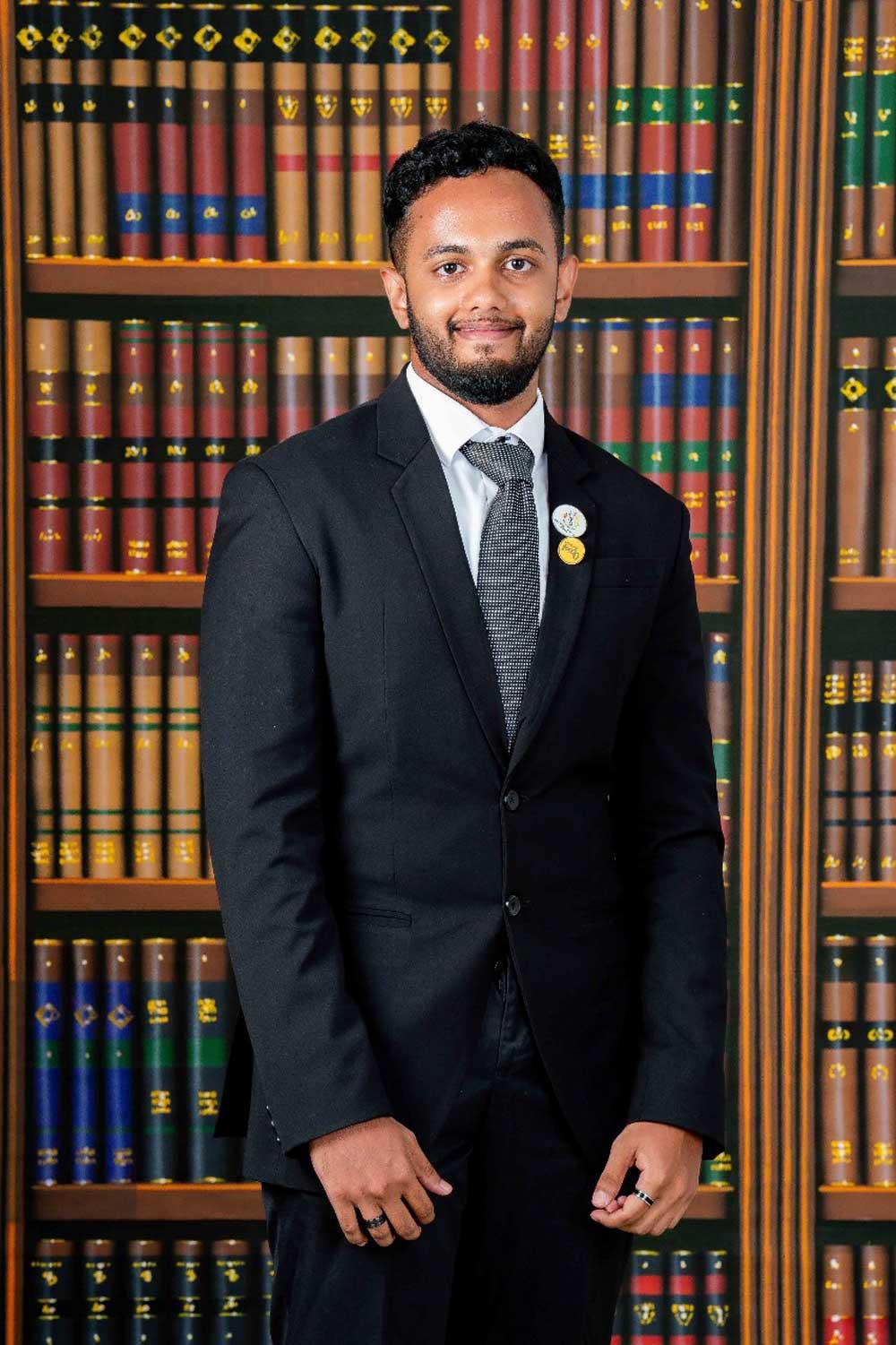
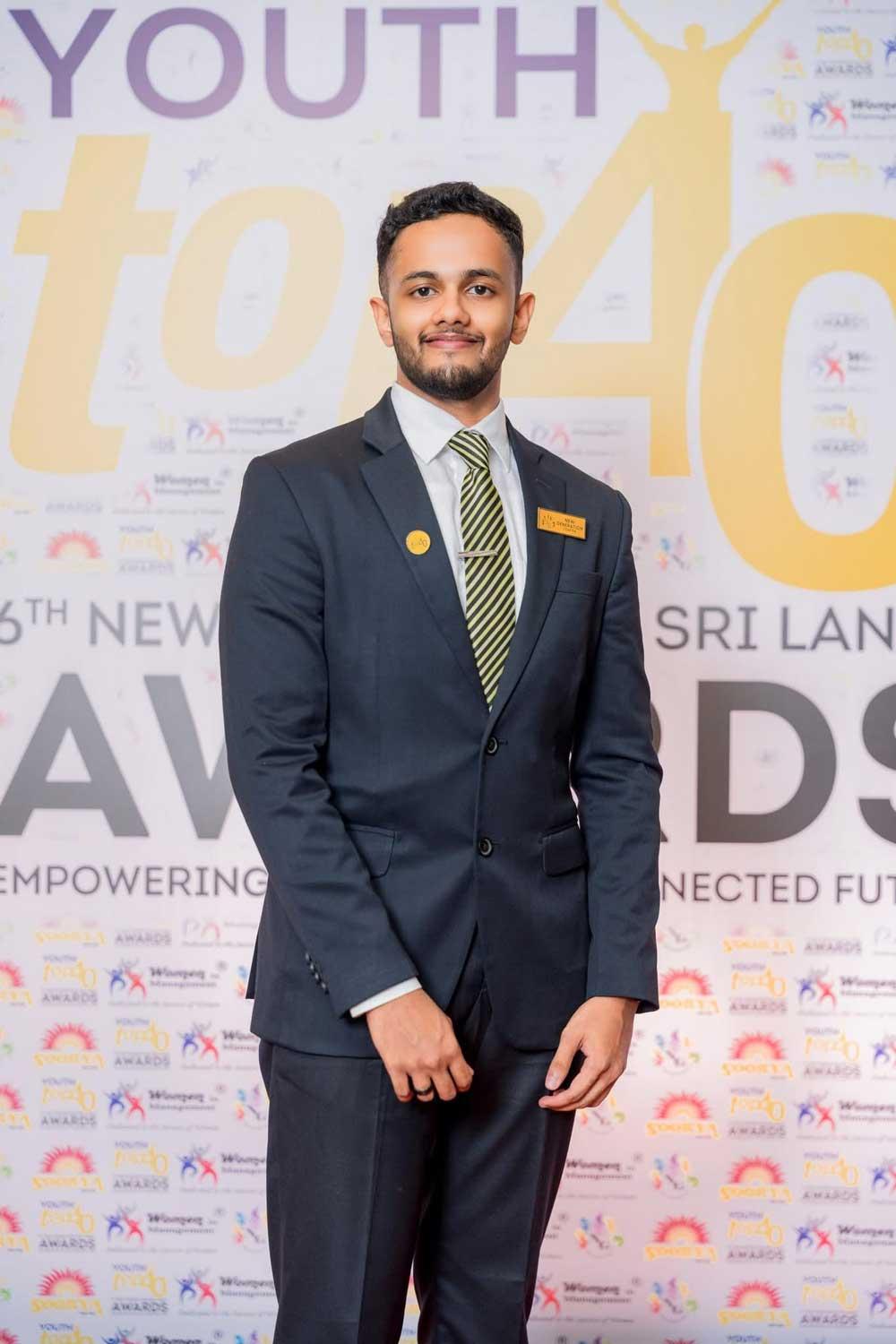
Zaidh Shafraz: Driven by Data, Defined by Discipline

Zaidh Shafraz represents a new generation of Sri Lankan talent turning passion into impact. Starting his career at just 17, he quickly learned that success goes beyond technical skill—it demands discipline, adaptability, and consistency.
Now working in data science, Zaidh has gained experience with organizations like Dialog, Ikman, and ARC Document Solutions, where he built systems from the ground up as a Data Research Specialist. His work reflects a strong ability to transform data into meaningful insights.
Alongside his corporate career, he founded Modern Academy, connecting students with quality education while creating opportunities for local tutors globally.
His message to youth is simple: start early, stay consistent, and play the long game—because real success is built over time.
1. Can you tell us about your journey into data science and what inspired you to pursue this field?
My journey into data science began with a genuine curiosity about how technology can be used to solve real-world problems. I have always enjoyed working with numbers, logic, and structured systems, and even during my school years I noticed a strong ability to handle complex mathematical concepts while applying effective coding logic.
As I observed global technological trends and future career prospects around 2020, I decided to pursue my degree at SLIIT, specializing in Data Science. As I progressed, I quickly realized that data is the foundation behind nearly every major decision in today’s world—whether in business, technology, or innovation.
What inspired me most was the ability to take raw and unstructured information and transform it into meaningful insights that can guide strategy, improve operations, and create real impact. For me, data science is not just about numbers—it is about turning ideas into reality and creating measurable value.
That unique combination of analytical thinking, problem-solving, and technology is what ultimately made me choose this field and continue building my career in it.
2. You’ve worked with major organizations locally and internationally—what has been your biggest learning experience so far?
My biggest learning experience has been realizing that technical skills alone are not enough to succeed in the industry. Working with major organizations taught me that communication, teamwork, professionalism, and the ability to adapt quickly are what truly separate an average employee from a valuable one.
Whether it was working with local teams at Dialog and Ikman or supporting global operations at ARC in the United States, I learned that every organization has its own standards, systems, and work culture. To survive and grow, you must be able to learn fast, stay consistent, and deliver results under pressure.
One of the biggest personal lessons for me was understanding that in a corporate environment, age does not matter—performance does. Being young in the workforce meant I had to be extra disciplined and mature, because I was working alongside senior professionals with years of experience. I learned how to speak confidently, take ownership of tasks, make firm decisions, and handle responsibility without hesitation.
Another major highlight has been the exposure of working with a large-scale US-based company like ARC. Not everyone gets the opportunity to work with international markets and global clients at an early stage of their career, and that experience has broadened my mindset significantly. It pushed me to operate at a higher standard, understand global business expectations, and build a level of professionalism that goes beyond local boundaries.
3. As the first Data Research Specialist at ARC Document Solutions, what challenges did you face stepping into a new role?
Being the first-ever Data Research Specialist at ARC was both exciting and challenging. Since the role was newly introduced, there wasn’t a fixed blueprint or structured workflow already in place. I had to build processes from the ground up, identify existing data gaps, and implement strategies for enrichment, cleanup, and structured database management.
One of the biggest challenges was realizing that even in a large US-based organization, certain areas of data handling were not being managed in the most efficient way. To overcome this, I spent a significant amount of time learning advanced HubSpot features and understanding how the platform could be optimized beyond the standard usage. I then introduced new techniques and more systematic methods for organizing, enriching, and validating data—approaches that were not previously implemented within the team.
Working with foreign markets and global clients also pushed me to operate at a higher standard, improving my professionalism, accuracy, and decision-making under pressure. The scope is endless and the learning top-notch so far. Excited for the projects ahead!
4. How did your time at Dialog Axiata shape your technical and professional skills?
Dialog was a turning point in my career. It exposed me to large-scale enterprise data systems and helped me gain hands-on experience in key areas that are vital for the role of a data engineer. The chance to work on major platform migrations and data tech-stacks really broadened my horizons in terms of learning and growth. Beyond technical knowledge, Dialog taught me how to work in a high-performance environment where data quality, security, and availability are critical. That internship experience made me more confident and industry ready. To this day I always hold onto the words of my supervisor at Dialog, wanted me to stand by, “Anyone can build a pipeline. A real data engineer builds trust in data.”
5. You started working at 17—how did early exposure to the workforce influence your mindset?
Credit for this goes entirely to my father. I still remember how I had just completed my first semester at SLIIT and was looking forward to enjoying a well-earned holiday, when he told me, “I would like to see you apply for an internship — you have so much to learn out there.”
At the time, I wasn’t too excited about waking up at 5 a.m., catching a bus at 7, reaching the office by 8, and returning home close to 7 in the evening. But that routine and struggle eventually became one of the most valuable experiences of my life.
I applied for an opening I came across on LinkedIn — it was my first time using the platform — and just two days later, I received a call from Ikman HR for an interview. Soon after, on the 1st of November 2021, I stepped into what became one of the most career-shaping periods of my life.
Starting work at 17 completely transformed my mindset. It taught me to take responsibility early on and helped me understand the importance of discipline, consistency, and accountability. While many people my age were still figuring out their direction, I was already exposed to corporate expectations, deadlines, teamwork, and professional standards.
That early exposure pushed me to mature faster and develop a stronger work ethic. It also gave me confidence, because I learned that I could perform under pressure and deliver results in a real-world environment. Most importantly, it taught me valuable life lessons about professionalism, people, and the realities of working in a competitive setting—lessons that continue to guide me as I progress in my career.
6. What motivated you to start your own education initiative, Modern Academy?
Teaching initially started as a part-time job for me, mainly as a way to earn some extra income. However, as I continued tutoring, I realized I genuinely enjoyed the process of helping students improve, build confidence, and achieve results. Over time, it became much more than a side hustle, it became a passion.
One of the most rewarding moments for me has always been hearing the excitement in a student’s or parent’s voice when they tell me they secured an A in Mathematics or Computer Science. That sense of impact and pride made me want to expand what I was doing beyond just individual tutoring.
As I gained more experience, I also noticed a major gap in the tutoring industry in Sri Lanka: many highly capable tutors struggled to connect with students in foreign countries, especially in regions like the Middle East. Due to my exposure through international networking tours and the contacts I built along the way, it was easier for me to access those markets. Since this field is largely driven by referrals and word of mouth, I was able to grow my reach steadily, and within a few months I expanded to over 20 students.
Realizing the potential, I decided to take this seriously and build it into something larger. That is what motivated me to start Modern Academy as a private education initiative. My goal was not only to support more students, but also to create opportunities for talented Sri Lankan tutors by connecting them with students overseas.
Today, it has grown into a business but more importantly, it has become a purpose-driven project that allows me to contribute to education while empowering others as well.
7. How do you balance your corporate career with your passion for teaching?
Balancing both requires strong time management and discipline. My corporate career is my professional growth path, while teaching is something I do because I genuinely enjoy it and find it meaningful. I plan my schedule carefully and prioritize tasks based on deadlines and importance.
In the evenings, I dedicate my time to teaching. The key for me is staying organized, being consistent, and always remembering why I started. Tutoring gives me a different kind of satisfaction because I’m directly contributing to a student’s future. As I always say, “Consistency is key.”
Since I work US hours—usually from 8 p.m. to 3 a.m. Sri Lanka time—I’ve naturally become a bit of a night owl. The flexibility is something I truly appreciate. I usually keep things simple: mind my own business, put on a good playlist, and get the work done efficiently.
8. Can you tell us more about your research paper and what impact you hope it will create?
My research paper was part of my final year dissertation at SLIIT which I was given the opportunity to publish at the 9th International Conference on Information Technology Research (ICITR 2024) at the University of Moratuwa. The focus of the research was building a recommender system that identifies negative emotions and suggests personalized activities to help reduce emotional stress. It was part of a study we did amongst our very own batchmates and the need to develop a novel machine learning algorithm for this system. I hope the research contributes towards future mental wellness technologies and encourages the development of systems that use AI not only for business growth, but also for human wellbeing.
9. You’ve been actively involved in youth leadership—how has that shaped your personal growth?
Youth leadership has played a major role in shaping who I am. Being part of New Generation Sri Lanka and serving as Honorary Treasurer taught me responsibility, financial discipline, and how to handle real-world decision-making. I’ve also been involved in sponsorship negotiations, partnerships, and leading international exposure projects like taking a Sri Lankan delegation to Dubai. These experiences helped me grow as a leader, improve my communication skills, and build confidence in working with professionals and organizations at high levels.
Another notable mention is my role as the Treasurer of the Sri Lanka Muslim Civil Society Youth Wing (SLMCS YW), where I manage a similar role while coordinating with multiple youth teams and projects. This role has strengthened my ability to handle responsibility, manage people, and ensure transparency and accountability in financial operations.
I guess you could say I’ve become the “money guy” in both organizations—when it comes to handling finances, they know who to call.
10. What advice would you give young Sri Lankans who want to build a career in tech while pursuing their passions?
My advice would be to start early, stay consistent, and never wait for the “perfect time.” Learn skills that matter, build your knowledge through practical exposure, and don’t be afraid to take small opportunities because they can lead to big growth. Also, never ignore your passions. Whether it’s teaching, sports, or leadership, those passions shaped my personality and built my confidence. Different principles, but same story applies for everyone.
One thing I strongly believe is that success comes from playing the long game. Real growth happens when you focus on continuous improvement every single day, even if progress feels slow. Another important lesson is to surround yourself with people who are smarter than you, because the right environment will push you to think bigger and aim higher.
I also feel that failure is not something to fear, it’s part of the process. If you want to build a strong career, you need to be willing to take risks, learn from mistakes, and adapt quickly.
Most importantly, stay disciplined—because talent without discipline will never reach its full potential. Consistency, patience, and the ability to keep going when motivation fades are what truly create success.
Rapid Fire Questions
One word to describe yourself? Driven.
Dream company to work for? Google.
Coffee or tea? Coffee. It’s basically what fuels my late-night work sessions.
Coding or teaching? Teaching.
Biggest motivation? Growth and impact.
Favorite subject to teach? Mathematics.
Early mornings or late nights? Late nights. Pretty obvious ha-ha.
One skill every student should learn? The mindset of continuous improvement.
Success or happiness? Happiness, a result of my success.
Where do you see yourself in 5 years? Interesting question, I don’t want to set benchmarks, but I see myself as a well-established data professional working in a global environment, leading impactful projects in data engineering and data strategy. I hope to grow into a role where I can lead international teams, collaborate across markets, and travel the world through work while continuously sharpening my expertise and becoming someone, others look up to in the field.
At the same time, I aim to expand Modern Academy into a larger platform that supports students and creates more opportunities for Sri Lankan tutors internationally. Most importantly, I want to keep contributing to my community through volunteering and meaningful initiatives, because success feels incomplete if you’re not giving back.