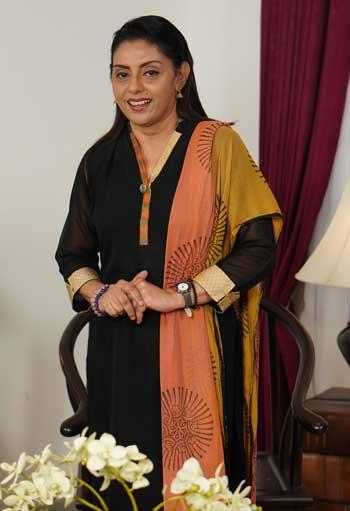
Featuring: Yashoda Wimaladharma
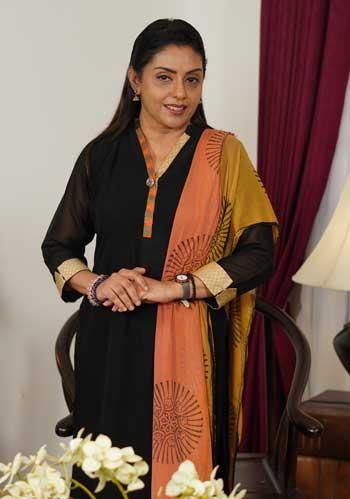 In this special episode of Fame Game, hosted by Kumar de Silva and Rozanne Diasz, the spotlight falls on one of Sri Lanka’s most respected and enduring actresses, Yashoda Wimaladharma. With a career spanning four decades, Yashoda reflects on her beginnings, personal struggles, industry insights, and the evolving landscape of television and cinema. What unfolds is an honest, emotional, and inspiring conversation that captures both the artist and the individual behind the fame.
Q: Yashoda, it is a pleasure to have you on the show. Let us begin with your journey. How did it all start?
Thank you for having me. I am happy to say this is my 40th year in the industry. I started acting as a teenager in 1995. At that time, I was a very shy and reserved girl. I did not participate in school plays or extracurricular activities, except being a Girl Guide. Acting was never something I actively pursued. It was my uncle, Bandula Vithanage, who offered me my first role. I initially refused because I did not believe I could act. However, my father encouraged me to try, saying he believed I had potential. That was the turning point.
Q: You mentioned being shy. Do you think that part of you still exists today?
Yes, absolutely. That shy child is still within me. I enjoy my own company and tend to be reserved. However, when I face the camera, I transform into someone else entirely. That transformation fascinated me from the very beginning. My uncle taught me that acting is about becoming another person and forgetting yourself completely. That concept has stayed with me throughout my career.
Q: Your first performance seems to have had a strong emotional impact on you. Can you tell us about it?
Yes, it did. My first role involved a storyline about a friendship affected by ethnic tensions. I had to portray deep emotion, especially in a parting scene. I did not know acting techniques, but I genuinely felt the emotion and cried naturally. That experience made me realize that I may have an innate ability for acting. It motivated me to continue in this field.
Q: You have also done some modelling. Was that ever a serious career path for you?
Not really. I did some modelling work such as paper shoots and a few ramp shows, but it was never my focus. Acting was always my passion. Modelling was something I did occasionally, mainly to support designers, but I never pursued it professionally.
Q: You have also worked internationally. Could you share more about that experience?
Yes, I began international work quite early. My first international project was a Malayalam film in 1991, followed by a French film in 1993. Over the years, I have acted in seven international films. Unfortunately, many of these projects were not widely publicized due to the lack of social media at the time. The most recent one was a television series for Abu Dhabi TV, which was partly shot in Sri Lanka and Dubai.
Q: Do you feel that the industry has limited your potential by typecasting you?
Yes, especially in television. I was often placed into a specific type of role. However, films gave me more variety, which helped me break out of that mould. I still believe there is a part of me that has not been fully explored. Directors have not completely utilized my range, and I feel this is a crucial time in my career where I can portray diverse roles, both younger and older characters.
Q: You mentioned not working much in recent years. What is the reason for that?
For the past three years, I have not done much, except for the Abu Dhabi series. The main issue is the lack of investment in artistic films. Producers are more focused on commercial success and financial returns, so they hesitate to fund artistic projects. I have received scripts from talented directors, but they are still searching for investors.
 Q: Would you consider doing commercial roles if offered?
Of course. Interestingly, I was rarely offered such roles. Most of my work has been in artistic cinema. The only commercial project I did was a Malayalam film. I am open to all types of roles, but opportunities matter.
Q: You have played some unique roles, including portraying a corpse. What was that experience like?
Yes, I have done that twice. The first time was quite uncomfortable because the coffin was very narrow. The second time, it was a custom made casket, which was much more comfortable. It is an unusual experience, but as an actor, you adapt to everything.
Q: Harris Wijeyasinghe seems to play an important role in your life. Could you tell us about that relationship?
He is like family, more than family. After my father passed away, he became a guiding figure in my life. He looks after me in every way, from ensuring I eat properly to supporting me emotionally. During difficult times, such as when my mother was unwell, he even cooked and sent food for me. I am truly blessed to have him in my life.
Q: Let us talk about your university life. How did you balance academics and acting?
I entered the University of Kelaniya in 1993. By then, I was already a known actress. However, I wanted to live like a normal student. My father, who was a lecturer, encouraged me to attend university because he believed it would help me grow artistically. Balancing both was challenging, but I managed.
Q: You went through a difficult period during your university years. Would you like to share that?
Yes, it was a very painful time. I was subjected to ragging, particularly in the Humanities section. It was a result of the social and political unrest at the time. My father was deeply affected by what I went through. He felt responsible and suffered greatly, which eventually led to his illness and passing. It was a huge loss, not only for me but for the nation as well.
Q: Do you still feel bitterness about that experience?
I did for a long time. However, as I matured, I began to understand the circumstances that led to it. While I can forgive, I cannot forget. It shaped me as a person and taught me many lessons about life and resilience.
Q: Over your 40-year career, what achievements stand out to you?
The greatest reward is the love and appreciation of the audience. However, I was recognized as the most popular television actress continuously from 1998 to 2002. That record still stands. It was a special time in my career.
Q: Your teledrama Doo Daruwo remains iconic. What made that era special?
That era was very different. Television brought families together. People would gather every Sunday to watch episodes. There were no distractions such as mobile phones or social media. The industry felt like a family, both on and off screen. That connection is missing today.
Q: How do you view the changes in the television industry today?
There have been many changes, and not all of them are positive. The focus has shifted from quality to quantity. In the past, scripts were evaluated and graded before production, ensuring high standards. Today, television is more commercially driven. The storytelling and cultural authenticity have declined.
Q: Is social media to blame for this shift?
Not entirely. Social media is just a platform. The real issue lies in how television channels operate today. They have taken control of content without maintaining proper standards. While social media has changed viewing habits, it is not the root cause of the decline in quality.
Q: Do you think the mindset of actors has changed over time?
Yes, significantly. In the past, actors were driven by passion. Today, many are focused on money and instant fame. They seek quick success and a luxurious lifestyle. That mindset affects the quality of work. Acting requires patience, dedication, and a genuine love for the craft.
Q: Would you accept a role with a low budget if the script is strong?
Definitely. I have done that before. For Thanamalvila Kollek, I accepted a lower payment because the script was exceptional. It is always the story and the character that matter most to me.
Q: Despite the success of that project, you were not nominated for awards. How did you feel?
It was disappointing, especially since the project received multiple awards. However, I believe award systems need improvement. The selection process and the standards of the jury should evolve. Recognition should be fair and truly reflect talent.
Q: Finally, what would you like to see change in the industry?
I would like to see a return to quality storytelling. Scripts should be given priority, and actors should be chosen based on talent rather than popularity. National channels, in particular, have a responsibility to uphold standards and produce meaningful content.
----------------------------------
Yashoda Wimaladharma’s journey is not just about fame, but also about perseverance, integrity, and passion. Her reflections offer valuable insights into the evolution of Sri Lanka’s entertainment industry and the personal sacrifices behind a successful career. Even after 40 years, her dedication to her craft remains unwavering, making her a true example of timeless artistry.