Robes, Smuggling, and Suspicion: The Questions Behind Sri Lanka’s “Monk Cannabis” Case.
By: Giselle Gunewardene
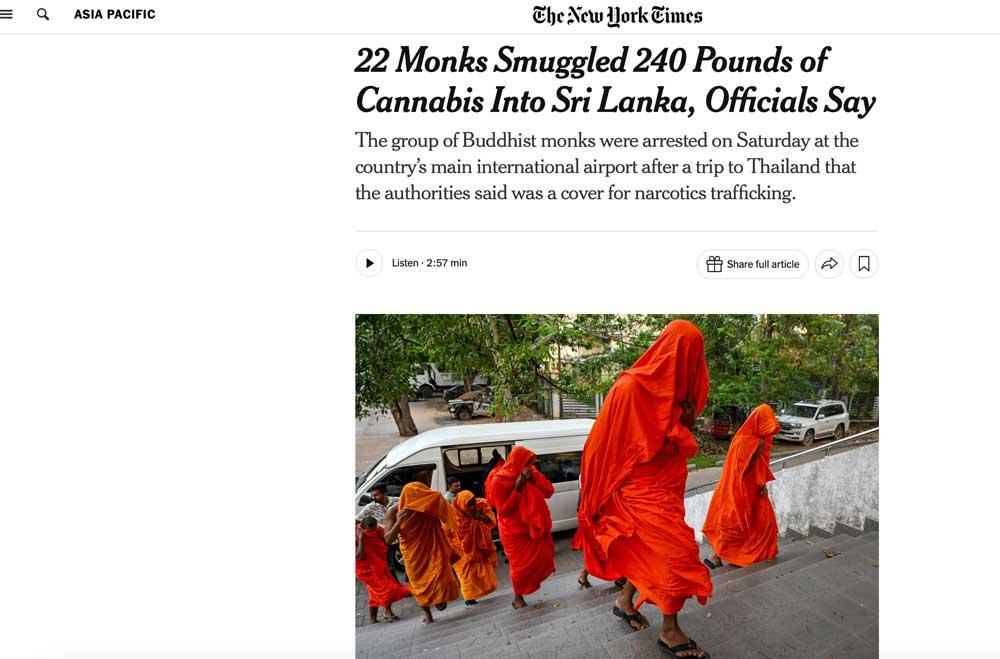
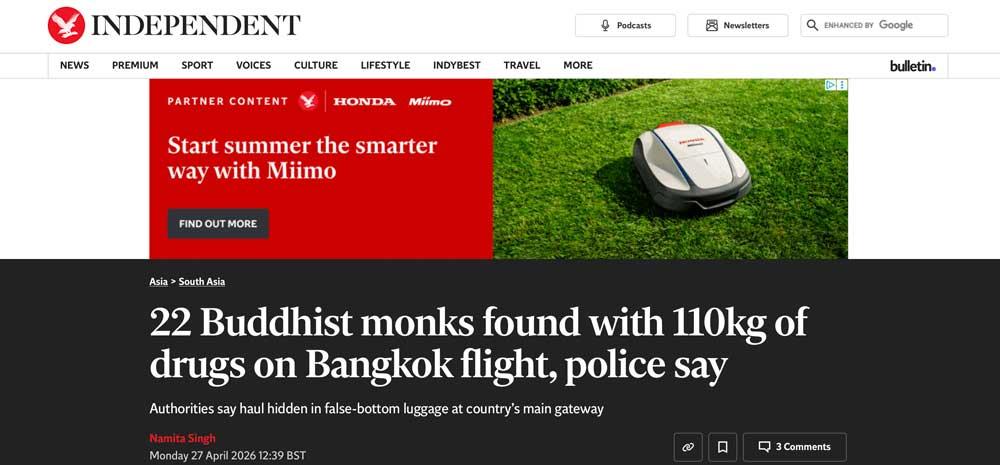
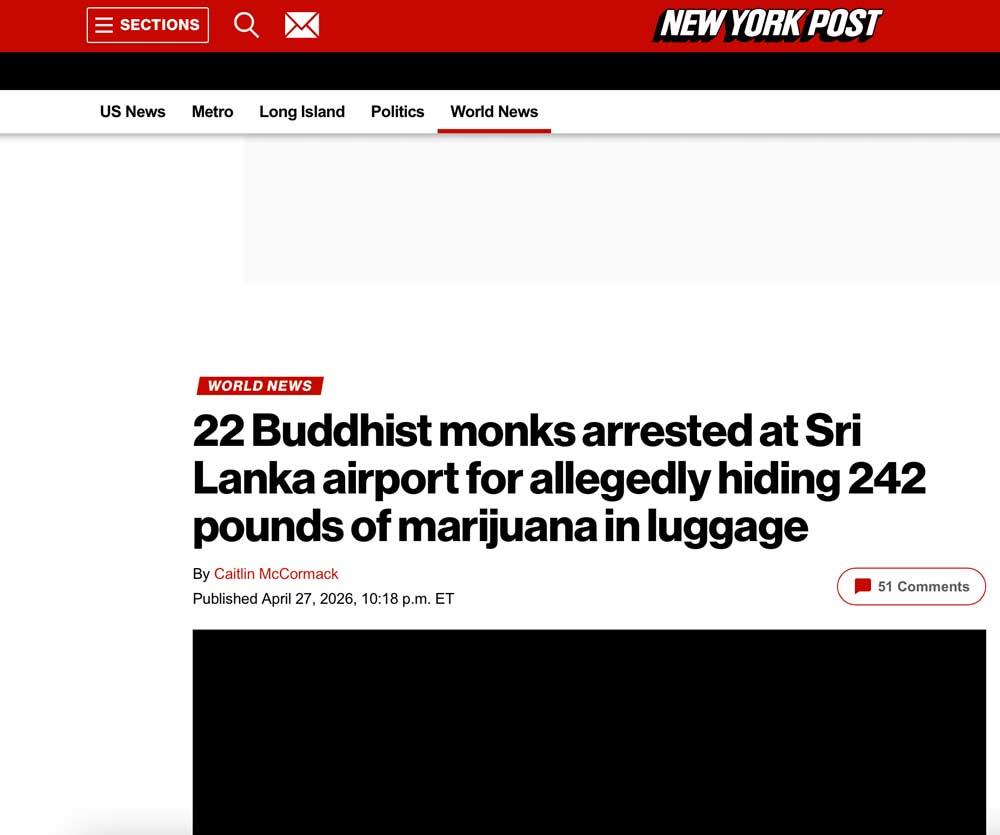
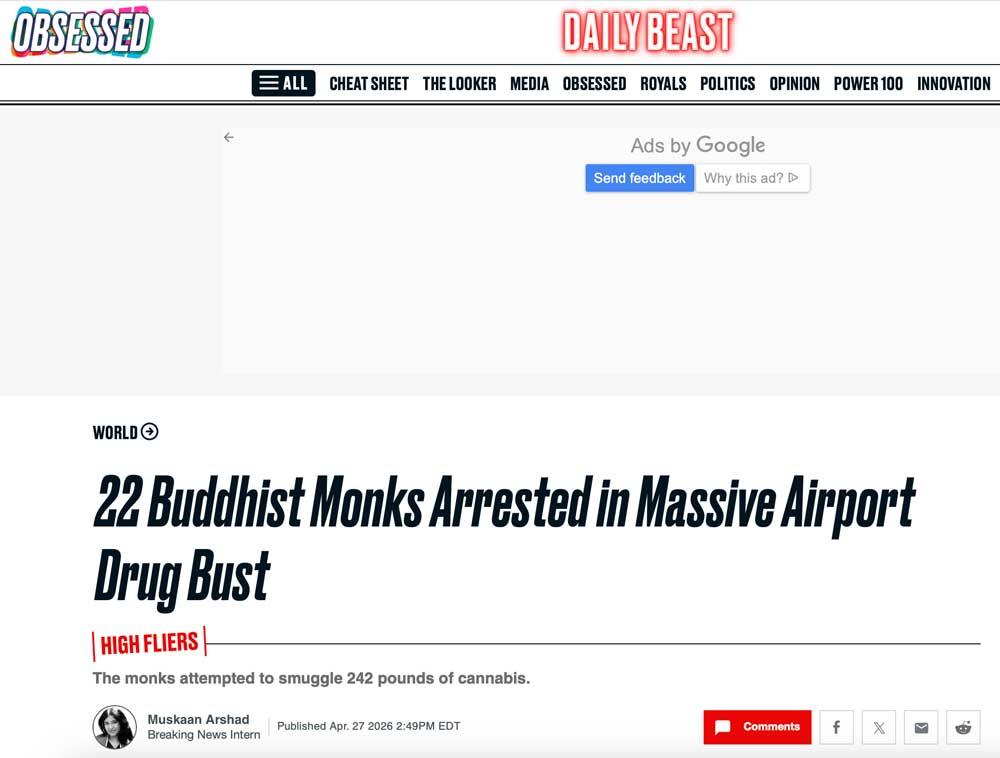
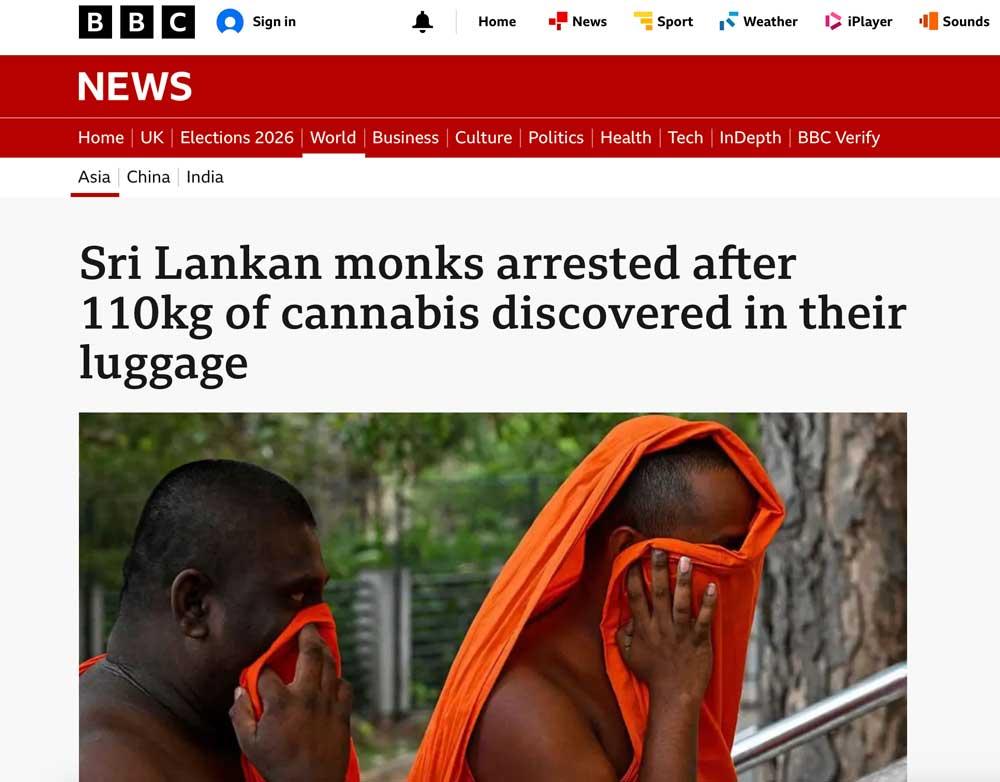
The recent arrest of 22 Buddhist monks at Bandaranaike International Airport with more than 100 kilograms of cannabis has sent shockwaves through Sri Lanka and far beyond. The image is difficult to reconcile. Saffron robed figures, long associated with discipline and renunciation, are now linked to one of the largest airport drug seizures in the country’s history. The story has travelled quickly, provoking outrage, disbelief, and a series of deeper questions that go well beyond the facts of the arrest. At its core, this is not simply a criminal incident. It is a moment that tests public trust, institutional credibility, and the fragile relationship between perception and reality in a globalised media environment.
The first question is also the most sensitive. Were these individuals ordained Buddhist monks, or men merely dressed as monks? In the immediate aftermath, several senior religious voices were quick to dismiss them as impostors, suggesting that the robes had been misused to manipulate public trust. This reaction is understandable. In Sri Lanka, the monastic robe carries immense symbolic authority. To associate it with criminality is to unsettle something far deeper than reputation.
Yet early indications from investigators complicate this claim. Authorities have suggested that at least some of those arrested had identifiable links to temples and were not strangers to the monastic system. Many were described as young or trainee monks rather than senior members of the Sangha. This introduces a more troubling possibility. The issue may not be one of impersonation but of vulnerability within the system itself. If young monks can be drawn into such activities, whether knowingly or through deception, then the conversation must shift from denial to introspection.
The second question turns outward. The group had reportedly travelled from Thailand, a country whose legal framework around cannabis has evolved in recent years and remains complex. How, then, did such a significant quantity of drugs pass through departure controls without detection? Airport security systems are robust but not infallible. Smugglers have long relied on concealment techniques, logistical coordination, and the exploitation of human trust to move contraband across borders. Equally important is the question of destination. Was Sri Lanka the intended market, or merely a transit point in a wider network? The scale of the seizure suggests something larger than domestic distribution. It points toward organised trafficking, possibly involving multiple jurisdictions and actors operating beyond the immediate visibility of law enforcement. In that context, the monks, whether complicit or misled, may represent only one layer of a more complex operation. Perhaps the most puzzling detail lies in the explanation that the luggage was handed over as donations. According to reports, a central organiser, who has also been arrested, allegedly provided the packages and instructed the monks to carry them without question. This raises an obvious concern. Why did no one check the contents?
Within Buddhist culture, the act of giving holds deep spiritual significance. Monks routinely receive offerings from lay supporters, and questioning such gestures may be seen as a breach of trust or humility. For younger monks in particular, the dynamics of hierarchy and obedience may discourage scrutiny. If this cultural framework was deliberately exploited, it would represent a calculated misuse of religious practice. At the same time, cultural context cannot fully absolve responsibility.
In a world where transnational crime is increasingly sophisticated, traditional assumptions about trust and intent may no longer be sufficient safeguards. The incident exposes a tension between inherited values and contemporary risks, one that religious institutions will need to confront with care and clarity.
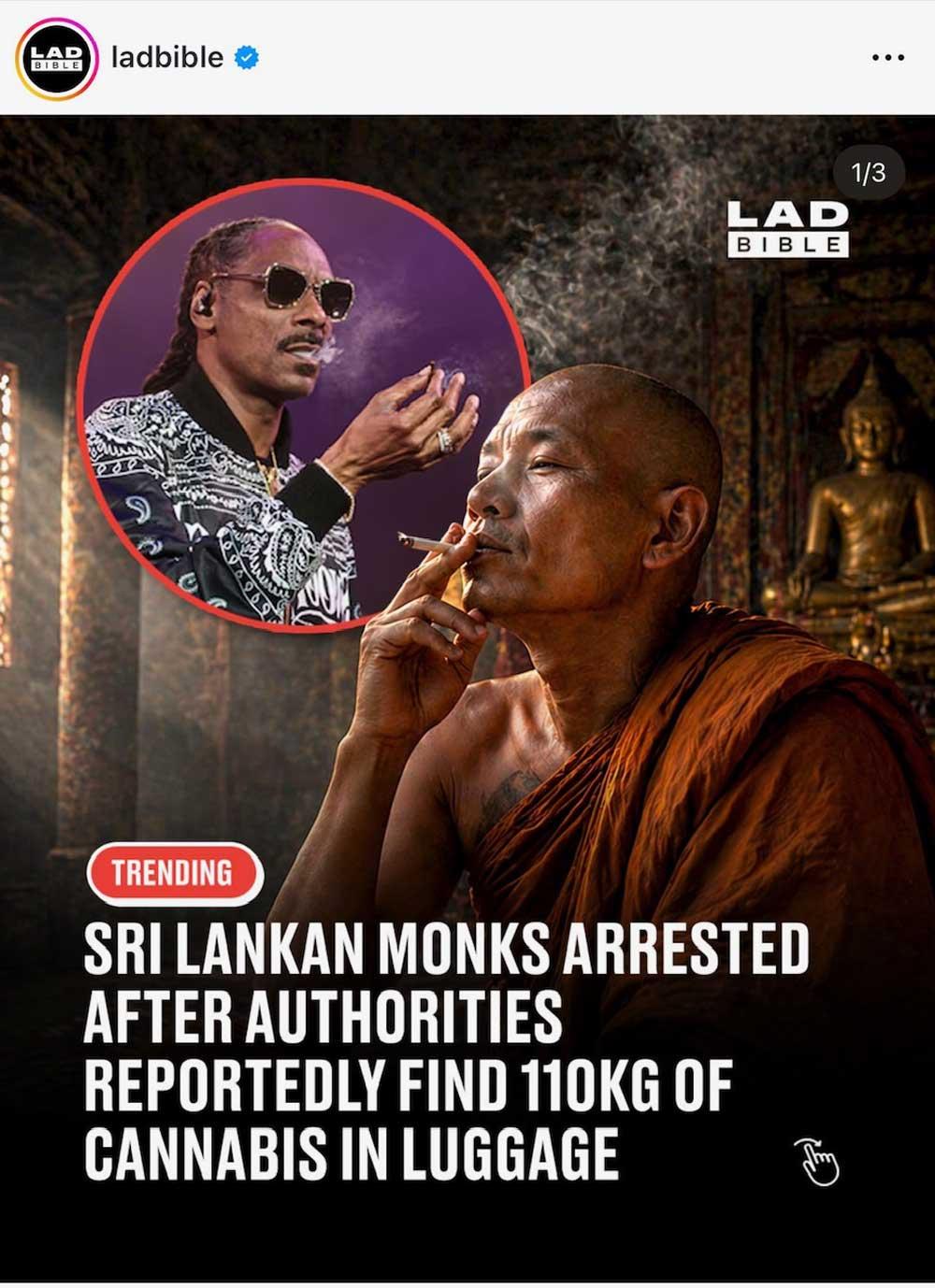
Beyond the immediate facts, however, another question has emerged, one that speaks to perception rather than process. Why did this story spread so rapidly across the world, while Sri Lanka’s efforts to promote its tourism, culture, and economic recovery often struggle to gain comparable attention? Part of the answer lies in the nature of global media. Stories that are unexpected or contradictory tend to travel further and faster. The juxtaposition of Buddhist monks and drug smuggling creates a narrative that is inherently striking. It captures attention because it disrupts expectation. In contrast, positive developments, however meaningful, rarely carry the same immediate impact. Yet within Sri Lanka there is also a growing perception that something more is at play. There appears, at times, to be a concerted effort by certain individuals within the country itself to amplify narratives that cast it in a negative light. This concern is not new. During the Sri Lankan economic crisis (2022), similar tensions were visible. While policymakers and industry leaders worked to stabilise the nation’s image and revive confidence, competing voices often projected a far bleaker picture to international audiences.
In that period, questions arose about motive and impact. Were these narratives driven by legitimate critique, political positioning, or the pursuit of visibility in a crowded information landscape? Whatever the intent, the effect was clear. Efforts at nation branding were frequently overshadowed by a steady stream of negative amplification. The current episode seems to echo that pattern. A serious but contained incident has rapidly become a defining global headline. This does not necessarily imply a coordinated campaign to undermine Buddhism or Sri Lanka as a whole. It may instead reflect a convergence of factors. Local actors seeking attention, international media prioritising impact, and digital platforms rewarding content that provokes strong reactions all contribute to the same outcome.
The result is an imbalance that is difficult to ignore. Positive stories require sustained effort, strategic investment, and careful positioning to gain international traction. Negative stories, particularly those with elements of shock or contradiction, often move effortlessly across borders. In such an environment, perception can quickly harden into narrative, and narrative into reputation. This makes the present moment particularly significant. The incident is not only about law enforcement or religious accountability. It is also about how Sri Lanka is seen and understood beyond its shores. The danger lies not in the reporting of the story itself, but in the possibility that a single story comes to stand in for a far more complex reality.
If the individuals involved were indeed monks, then the response must extend beyond condemnation. It must involve a deeper examination of how young members of the Sangha are guided, supported, and protected from exploitation. If, alternatively, elements of deception or coercion are established, then the focus must turn to dismantling the networks that misuse religious identity for criminal ends. Either way, the robes themselves are not on trial. What is being tested are the systems that surround them, the assumptions that sustain them, and the narratives that define them in the public imagination. In the end, this story is about more than cannabis or crime. It is about trust, vulnerability, and the power of perception in an interconnected world. How Sri Lanka responds, both in substance and in story, will shape not only the outcome of this case but the contours of its image in the years to come.