A Full Table, Full Plates, Full Hearts… Almost

By Noeli Jesudas
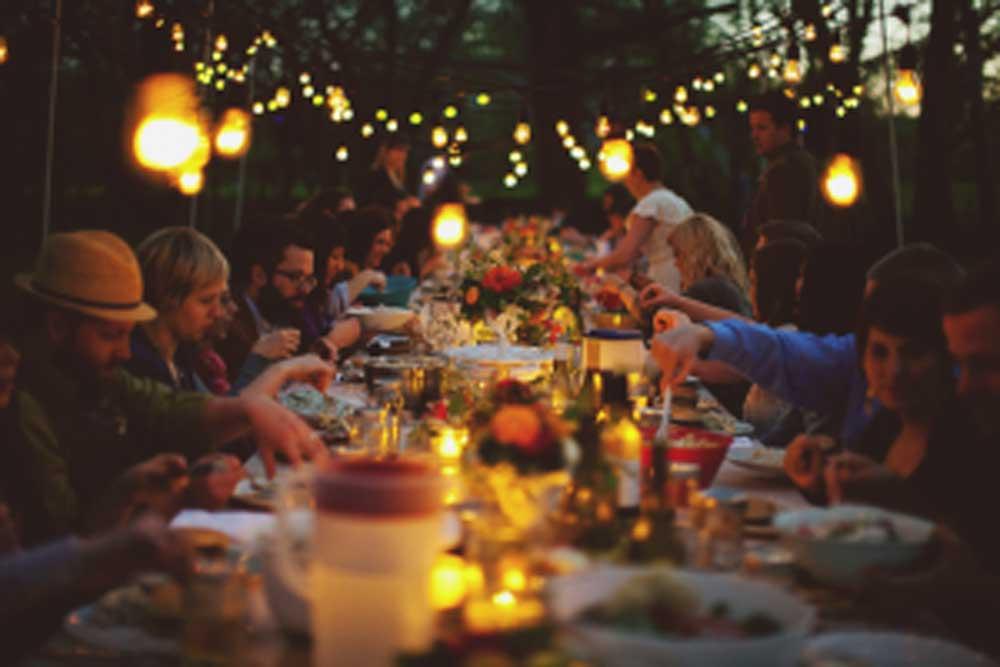
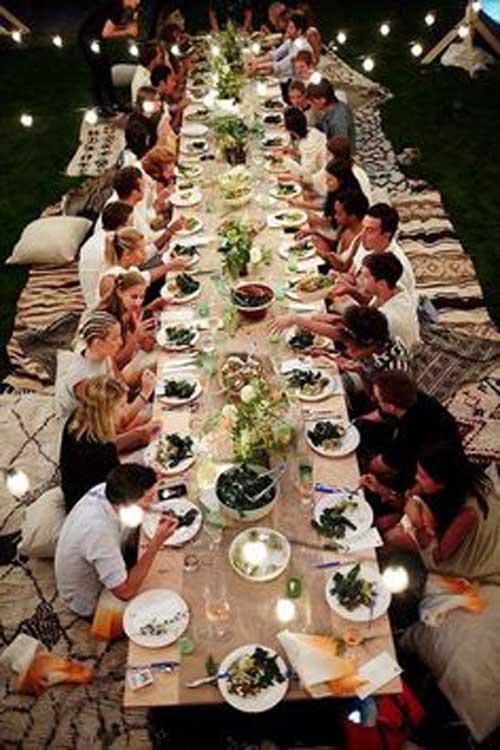
A big, long table. Too many plates to count. Someone insisting you take “just a little more.” Someone else is already halfway into a second dessert. Laughter bouncing off the walls, overlapping conversations, the occasional clink of a glass raised for no real reason other than why not. It’s chaotic, loud, slightly messy, and for a moment, it feels like everything is exactly as it should be. Because sometimes, maybe that’s all it takes.
There’s something deeply comforting about a full table. It’s not just the food; it’s the people who come with it. The ones who show up late and unapologetic, the ones who serve everyone else before themselves, the ones who turn the simplest story into a full performance. It’s familiar. Predictable in the best way. You know where you sit, who you’ll laugh with, and who you’ll roll your eyes at. It’s a rhythm you’ve known for years, maybe your whole life. And in those moments, it feels like enough.
You forget about the unread emails, the quiet anxieties that creep in at 2 a.m., the things you haven’t quite figured out yet. You forget that you’ve been feeling a little off lately, a little unsure. Because here, at this table, everything is loud enough to drown that out. The laughter fills the gaps. The food keeps your hands busy. The noise gives you something to hide behind.
It’s a kind of pause button. A temporary stillness in the middle of everything else. But then, the plates start to empty. Someone checks the time. Chairs scrape back. There’s talk of “doing this again soon,” the kind that sounds sincere but floats a little too easily into the air. One by one, people leave. The table that once felt too full suddenly feels too big.
And that’s when it hits you, maybe quietly, maybe all at once. Was that enough? It’s a strange question, because nothing was wrong. In fact, everything was good. Really good. But sometimes “good” doesn’t stretch far enough to cover everything you’re feeling. Sometimes, even in a room full of people, there’s a part of you that stays a little untouched. Like you showed up, you laughed, you played your role perfectly, but you didn’t quite arrive as your whole self.
And maybe that’s not anyone’s fault. We always seem to hold on to these moments, treating them as proof that life is going right. A full table means you’re surrounded. Laughter means you’re happy. Food means abundance. It’s a simple equation, one that’s easy to believe in. And most of the time, it’s true. These are the moments that carry us, that remind us we’re not alone.
But they’re not everything. Because life doesn’t just happen at the table, it happens in the quiet after, in the walk back home. In the way, your thoughts start to get louder once everything else gets quiet. It happens in the spaces where there’s no one to laugh over you, no one to pass you another plate, no one to distract you from yourself. And that’s where things get a little more real.
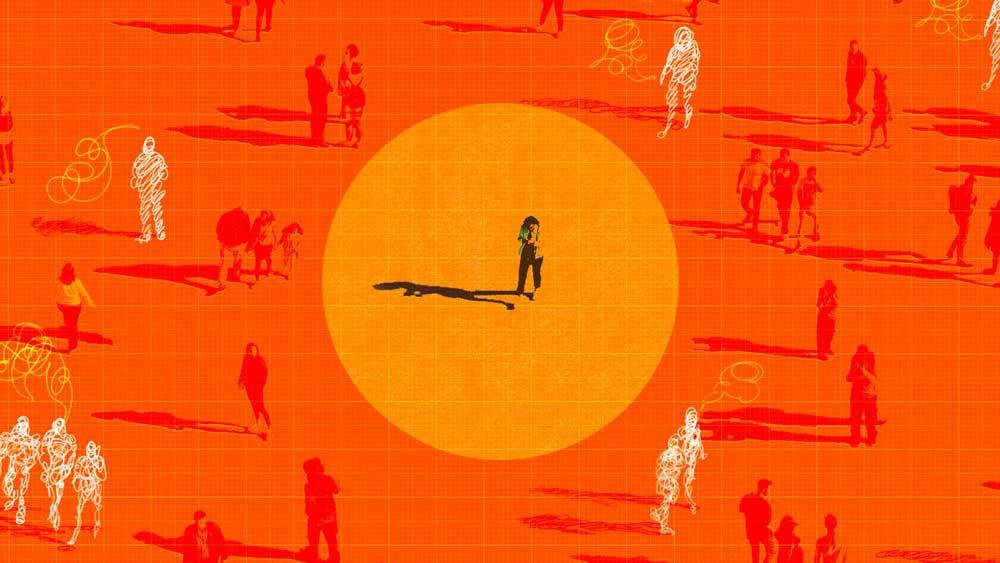
It’s easy to rely on the noise. To let it become your comfort zone. To keep filling your time, your space, your calendar, just so you don’t have to sit too long with what’s underneath. And again, there’s nothing wrong with that. We all need those moments. We all need people. We all need that warmth. But if that’s all you have, if that’s the only thing keeping you going, it starts to feel a little fragile. Because what happens on the days when the table is empty? When everyone’s busy, when plans fall through, when there’s no laughter to lean on? What happens when it’s just you, your thoughts, and a kind of silence you’re not used to?
That’s when you realize that those big, beautiful moments, while important, can’t be the only thing holding you together. They’re highlights, not foundations. And maybe that’s the shift we don’t talk about enough. The idea that you can deeply love those gatherings, crave them even, and still acknowledge that they don’t fix everything. That they’re a part of your life, not the whole picture. That it’s okay if you leave a full table and still feel a little empty. Because being human is complicated like that. You can be grateful and restless at the same time. You can feel surrounded and still a little alone. You can laugh until your stomach hurts and still go home with thoughts that don’t quite settle. And none of that makes the moment any less real. If anything, it makes it more. Because it means you’re not just chasing the noise, you’re starting to notice what happens beyond it. You’re starting to ask yourself what you actually need, not just what feels good in the moment. And that’s not always an easy question to answer.
Maybe it’s deeper conversations, the kind that don’t get lost in a crowded room. Maybe it’s time alone, not as an escape but as a way to reconnect with yourself. Maybe it’s finding a different kind of joy, one that doesn’t rely on everything being loud and full and perfect. Or maybe it’s just learning to sit with the in-between. To appreciate the table for what it is, a place of connection, of warmth, of shared moments, without expecting it to carry everything else. To let it be a source of energy, not the only source. To enjoy it fully when it’s there and not feel completely lost when it’s not. Because the truth is, those tables will come and go.
There will be nights that feel endless and perfect, and others that are quiet and uneventful. There will be phases where your life feels full of people, and others where it feels a little emptier than you’d like. That’s just how it moves. And somewhere in between all of that, there’s you. Not the version of you that only exists in those loud, joyful moments, but the one that stays after everyone leaves. The one that has to keep going, even without the laughter, even without the distractions.
That version matters just as much. So yes, a big, long table, lots of food, lots of laughter, it can feel like everything. And sometimes, in that moment, it really is. It can carry you through a hard week, remind you of what you have, and give you a kind of joy that’s hard to replicate anywhere else. But it’s not the whole story. It’s one chapter. A beautiful one, a necessary one, but not the only one. And maybe the real balance is learning to hold both truths at once. To lean into the laughter when it’s there and not run from the quiet when it’s not. To build a life that feels full not just at the table, but beyond it too. Because in the end, it’s not just about having somewhere to sit. It’s about having somewhere within yourself that still feels like home, even when the table is empty.