More Information, Less Understanding: The Literacy Paradox
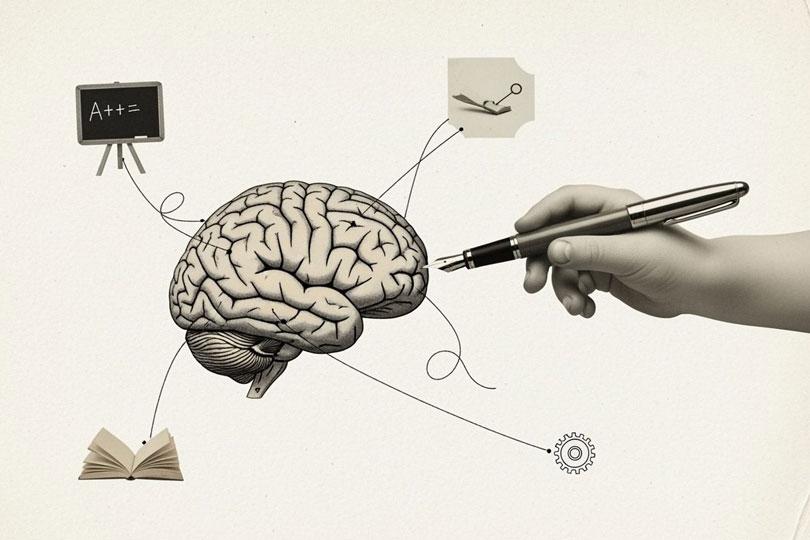
We live in an age in which almost any question can be answered before it has been properly considered. A search engine produces thousands of results in seconds; a social media feed delivers a steady procession of explanations, opinions, statistics and breaking news. For Generation Z, information is not something one necessarily goes looking for. It is something that arrives, often uninvited, between a conversation, a lecture and the journey home. Yet, for all this unprecedented access to knowledge, a more difficult question remains: are we becoming better at understanding the world, or merely more accustomed to receiving information about it?
Literacy has traditionally been associated with the ability to read and write. But the meaning of being literate has never been entirely confined to recognizing words on a page. It involves interpretation, discernment, the ability to distinguish evidence from assertion and to recognize what a text leaves unsaid. In a digital environment, these abilities have become considerably more important. The challenge facing Gen Z is not necessarily a reluctance to read, but an increasingly complicated relationship with what it reads.
Consider the ordinary experience of encountering a news story online. A headline appears, followed by a few lines of text, perhaps a short video explaining the issue and a comment section already crowded with competing conclusions. Within minutes, a reader may have encountered several interpretations of the same event without having read the original report. The impression of being informed can arrive long before an understanding of the subject has had time to develop.
This is where the distinction between information and knowledge becomes significant. Information is readily available; knowledge requires work. It asks the reader to establish context, compare accounts, question sources and tolerate uncertainty. Understanding, in turn, demands something even less convenient: time. It requires staying with an idea beyond the moment it becomes familiar, allowing contradictory evidence to complicate an initial opinion rather than immediately abandoning it.
The architecture of digital platforms does not always encourage this kind of engagement. Content is frequently organised around immediacy, visibility and reaction. A complex political development can be compressed into a thirty-second video; a scientific finding can become a confident infographic stripped of its limitations. The problem is not that these formats are inherently incapable of communicating serious ideas. They can make knowledge accessible to people who might otherwise never encounter it. The difficulty begins when accessibility is mistaken for completeness. For Gen Z, therefore, digital literacy must extend beyond knowing how to operate technology. It must include the ability to recognise manipulated images, identify misleading statistics, understand algorithmic bias and question the authority of a source, even when its presentation is persuasive. A polished video is not necessarily an accurate one, just as a widely shared opinion is not necessarily an informed one.
There is also a quieter loss worth considering: the diminishing space for sustained attention. Reading a long article, following an argument across several chapters or sitting with an unfamiliar subject asks something different of the mind than moving rapidly between fragments of content. Neither form of reading is without value. But the capacity to concentrate, follow complexity and revise one's thinking is difficult to cultivate when every moment of intellectual discomfort offers an invitation to scroll elsewhere.
This is not an argument for nostalgia, nor an attempt to position books against screens. Gen Z is not a generation that has stopped reading. It reads messages, subtitles, articles, captions, research summaries and an extraordinary volume of material that previous generations could scarcely have accessed. The more useful question is whether the education systems, reading cultures and digital environments surrounding young people are equipping them to make sense of that material.
The responsibility cannot rest entirely with young readers. Schools must teach students how to evaluate information, not simply retrieve it. Journalism must resist the temptation to sacrifice context for circulation. Technology platforms must be examined for the ways in which their systems shape what people encounter and believe. And reading, in its fullest sense, must be understood as more than a classroom exercise or an examination requirement. Perhaps the defining literacy challenge of this generation is not learning how to find information. It is learning when to doubt it, how to investigate it and when to admit that one does not yet understand it.
In a world that has made information almost limitless, the ability to think carefully has become increasingly valuable. We have never had so many ways to know about things. Whether we are learning to understand them is another matter entirely.