Gedara Gini: The Fire We Are Told to Keep Indoors
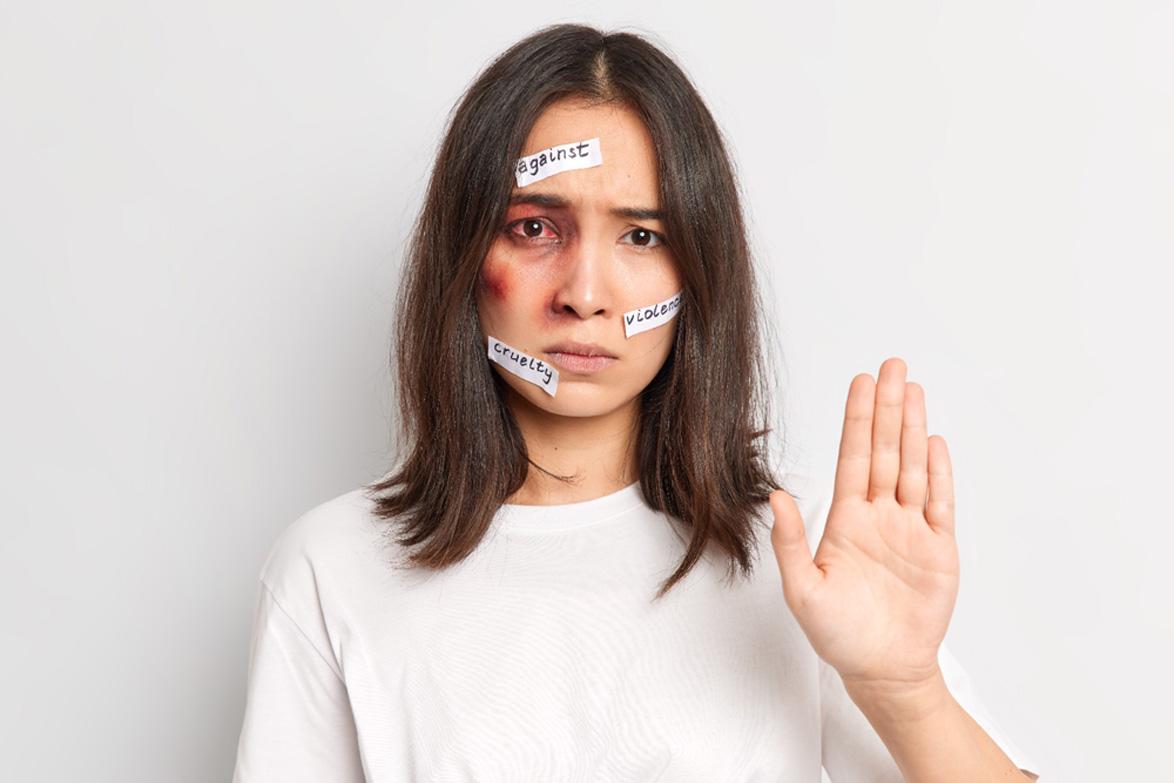

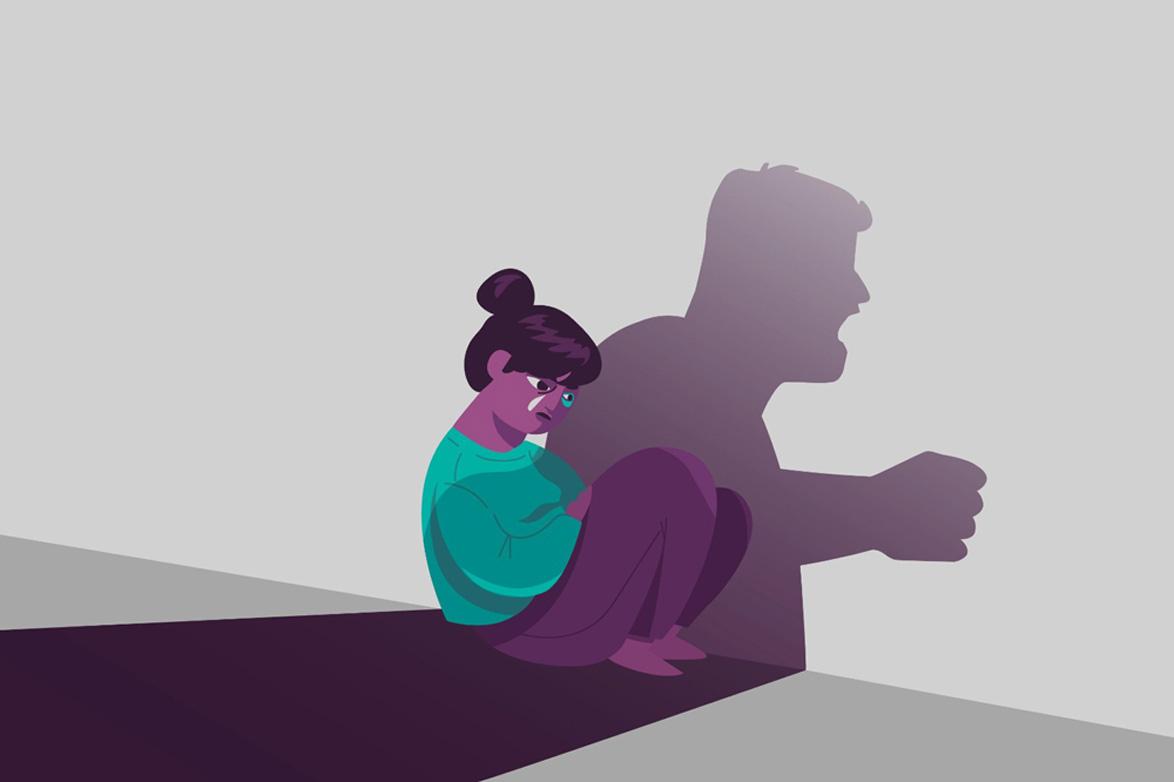
There is a Sinhala proverb that has done more damage to the women of this country than any law, any court, any government that has come and gone through the revolving door of our democracy. Gedara Gini Eliyata Danna Epa. Do not let the home fires out. Keep what burns inside burning inside. And if you are scorched, that is a matter between you and the fire, and the street does not need to know, and the children's school does not need to know, and the Women and Child Protection Bureau certainly does not need to know, and you will sit with your burns and you will serve the dinner and you will be, above all things, a good wife. The proverb is not a proverb. It is a policy. It is the oldest and most successful policy this country has ever implemented, and it costs the government nothing, because the women enforce it themselves.
Sri Lanka received close to 130,000 domestic violence complaints in 2024. By September of 2025, the count had already crossed 113,000. That is 310 women a day walking into a police station or calling a helpline to say: something is happening to me inside my home. And the police, to their partial credit, have said out loud that this number is not an accurate measure of the problem. DIG Renuka Jayasundara of the Women and Children Bureau said it plainly: victims hesitate to report. Some die without ever having had the chance to complain. The 130,000 is the surface. Below it is a depth we have collectively agreed not to measure.
The Women's Wellbeing Survey of 2019, the first and still the only national survey of its kind, found that nearly 40% of ever-partnered women in this country had experienced physical, sexual, emotional, or economic violence from a partner. One in five had experienced physical or sexual violence specifically. More than a third, 35.7%, had contemplated suicide. Not as a passing thought. As a calculation. As an option they had weighed against the alternative of continuing. We do not talk about this at election time. We do not include it in the budget speeches. We call it, when we must call it something, a domestic matter, and we use that phrase the way you use a lid on a pot that is boiling over, not to solve the problem but to keep the mess from reaching the floor.
The Lazy Argument
The economic catastrophe that began in 2022 did not invent this violence. I want to be precise about that, because the lazy argument is that poverty produces abusive men, and the lazy argument is wrong, and it does harm, because it lets the wealthy abuser off the hook, and it lets the culture off the hook and it locates the problem in a man's wallet rather than in the civilisation that made him. Poverty is an accelerant. It finds the violence already present, and it turns up the heat. Research from Colombo North Teaching Hospital studying intimate partner violence from 2019 to 2021 found that financial stress and substance abuse were the most common trigger factors, often together, because when the money runs out the arrack remains, and when the arrack remains the night gets longer, and the woman in the kitchen with the bolted door has learned to read the sound of a particular footstep the way a sailor reads weather. When the poverty rate doubled from 13.1% to 25.9% in two years and more than half a million jobs disappeared and families that had never skipped a meal began skipping meals, the violence that had always been present found new occasions and new intensities. This is what we built and then called an economic crisis. The women inside it called it something else. They called it Tuesday.
The Forms of Violence
There are the forms of violence that we have not even bothered to name, because naming them would require us to see them, and seeing them would require us to prosecute them, and prosecuting them would require laws that this government and every government before it has chosen not to write.
Economic abuse: the systematic destruction of a woman's ability to earn, save, or access money, so that leaving becomes not a decision but an impossibility, because she has no account, no salary, no receipt for a single rupee that he has not approved.
Coercive control: the daily management of another person through surveillance and unpredictability and the specific terror of not knowing, not knowing which version of him will walk through the door tonight, not knowing what she has already done wrong that has not yet been punished. A woman in a published study described her husband as someone who had removed his mask soon after their marriage. She could not predict him. That unpredictability is not a personality flaw. It is a weapon, and the psychological literature calls it intimate terrorism, analytically, because the analogy is exact: it installs chronic fear, it rewires the brain's stress response, it creates the hypervigilance of a person who is always, always waiting for something to go wrong. We ask why she does not leave. We are asking a person in a sustained neurological state of siege why she cannot think clearly. The question is its own answer.
Digital abuse is the newest room in this house. In 2023, 51% of harmful speech online in Sri Lanka targeted women. Abusers monitor phones. They install tracking software. They send threats through WhatsApp at two in the morning and delete them before sunrise. The Online Safety Act of 2024 was supposed to address this. Critics, including ARTICLE 19 and the International Commission of Jurists, say it is better suited to censorship than to protection.
The Cyber Crime Investigation Unit is under-resourced. Most women who are being monitored and threatened through technology do not know that these behaviours have a name, and they certainly do not know they might constitute a crime, because we have not told them, and we have not told them because telling them would require us to act on what they say.
And then there is what happens in the bedroom. In Sri Lanka in 2026, a man can rape his wife. Not through a loophole. Not through an oversight. The Sri Lankan government confirmed this before the UN Committee on the Elimination of Discrimination Against Women in February 2025. As a fact about the present state of the law. Section 363(d) of the Penal Code exempts husbands from rape charges unless the couple is judicially separated. The logic of this law descends from an 18th century English legal doctrine called Coverture, which held that a wife becomes, at the moment of marriage, a legal extension of her husband, and cannot therefore be wronged by him as a stranger can be wronged. We inherited this from a colonial administration that has been gone for 76 years. We have kept it. A Justice Minister announced intentions to introduce criminalisation in 2024, faced public backlash over unrelated provisions, and retracted the proposal. One in five women in this country has experienced physical or sexual partner violence. The fraction of those cases that involve sexual coercion within marriage is unknown, because we have not built the legal or statistical framework capable of seeing it. It does not exist in our law. In the bedrooms where it happens, it does not have a name. It is called marriage. It is the most protected crime in the country.
A Family Matter
A woman in Sri Lanka who decides, against the proverb and against every social pressure that backs the proverb, to report domestic violence, will find the following. She will find at many police stations outside Colombo, a male officer who will call it a family matter.
She will find a Protection Order system that, if she is lucky and persistent, will produce an order her husband can violate for a fine of ten thousand rupees. Ten thousand rupees. The price this country has placed on a woman's safety inside her own home is less than most families spend on a month's groceries. She will find counsellors, undertrained and operating from personal religious conviction, who have been documented sending women back to abusive husbands because they believe divorce is against their faith. She will find ten government shelters in a country of 22 million people, a figure that has been described as a crisis and agreed to be a crisis and remains, because the agreement to call something a crisis does not require anyone to fix it. Women In Need, one of the largest service providers in the country, lost approximately 85% of its operational funding in 2025 when USAID shut down. The gap is not being filled. And she will find that if she wants a divorce, domestic violence is not a recognised ground under the Marriage Registration Ordinance. She must prove adultery, desertion, or incurable impotence. She can present a decade of police records and medical files and a court order. It is not sufficient. The institution of marriage in Sri Lanka is more robustly protected than the woman living inside it.
Good Reason to Hit the Wife
The 2019 survey found that more than one third of Sri Lankan women believe a man has a good reason to hit his wife. Not men. Women. Women who have absorbed, entirely and internally, the logic of their own disposability. This is not ignorance. You cannot call it ignorance. It is the product of a careful, consistent, multigenerational education conducted in homes and temples and schools and counselling offices and television dramas and in the mouths of every aunty who said be patient and every priest who said suffer and every officer who said what did you do to make him so angry. We did not fail to teach women that violence is wrong. We taught them that it is sometimes right. The difference between those two sentences is the entire problem.
130,000 complaints a year is not a system working. It is a crisis with the lid on. And somewhere in Kandy, in Batticaloa, in a housing scheme in Colombo North, in a tea estate in Nuwara Eliya, in every district of this island, a woman is sitting with her burns, serving the dinner, keeping the fire indoors, because we built a country that gave her no other option and then called her silence stability. I am not interested in stability. I am interested in the fire.
If you are experiencing domestic violence: National Helpline - 1938
Women In Need: 011 267 1411